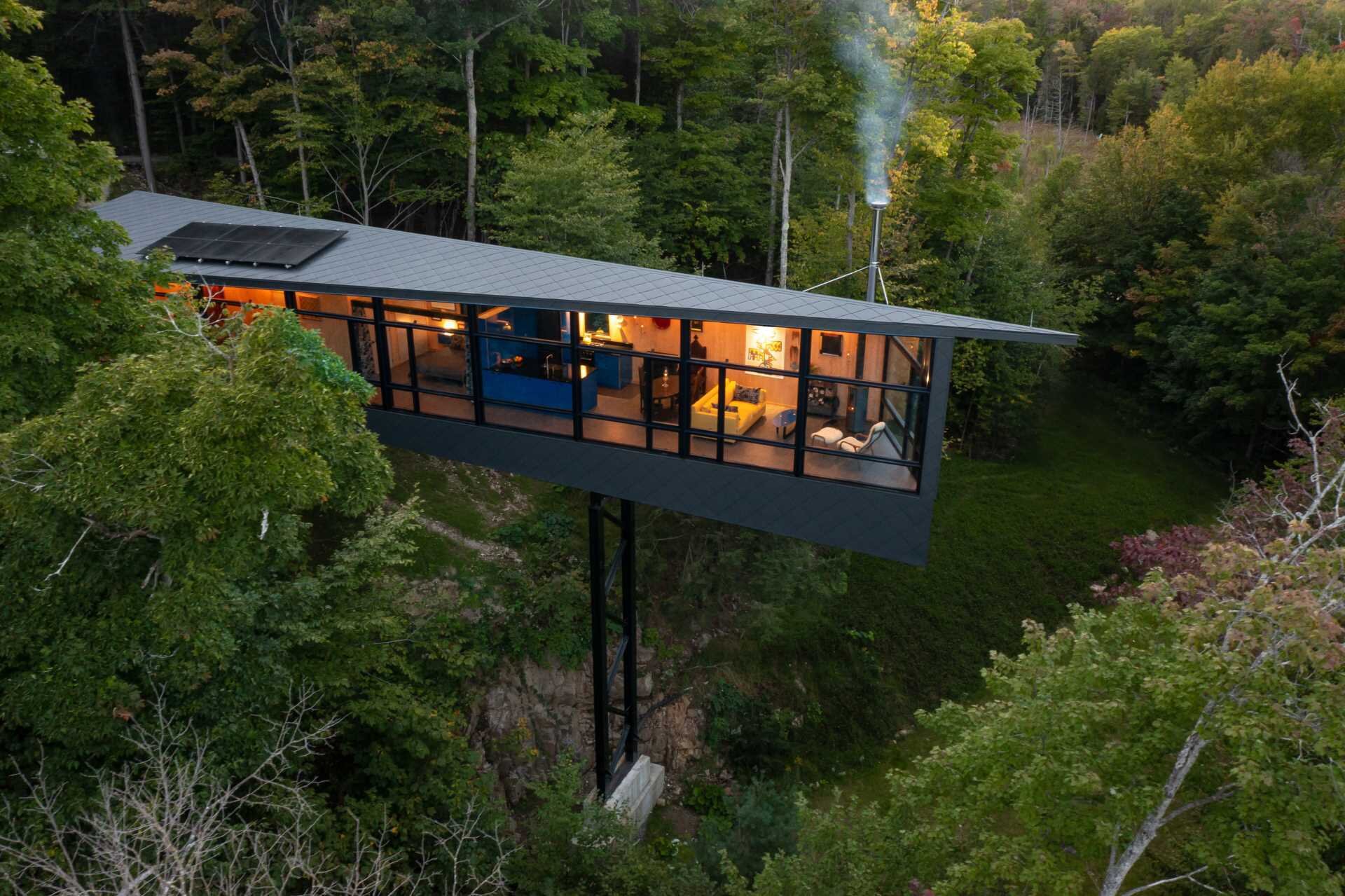
In Quebec, Canada, Kariuok Architects designed a modern cabin that rises into the treetops, creating a home that feels suspended within the forest canopy. Known as the m.o.r.e. CLT Cabin, the project challenges many assumptions about traditional lakeside cottages while embracing innovative construction methods, environmental awareness, and striking contemporary design.
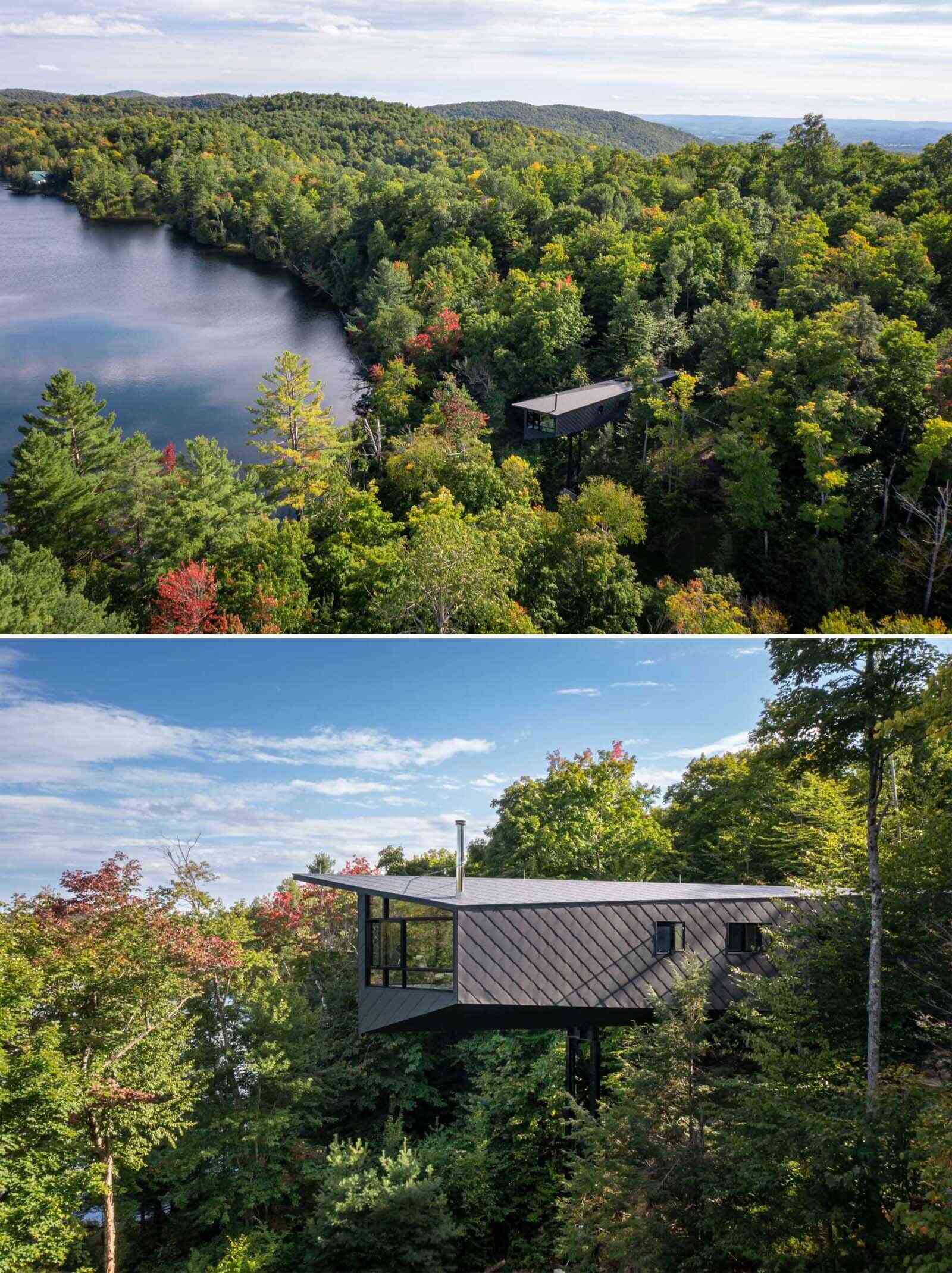
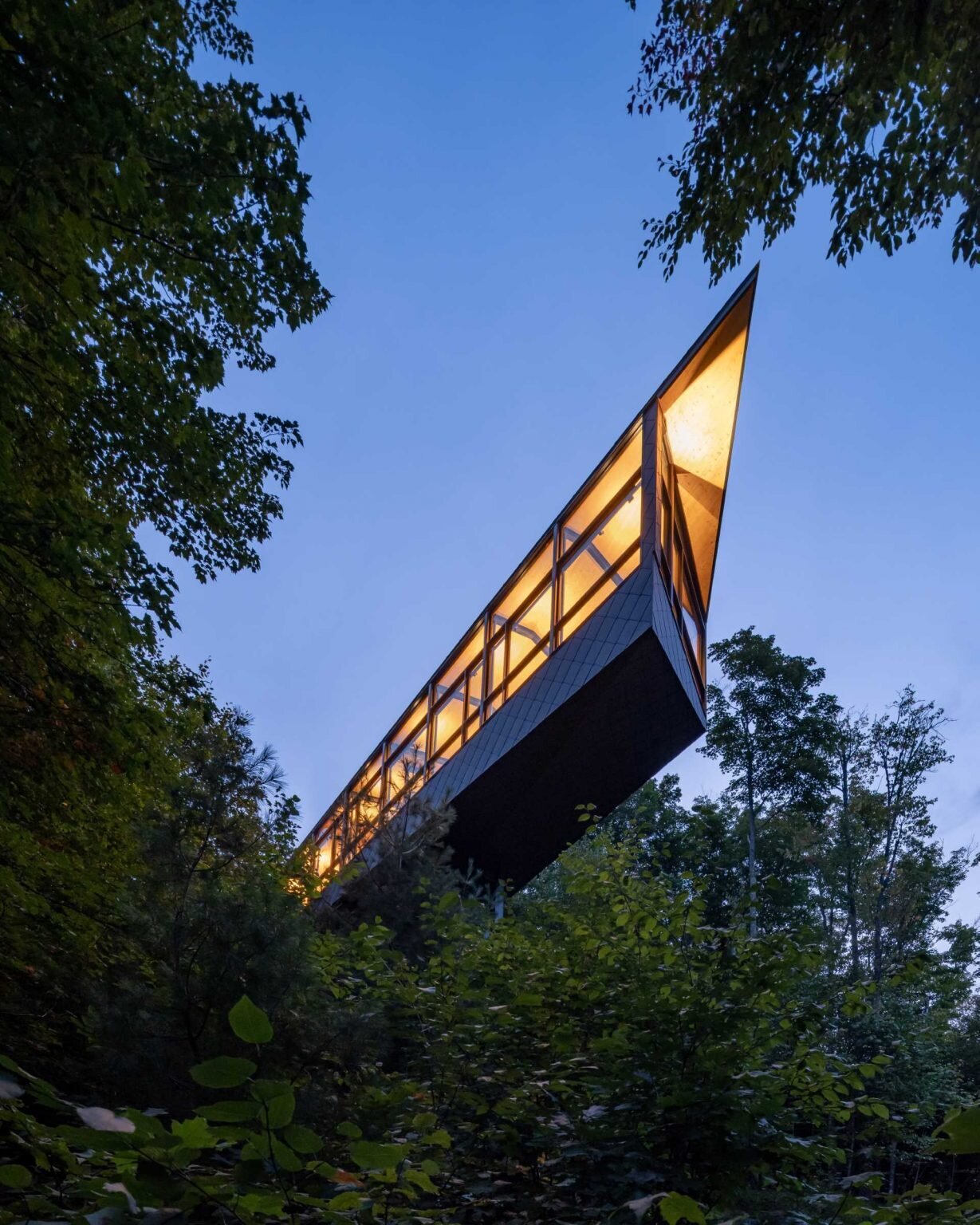
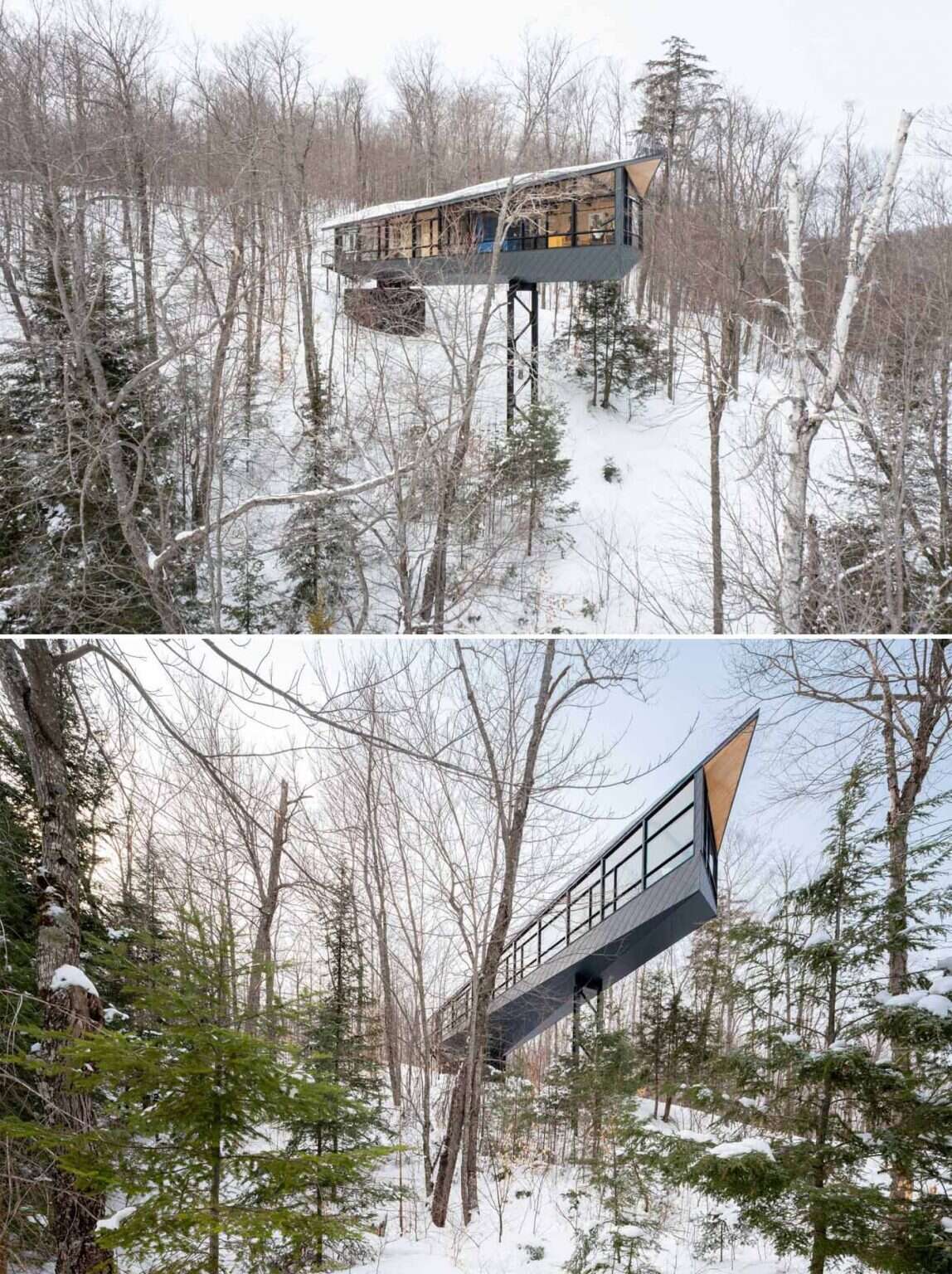
From a distance, the cabin appears to float above the landscape. Its elevated position provides sweeping views through the trees while reducing disturbance to the land below.
Turning a Zoning Challenge Into an Architectural Opportunity
The design process was shaped by local regulations that required any new construction to sit at least 100 feet (30m) from the lake. At that exact point, however, the site featured a rocky cliff face.
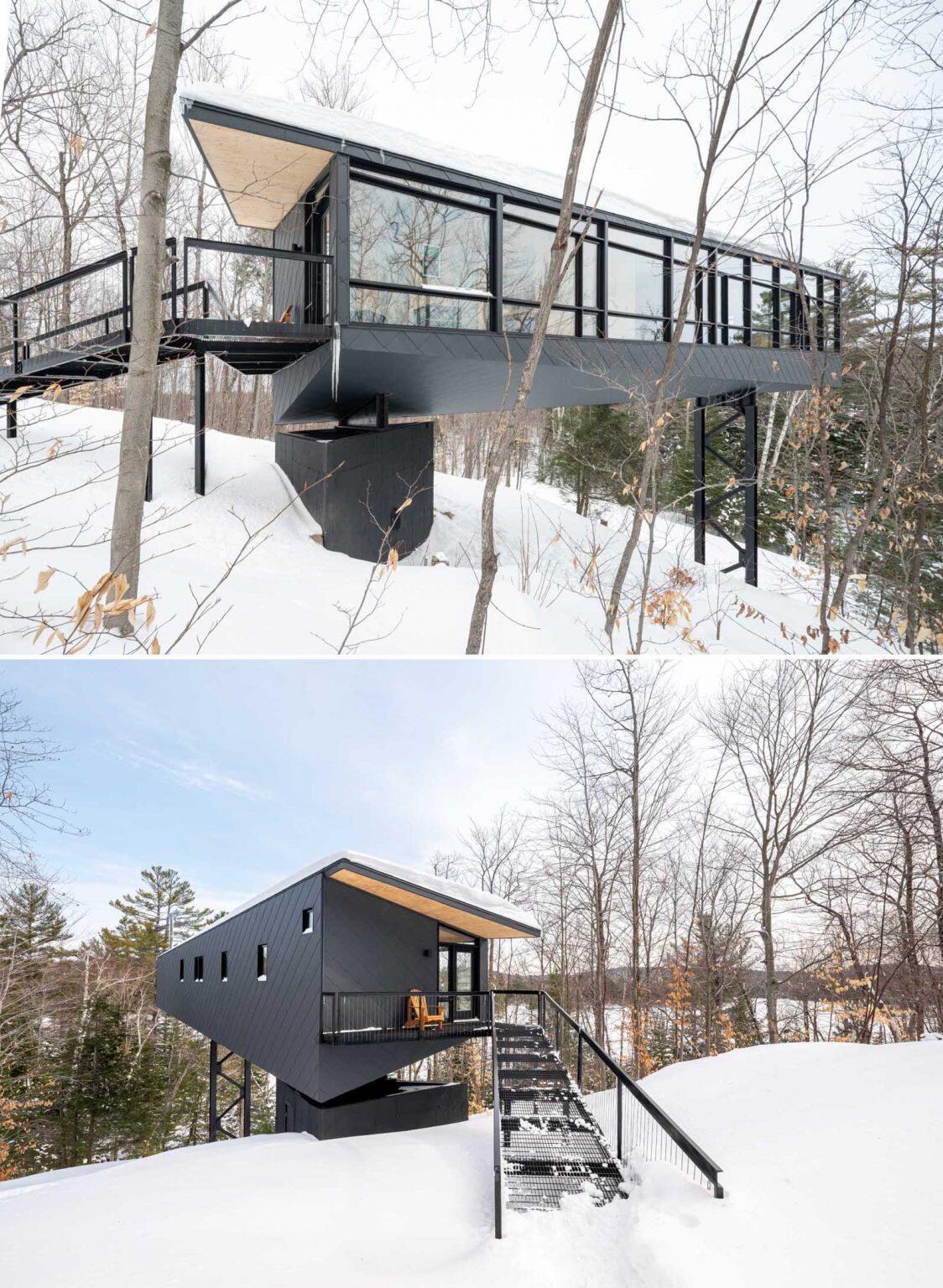
Instead of removing the rock through blasting, the architects incorporated it into the design. They then pursued a zoning variance that allowed the front portion of the cabin to extend beyond the setback line, hovering above the landscape instead of resting directly on it.
The approval process took years, but the result transformed a regulatory challenge into a distinctive design solution. The cabin now projects outward over the hillside, creating the sensation of living among the trees while helping preserve the terrain below.
Elevated on a Single Mast
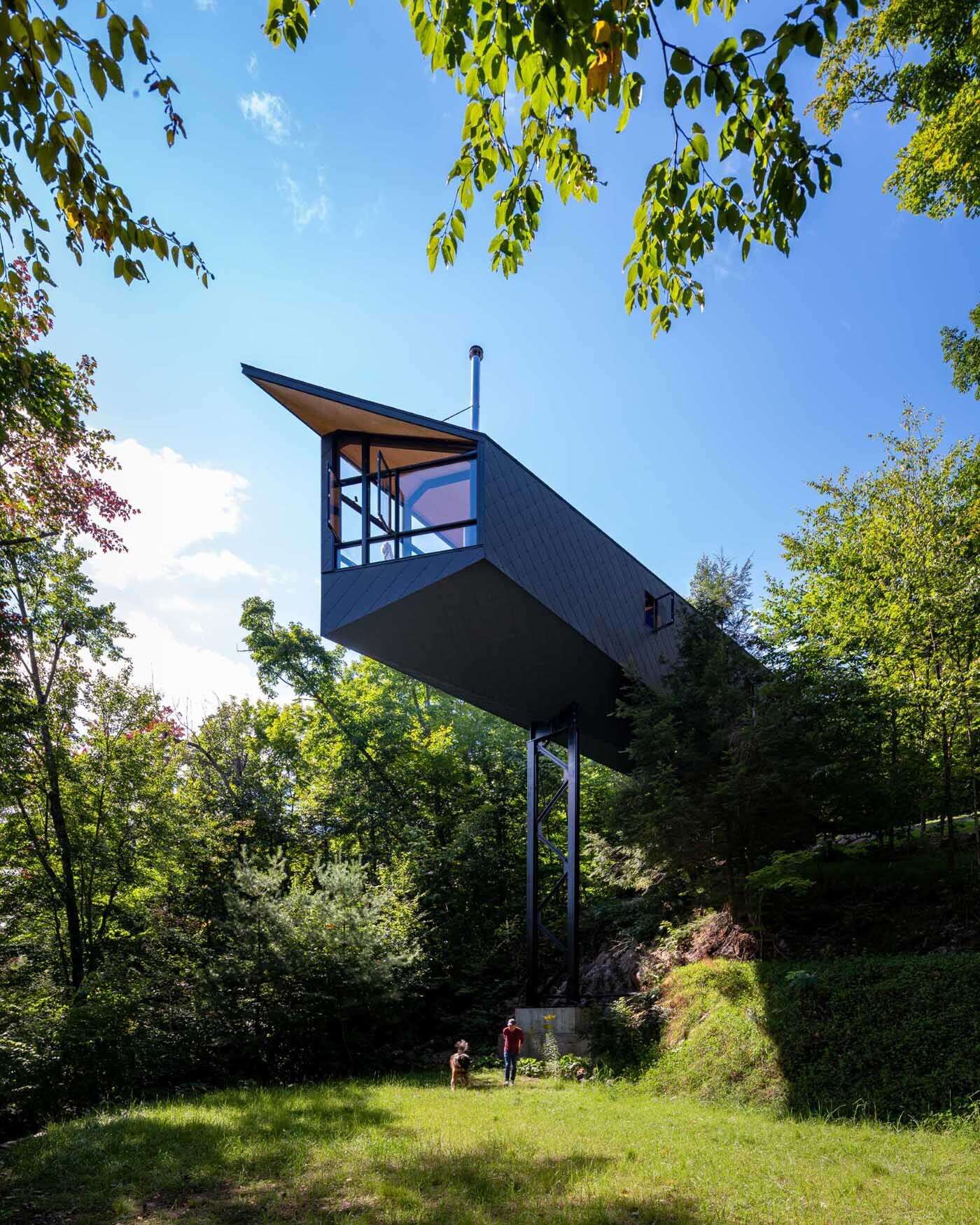
One of the most striking aspects of the project is the structural system that supports it.
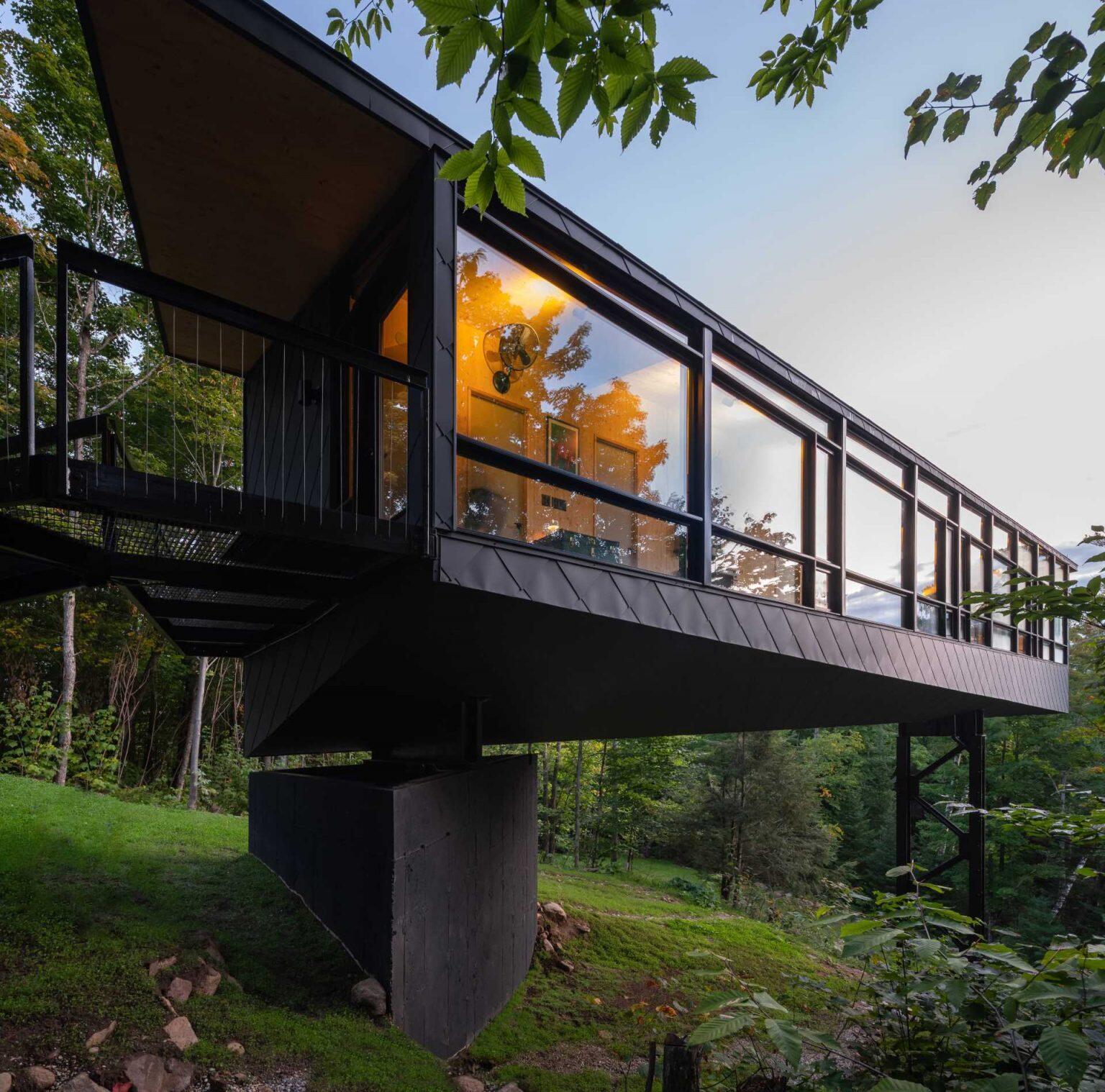
Instead of relying on a large conventional foundation, the cabin is anchored using a single concrete footing and a steel mast. This approach significantly reduced the amount of excavation required and minimized disruption to the surrounding forest floor.
By lifting construction activity away from the hillside, the design helped protect vegetation, reduce erosion risks, and lower the amount of concrete used during construction. The elevated structure also contributes to the cabin’s dramatic appearance, making it seem as though it is floating through the trees.
Precision-Built Timber Construction
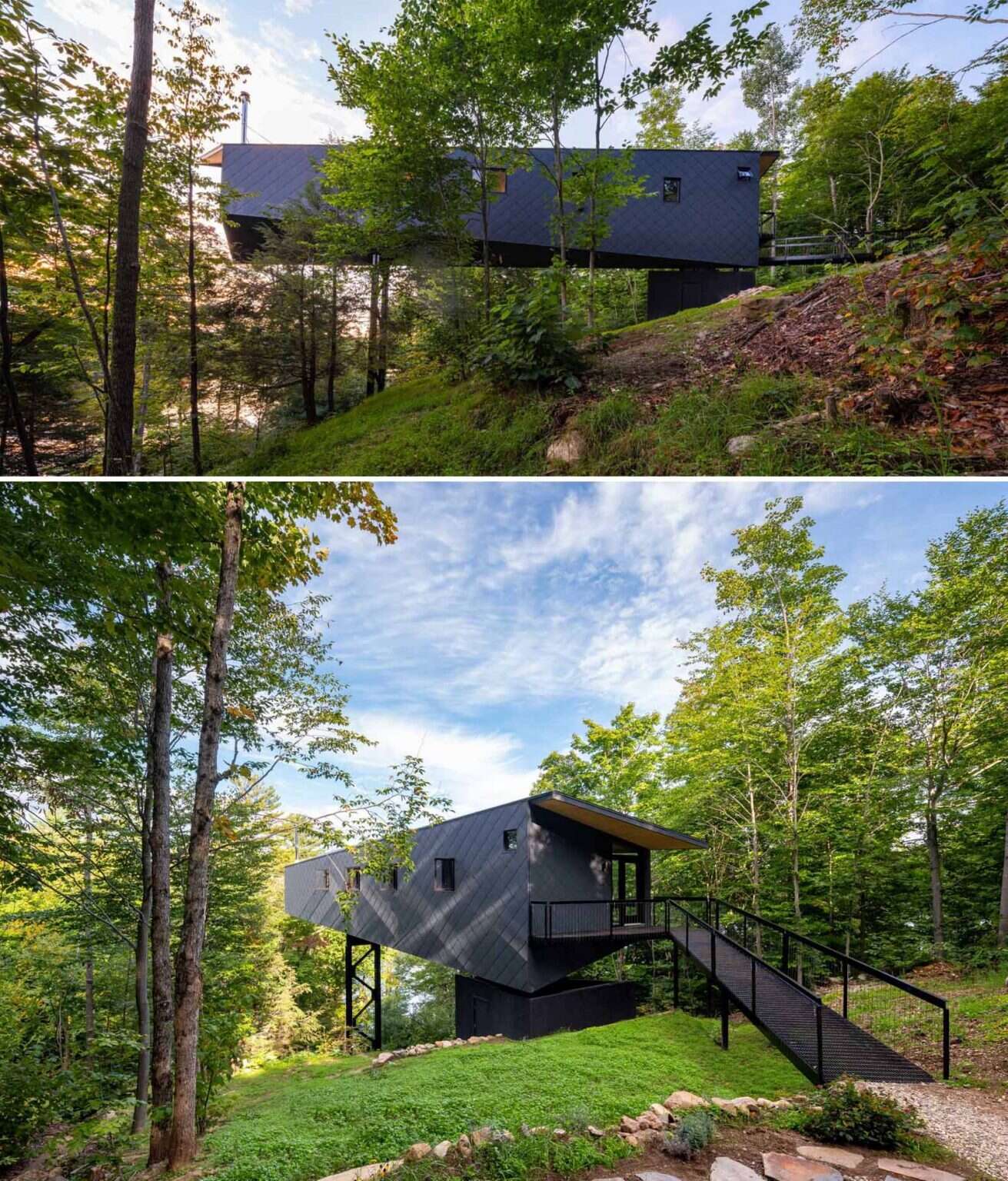
The cabin was constructed using suitably sourced cross-laminated timber (CLT) panels and glulam beams.
Rather than assembling the structure entirely on-site, the timber components were milled offsite with precision and transported to the property before being hoisted into position. This process shortened construction time and reduced the need for heavy machinery moving throughout the site.
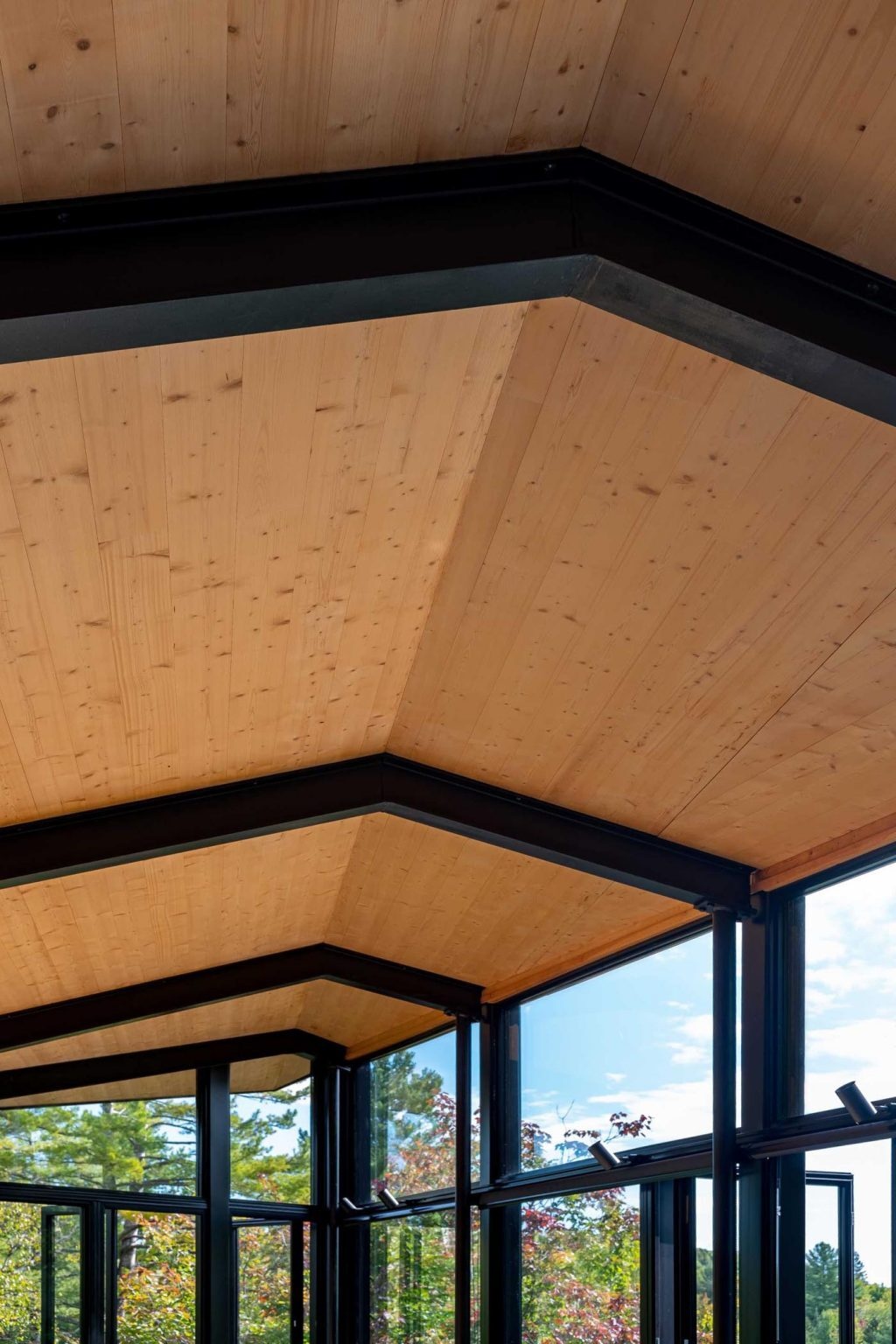
The architects also developed an innovative folded structural system using thinner CLT panels. Similar to how a folded sheet of paper becomes stronger, the folded timber elements increase structural performance while using less material.
Designed to Capture Sunlight and Breezes
The elevated position of the cabin offers more than dramatic views. By sitting high above the ground, the home captures cooling breezes from the surrounding landscape. Combined with its 12-foot-high interior spaces and strategic openings, the design creates effective cross-ventilation throughout the warmer months.
Large glazed walls face south, while the surrounding tree canopy provides seasonal shading. During summer, leaves help filter direct sunlight. In winter, bare branches allow sunlight to stream inside and contribute to passive heating.
The cabin also operates using solar power, reducing reliance on traditional energy sources while supporting off-grid living.
Built for More Than Human Occupants
Beyond its environmental strategies and innovative construction, the cabin was also designed with local wildlife in mind. Integrated into the steel mast are specialized bat pods that provide shelter for endangered brown bats. Elevated above potential predators and positioned near the lake, these spaces offer a safe habitat while supporting local biodiversity.
It’s a small detail that reflects the broader ambitions behind the project, showing how architecture can accommodate both people and wildlife within the same site.
Warm Timber Interiors Framed by Nature
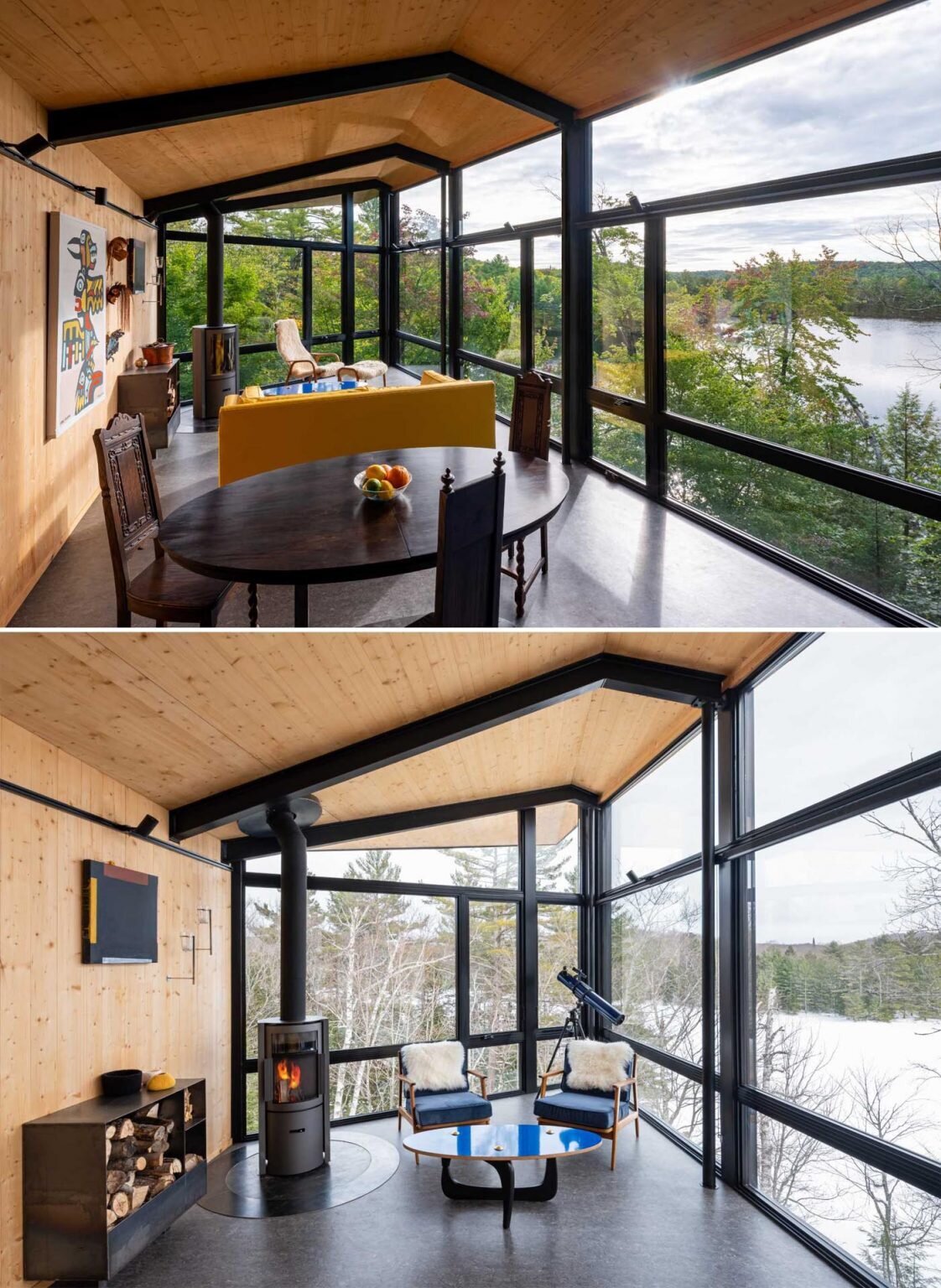
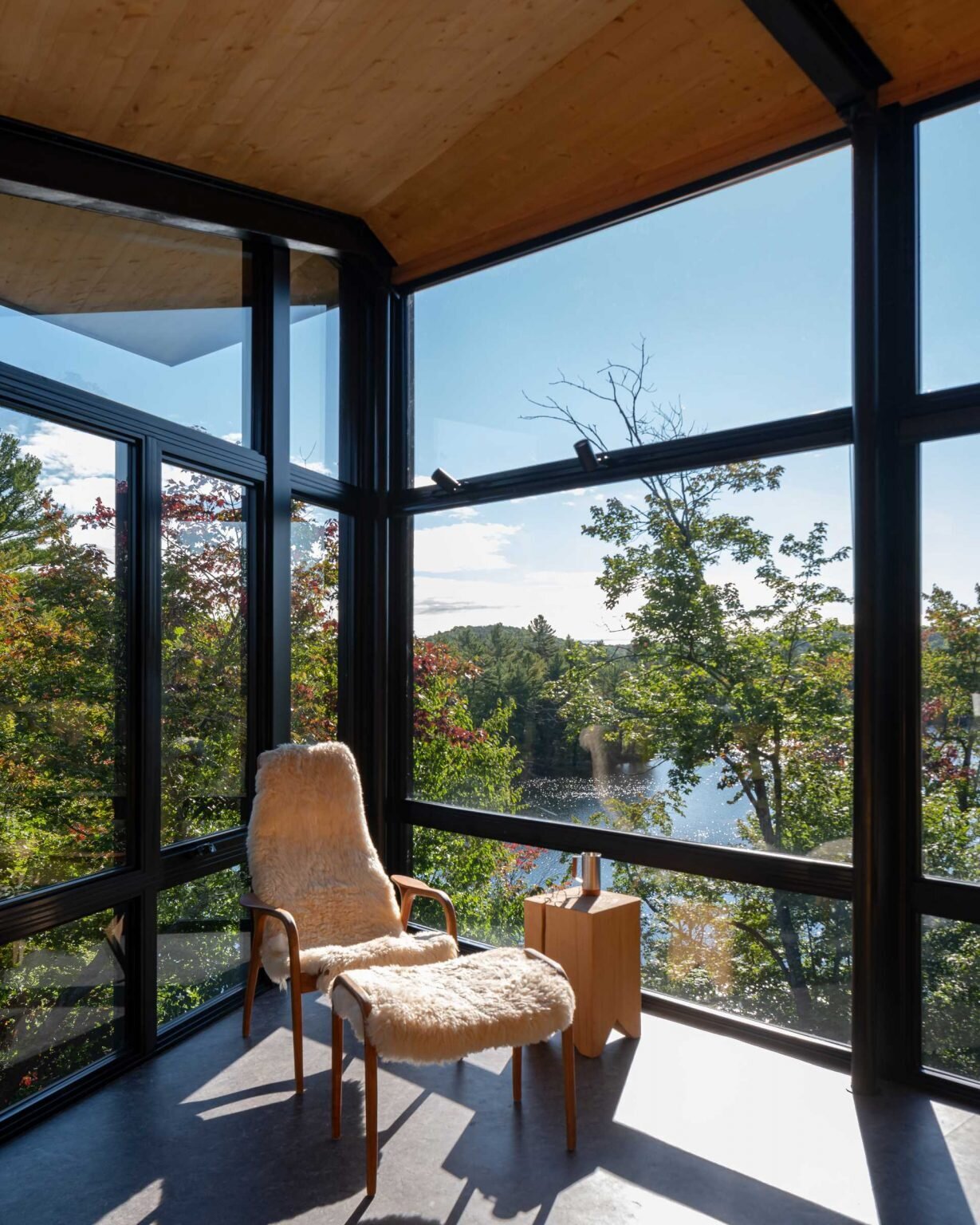
Inside, the cabin showcases the natural beauty of exposed wood surfaces. Timber lines the walls and ceilings, creating a warm and inviting atmosphere that complements the surrounding forest.
Stretching along the length of the cabin, black-framed windows draw attention outward and provide uninterrupted views of the landscape. The contrast between the dark window frames and the pale timber surfaces gives the interior a clean, contemporary character.
Every room benefits from a close visual relationship with the trees, making the changing seasons an ever-present feature of daily life inside the home.
A Bright Blue Kitchen Adds Personality
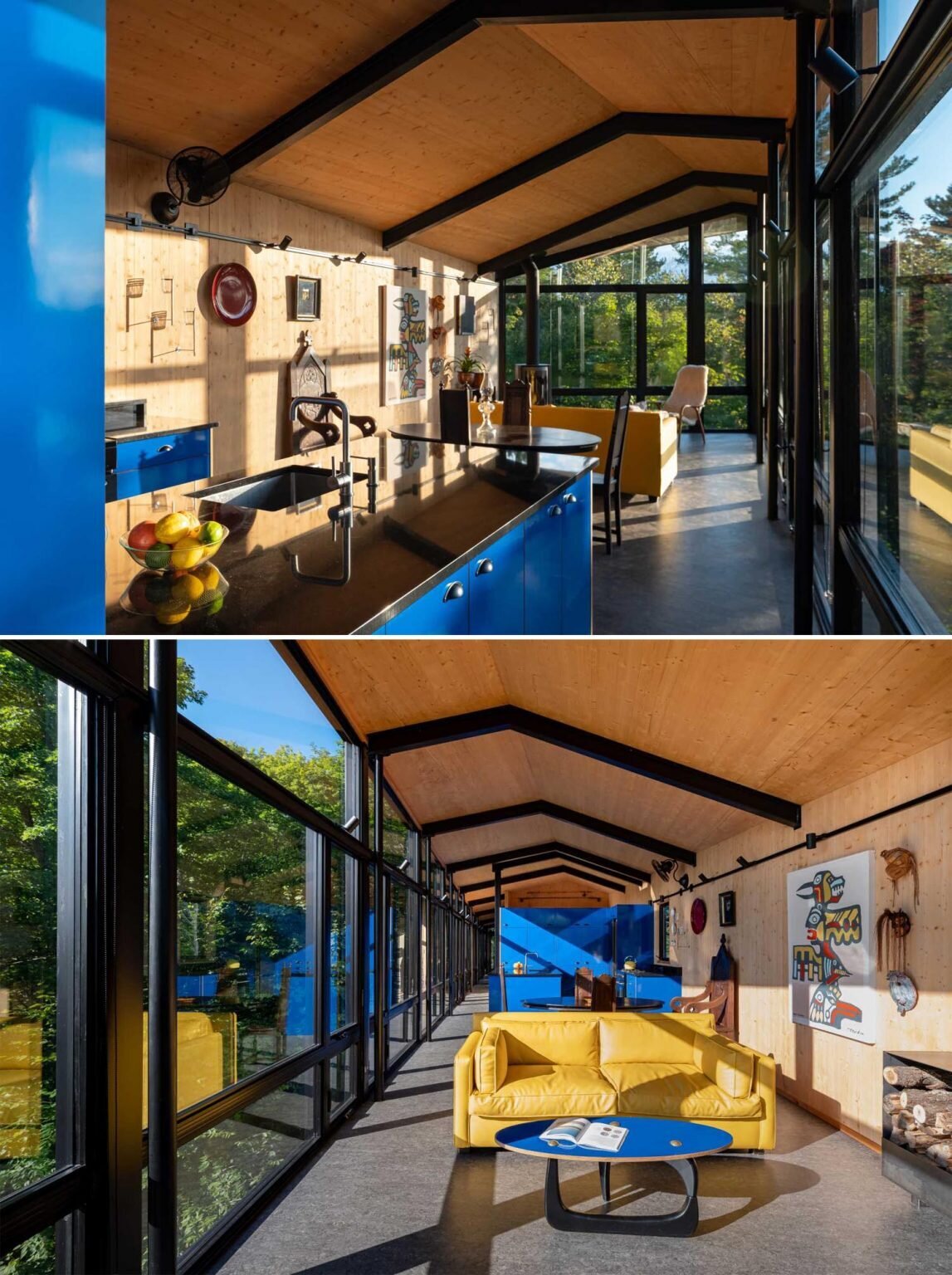
While much of the interior palette is defined by natural wood, one room introduces an unexpected burst of color. The kitchen features bright blue cabinetry that immediately stands out against the timber backdrop. The bold choice injects energy into the interior and creates a memorable focal point within the otherwise natural palette.
Combined with the clean lines of the cabinetry and the expansive views beyond the windows, the kitchen becomes both functional and visually striking.
The m.o.r.e. CLT Cabin by Kariuok Architects offers a fresh perspective on what a contemporary cottage can be. Elevated among the treetops, constructed with precision-engineered timber, and powered by renewable energy, the project transforms site constraints into architectural opportunities.