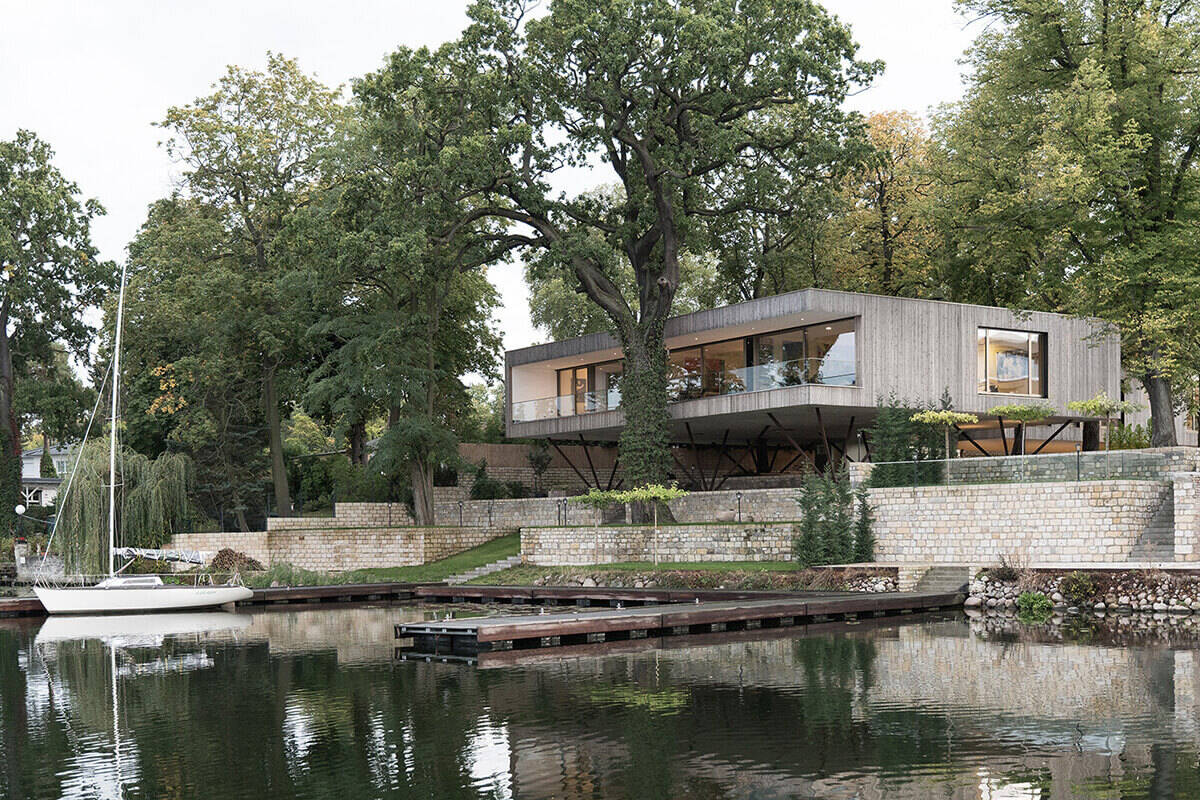
In Potsdam, Germany, Carlos Zwick Architekten transformed a neglected riverfront property into a striking modern home. The site once held two timber-framed houses on the verge of collapse, surrounded by overgrowth and years of neglect. What now stands in their place is something entirely different, a house that rises above the ground and works with the landscape instead of competing with it.
A Design That Lifts Above the Ground
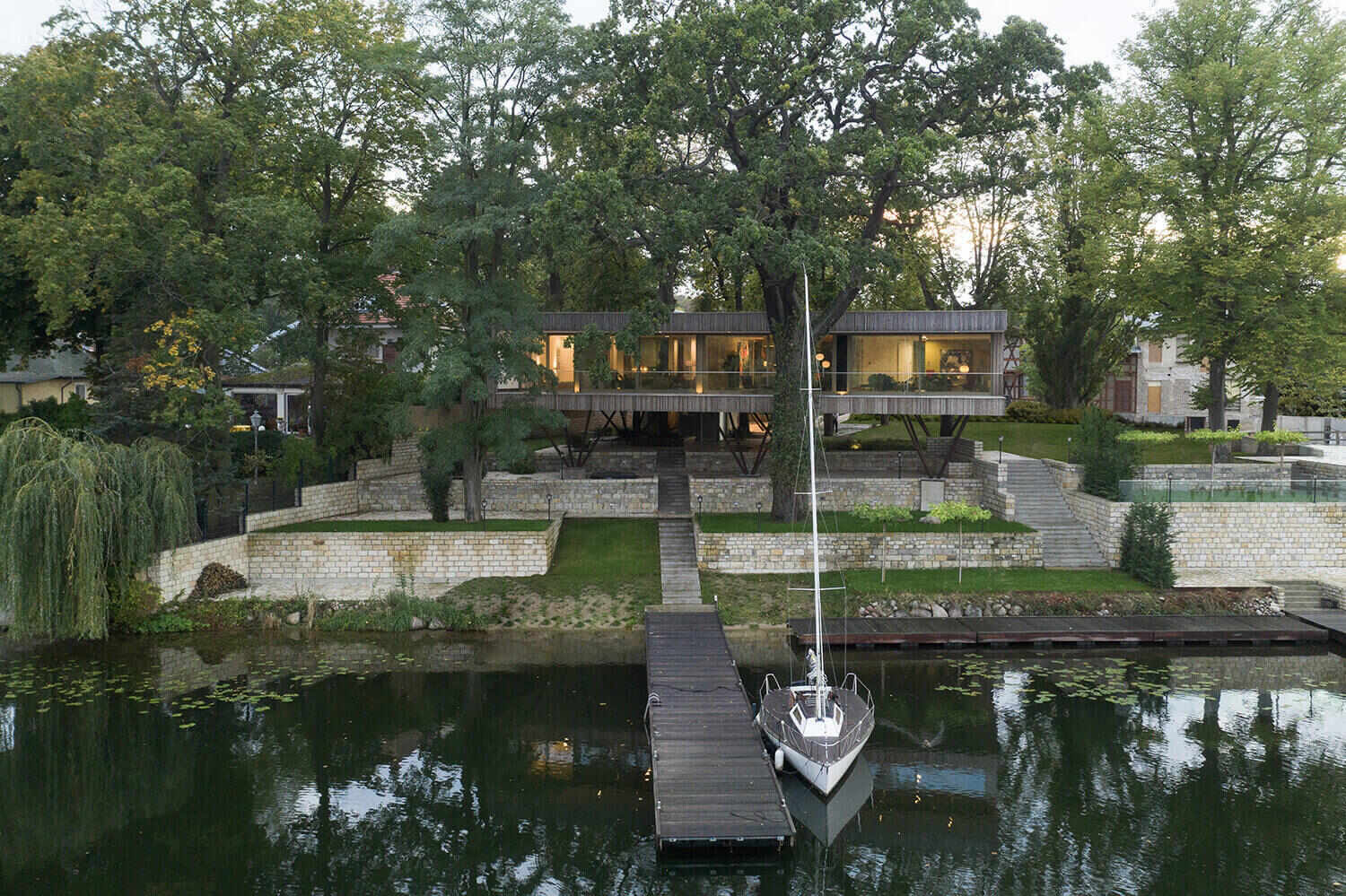
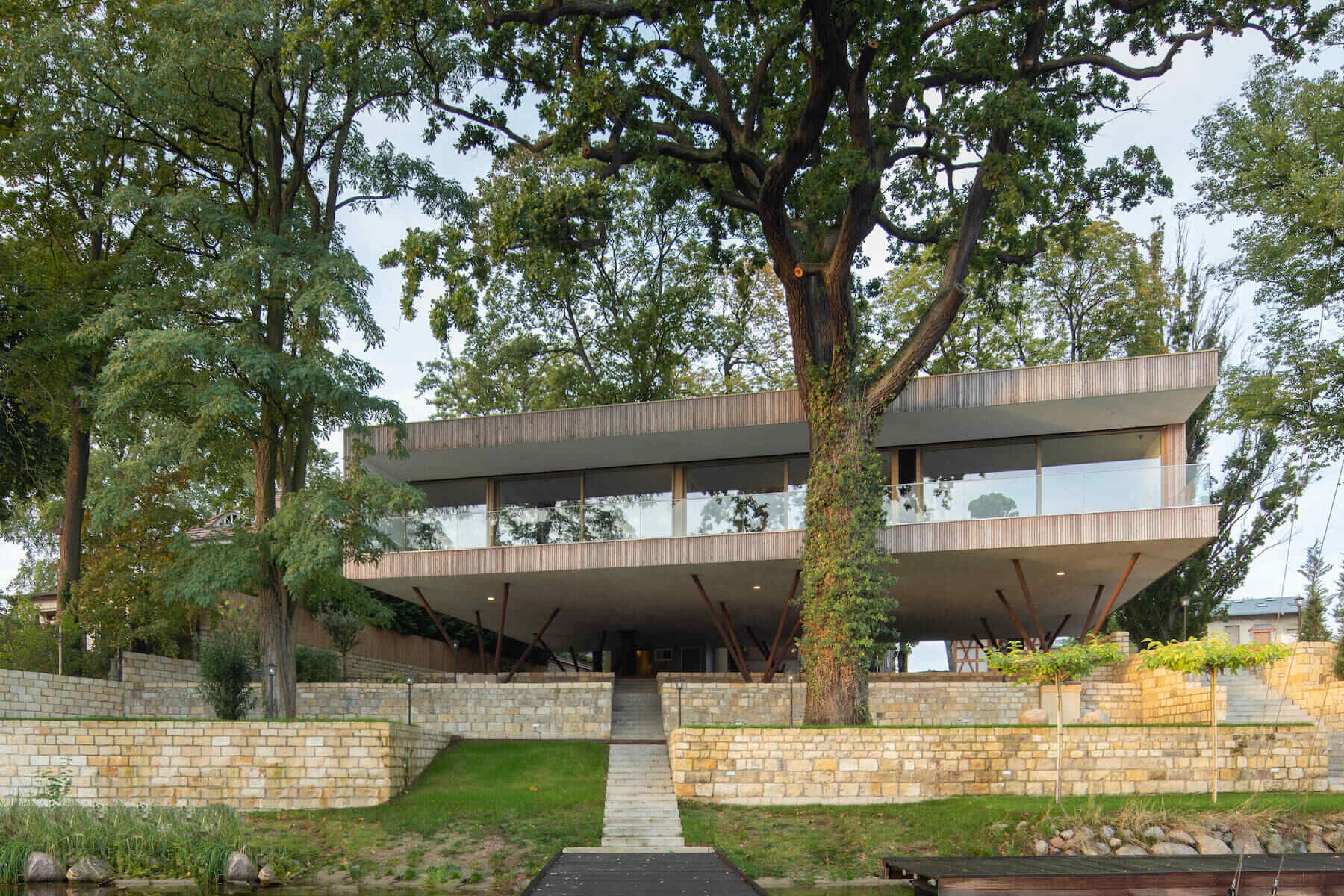
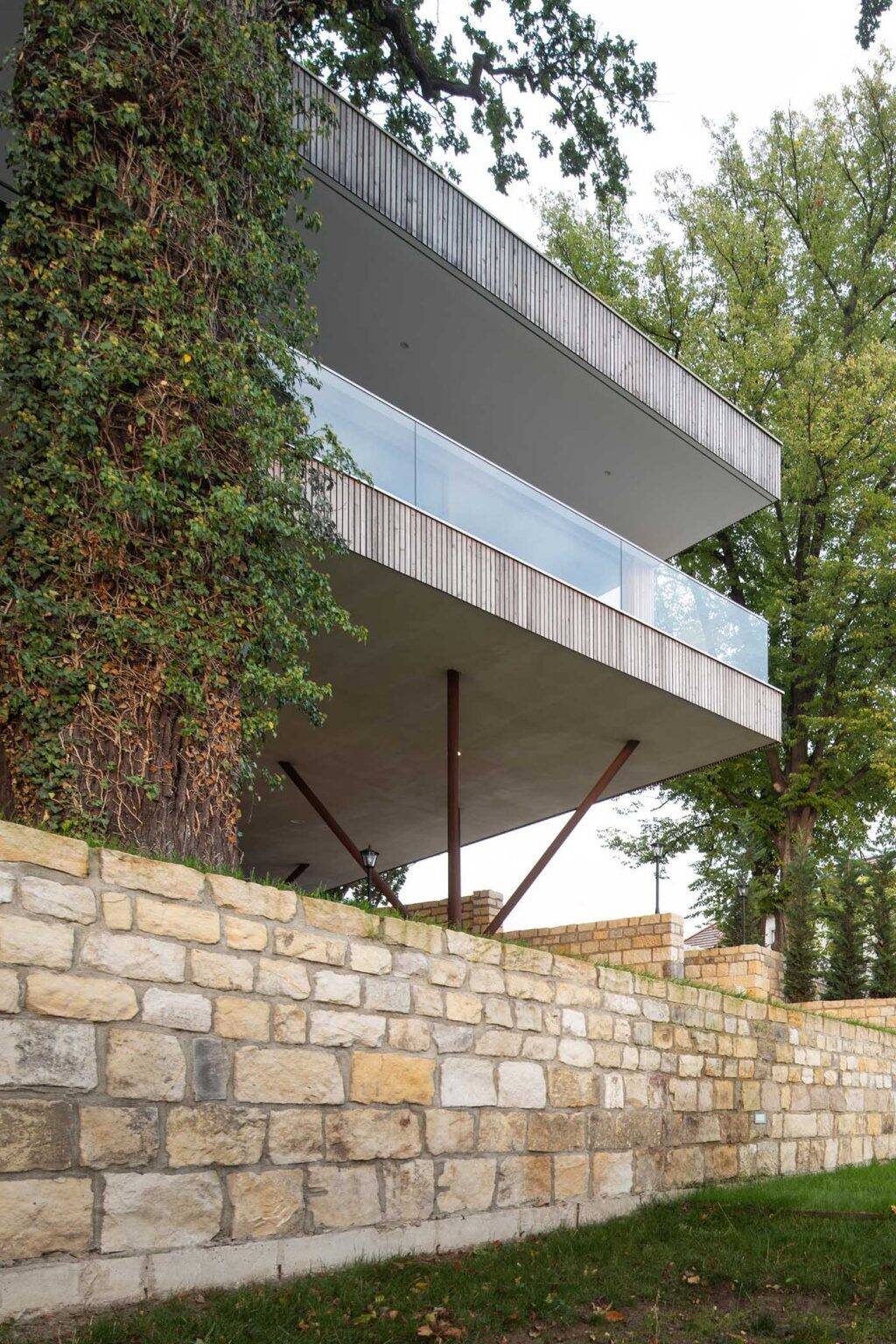
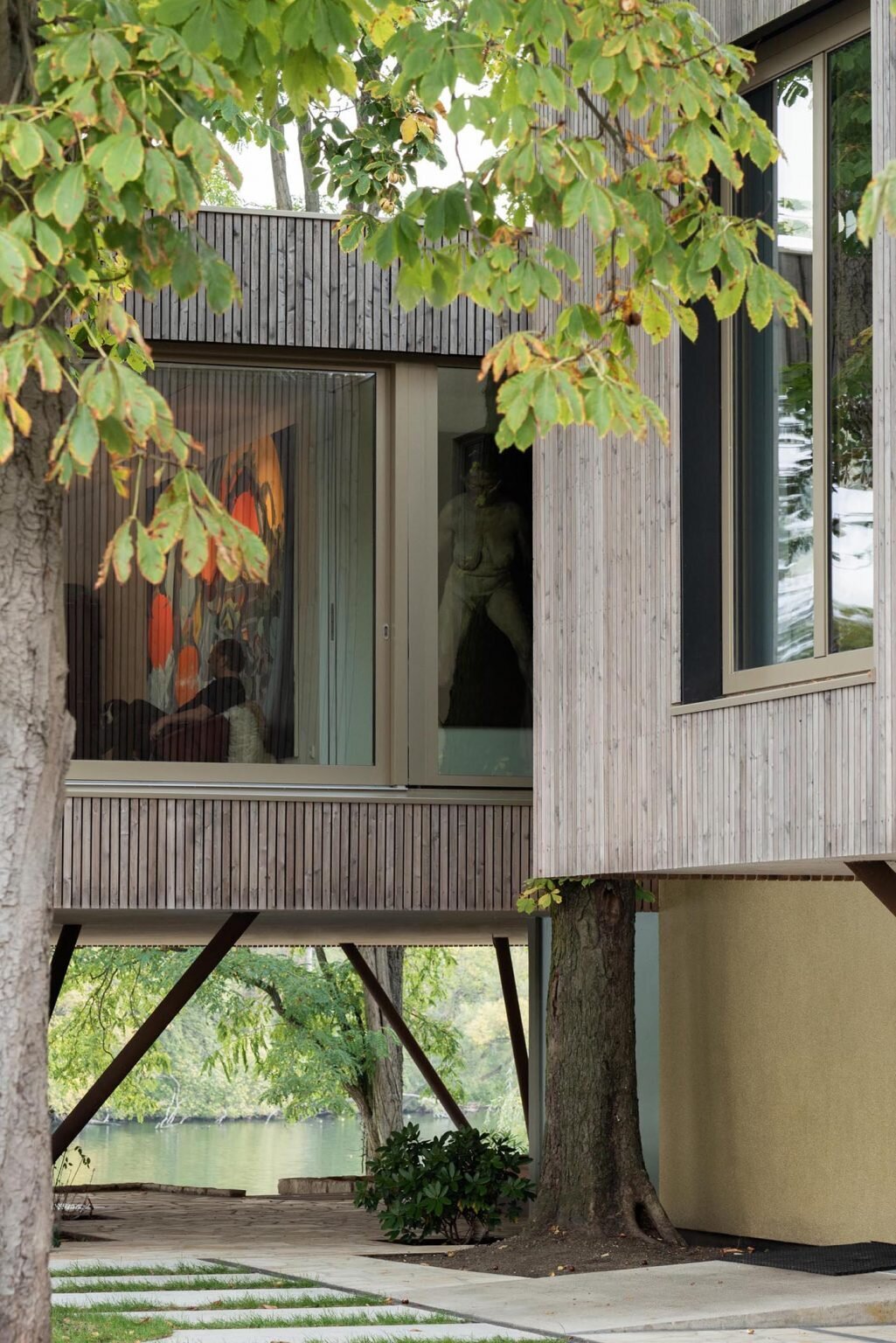
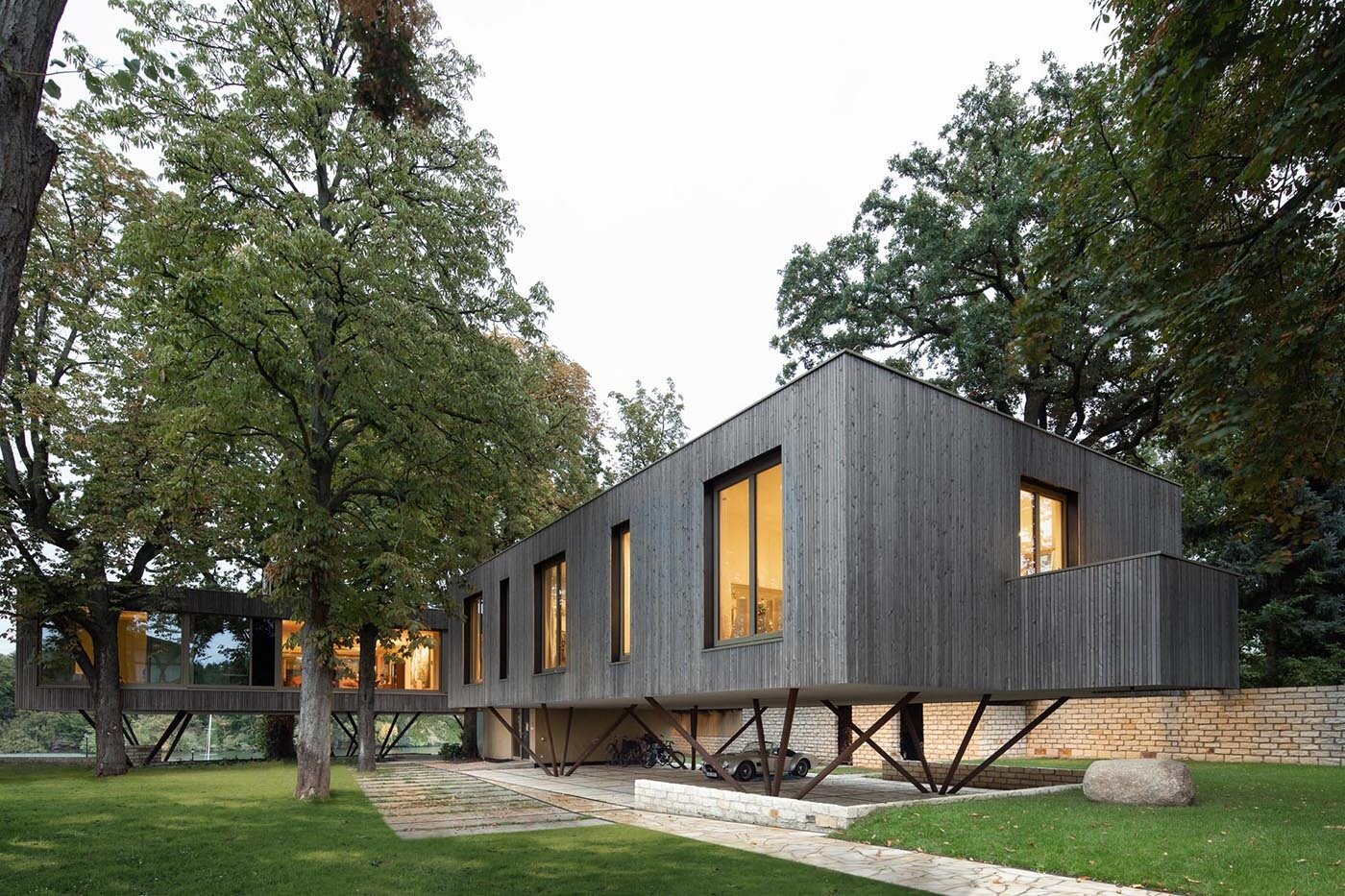
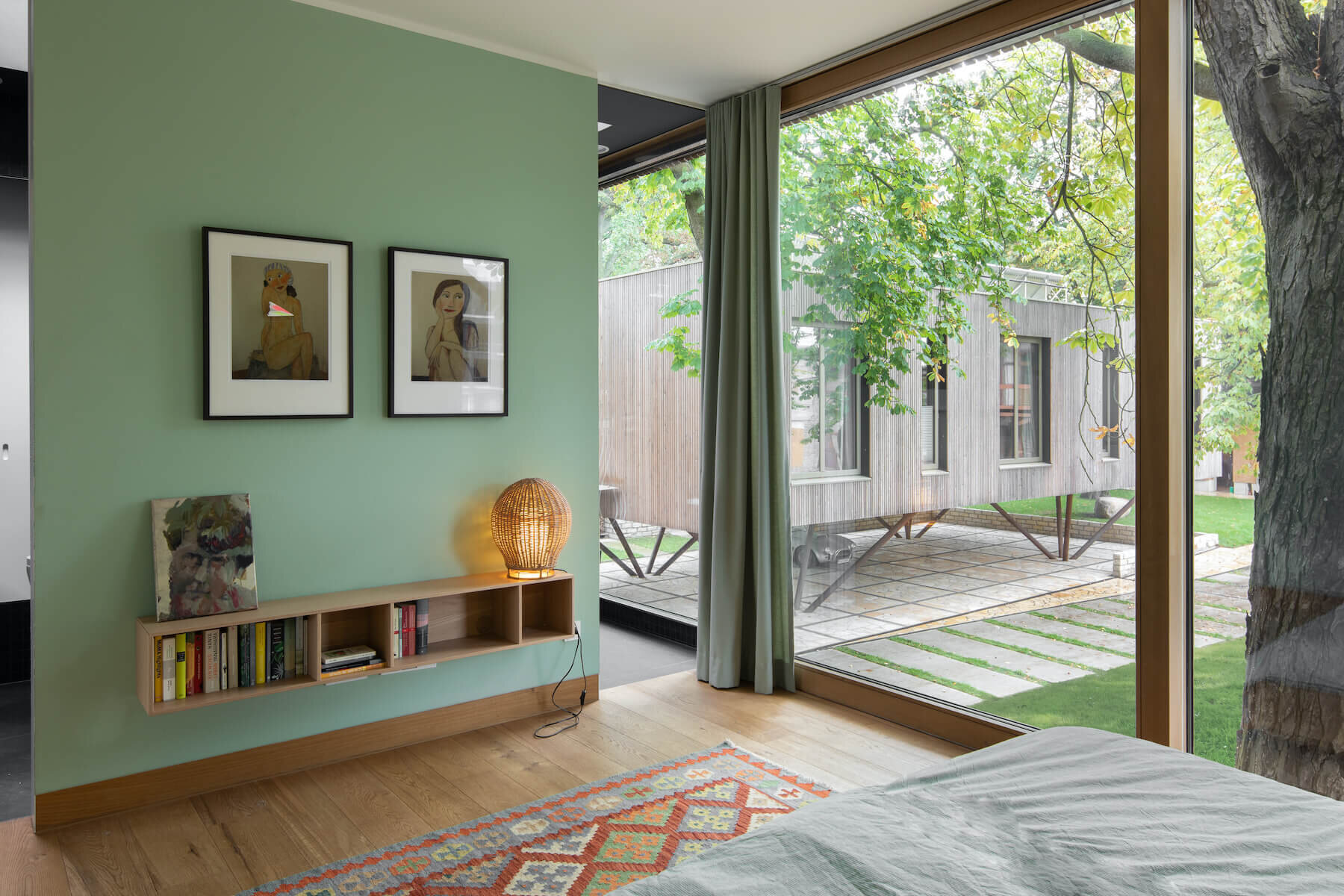
The new structure was designed to avoid disrupting both the riverfront and the existing trees. Instead of spreading across the site, the home is elevated on 10 individual foundations and supported by 40 diagonal posts.
This lifted approach creates a light footprint while also giving the house a distinctive presence. It feels almost suspended, hovering just above the terrain while preserving what was already there.
A Natural Exterior That Blends In
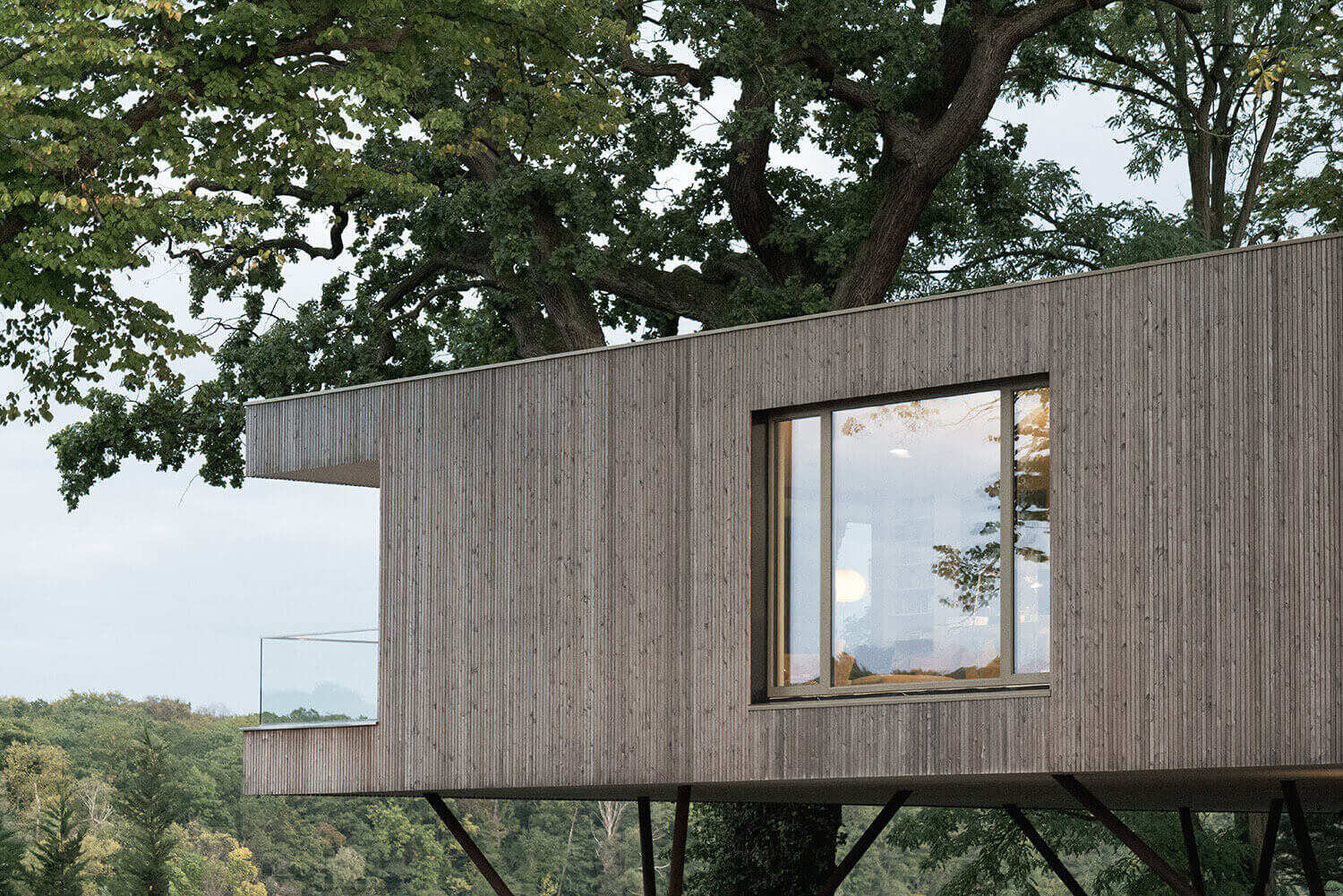
Clad in vertical narrow larch slats, the exterior reflects the tones and textures of the surrounding trees. The material choice helps the house sit comfortably within its environment, shifting in appearance as the light changes throughout the day.
Arrival Beneath the House
Approaching the home reveals one of its most practical features. The raised structure creates a sheltered space underneath, used for parking cars and bikes. This simple move adds functionality without expanding the building’s footprint, turning what could have been unused space into something highly useful.
Living Room With a View
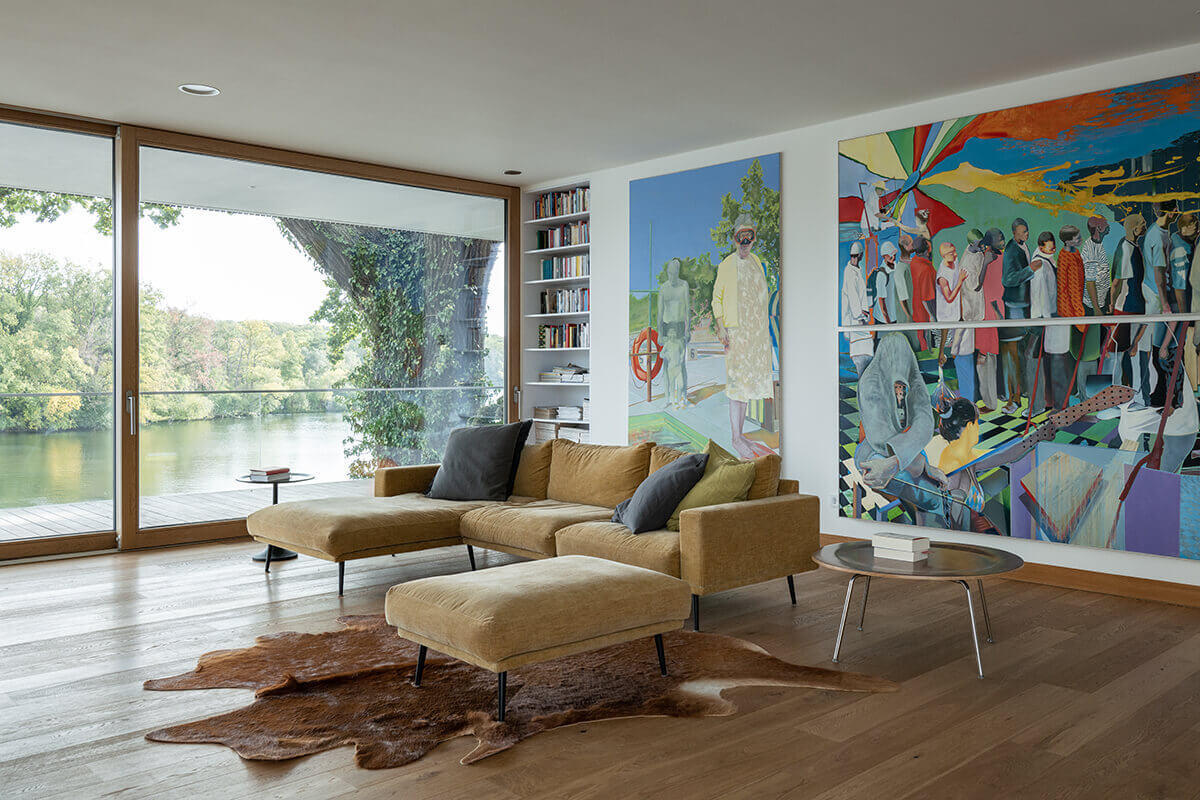
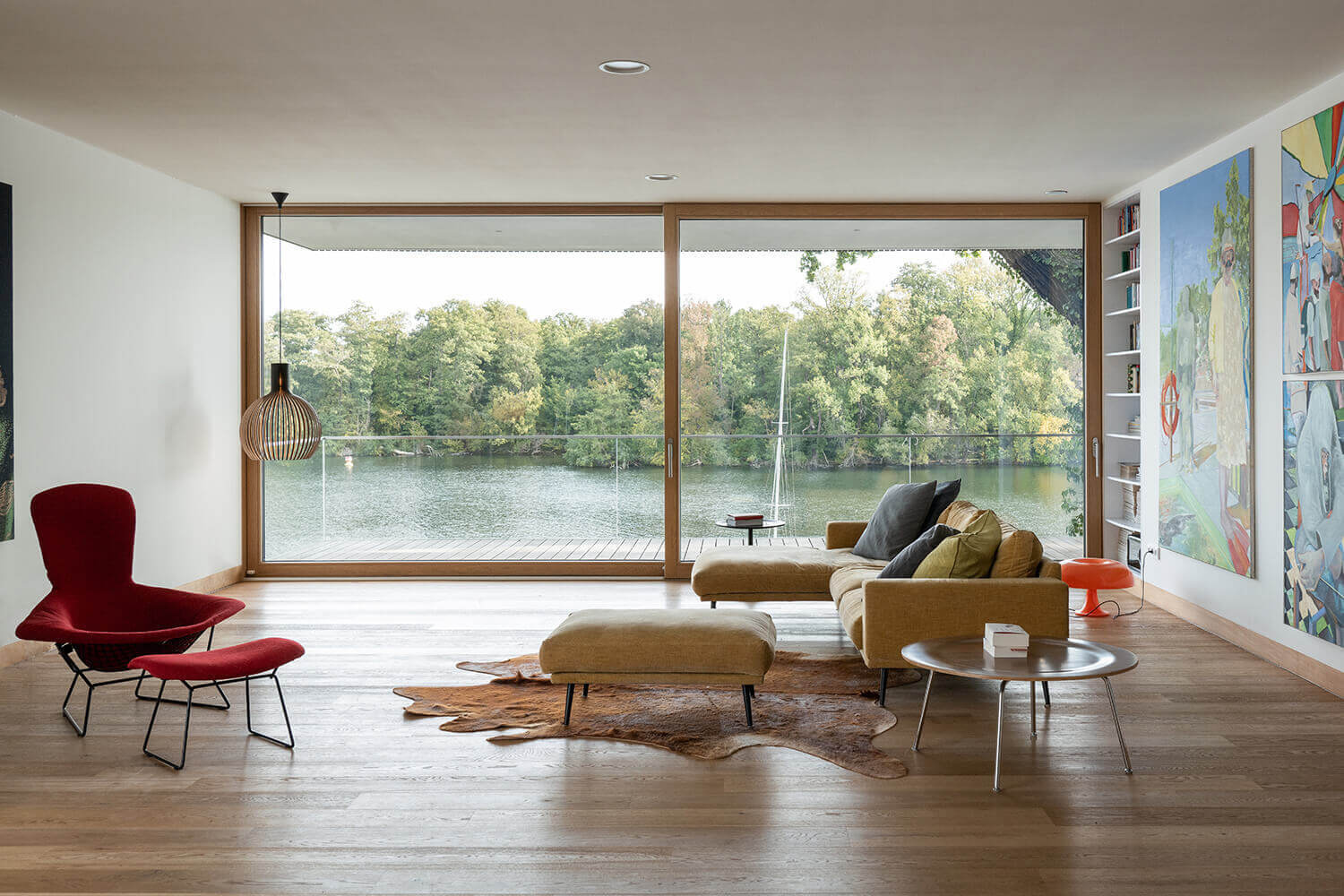
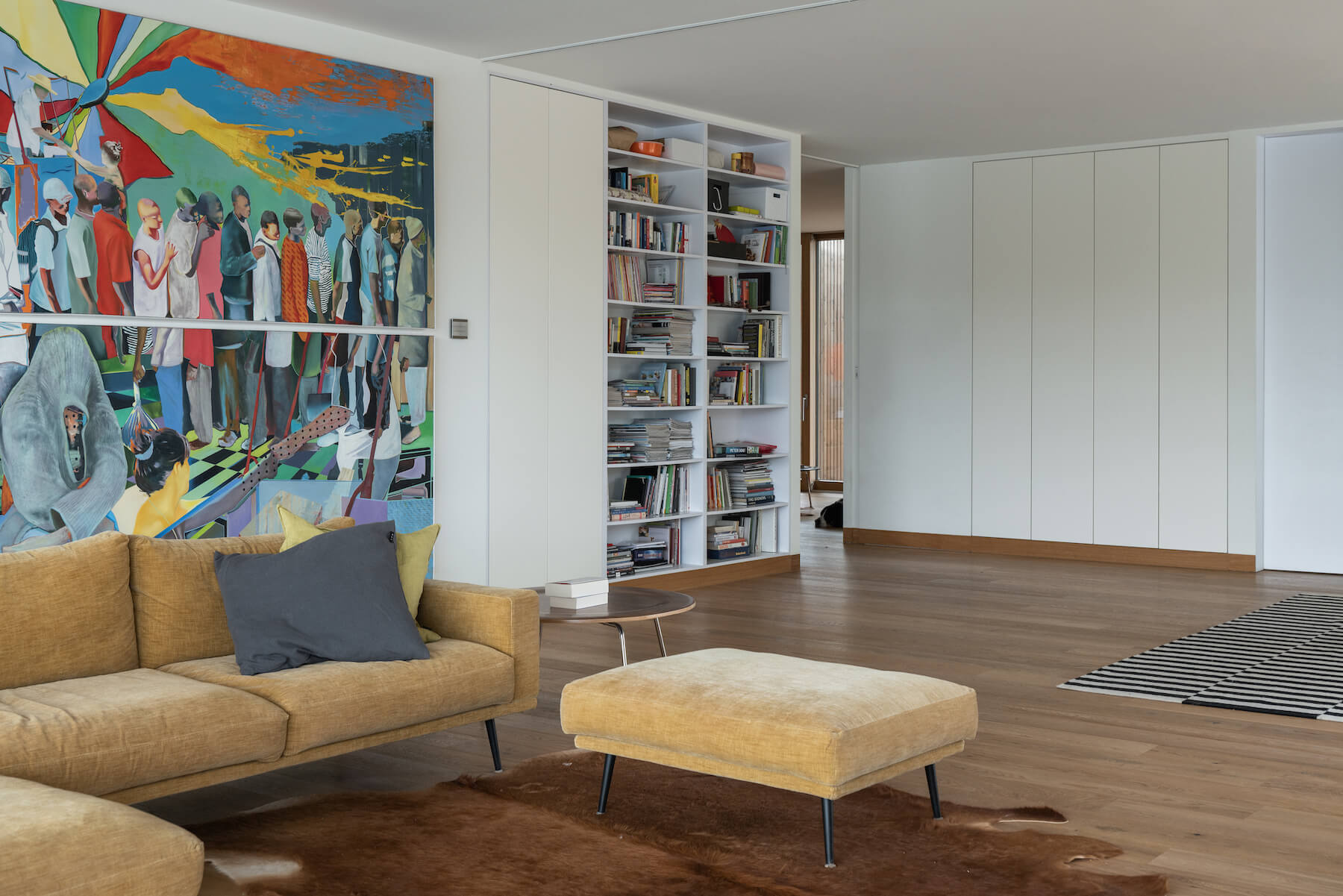
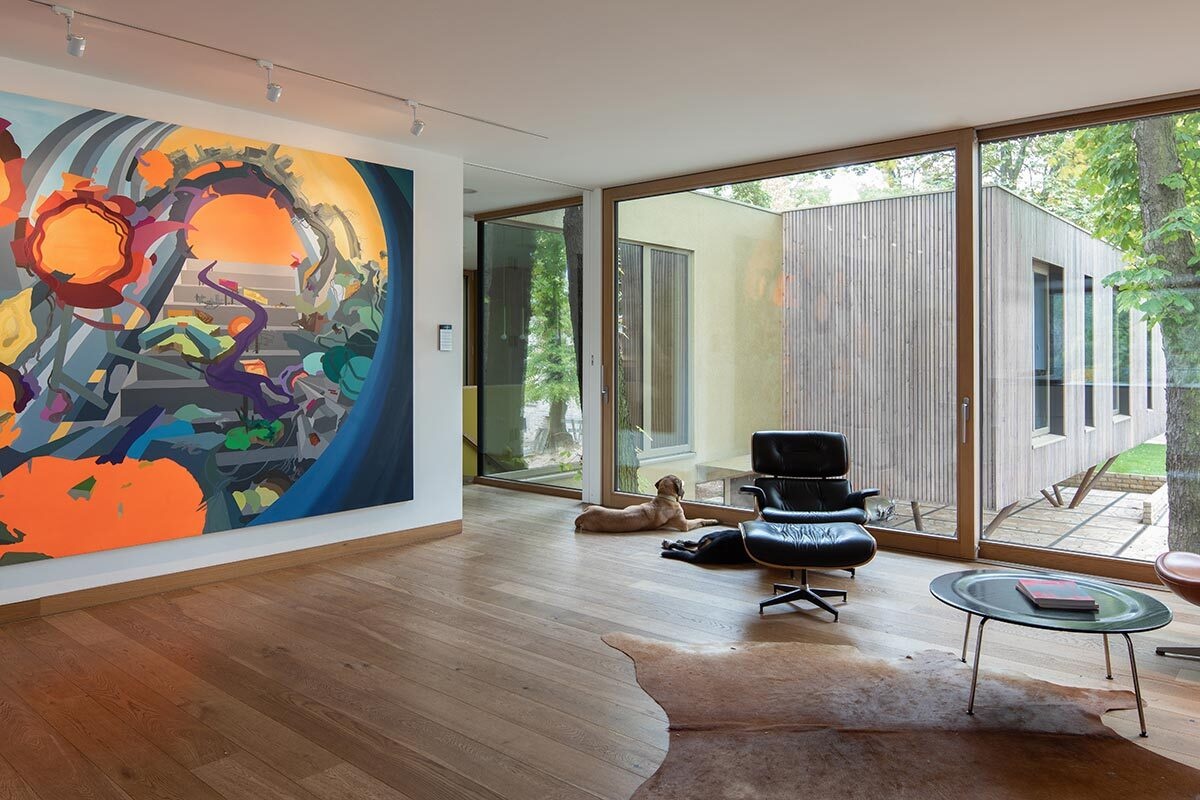
Inside, the living room keeps things minimal, allowing the architecture and views to take focus. Artwork introduces color, adding contrast to the otherwise restrained palette.
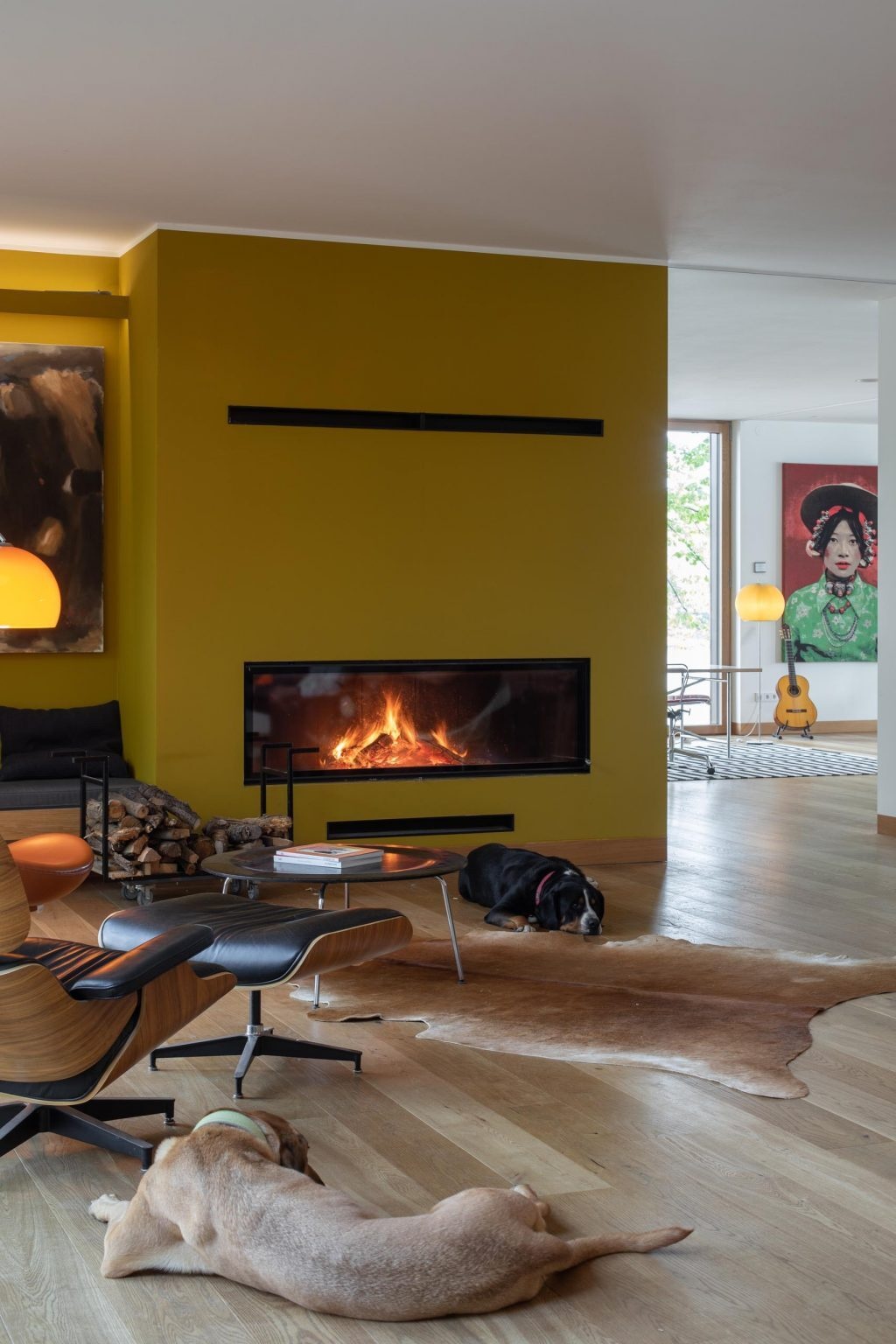
A large sliding wood-framed glass door opens directly to the balcony, framing views of the river. A linear fireplace adds warmth, making the space feel inviting without overwhelming it.
Dining Space That Extends Outdoors
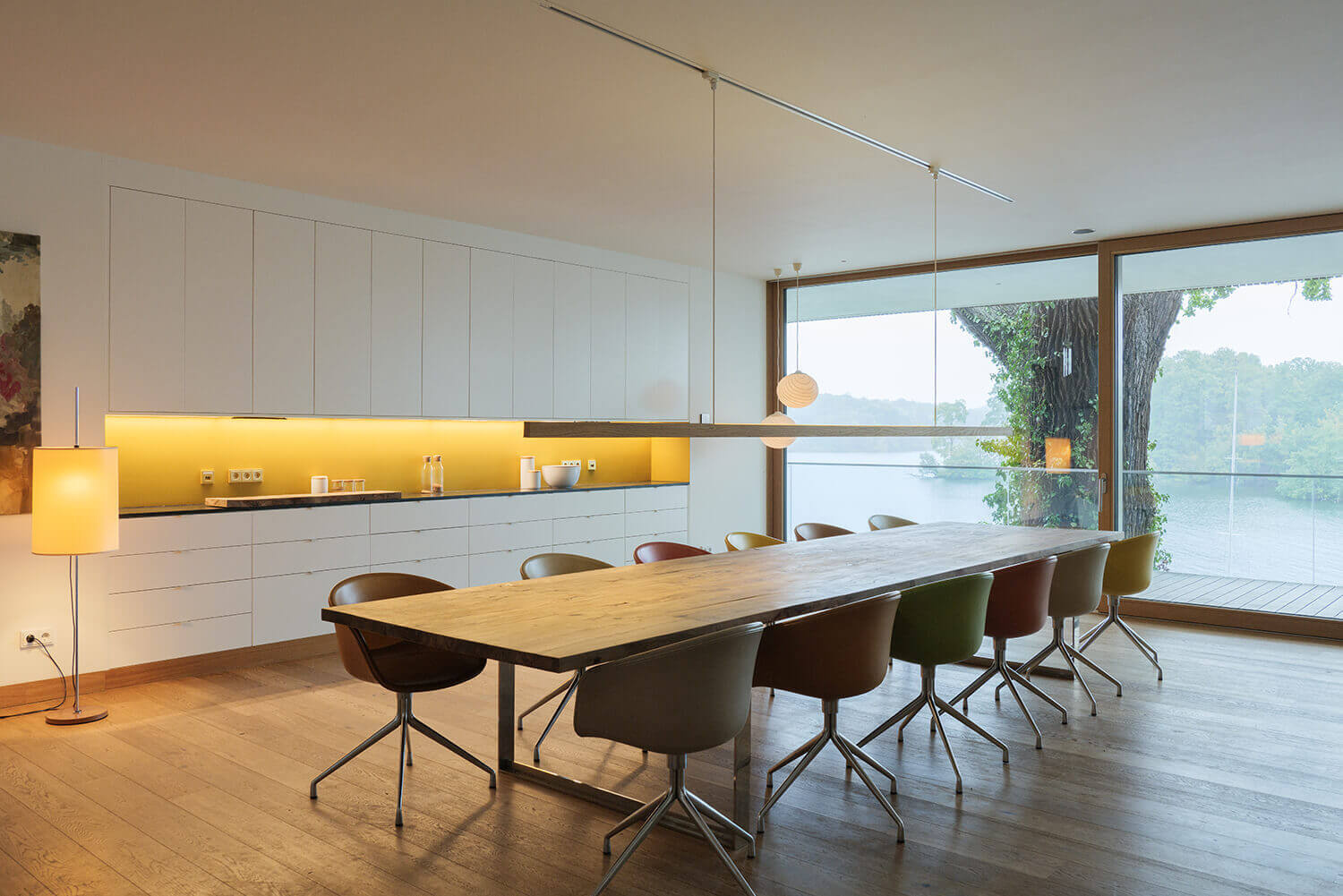
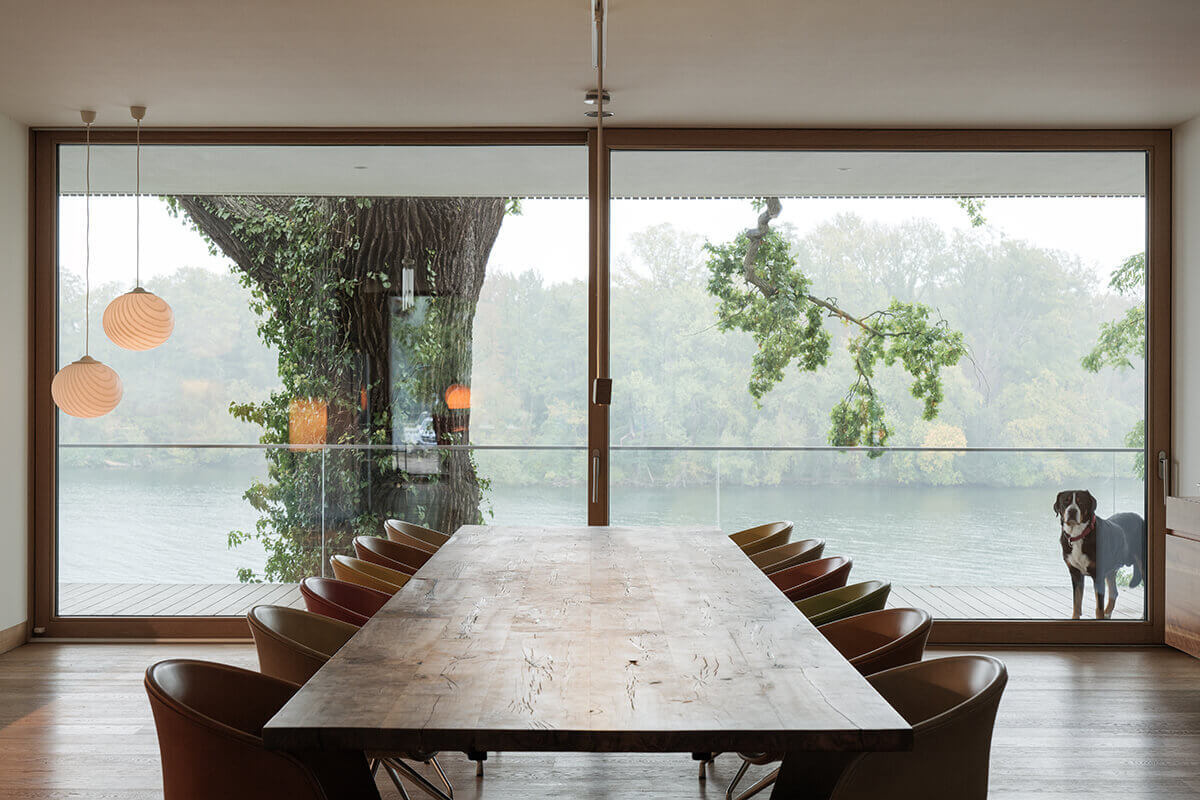
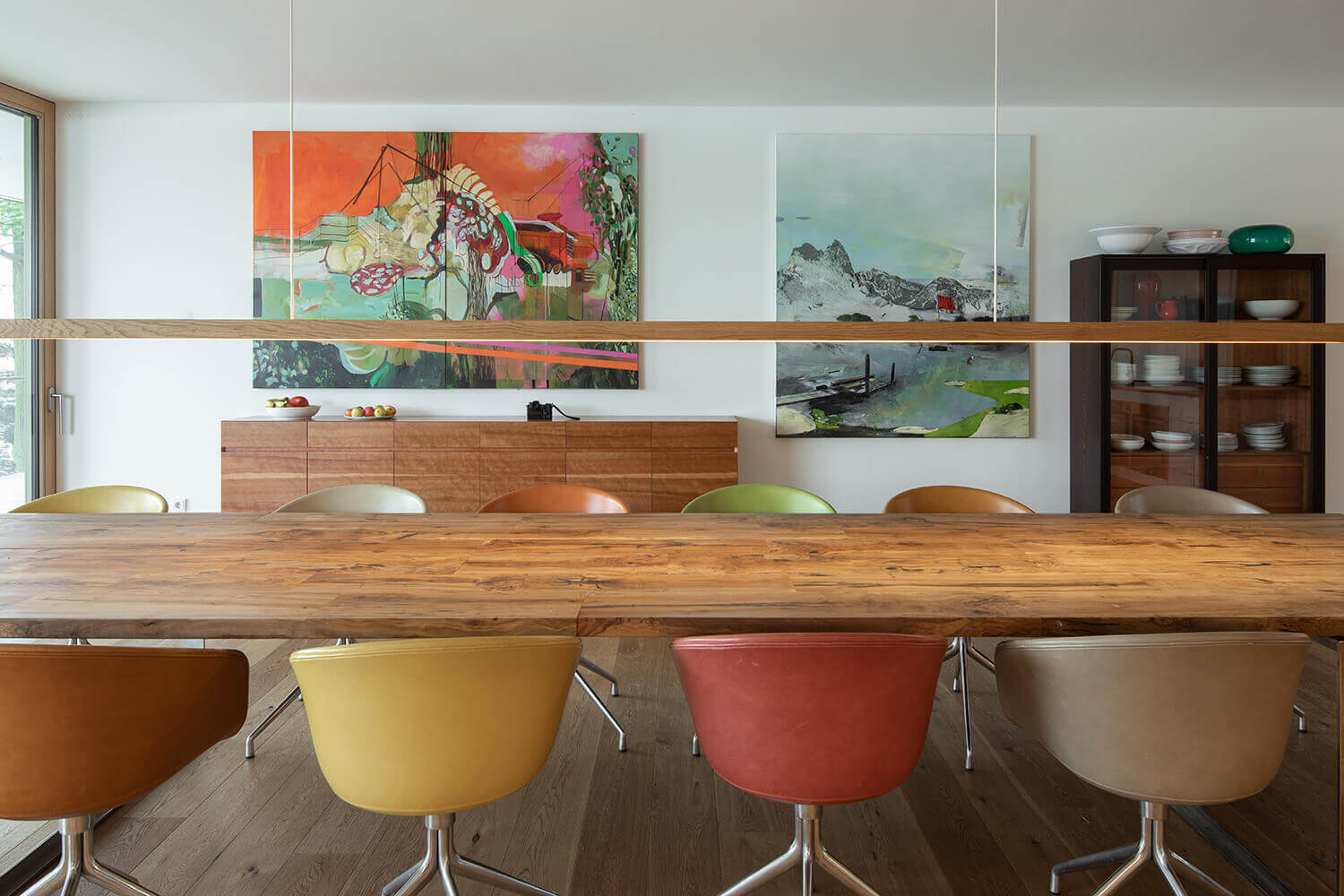
The dining room continues the same visual language. An extra-long table anchors the space, paired with a minimalist horizontal pendant light overhead. A wall of white cabinetry keeps storage clean and unobtrusive.
Another sliding glass door connects the room to the outside, reinforcing the connection between indoor and outdoor spaces.
A Clean and Functional Kitchen
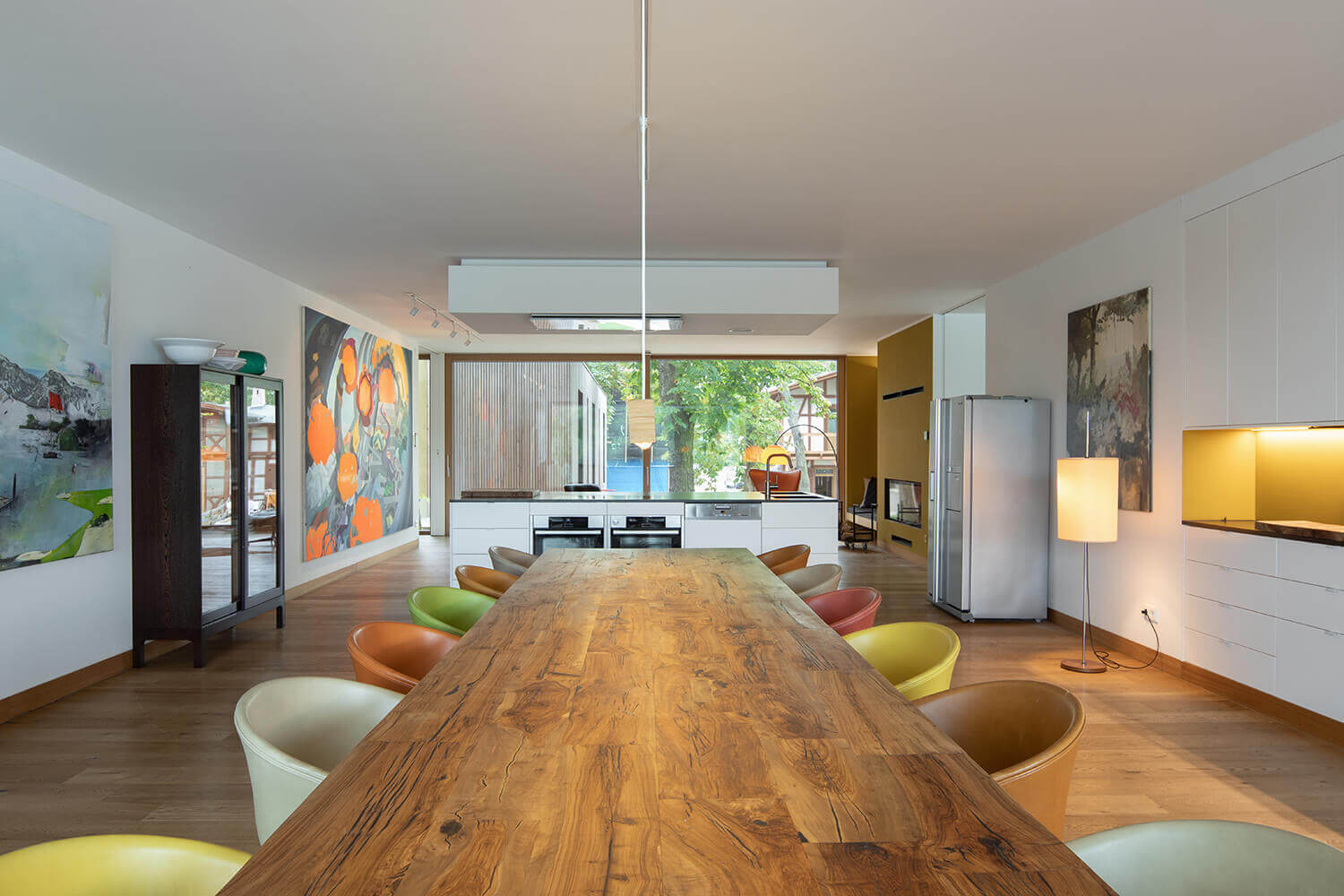
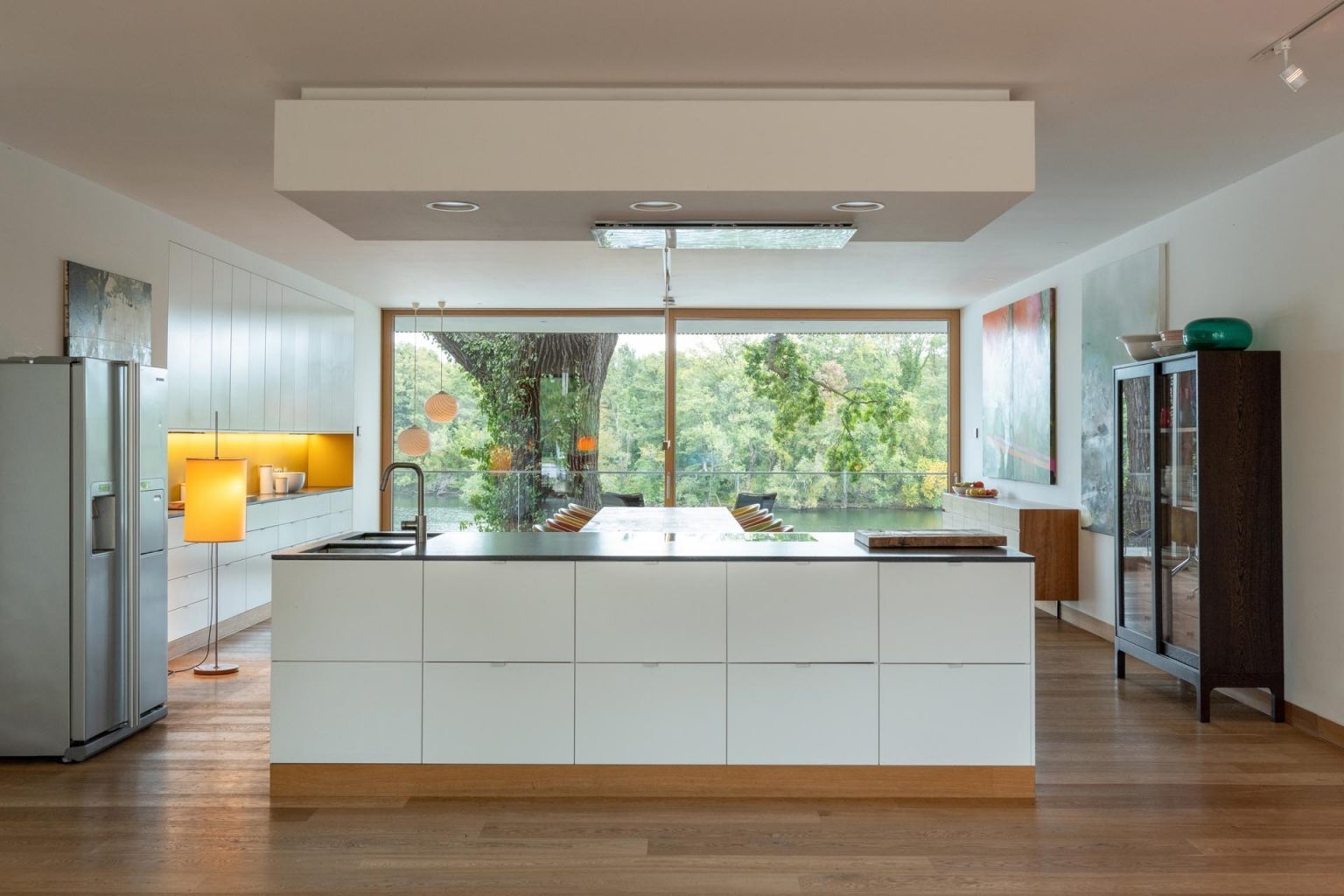
Behind the dining area, the kitchen keeps things simple. A white island paired with a darker countertop creates contrast while maintaining a streamlined look. The layout is straightforward and efficient, supporting everyday use without unnecessary complexity.
Spaces for Relaxation and Creativity
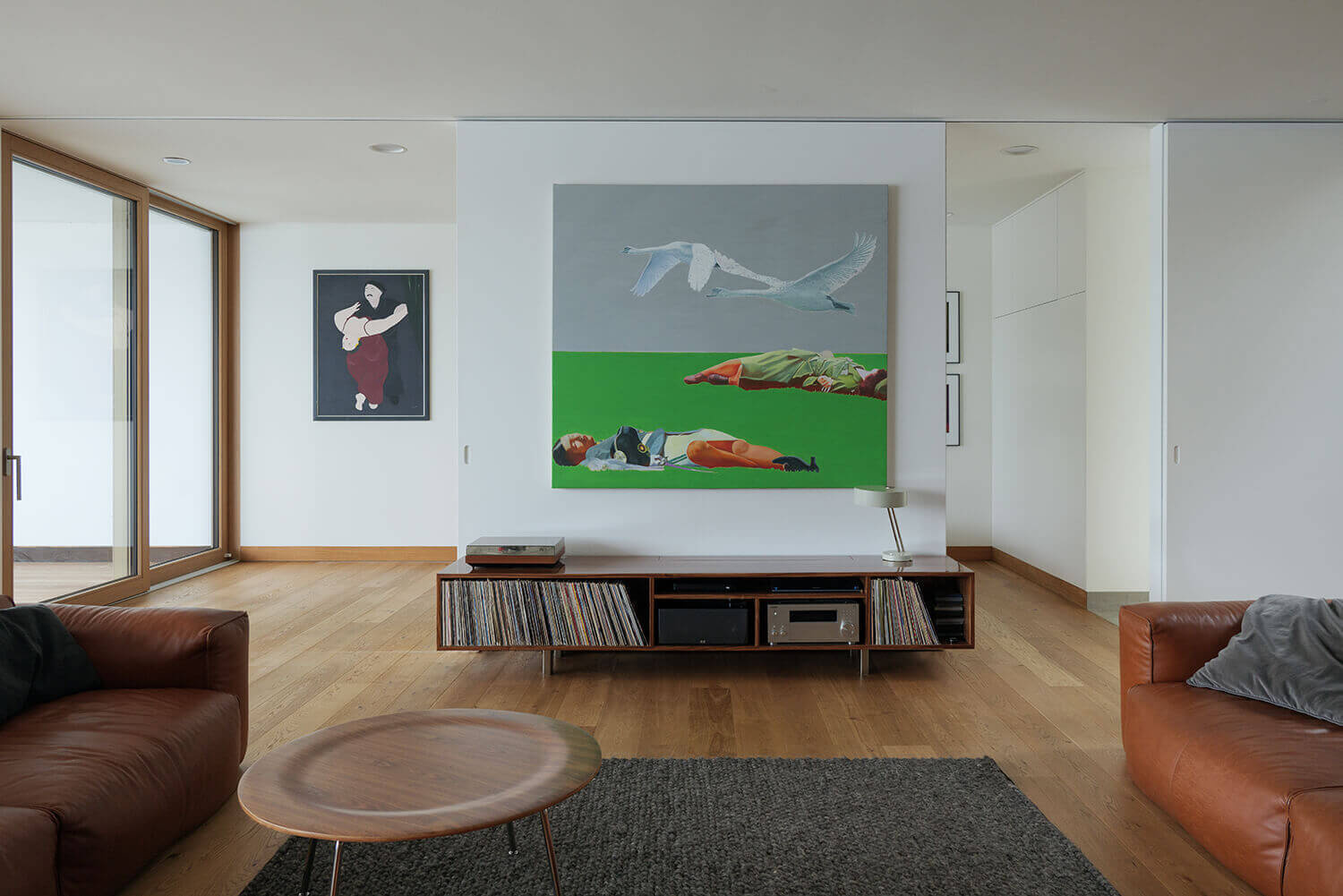
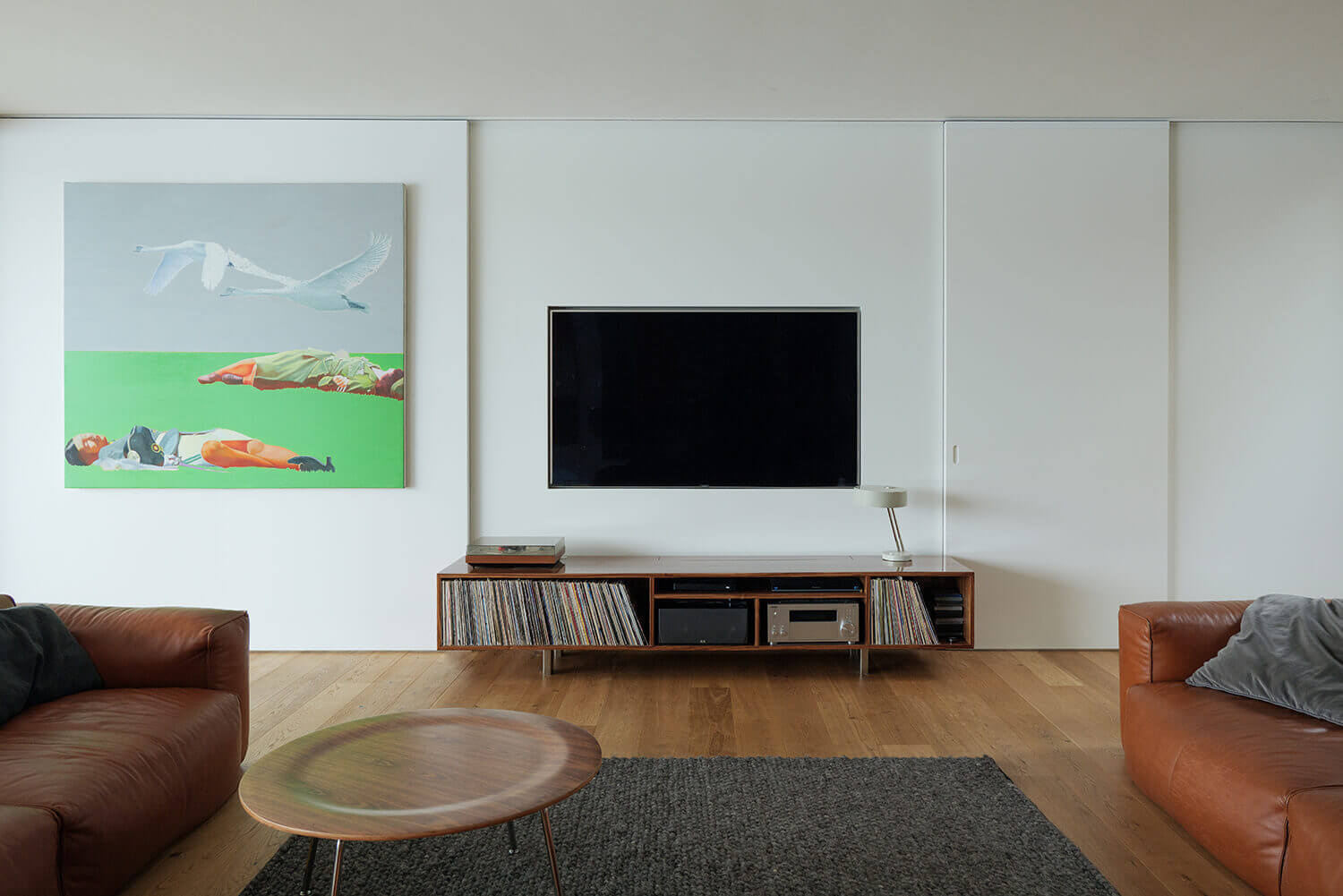
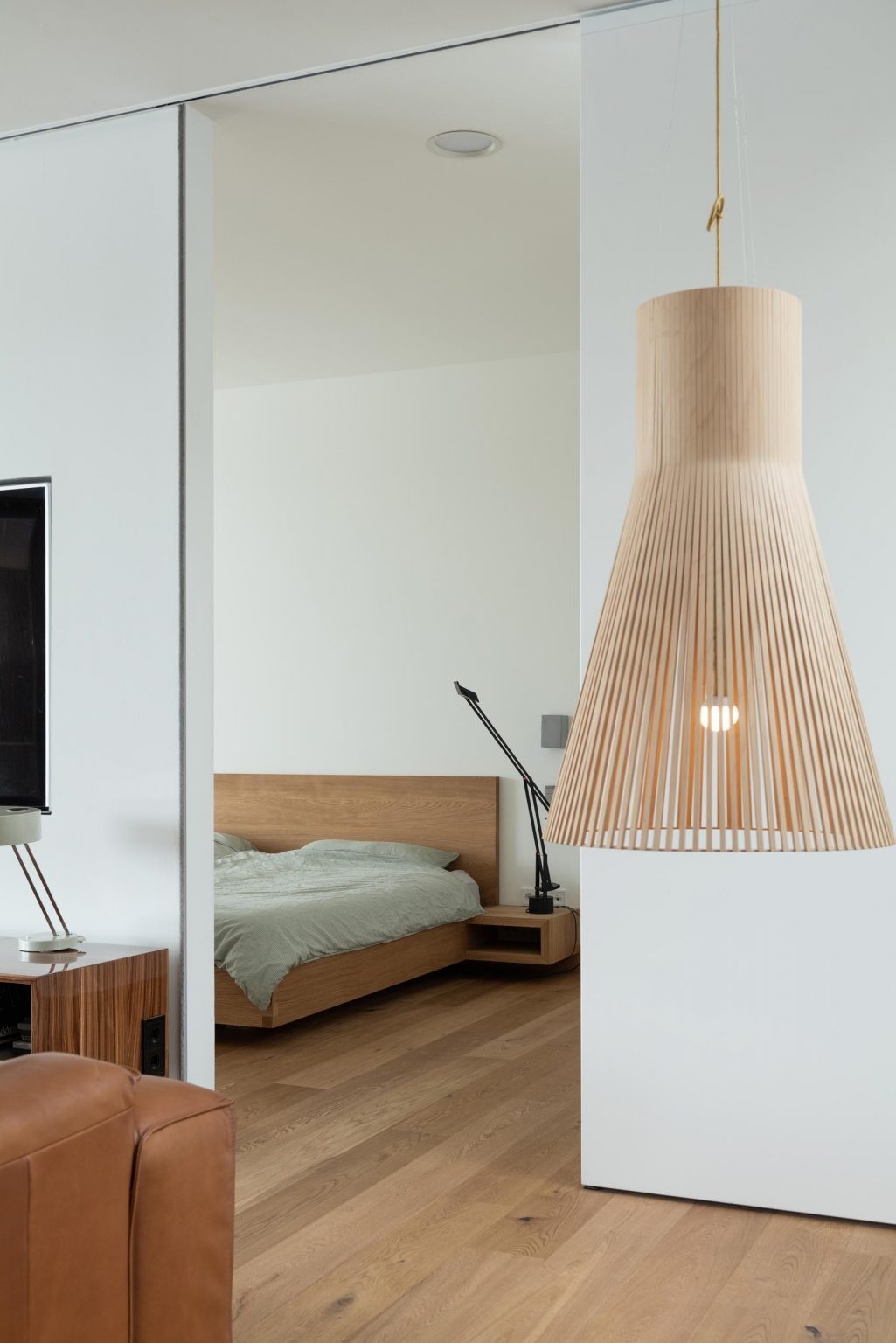
Beyond the main living areas, the house includes a variety of flexible spaces. A TV room hides its screen behind a sliding wall, allowing the room to shift in purpose.
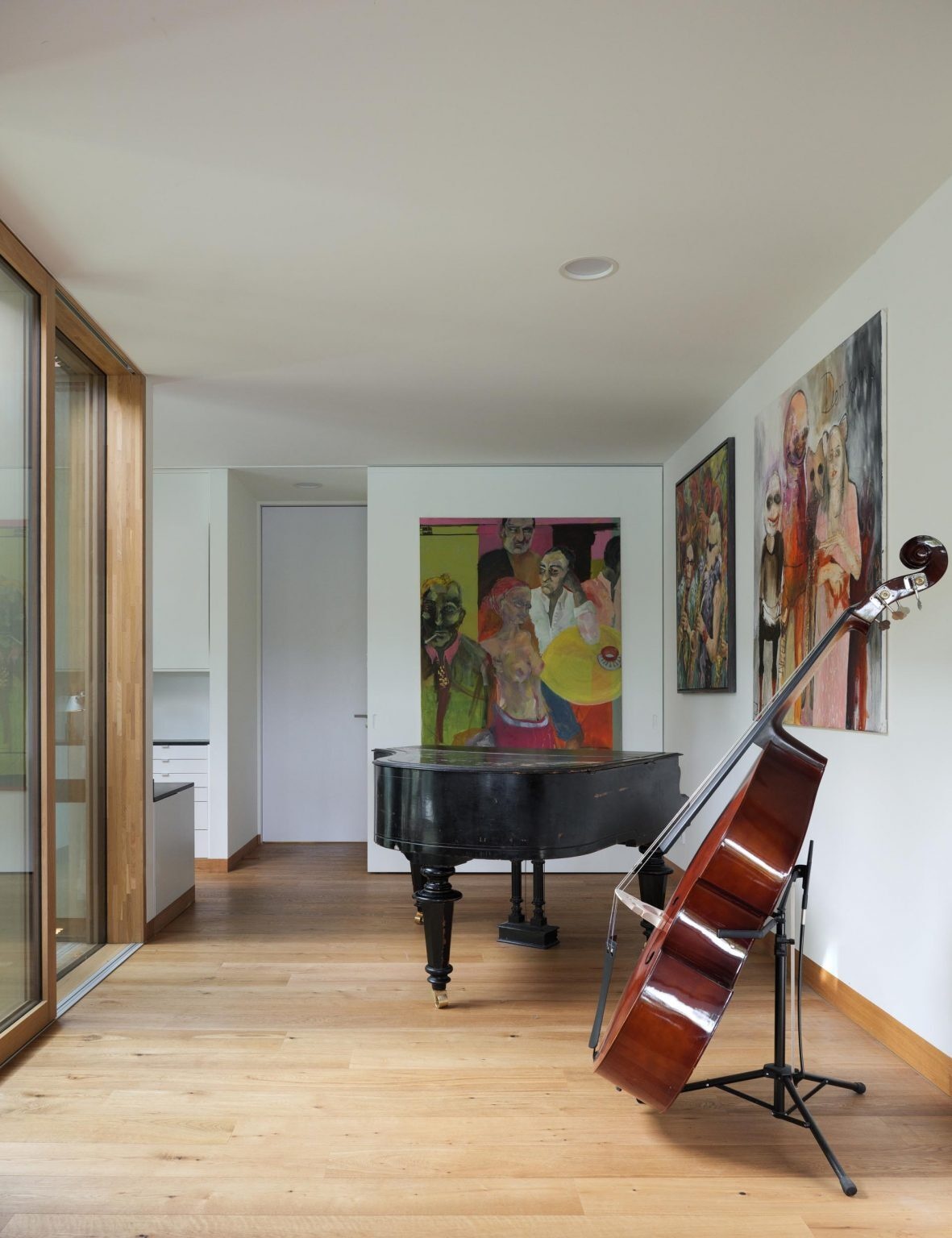
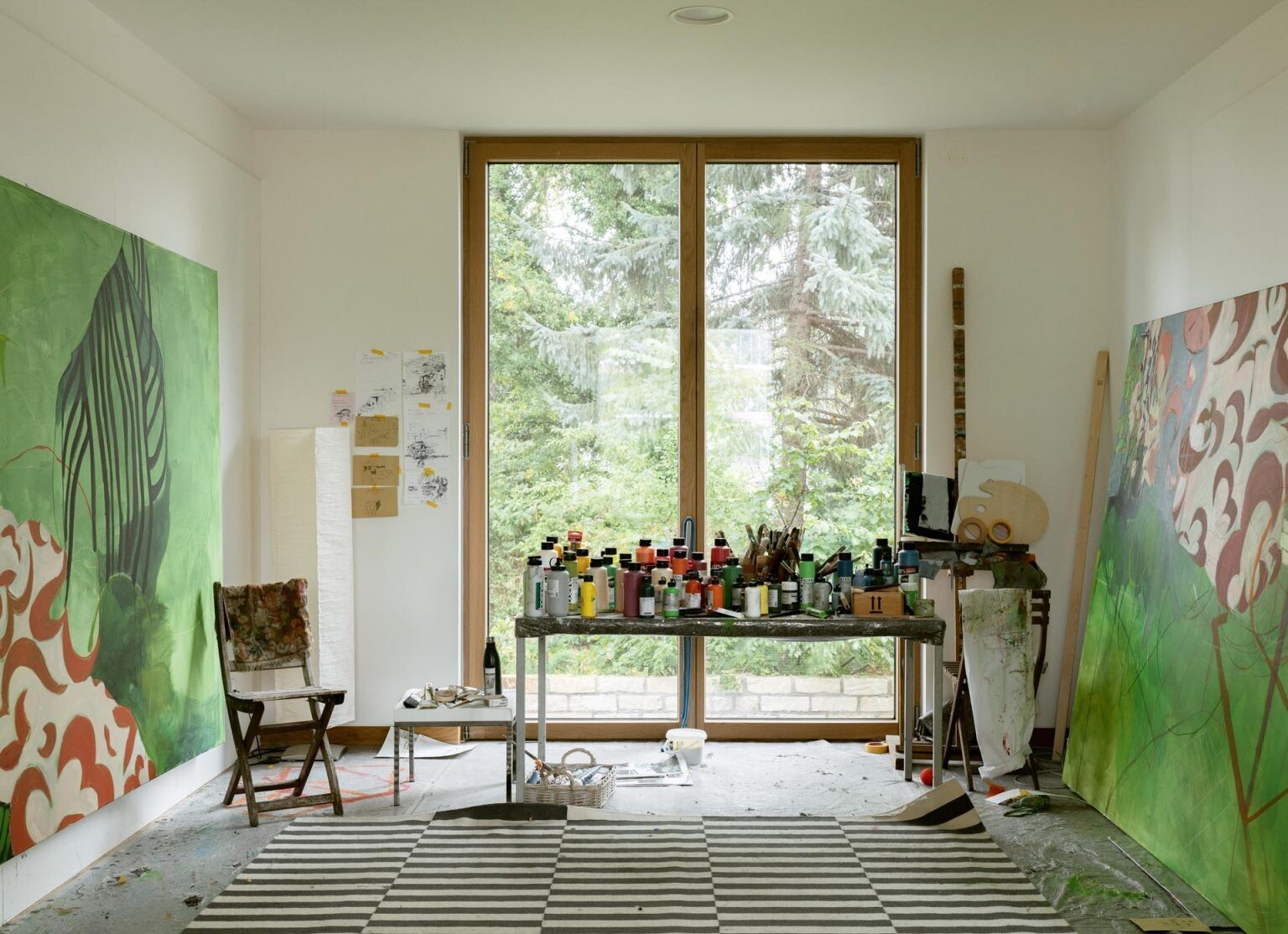
There’s also a music room filled with artwork and an art studio that looks out toward the trees, giving each space its own identity while staying visually consistent.
Private Areas With a Calm Atmosphere
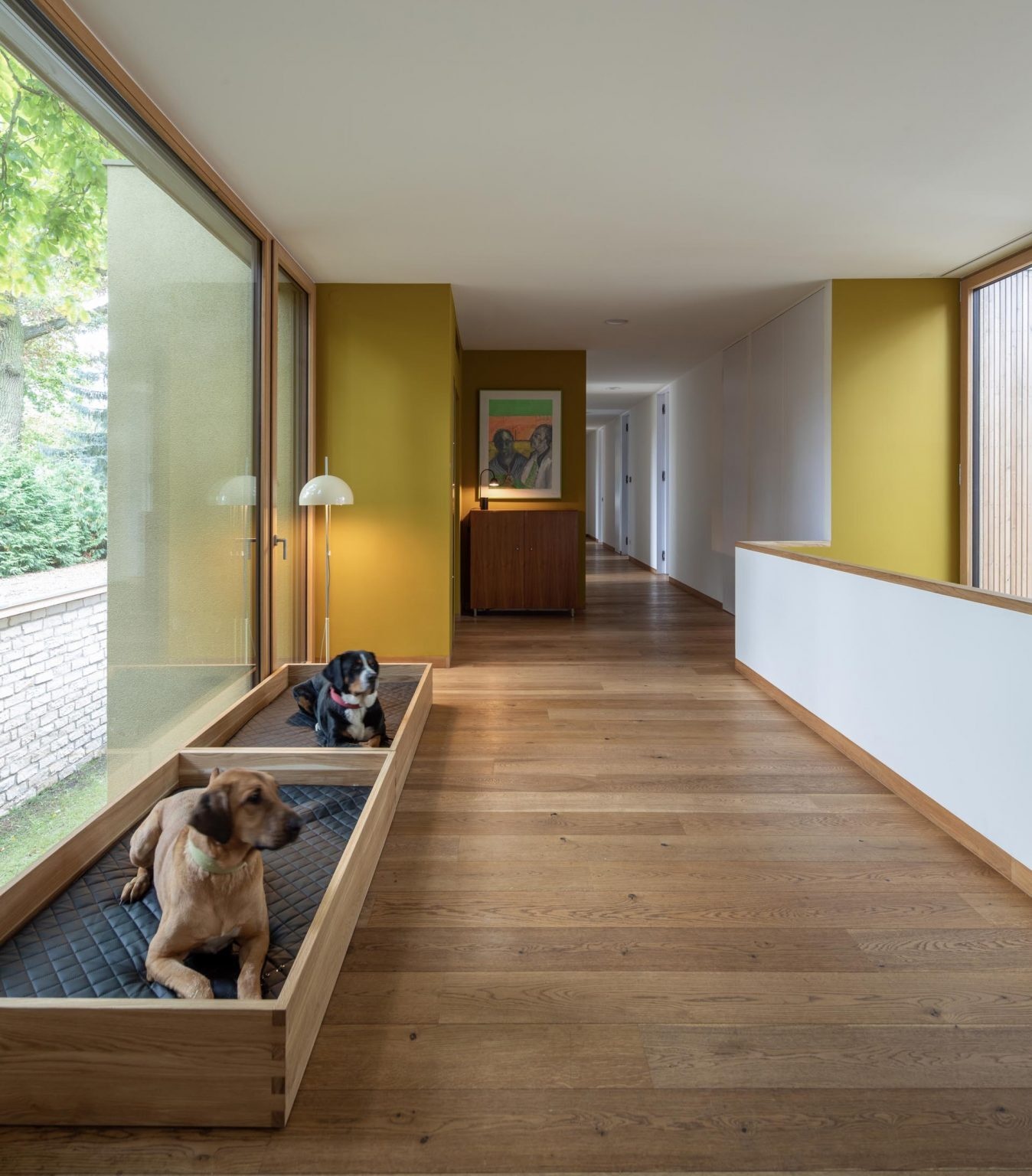
A hallway with wood flooring connects the private areas of the home. Along the way, a pair of dog beds adds a lived-in touch.
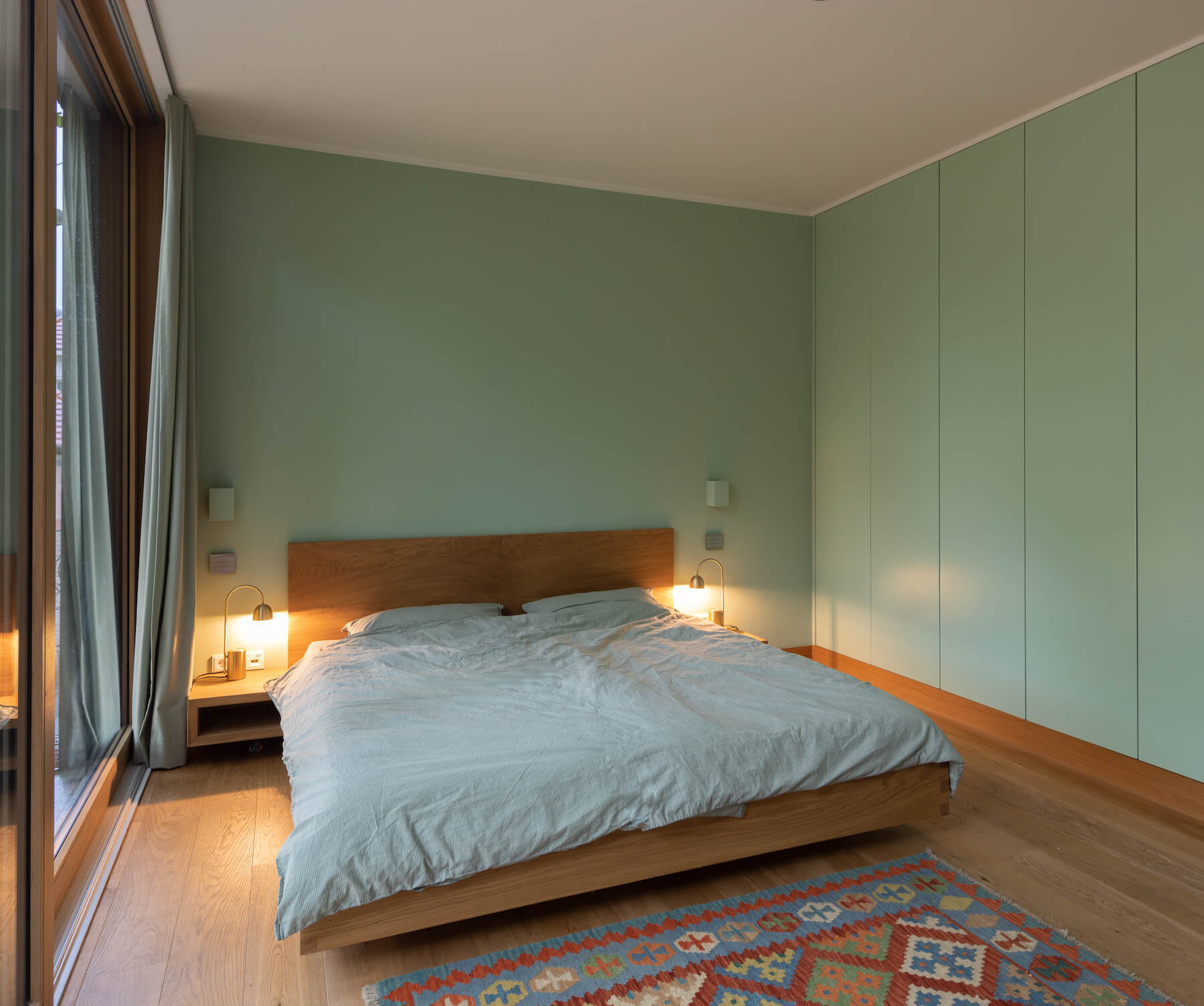
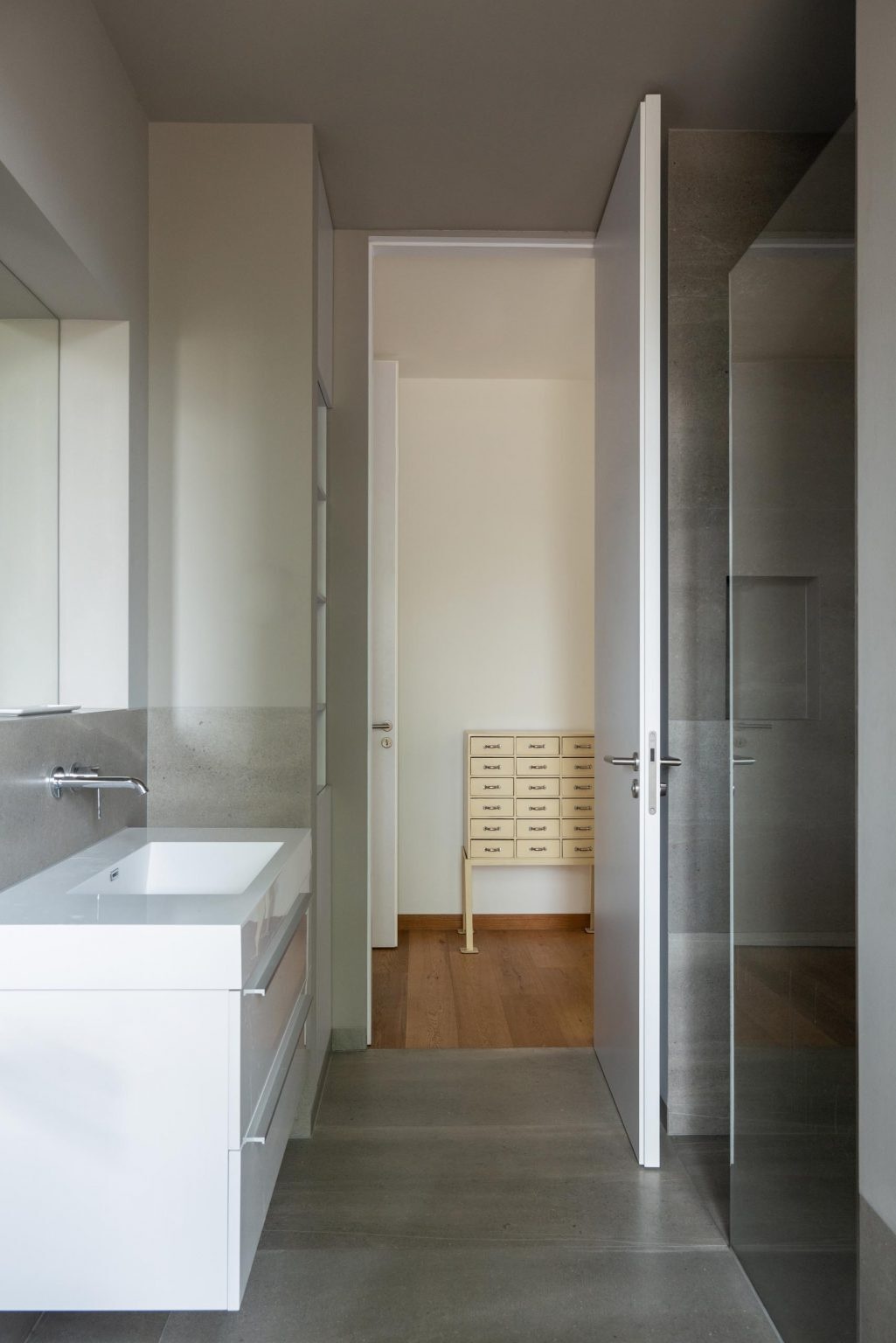
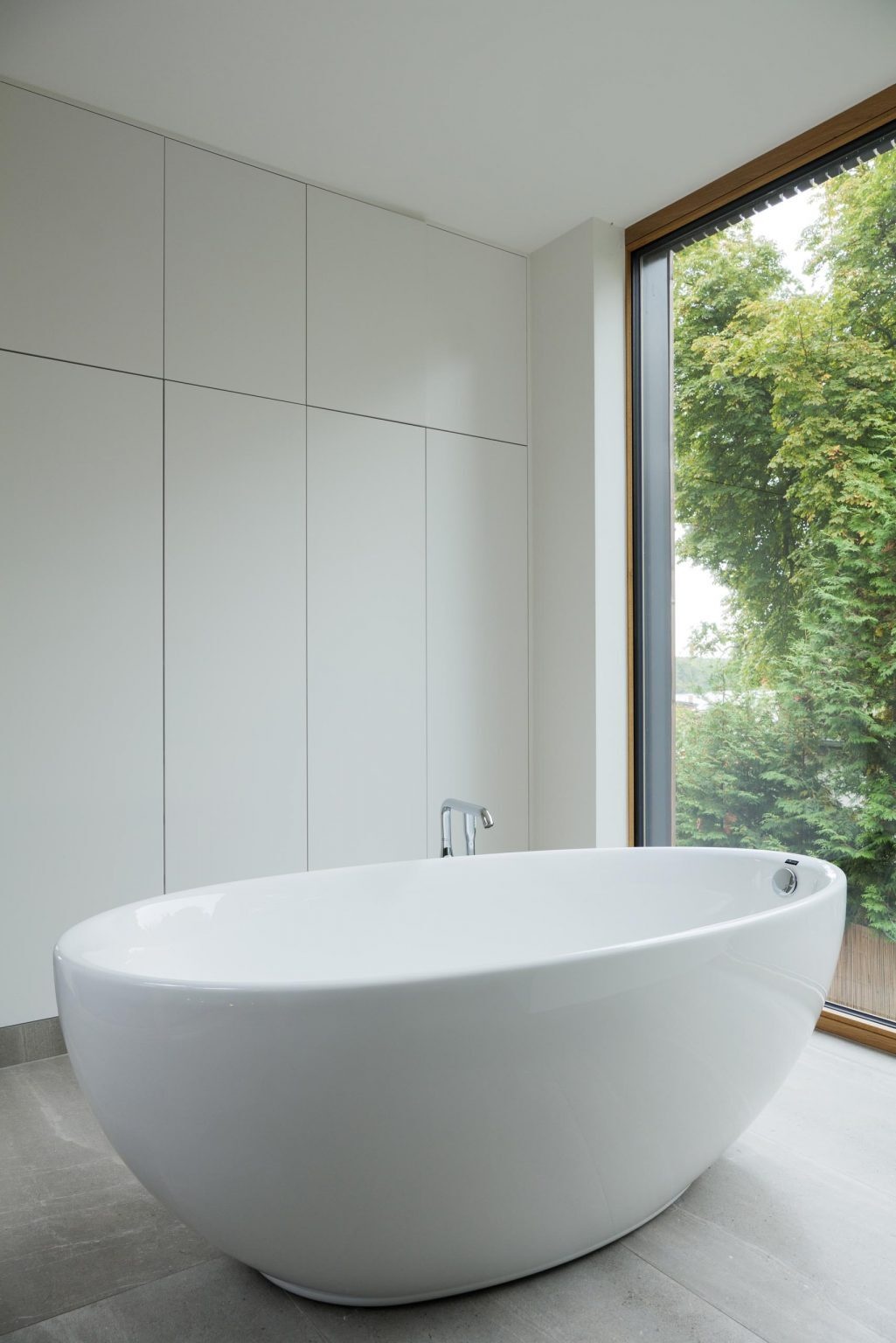
The bedrooms are simple, featuring wood bed frames and plenty of natural light. Bathrooms follow the same approach, with clean details like a floating white vanity and a freestanding bathtub.
What was once an overlooked and deteriorating site has become a home that feels both modern and closely tied to its setting. By lifting the structure, simplifying the materials, and opening every space to the outdoors, Carlos Zwick Architekten has created a house that fully transforms its origins while making the most of its riverfront location.