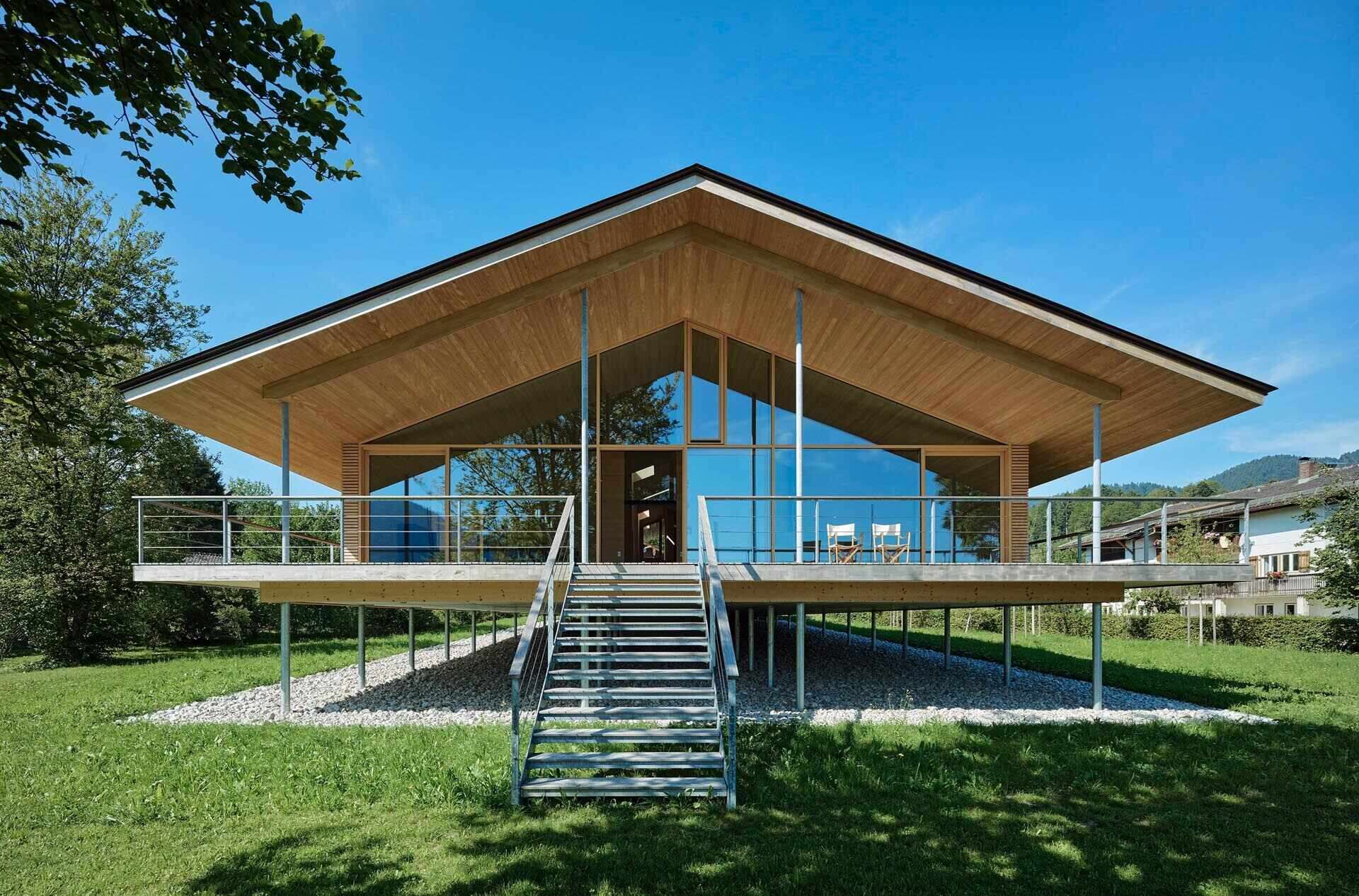
In Bad Wiessee, Germany, Dietrich | Untertrifaller Architekten designed a holiday home that takes inspiration from the traditional boat and fishing houses once common around Lake Tegernsee. Sitting directly beside the water, the house follows the long history of rural lakeside construction while introducing a cleaner and more modern architectural approach.
Because the site is regularly affected by flooding, the entire home was elevated on stilts. This practical solution also gives the building a lighter appearance, allowing it to hover gently above the landscape. The long horizontal lines, low profile, and timber exterior all reference the character of old waterfront structures found throughout the region.
Timber Construction Inspired by Local Traditions
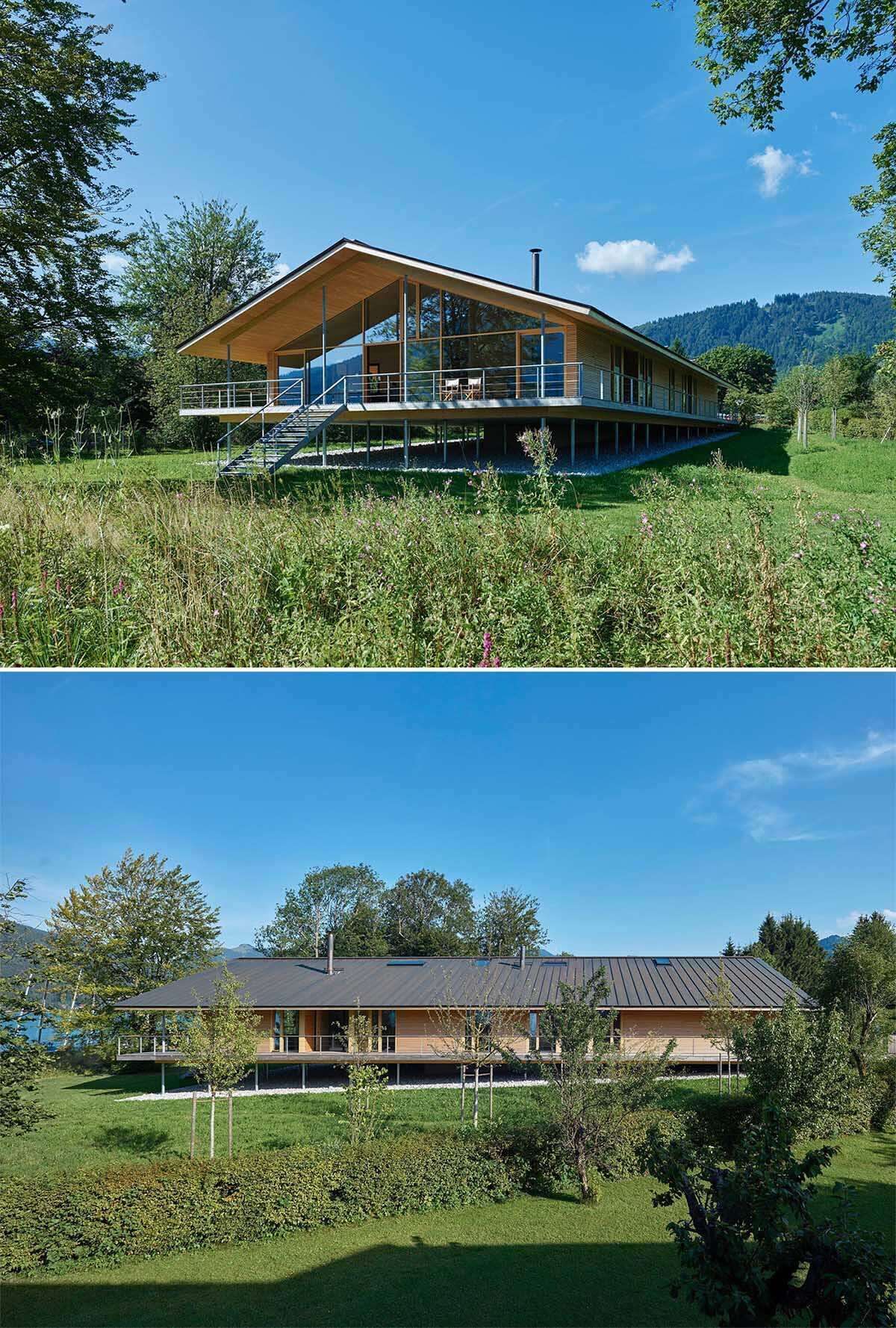
The home was built mainly from local silver fir, giving the exterior a soft natural appearance that will continue to age over time. Horizontal timber cladding wraps each section of the house, while large windows framed in wood bring in views of the surrounding lake and landscape.
Instead of heavily altering the land, the architects kept the natural ground surface mostly intact. Only small areas were disturbed for the structural piles and underground plant room. The result is a house that feels lightly placed on the site, with the timber construction helping it blend naturally into the lakeside setting.
A Walkway That Becomes a Lakeside Terrace
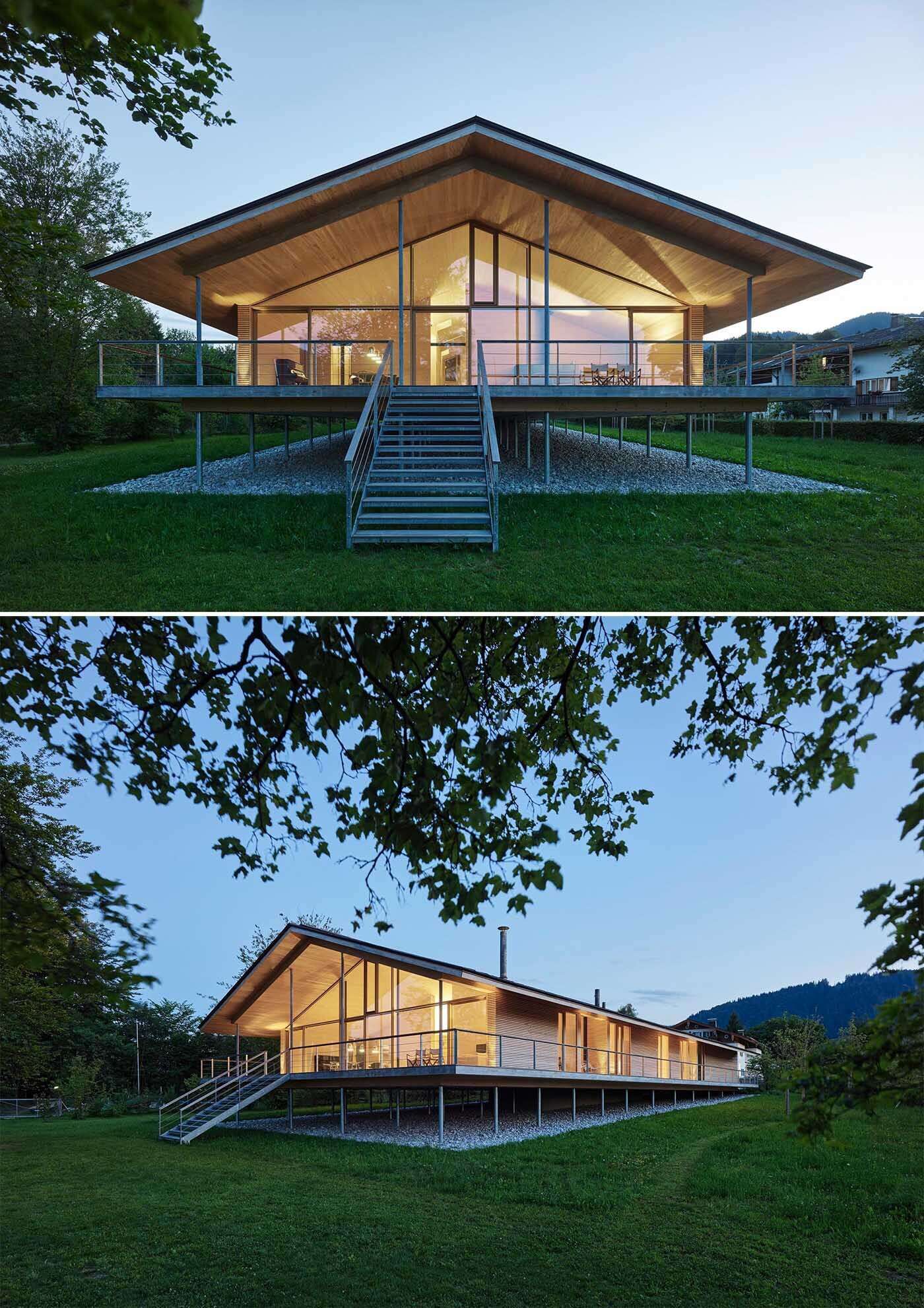
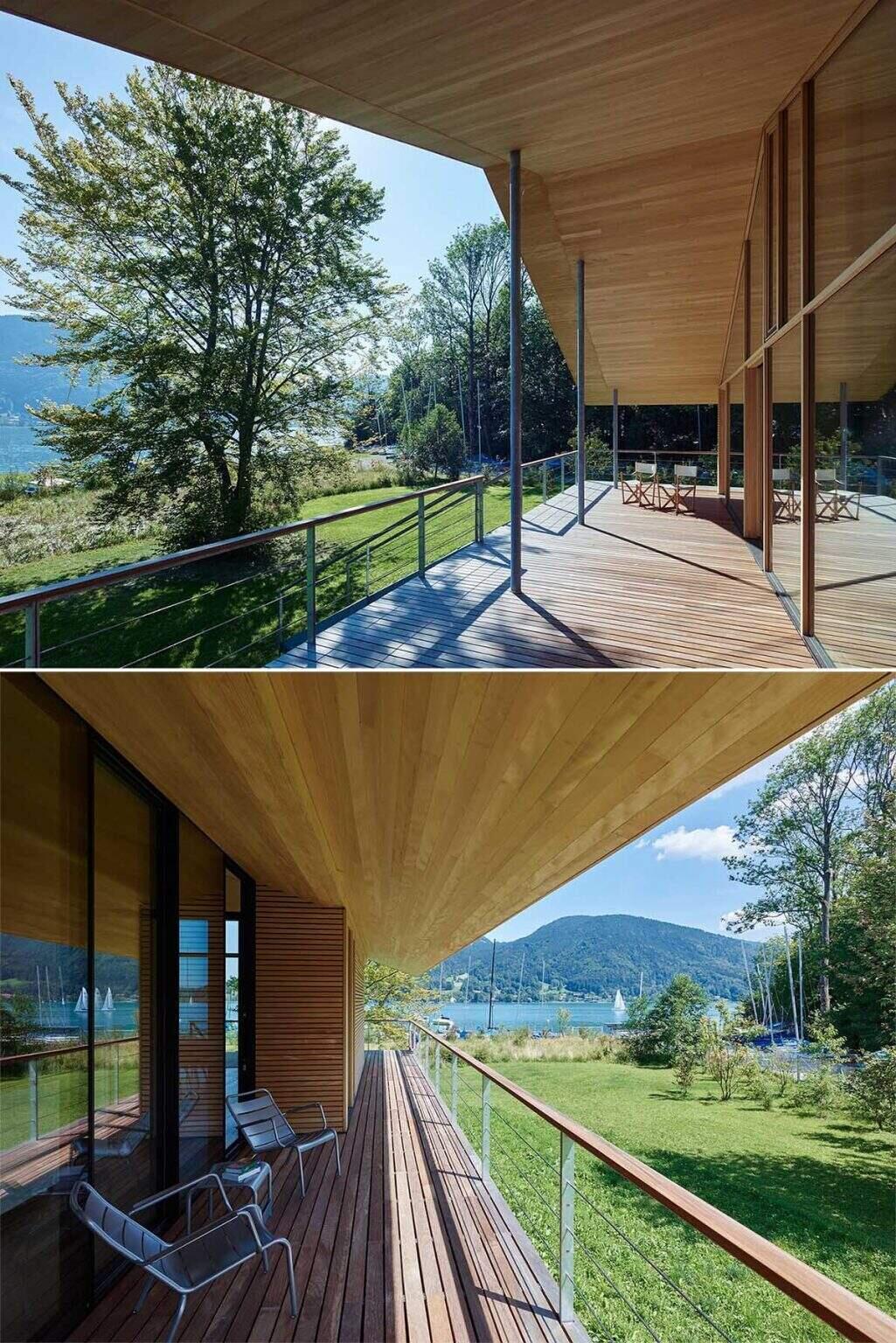
One of the most striking features of the house is the wooden walkway that wraps around the entire exterior. On the lake-facing side, this pathway expands into a generous terrace that acts as an outdoor living space overlooking the water and nearby boats.
Above it all sits a steep saddleback roof with large overhangs that fully shelter the terrace below. The oversized roof not only protects the outdoor areas from changing weather, but also strengthens the home’s resemblance to traditional rural waterfront buildings and boat houses.
Warm Wood Interiors and Light-Filled Hallways
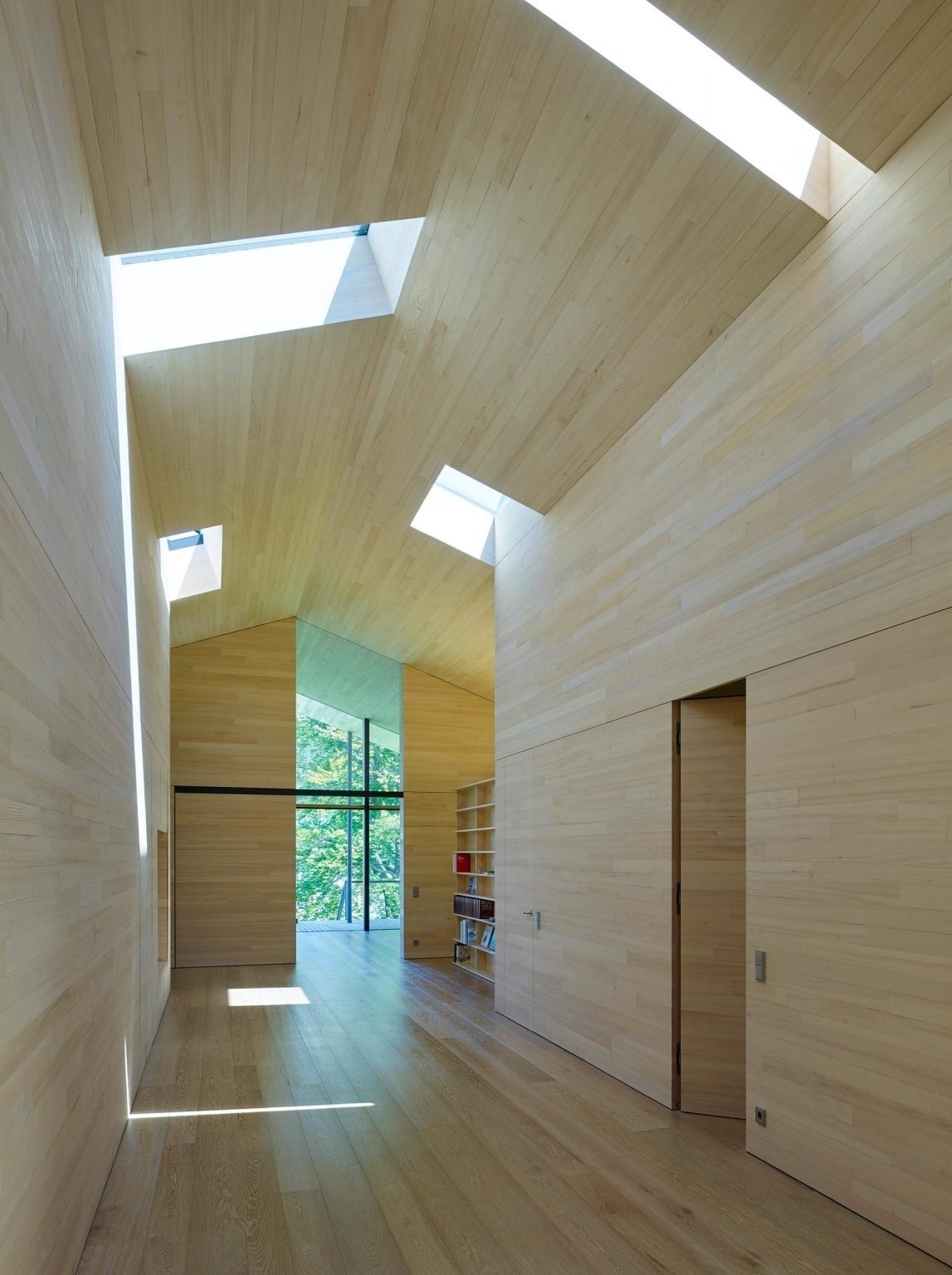
Inside, the timber palette continues across the walls, ceilings, and floors, creating a warm and consistent atmosphere throughout the home. The natural wood surfaces give every room a quiet simplicity while connecting the interior to the materials used outside.
The hallway running through the centre of the home is brightened by skylights and large glazed sections between the main room volumes. Natural light filters deep into the interior, guiding visitors from the entrance toward the shared living spaces facing the lake.
A Living Space Framed by Lake Views
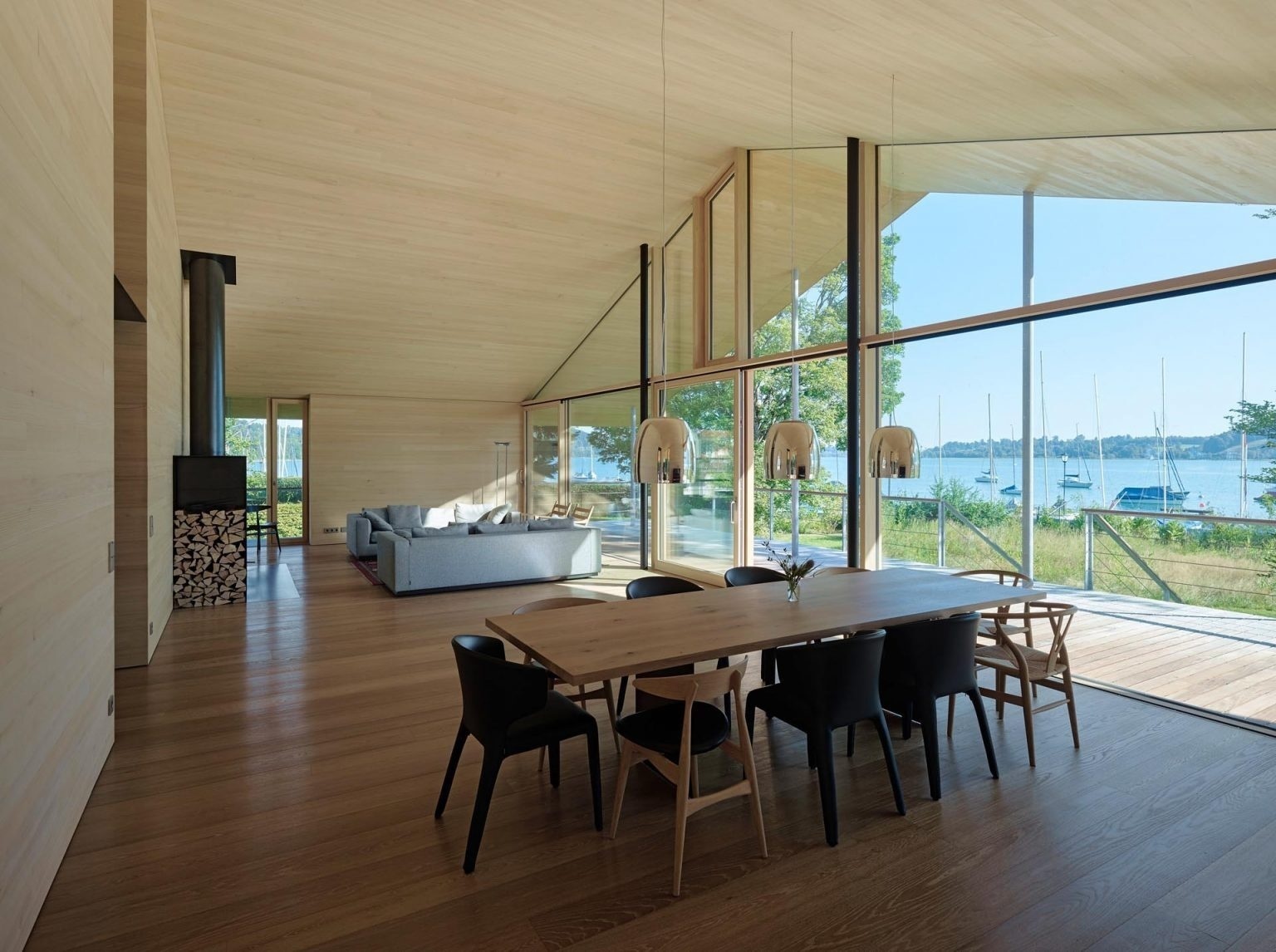
At the end of the hallway, the house opens into a spacious living and dining area designed to fully capture the lakefront location. A full wall of floor-to-ceiling windows frames uninterrupted views across the water, with boats visible just beyond the glass.
The openness of the room contrasts with the more enclosed hallway, making the final reveal feel even more dramatic. Combined with the timber finishes and soft natural light, the living area becomes the social heart of the home and the place most connected to the surrounding landscape.
A Layout Split Into Separate Volumes
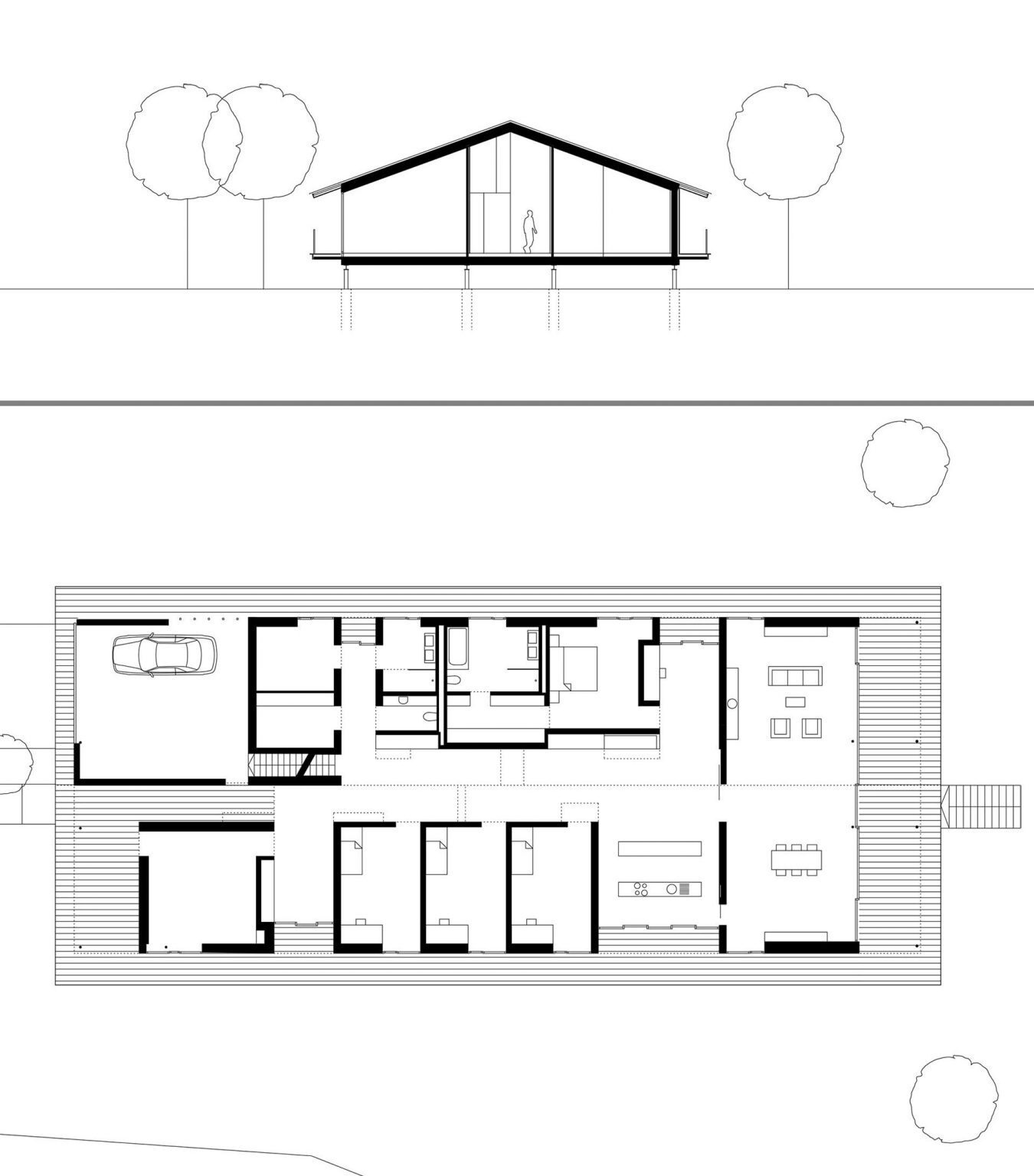
The house itself is organised into five distinct sections, each expressed externally as its own volume. These include the workshop, children’s rooms, living areas, parents’ spaces, and garage. Breaking the home into separate forms helps reduce its visual scale while giving each area its own identity.
This arrangement also creates opportunities for recessed glazed sections between the volumes, allowing more daylight into the central hallway and strengthening the connection between indoors and outdoors.
By combining traditional waterfront building ideas with modern timber architecture, Dietrich | Untertrifaller Architekten created a holiday home that responds directly to its lakeside location. Elevated above the flood-prone ground and wrapped in warm local wood, the house balances practicality with calm, understated design while making the most of its views across Lake Tegernsee.