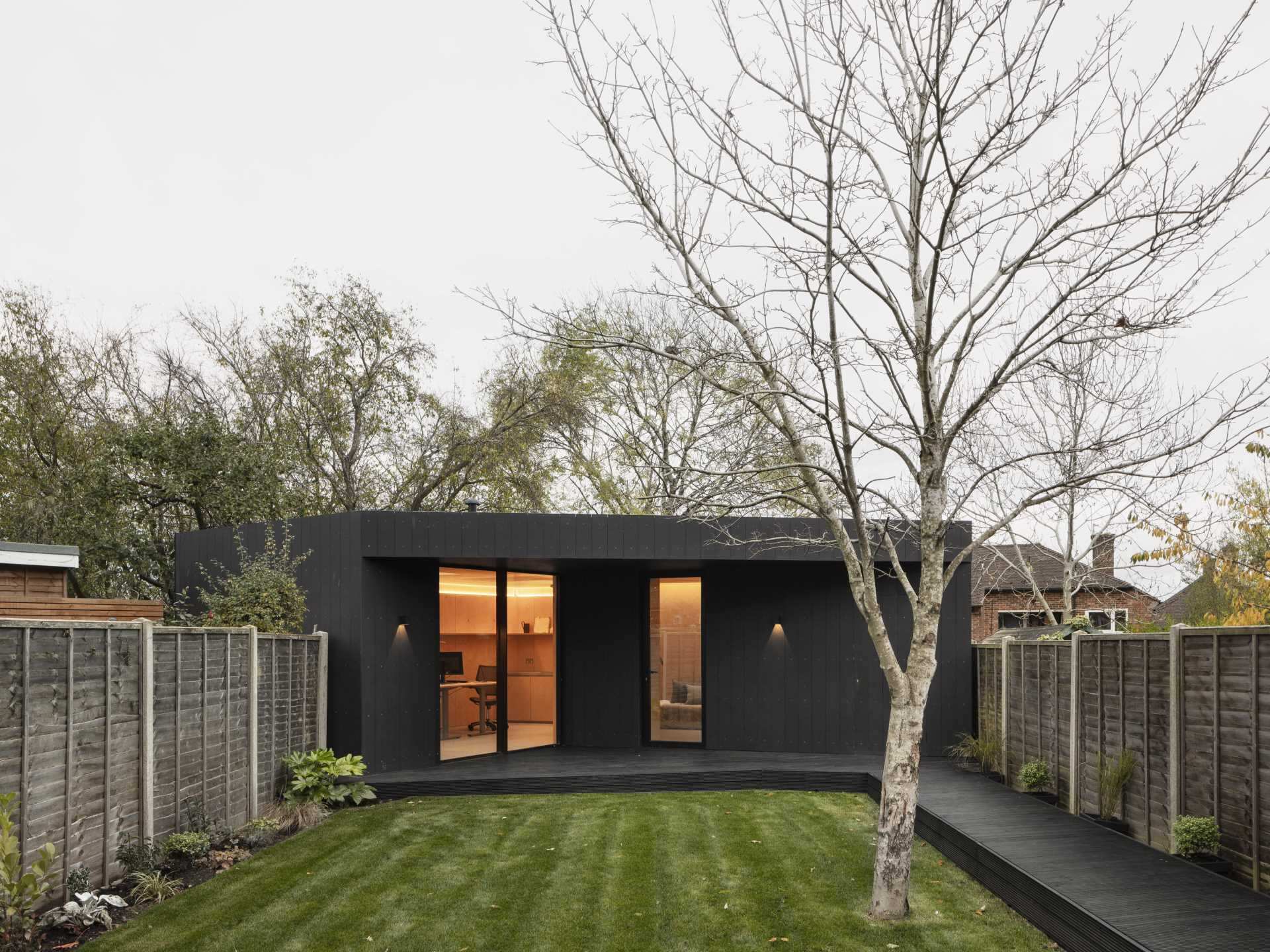
In London, Brosh Architects found themselves facing a challenge familiar to many growing practices: they needed more office space. After an extended search for rental premises in central London proved unsuccessful, architect Lior Brosh made an unexpected decision. Instead of continuing the search, he turned to the back garden of his own home and built a studio designed specifically for the practice’s expansion.
An Unusual Garden Shape Inspired the Design
The studio’s form was driven by the awkward geometry of the rear garden. Instead of forcing a conventional rectangular footprint onto the site, the architects allowed the irregular shape of the garden to determine the layout and proportions of the building.
Constructed with blockwork walls and a timber roof structure, the exterior is wrapped in black fibre-cement cladding. The dark finish gives the small building a crisp, contemporary presence while helping it sit quietly at the far end of the garden.
A Small Building With Multiple Functions
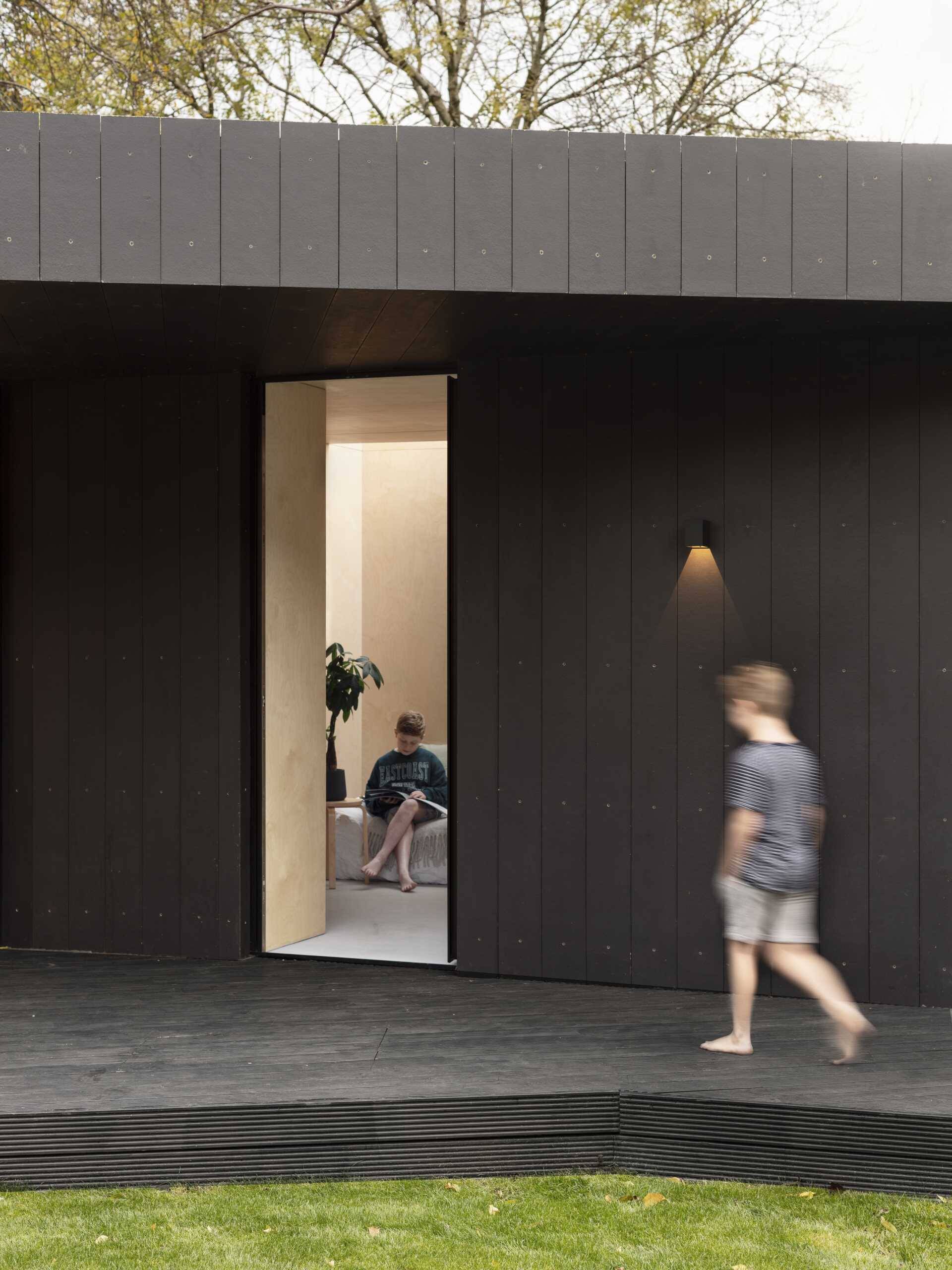
Although compact, the studio was planned to accommodate several different uses. The main area functions as a working office for the architecture practice, while a separate guest suite with an en-suite bathroom provides accommodation for visiting family and guests.
The layout also includes dedicated garden storage, allowing the building to support both professional and domestic needs without wasting valuable space.
Concrete and Birch Plywood Create a Minimal Interior
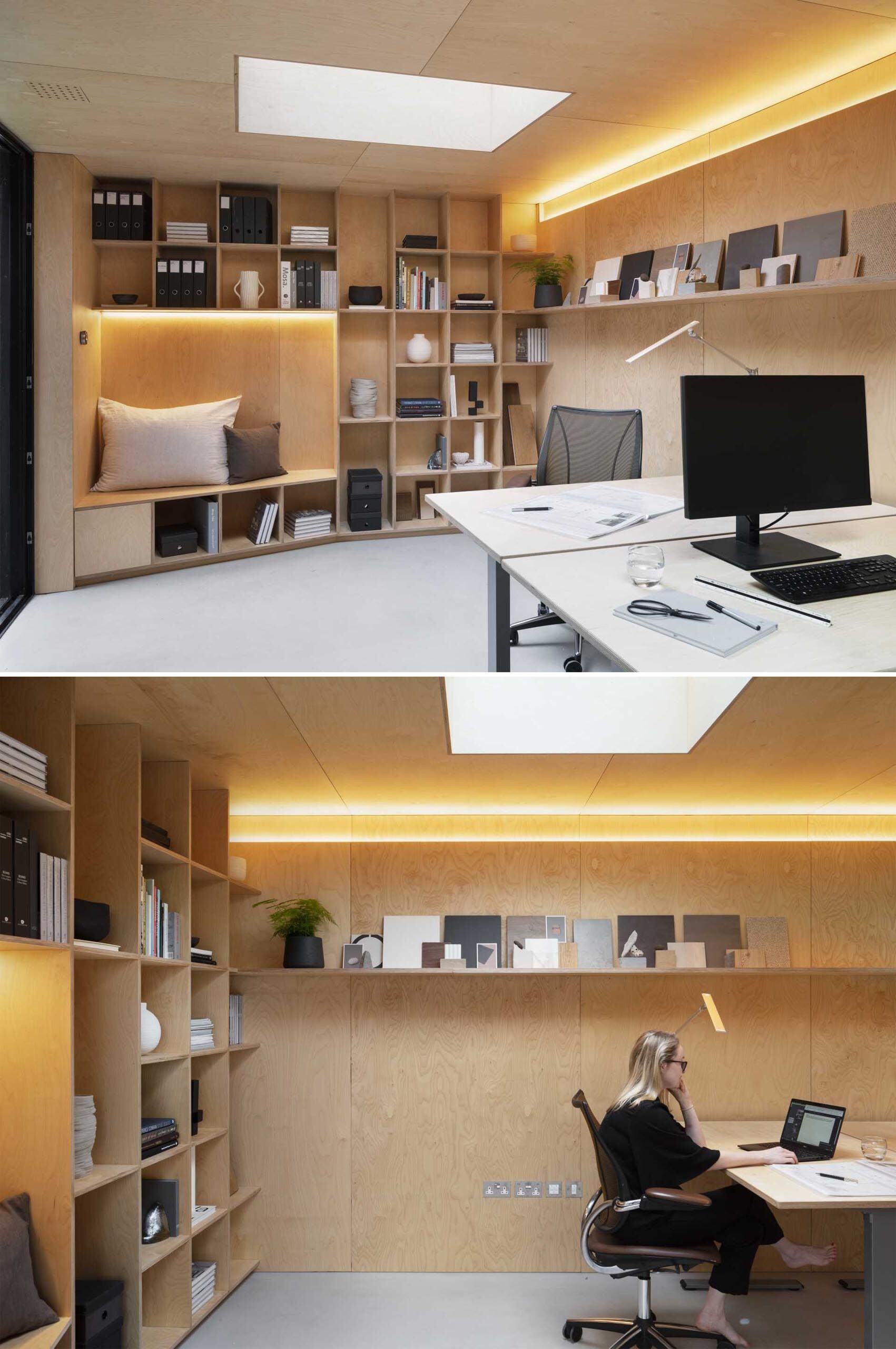
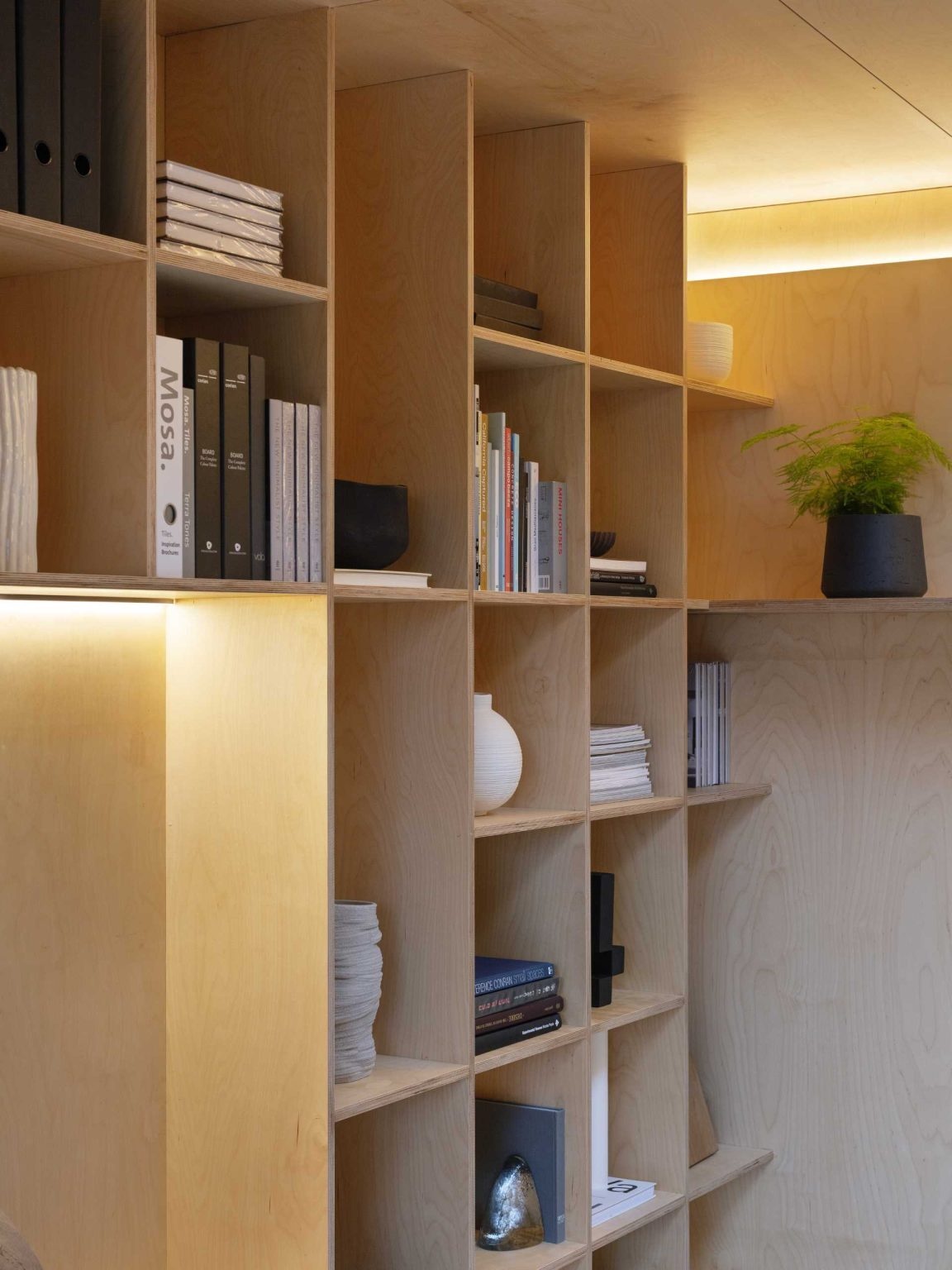
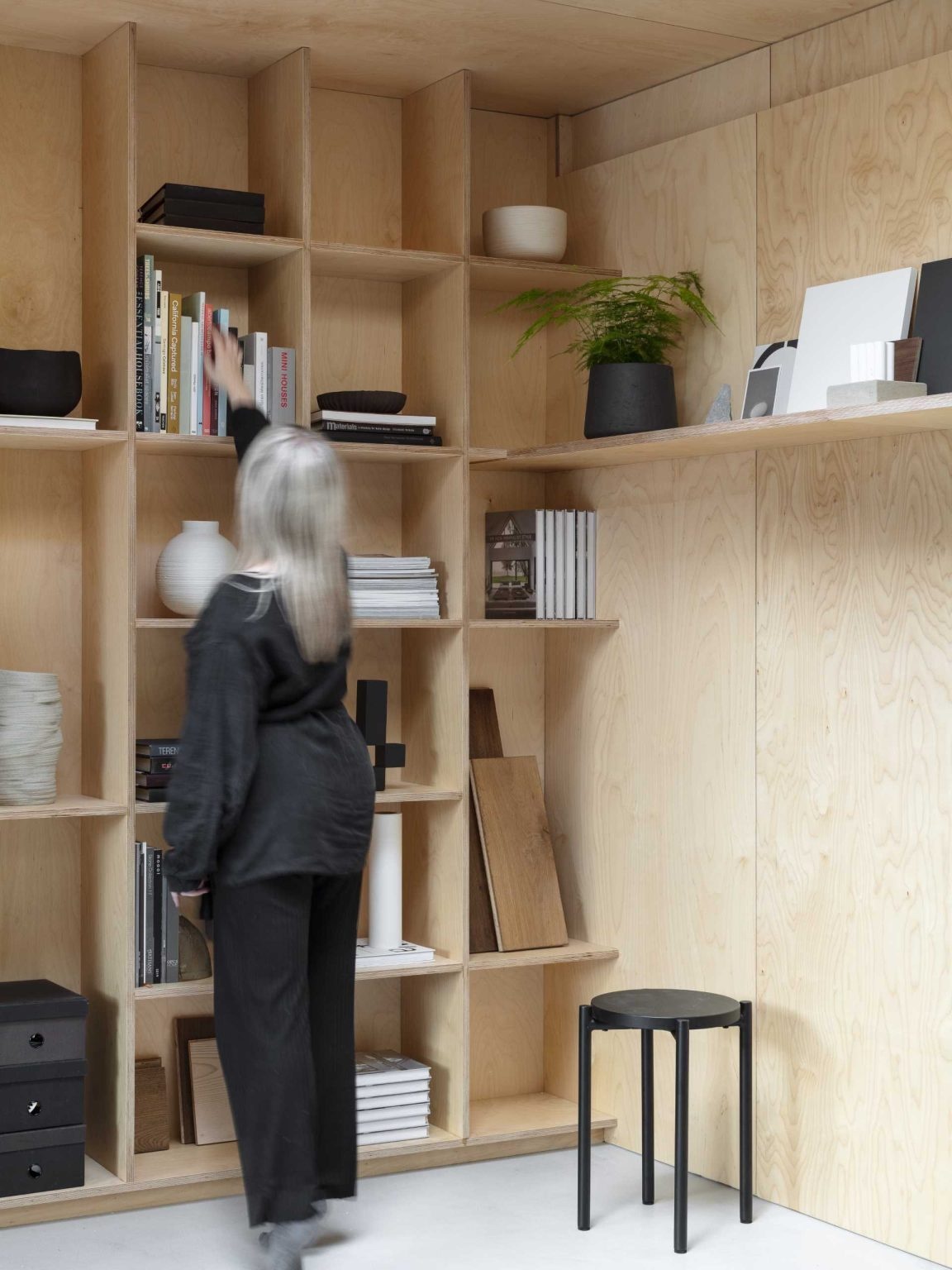
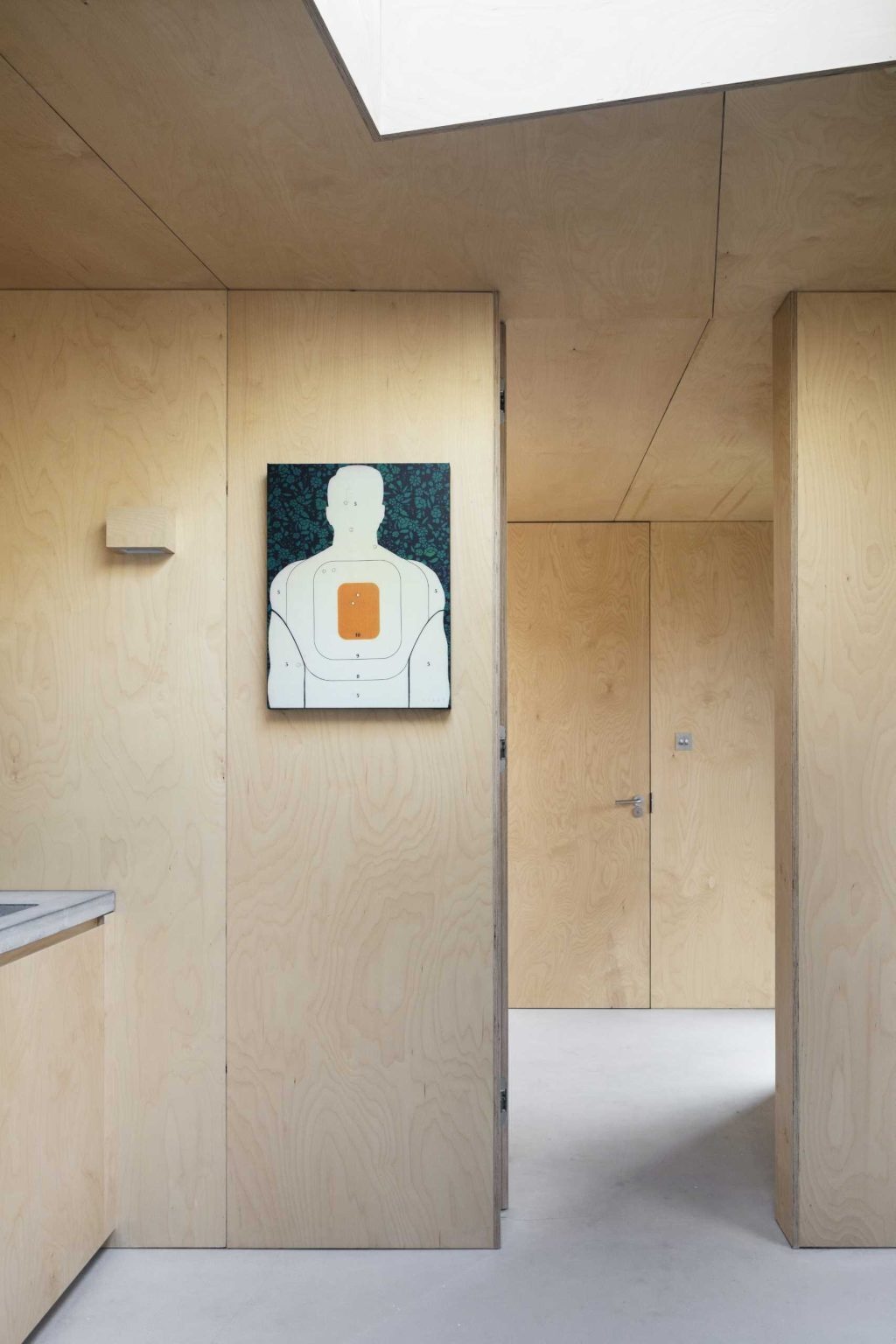
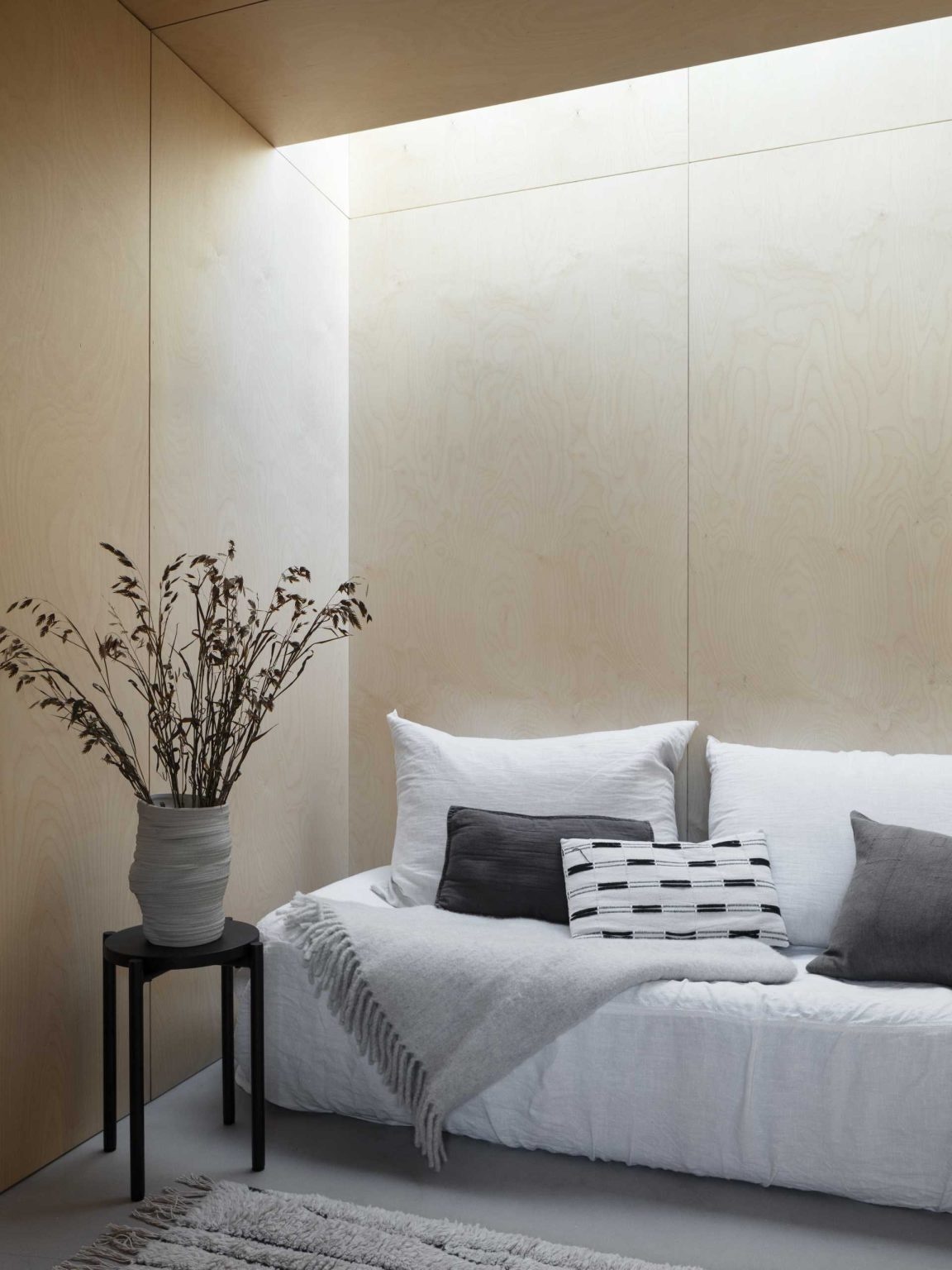
The interior palette is intentionally restrained. Only two materials are used throughout the main spaces: a concrete floor and birch plywood walls and ceilings.
This limited selection gives the studio a clean, uncluttered appearance that works well as a professional office, while the warm tone of the plywood prevents the minimalist interior from feeling cold during London’s darker winter months.
Bookshelves Become Part of the Architecture
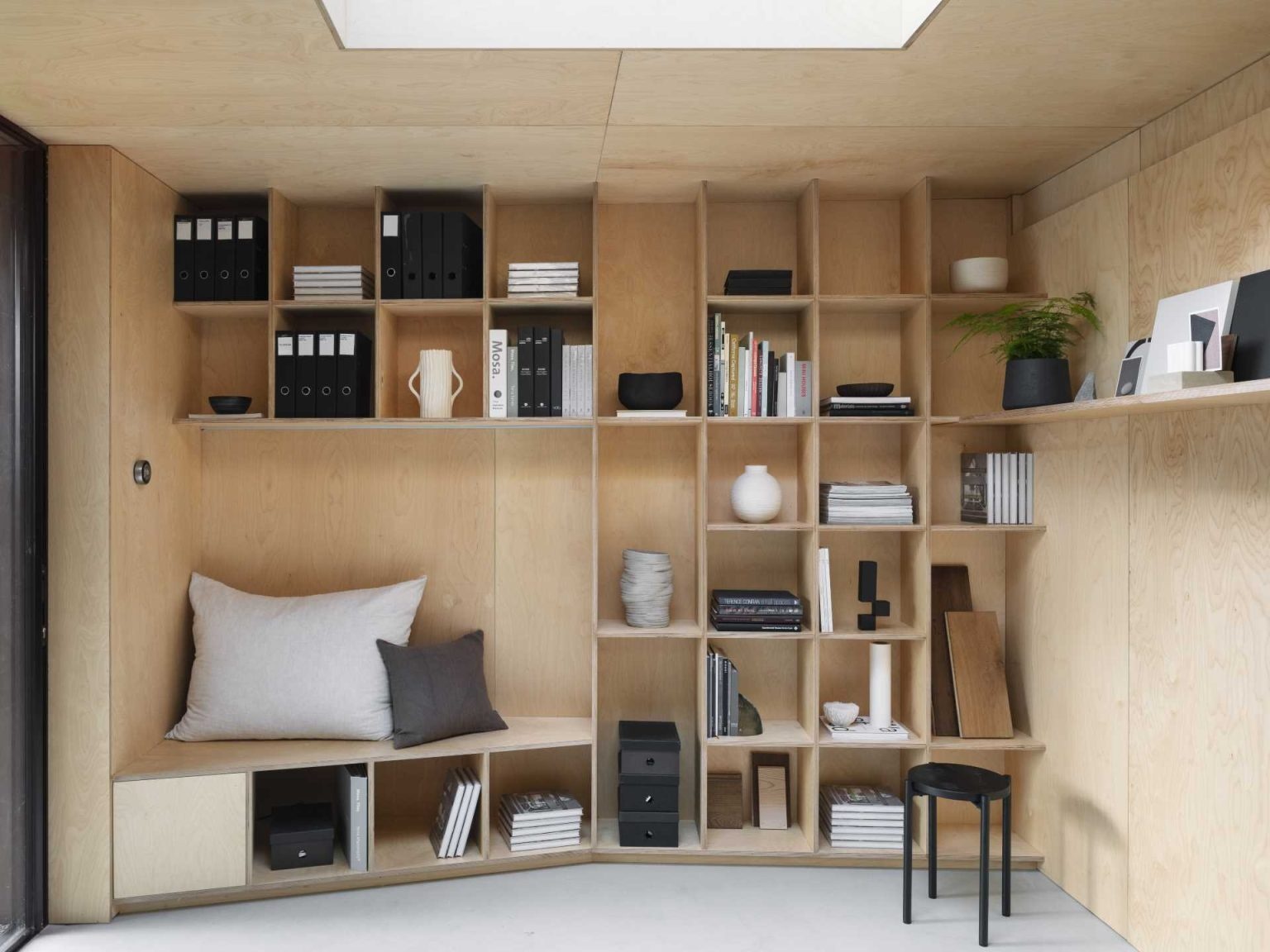
Storage is integrated directly into the office area through a full wall of bookshelves. The shelving does more than hold books and documents, it also incorporates a built-in seating nook that offers a comfortable place to read, review drawings, or take a break during the workday.
By combining storage and seating in a single element, the architects made efficient use of the studio’s limited footprint.
A Skylight Brings Light Into the Workspace
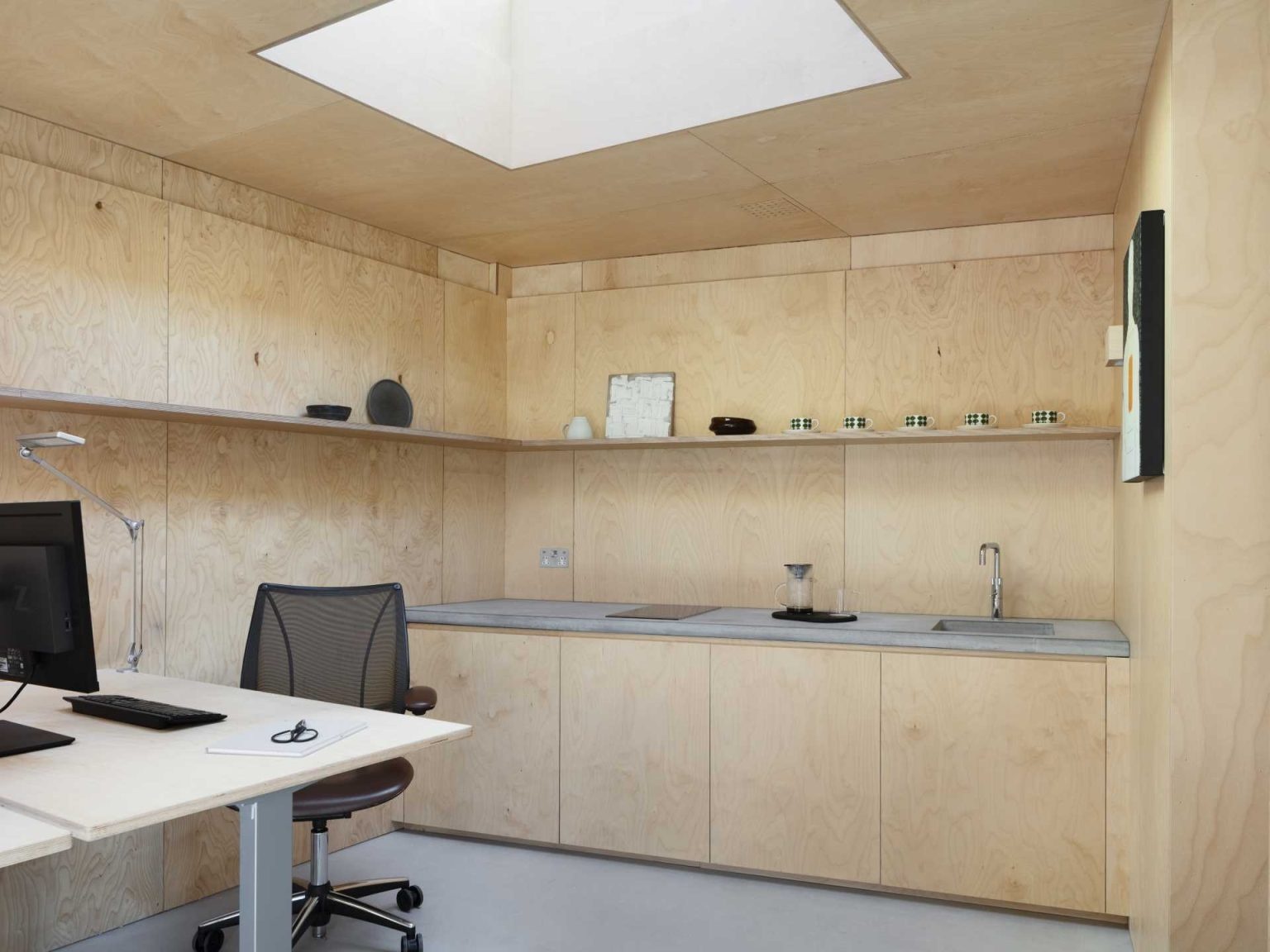
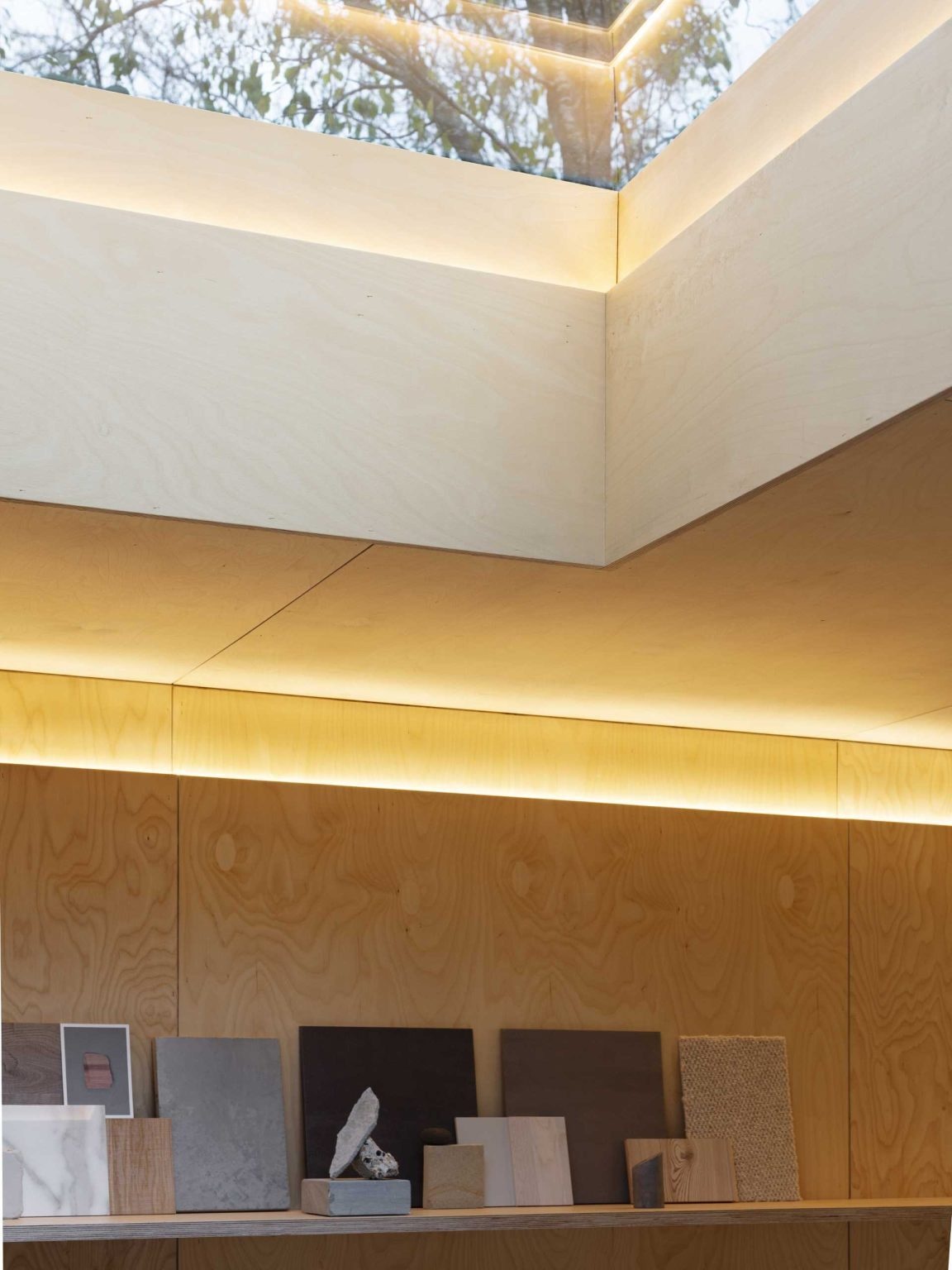
Opposite the bookshelf wall is a simple kitchenette that provides basic facilities for the office. Above, a skylight introduces natural light into the center of the plan, helping brighten the workspace throughout the day.
A continuous shelf wraps from the kitchen area toward the bookshelves, visually linking the different parts of the room and adding another layer of practical storage.
The Guest Suite Sits Behind a Separate Door
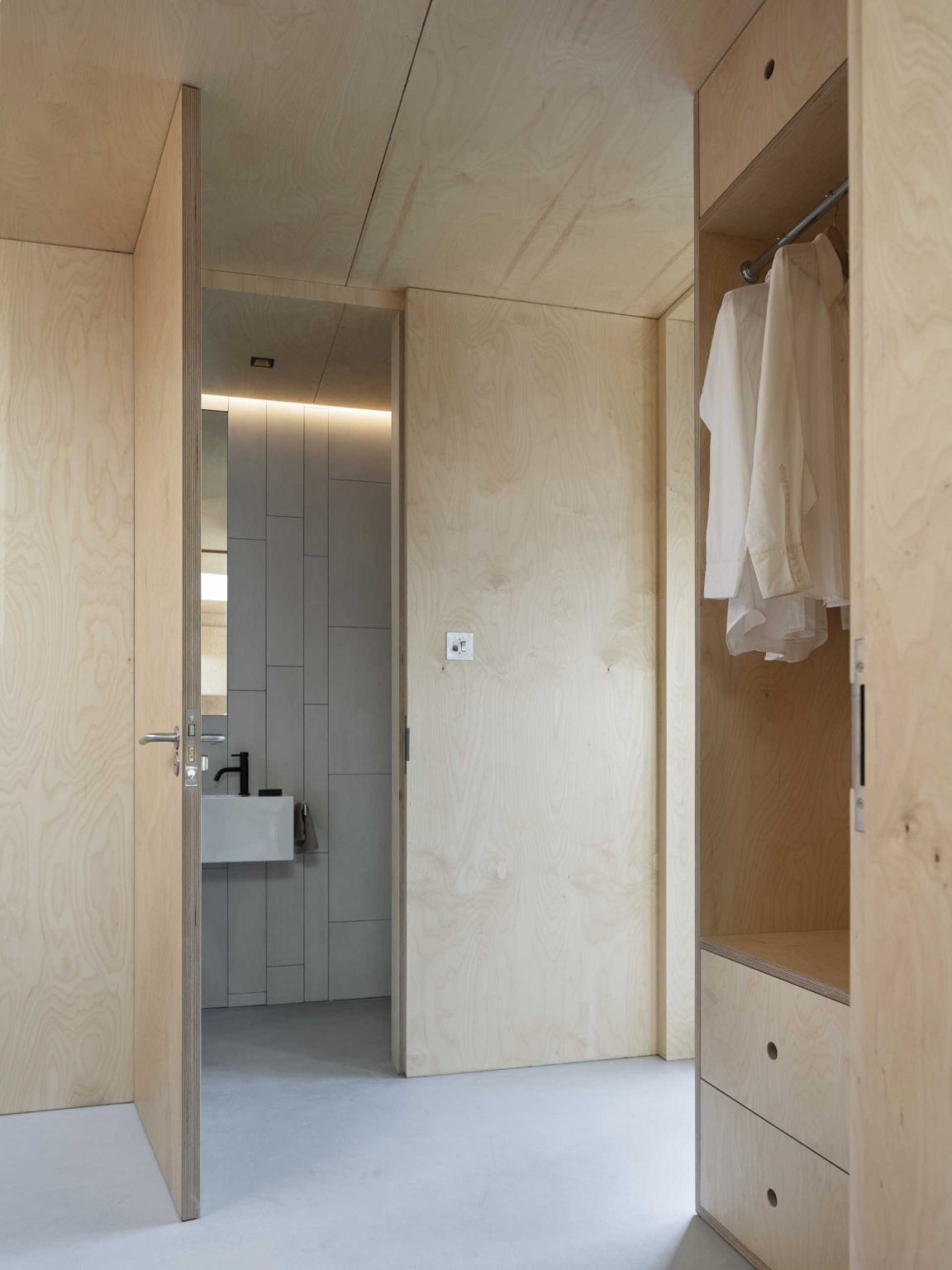
A door separates the office from the guest accommodation, allowing visitors to have privacy independent of the working area. Inside the suite, the birch plywood walls continue, creating a warm backdrop for the simple furnishings.
The room also includes an open closet area and direct access to its own bathroom, making it suitable for overnight stays without requiring additional space in the main house.
Vertical Lines Give the Bathroom Extra Height
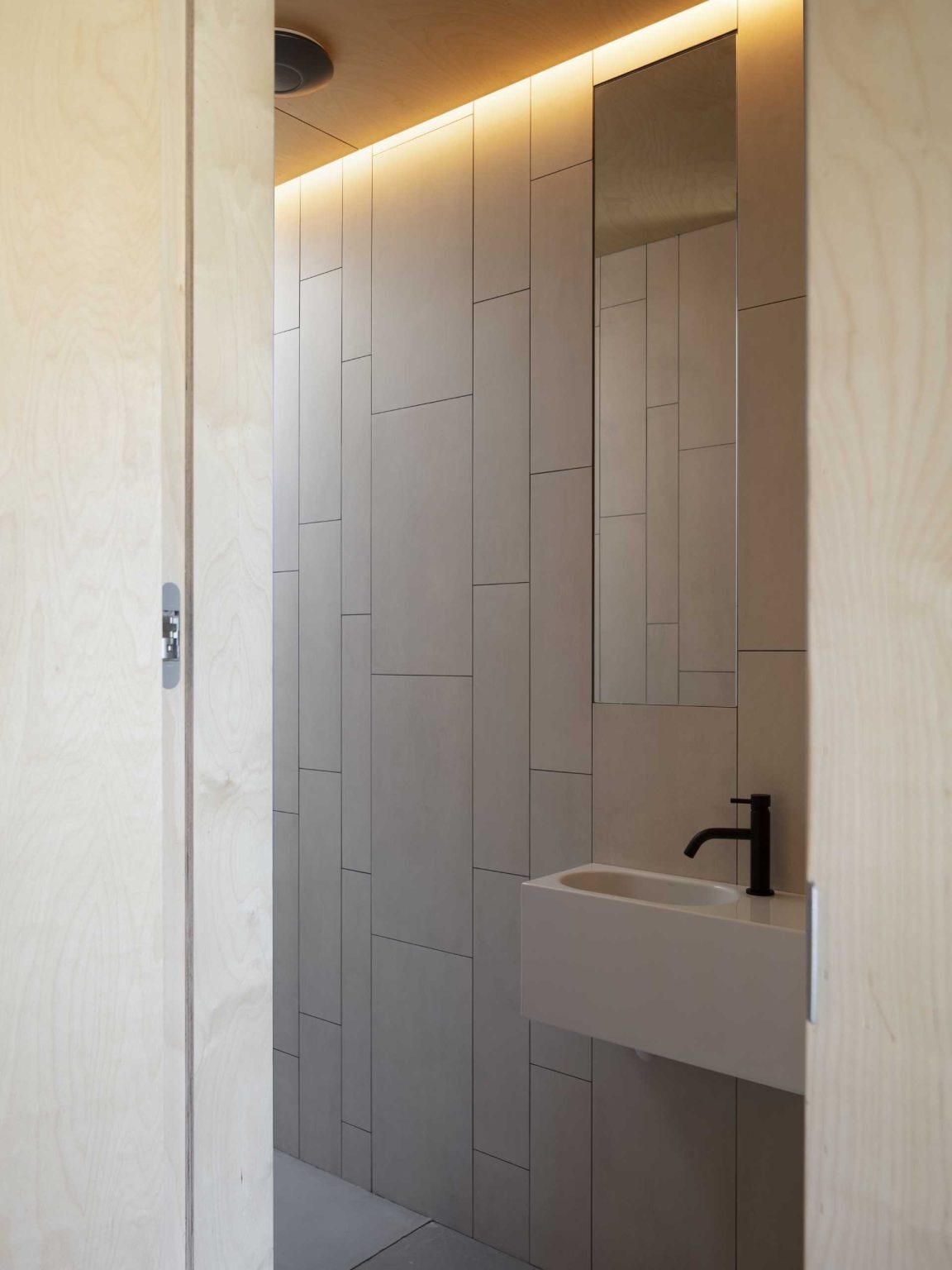
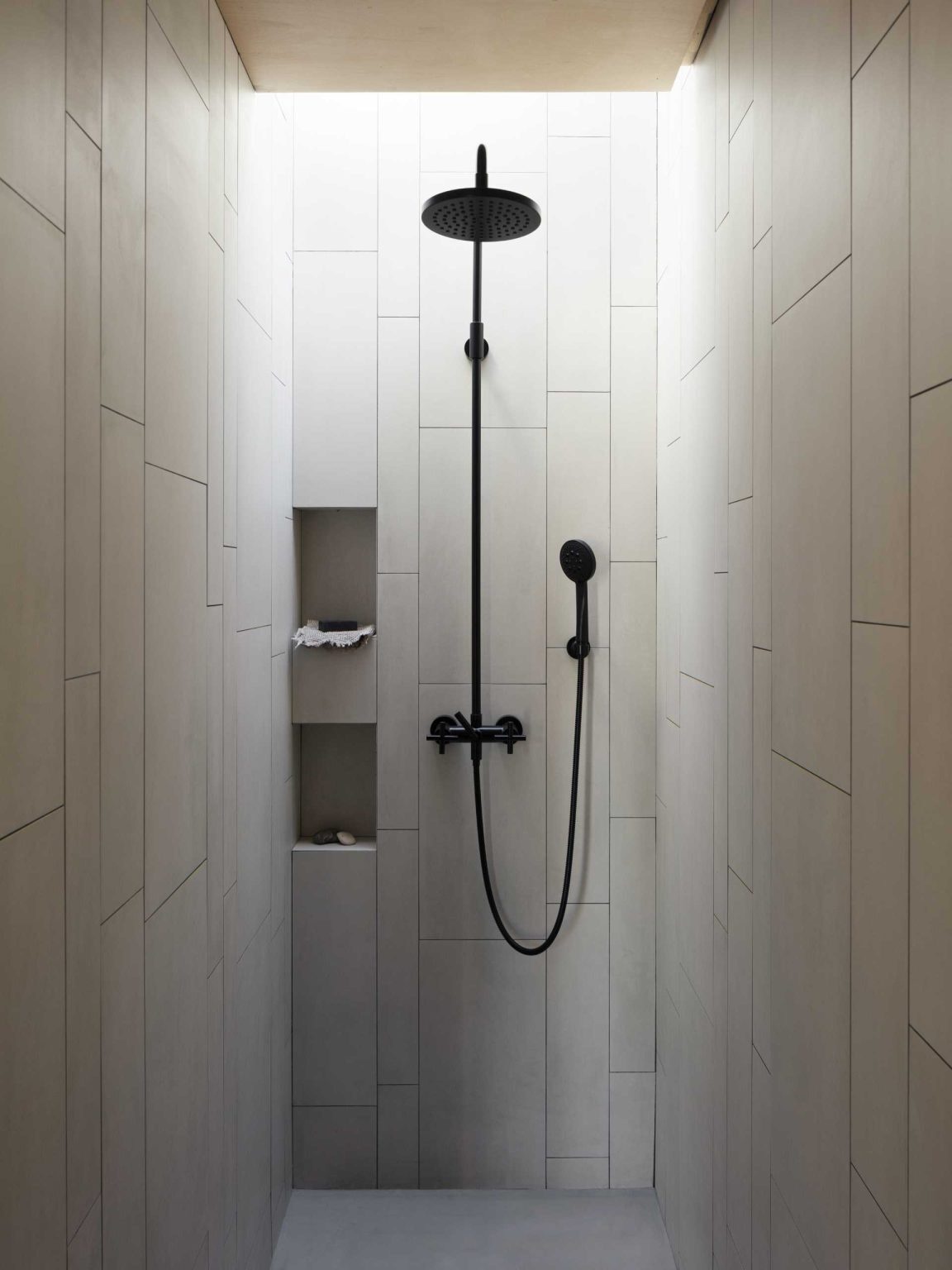
The bathroom introduces a slightly different material treatment, with tiled walls replacing the plywood. A tall vertical mirror draws the eye upward, while concealed lighting behind the mirror adds a soft glow that enhances the sense of height within the compact space.
What began as a search for extra office space became an opportunity to create a highly adaptable building tailored to the needs of Brosh Architects. By using an awkward garden site, a restrained material palette, and a layout that combines work, accommodation, and storage, the studio delivers far more than a typical garden office.