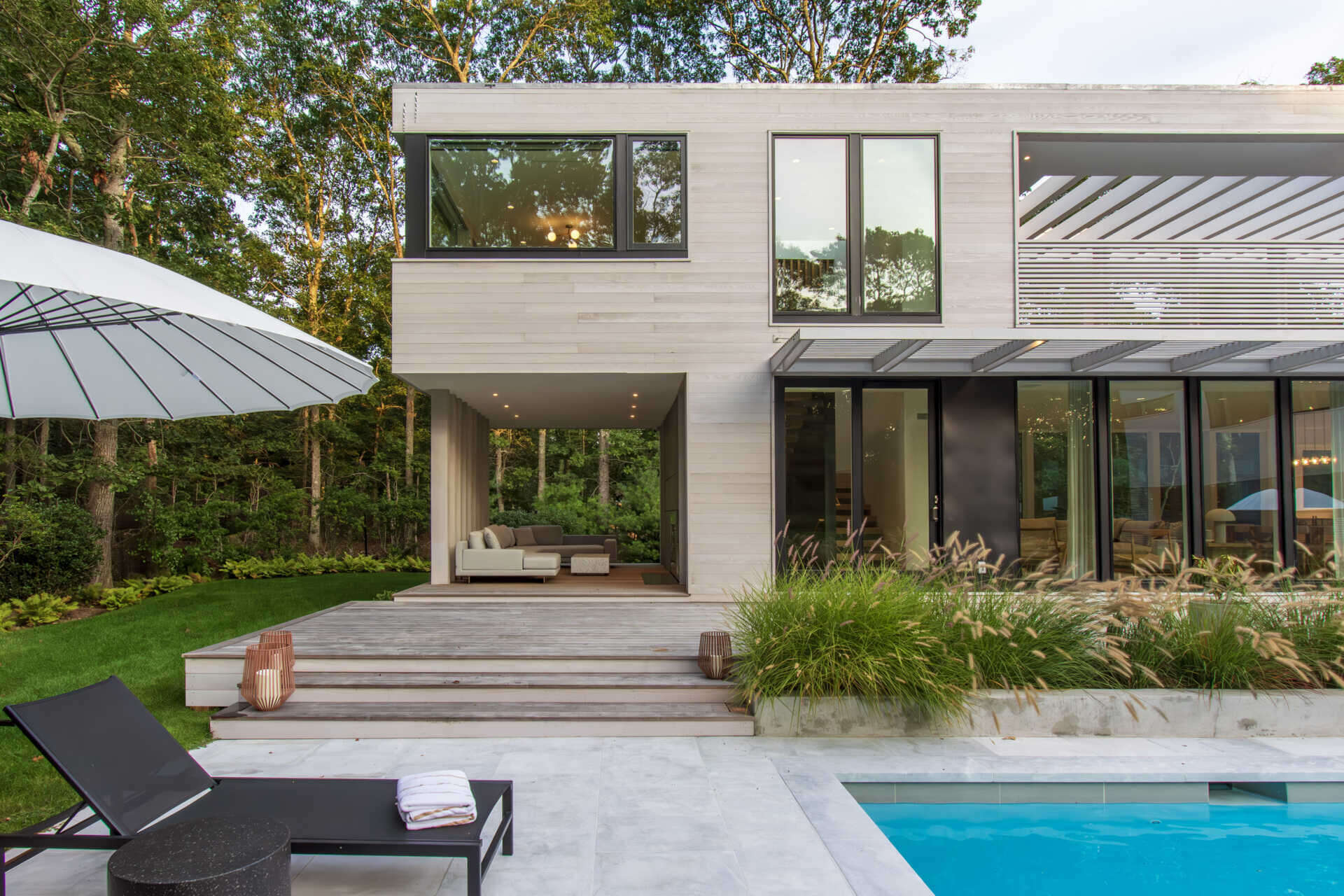
Tucked into a wooded pocket of East Hampton, the Northwest Woods Residence brings together modular construction, warm natural materials, and a layout shaped around privacy and light. Designed by RESOLUTION: 4 ARCHITECTURE, with interiors by Atelier + Concept and modular fabrication by Signature Building Systems, the home sits quietly among preserved trees while opening itself to sunlight and long woodland views.
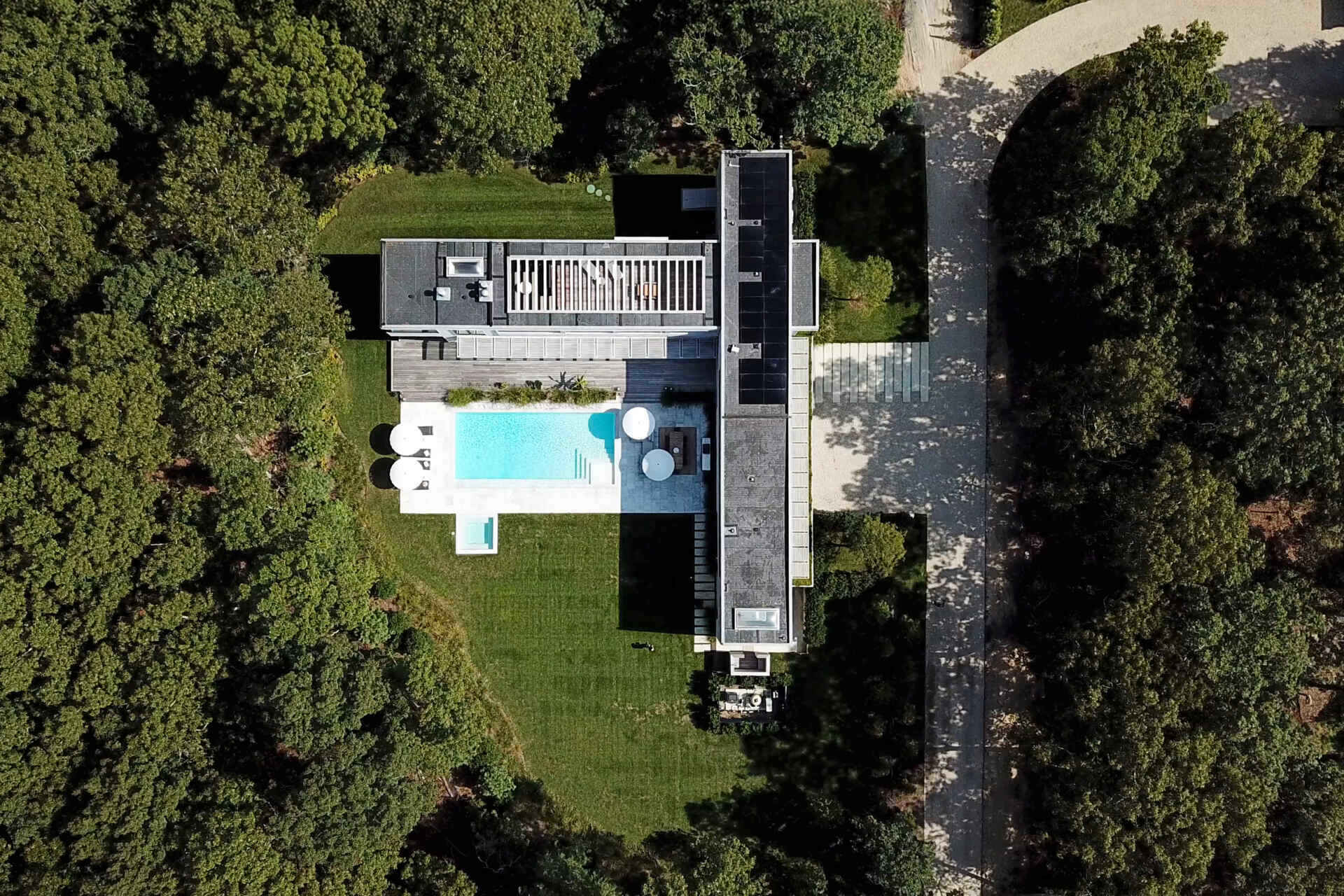
Bleached Cedar and Modular Design Shape the Exterior
The architecture of the Northwest Woods Residence was shaped by both the site restrictions and the realities of modular construction. Designed as a prefabricated home, the project was divided into ten modules that were fabricated off-site in Pennsylvania before being transported and assembled in East Hampton. Even with the efficiency of modular building, the house still feels highly tailored to its wooded setting.
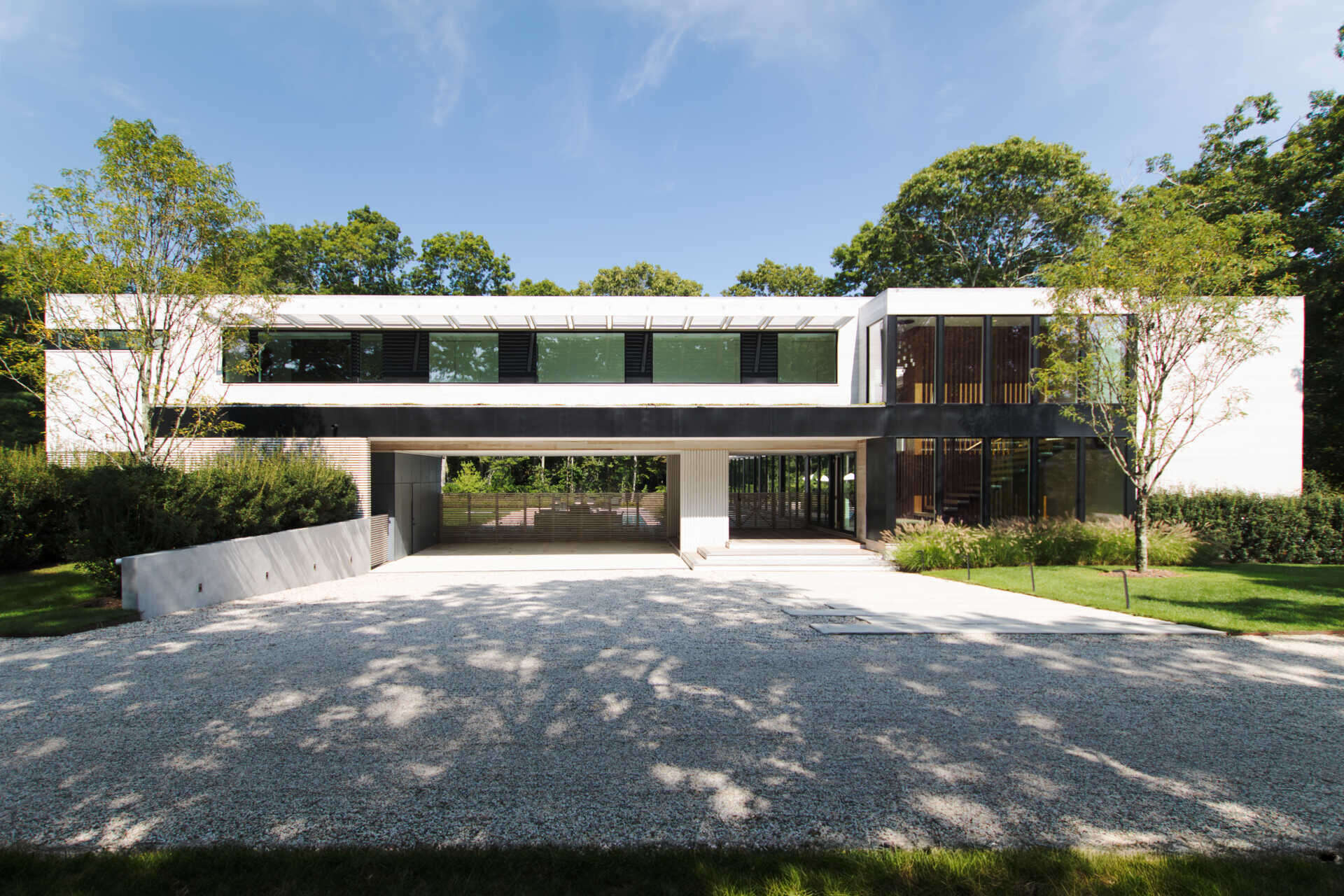
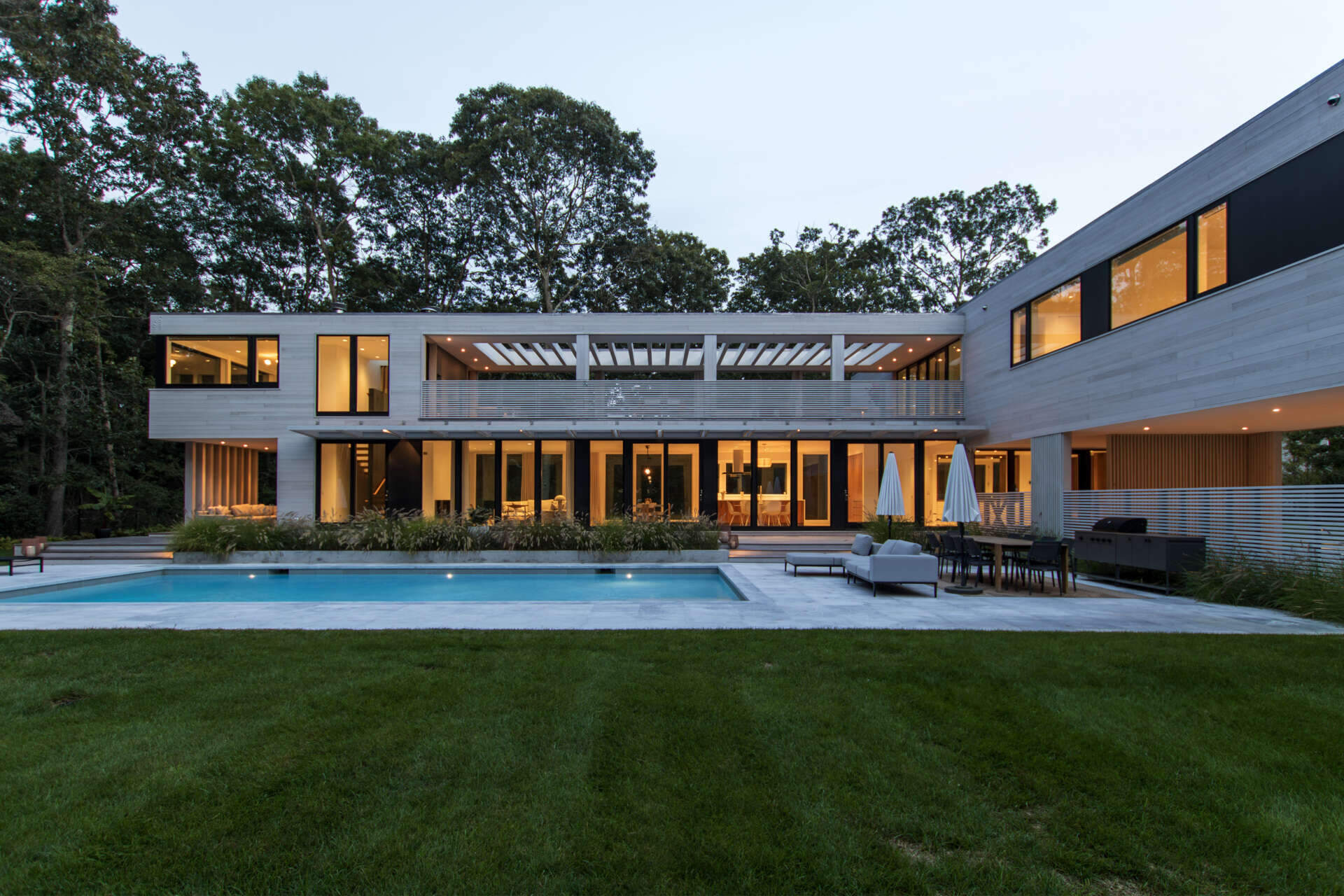
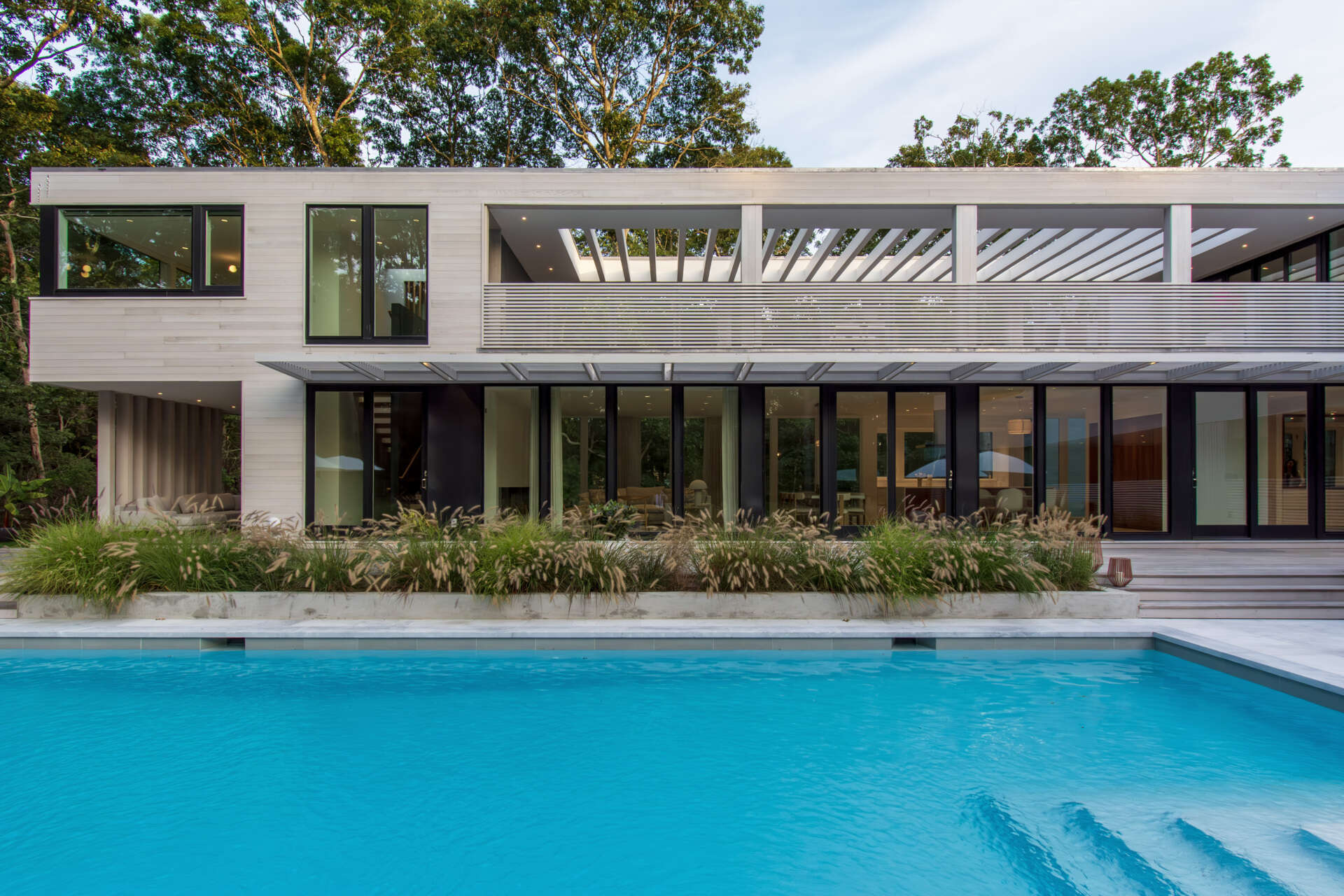
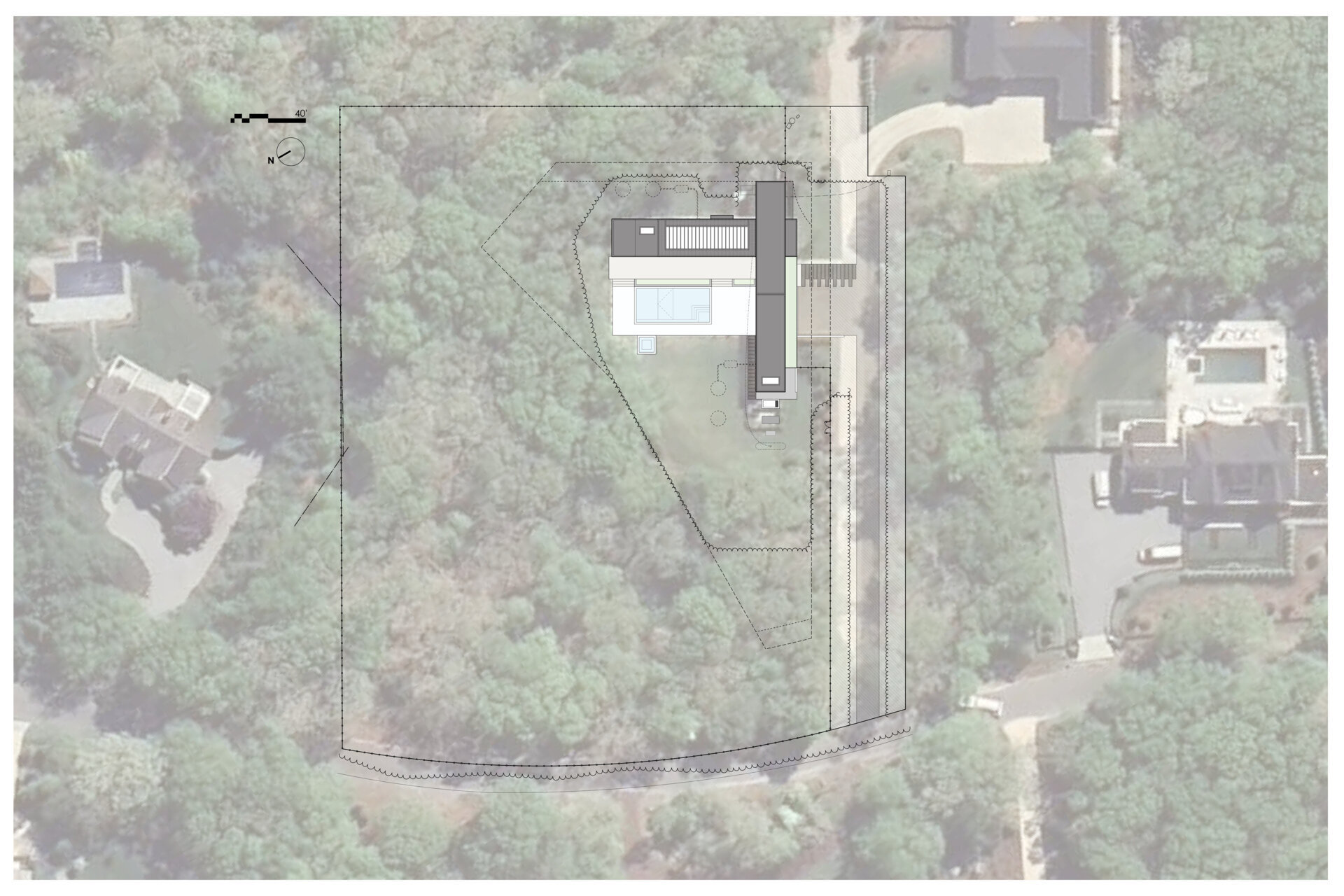
Strict setback rules, clearing limits, and height restrictions influenced the overall form of the house, with rooflines and massing shaped around the natural grade of the land. Bleached cedar siding gives the exterior a soft weathered appearance that fits naturally within the East End landscape, while large glass openings bring light deep into the interiors.
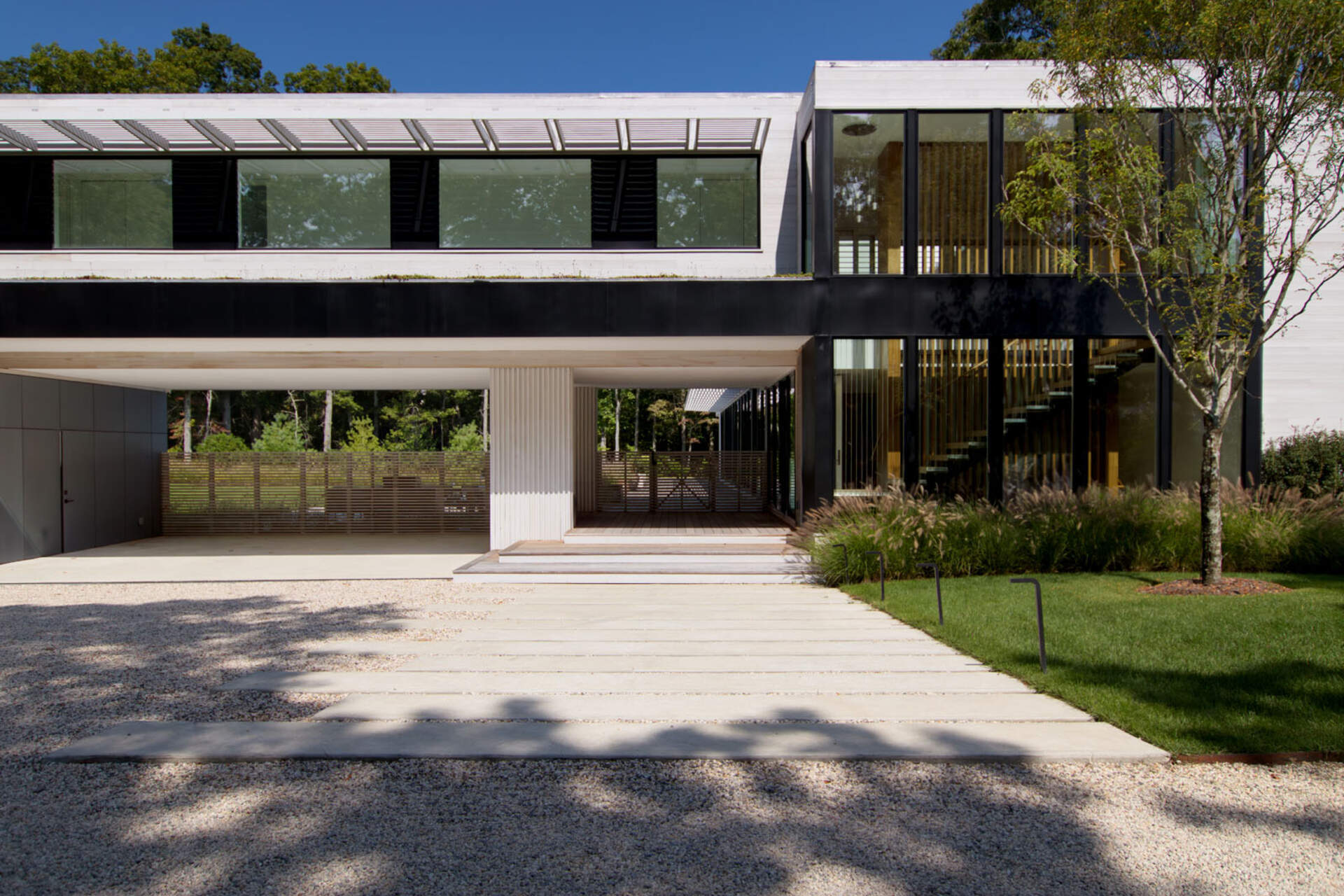
Custom cedar brise soleils filter western and southern sunlight, balancing privacy, shade, and openness throughout the home.
Native planting softens the transition between the architecture and surrounding woods, helping the home feel integrated into the landscape while maintaining a distinctly modern identity.
A Private Pool Terrace Surrounded by Trees
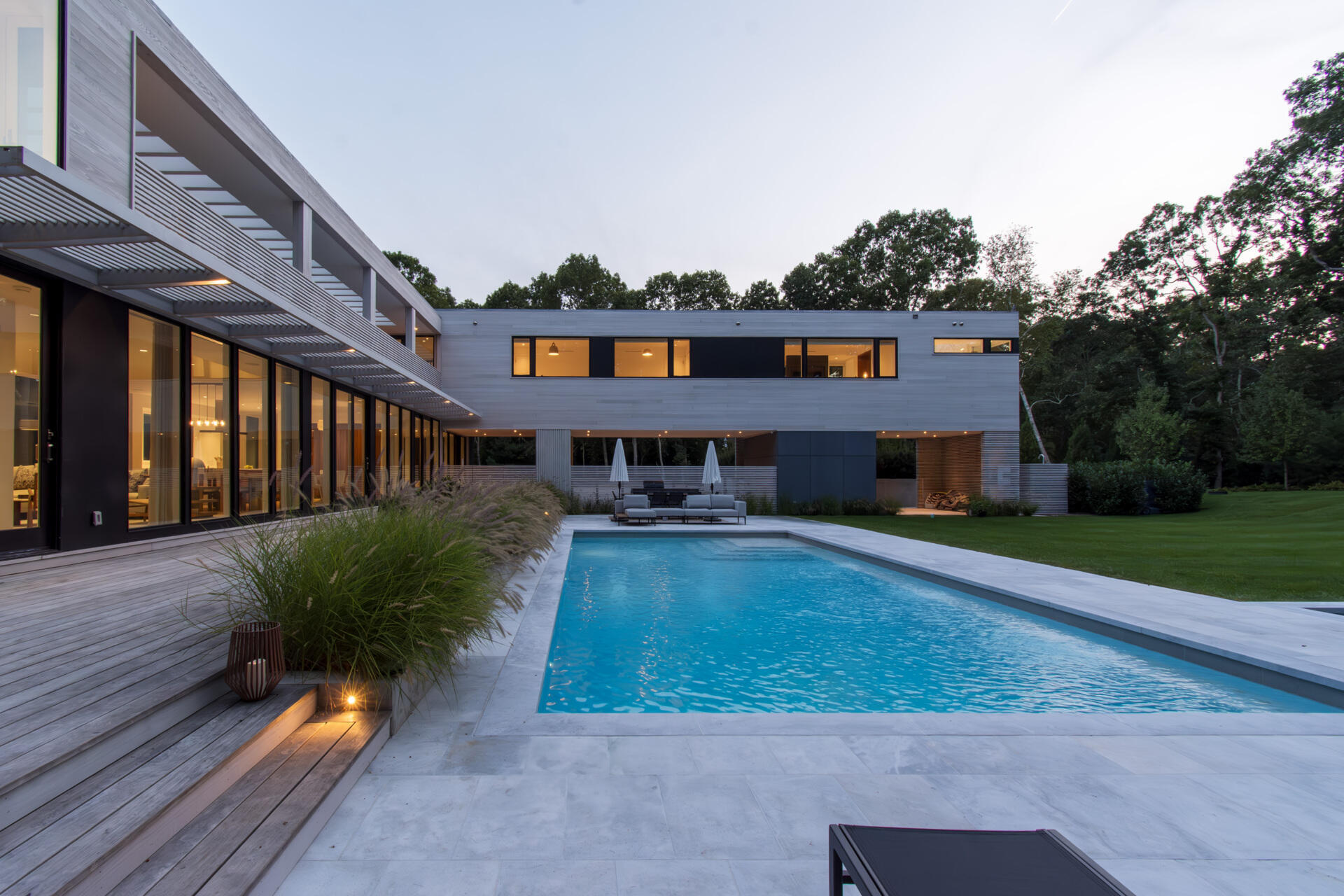
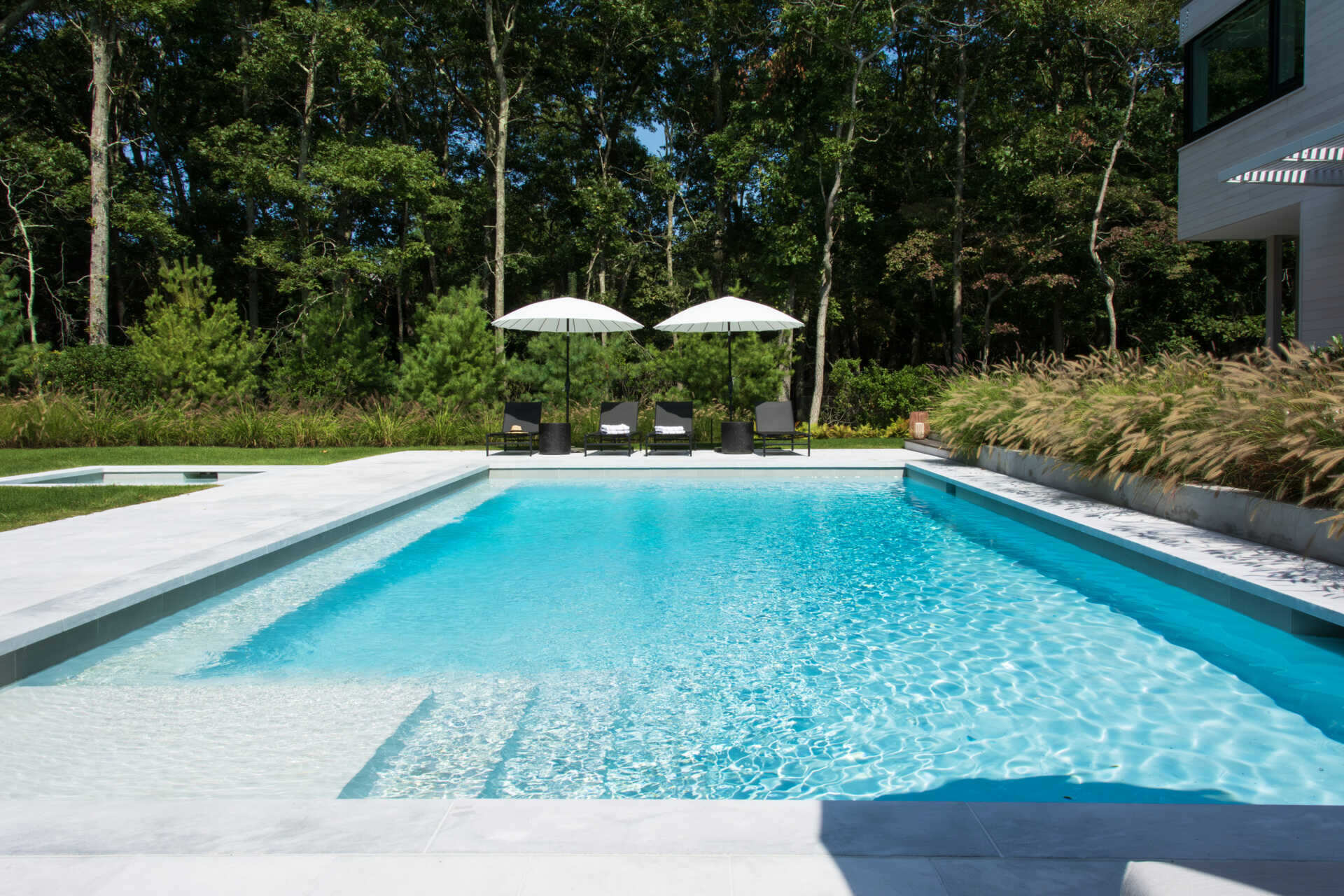
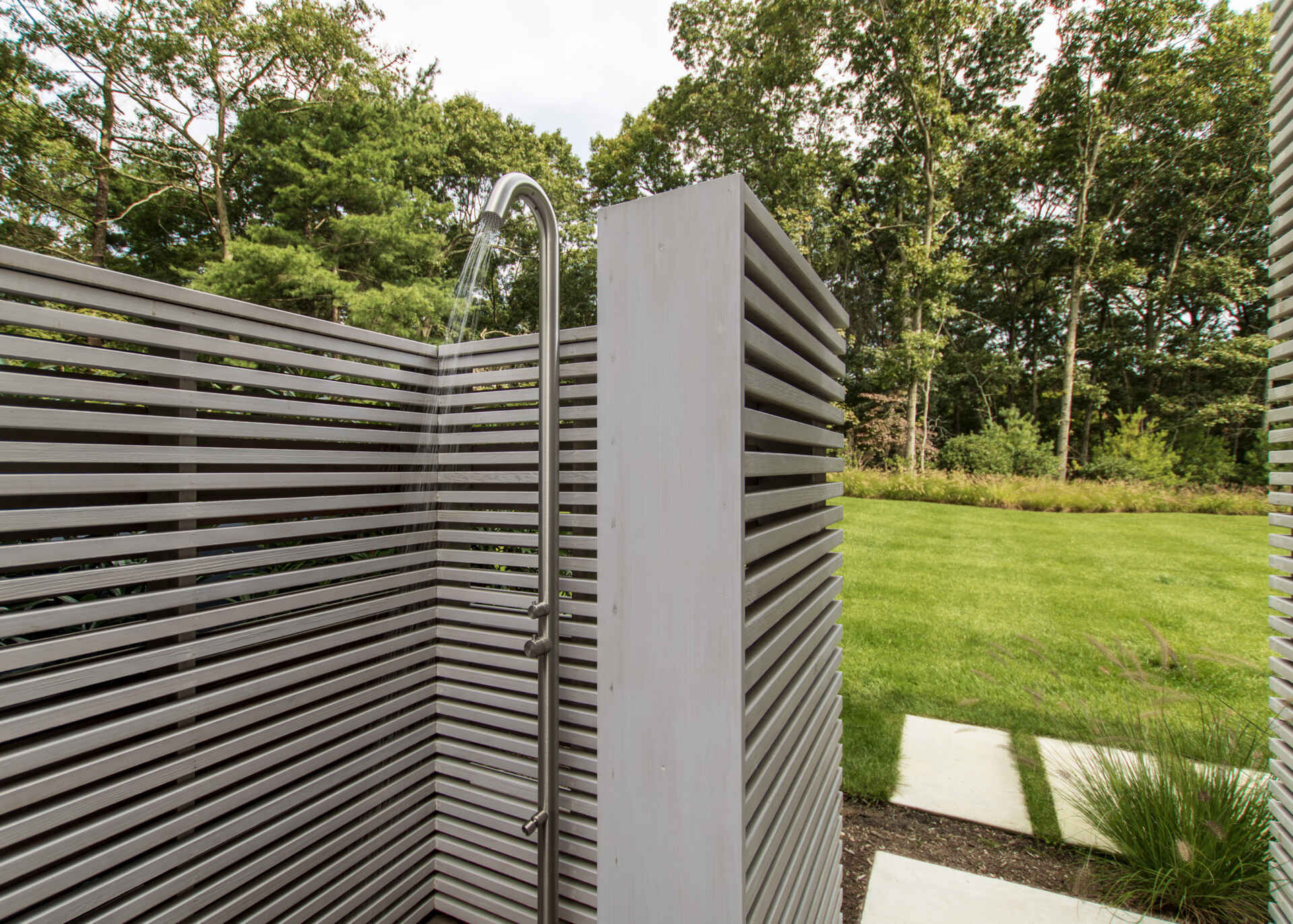
The pool terrace extends directly from the main living spaces, creating an outdoor zone that feels private without becoming enclosed. Cedar screen walls separate the pool from the arrival sequence and parking area, allowing filtered views while maintaining openness.
An outdoor shower tucked beside the terrace adds another layer to the summer-focused design. Surrounded by cedar and greenery, it feels integrated into the architecture instead of added as an afterthought. Covered decks nearby provide shade throughout the day, making the exterior spaces usable across changing weather and seasons.
A Layered Entry Sequence Wrapped in Cedar
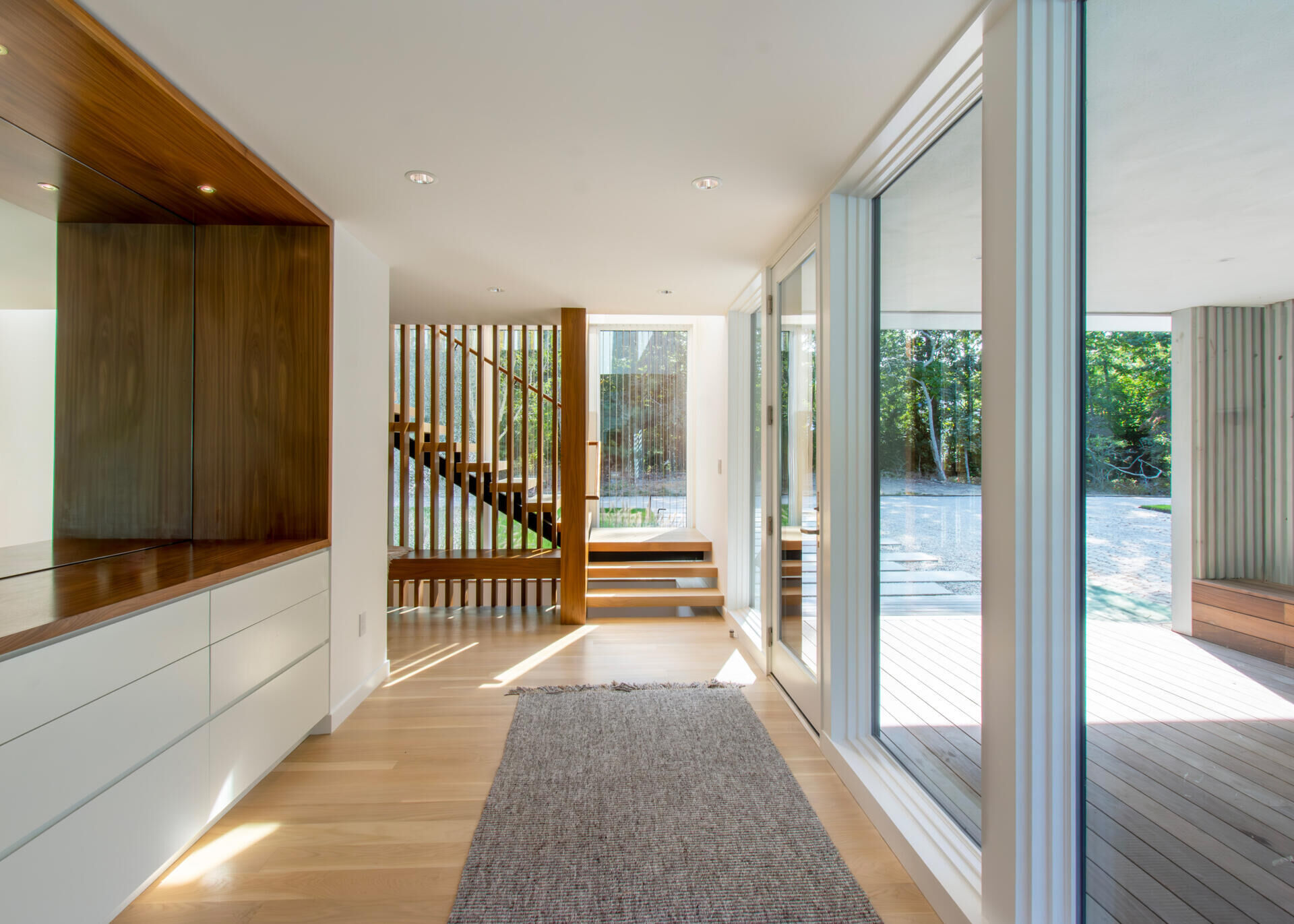
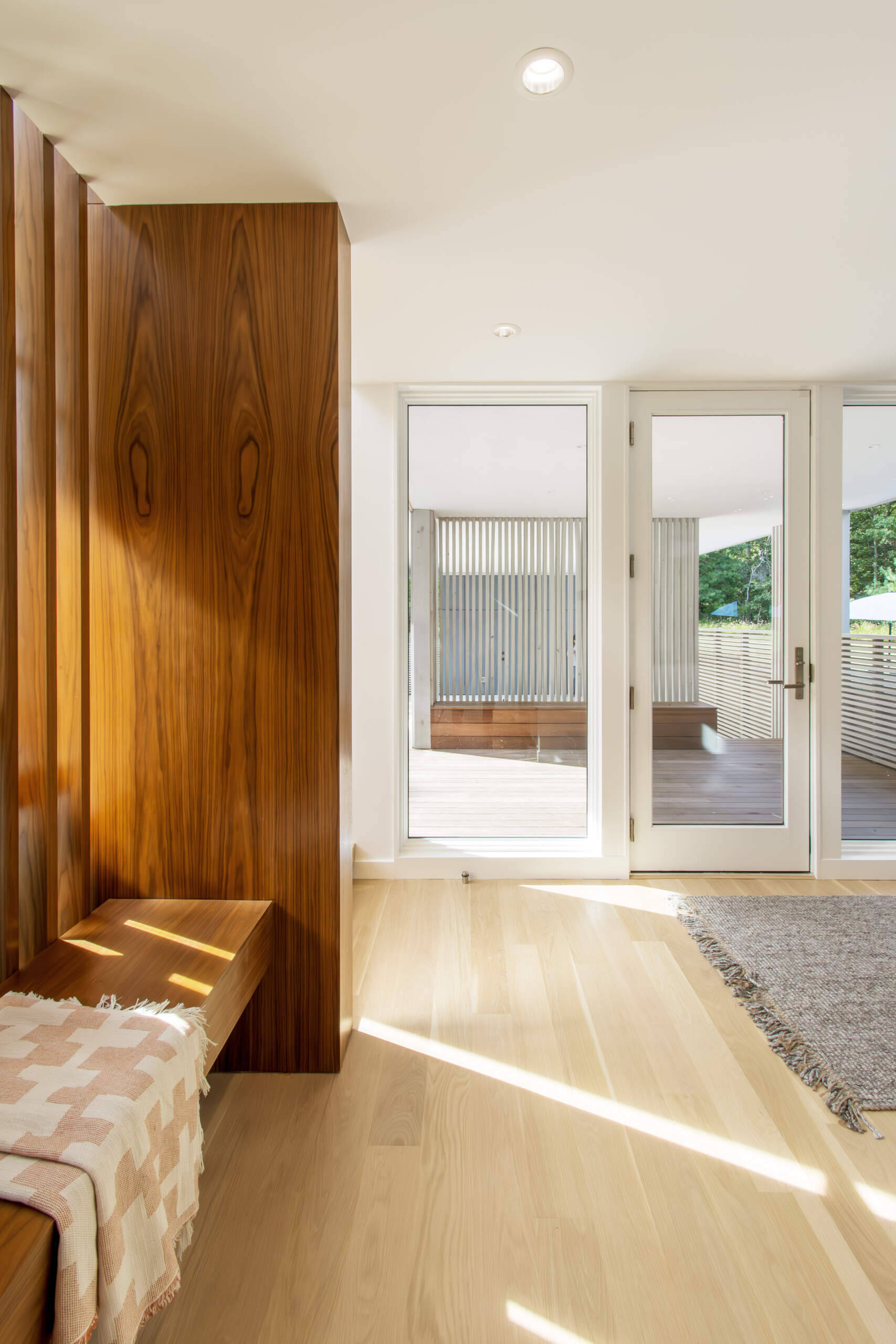
Arrival begins beneath a second-floor volume that stretches across the carport, creating a sheltered entry experience before stepping inside. Cedar screen walls guide movement through the entry sequence, adding texture and depth without fully closing off the exterior spaces.
Inside, the foyer intentionally compresses the ceiling height to eight feet. That lower scale makes the transition into the main living area feel dramatic, as the interiors suddenly open into double-height glazing and long views toward the woods.
Floor-to-Ceiling Glass Frames the Surrounding Woods
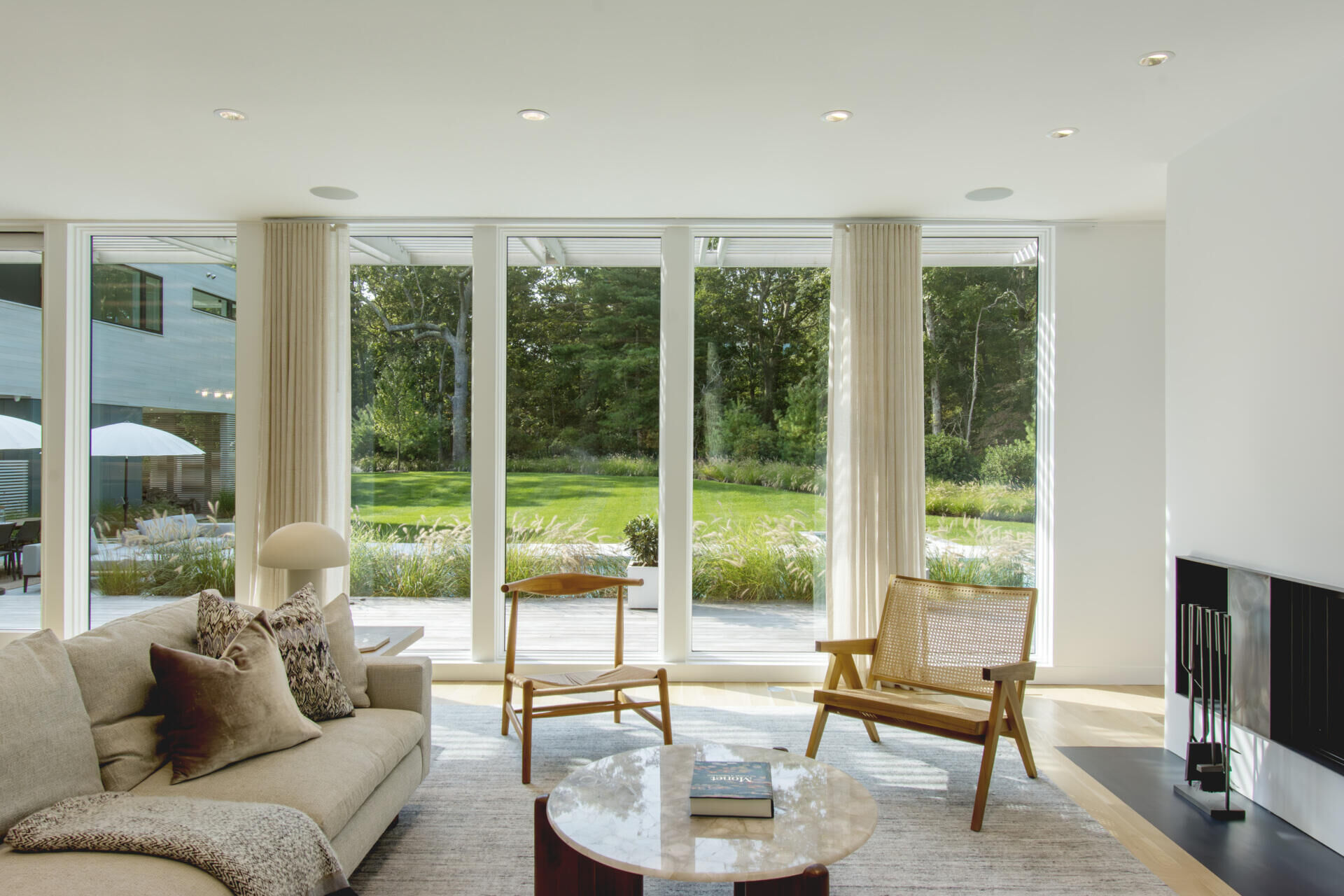
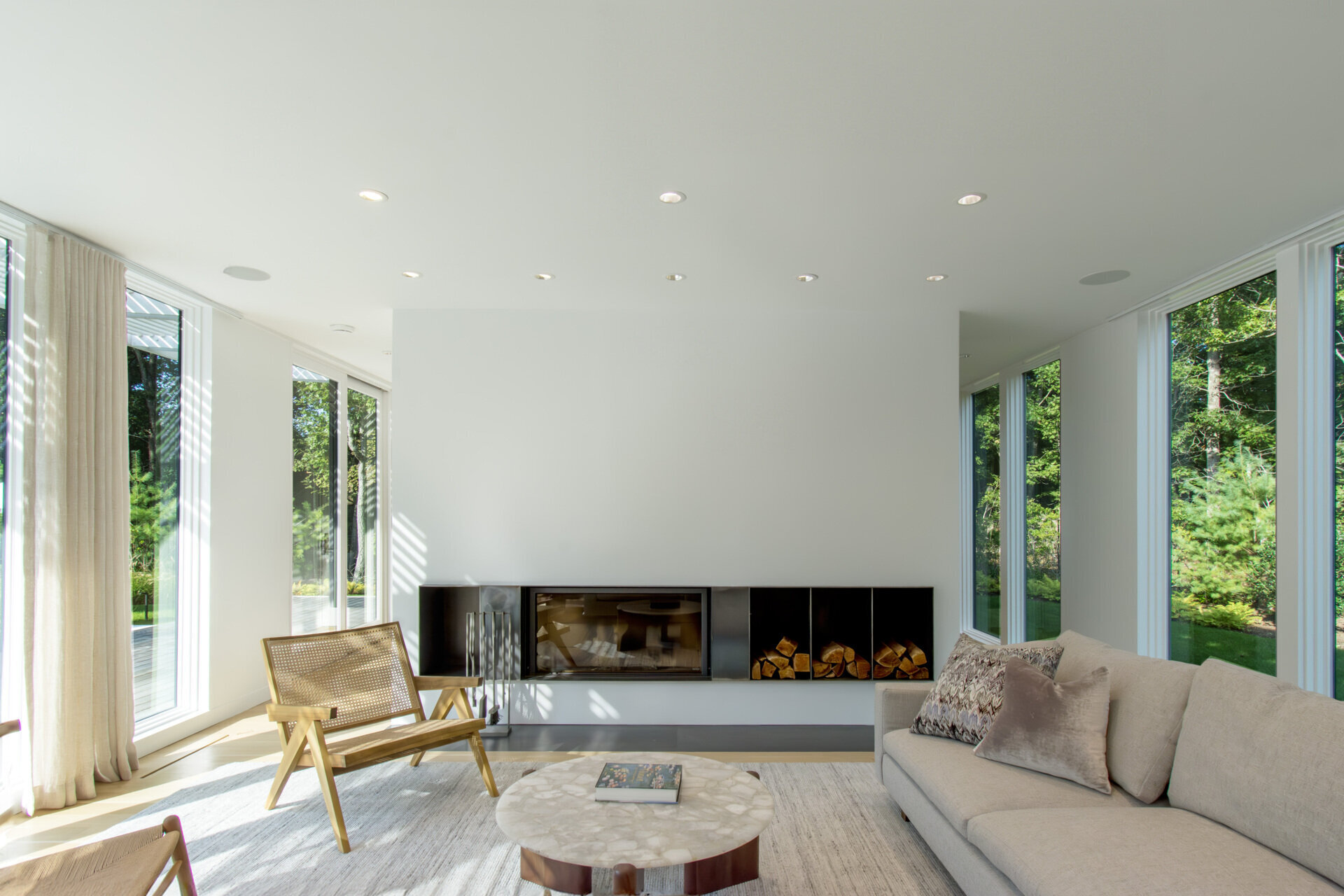
The living room is positioned to capture preserved woodland views to the north, east, and west. Floor-to-ceiling glazing turns the surrounding trees into a constantly changing backdrop, while operable sliding doors allow fresh air to move naturally through the home, and a fireplace adds warmth on a cool night.
The material palette keeps the atmosphere warm and understated. Cedar tones, soft finishes, and filtered daylight create a relaxed setting that never competes with the landscape outside. Even with expansive glass walls, the room maintains privacy through orientation and strategic screening.
Indoor-Outdoor Dining in the Heart of the Home
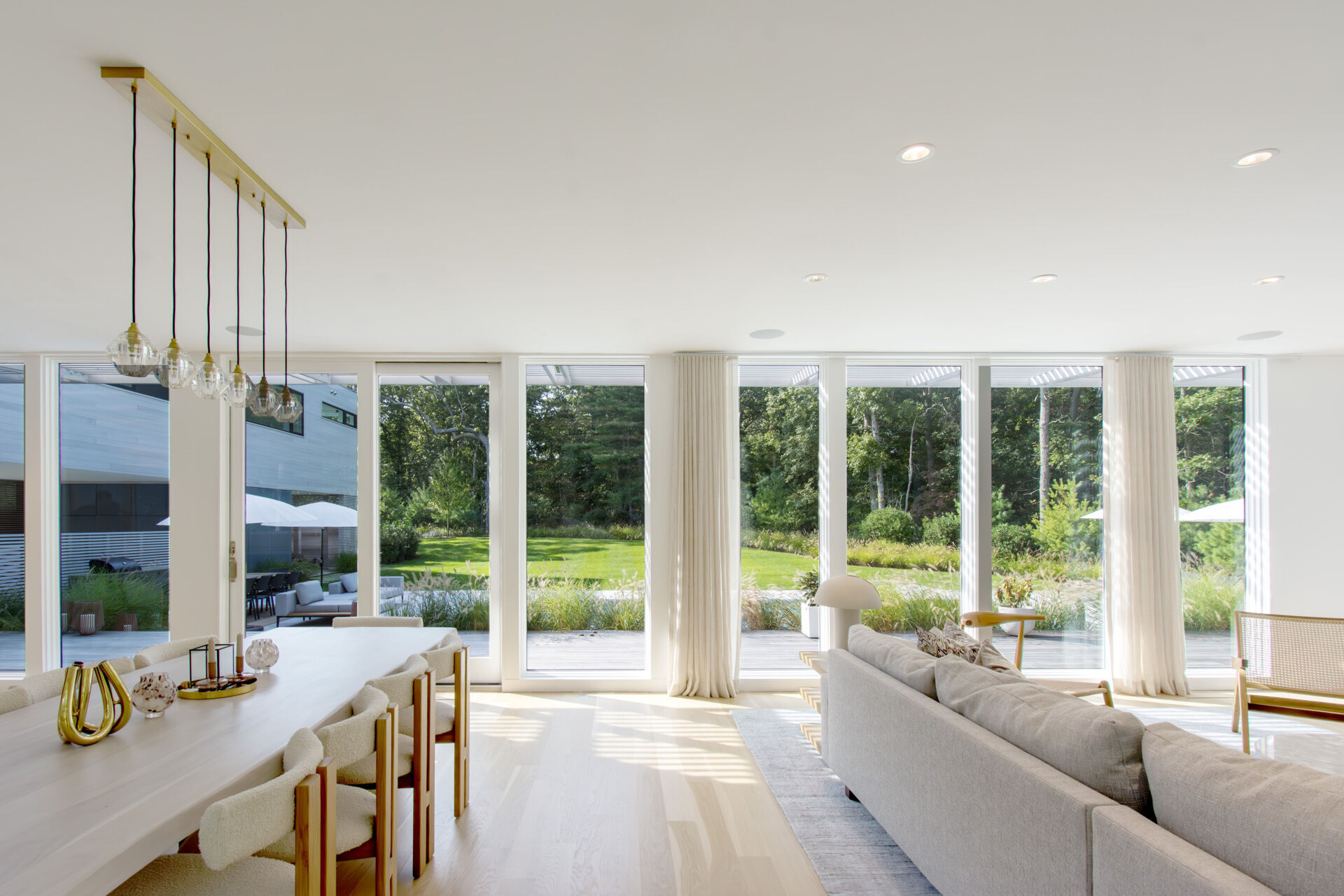
Positioned between the living room and kitchen, the dining area acts as a social anchor within the open-plan layout. Natural light shifts across the space throughout the day thanks to nearby skylights and expansive glazing.
Views extend toward the pool terrace and surrounding trees, while sliding doors make outdoor dining feel like a natural extension of the interior during warmer months.
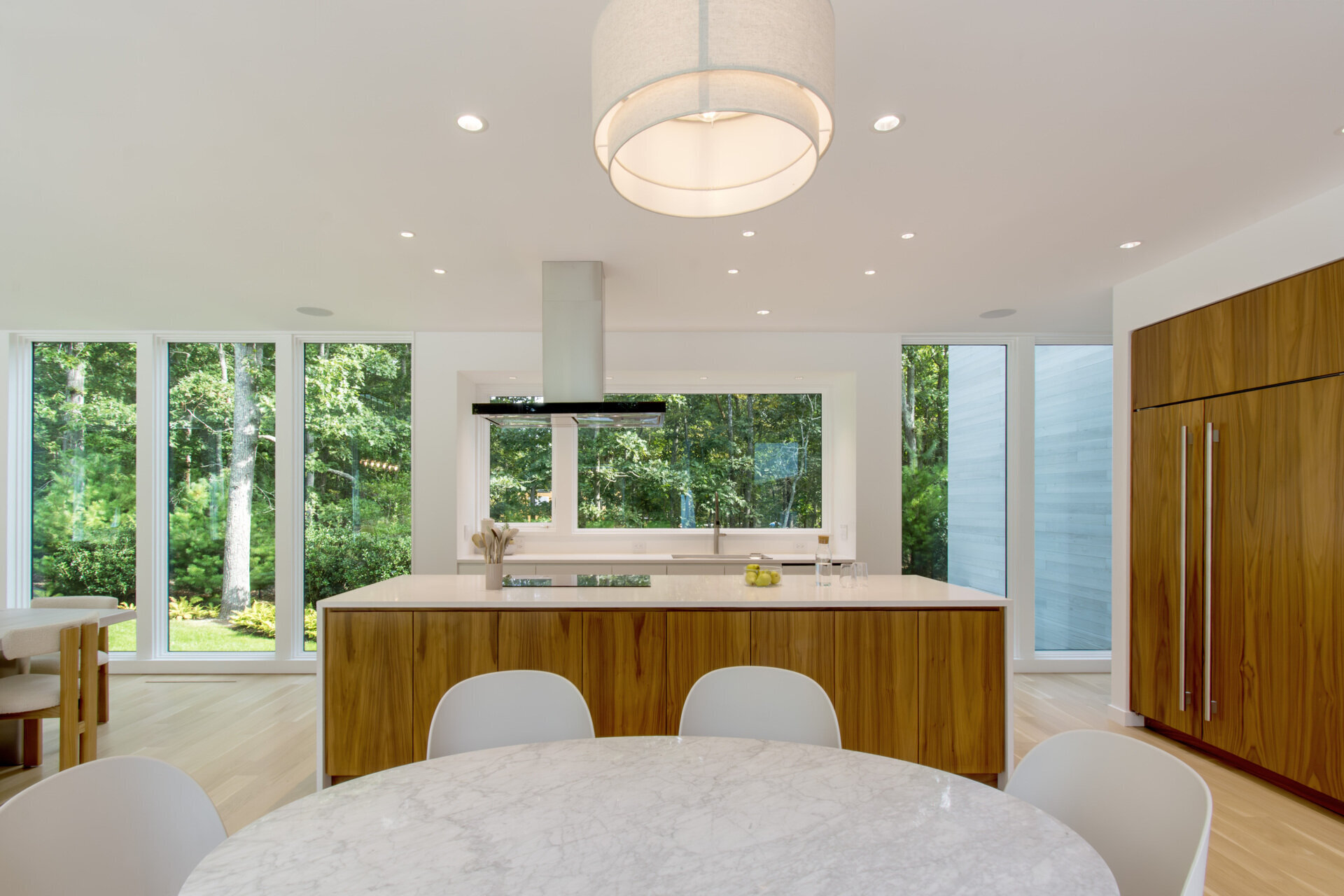
Clean-Lined Cabinetry Meets Natural Materials
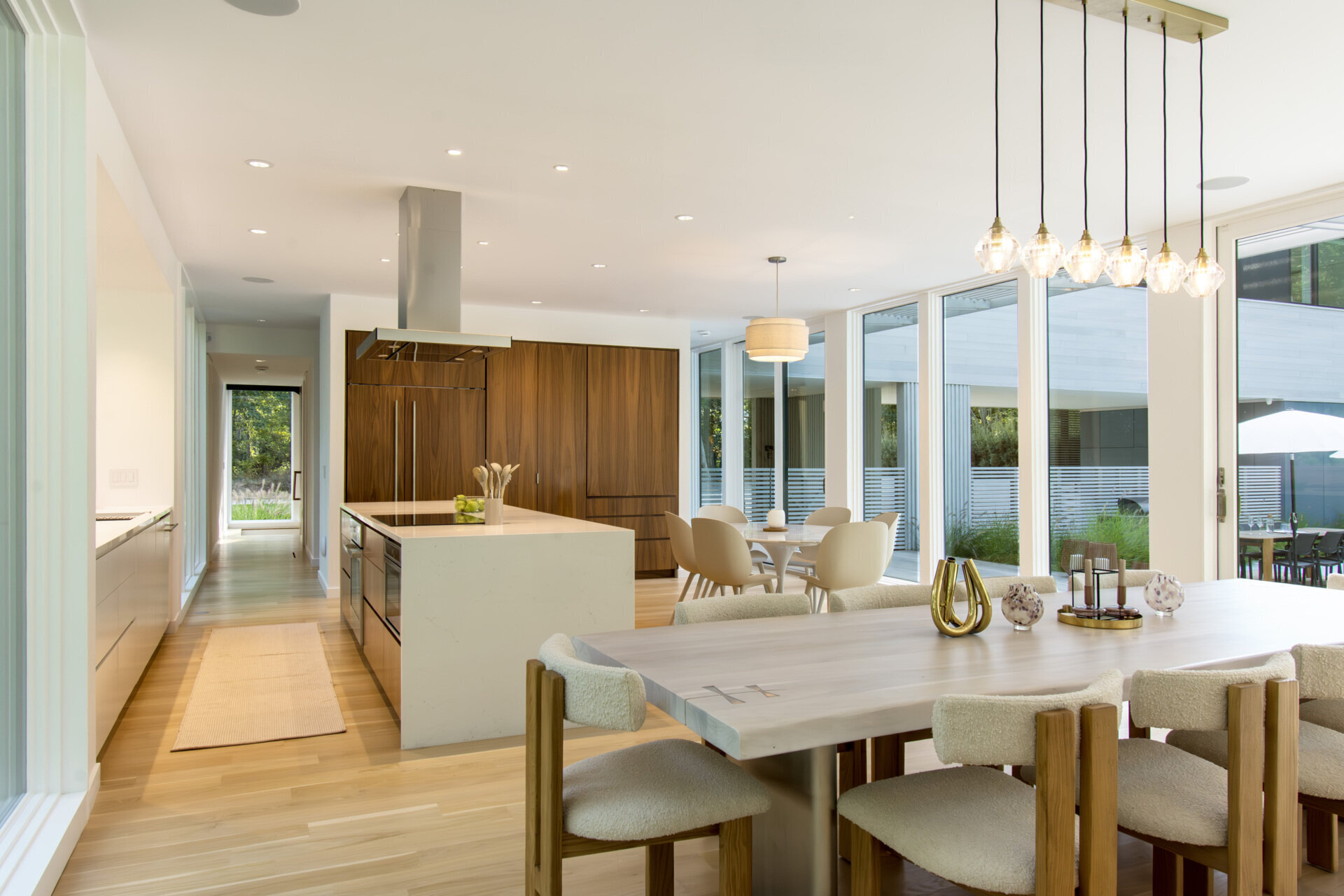
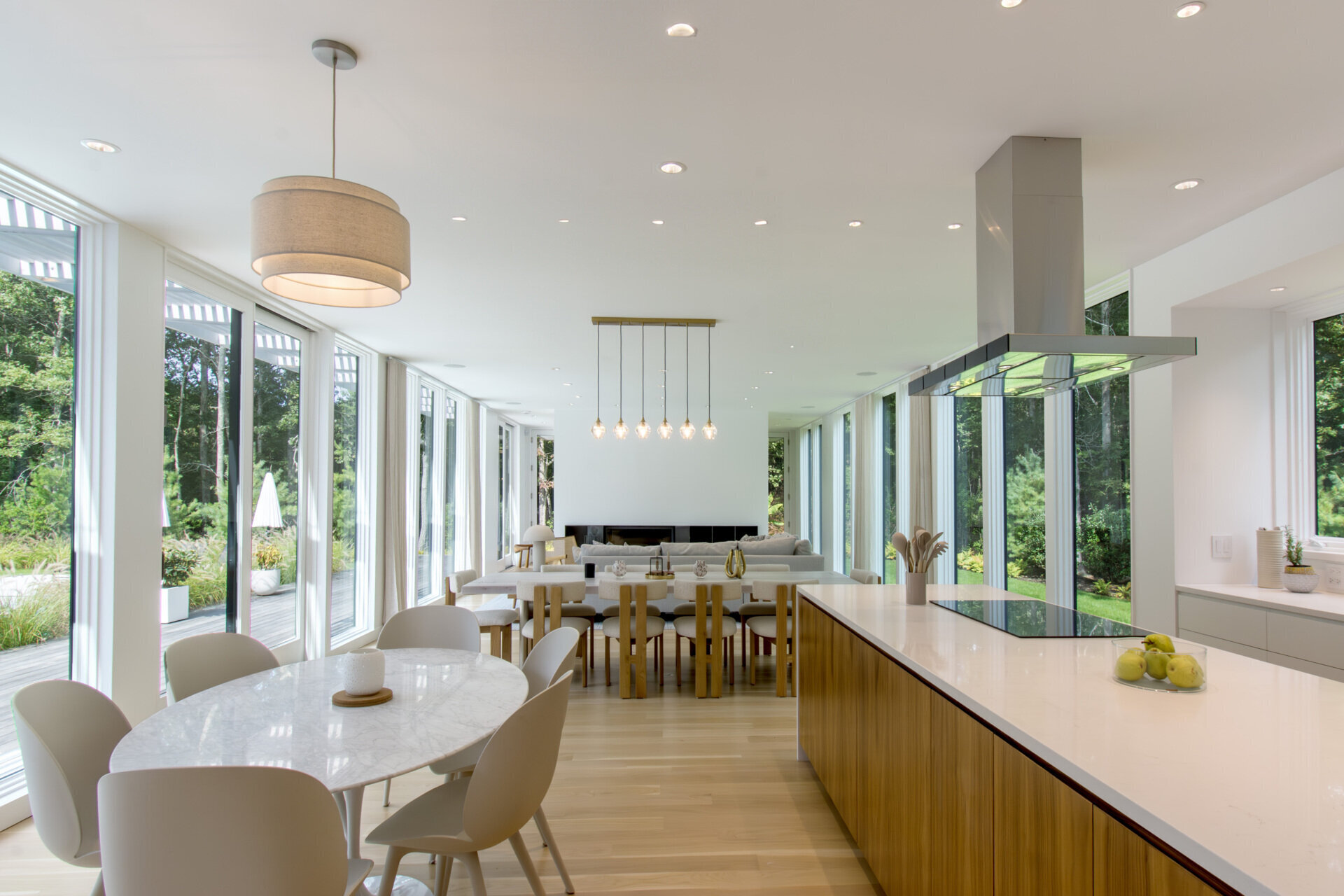
The kitchen combines clean-lined cabinetry with warm material finishes that complement the cedar architecture throughout the home. Because many of the finishes and fixtures were installed before the modules arrived on site, the kitchen also reflects the efficiency of the modular construction process. Cabinetry, systems, and detailing feel integrated from the beginning instead of pieced together later.
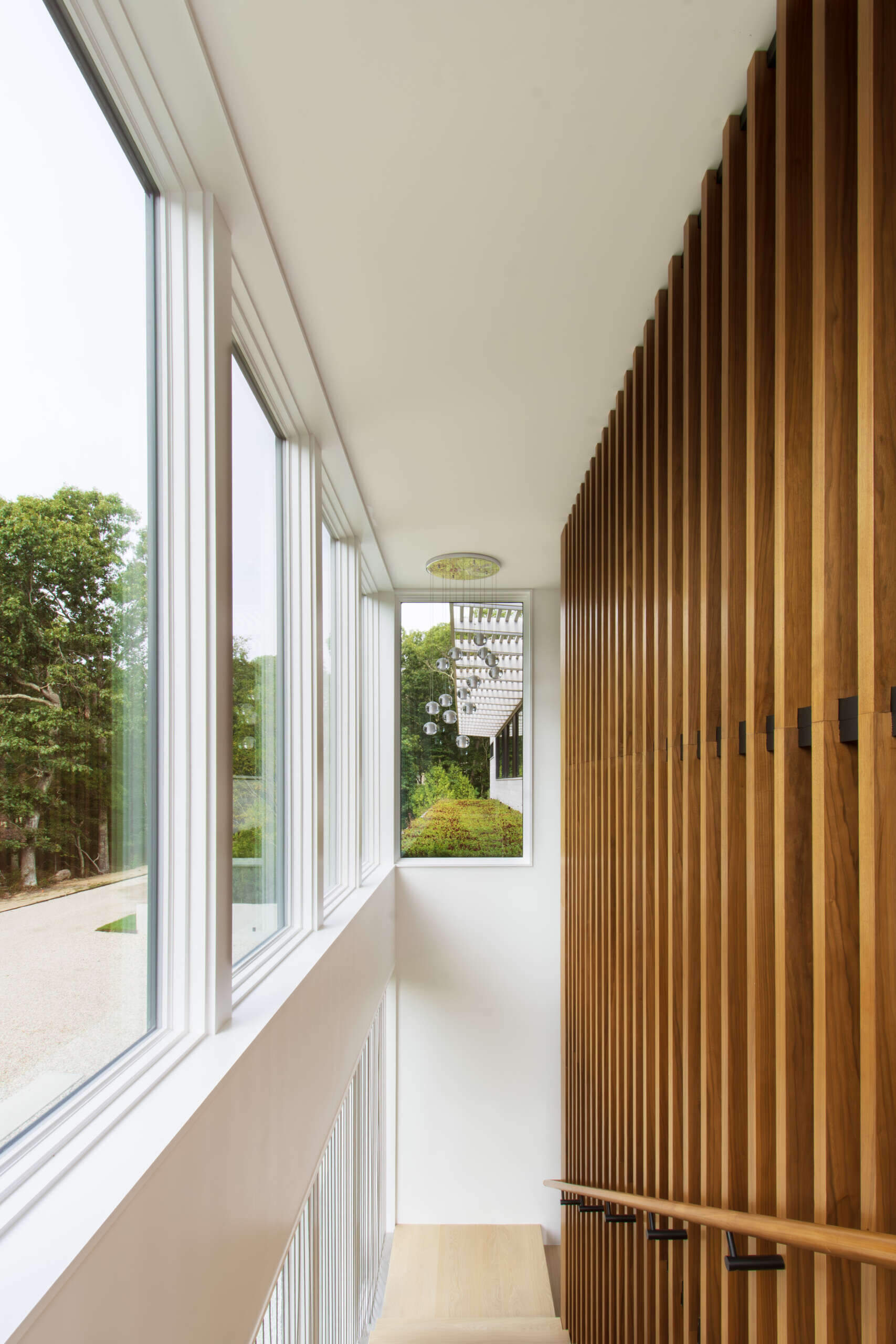
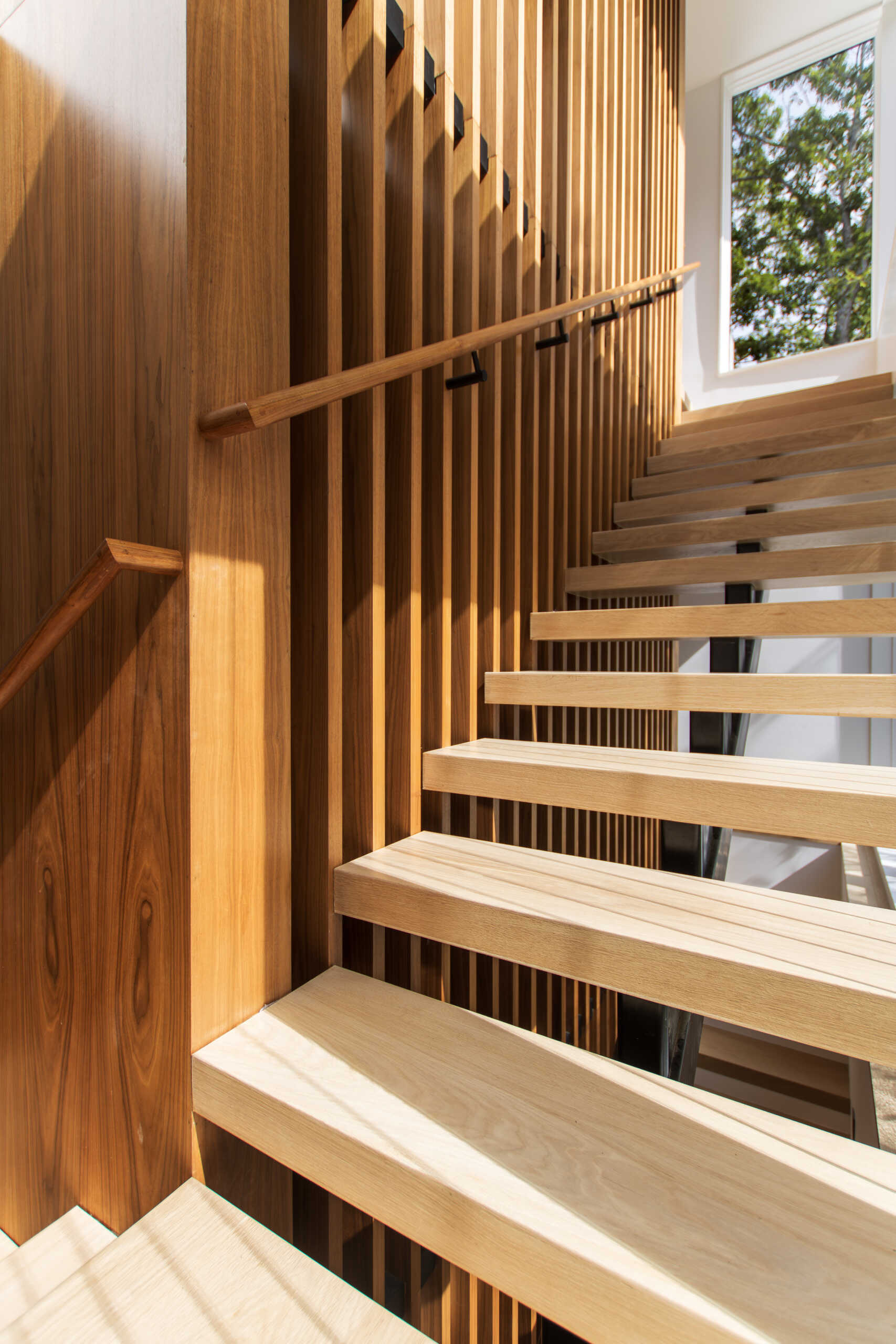
Light and Shadow Move Through the Stairwell
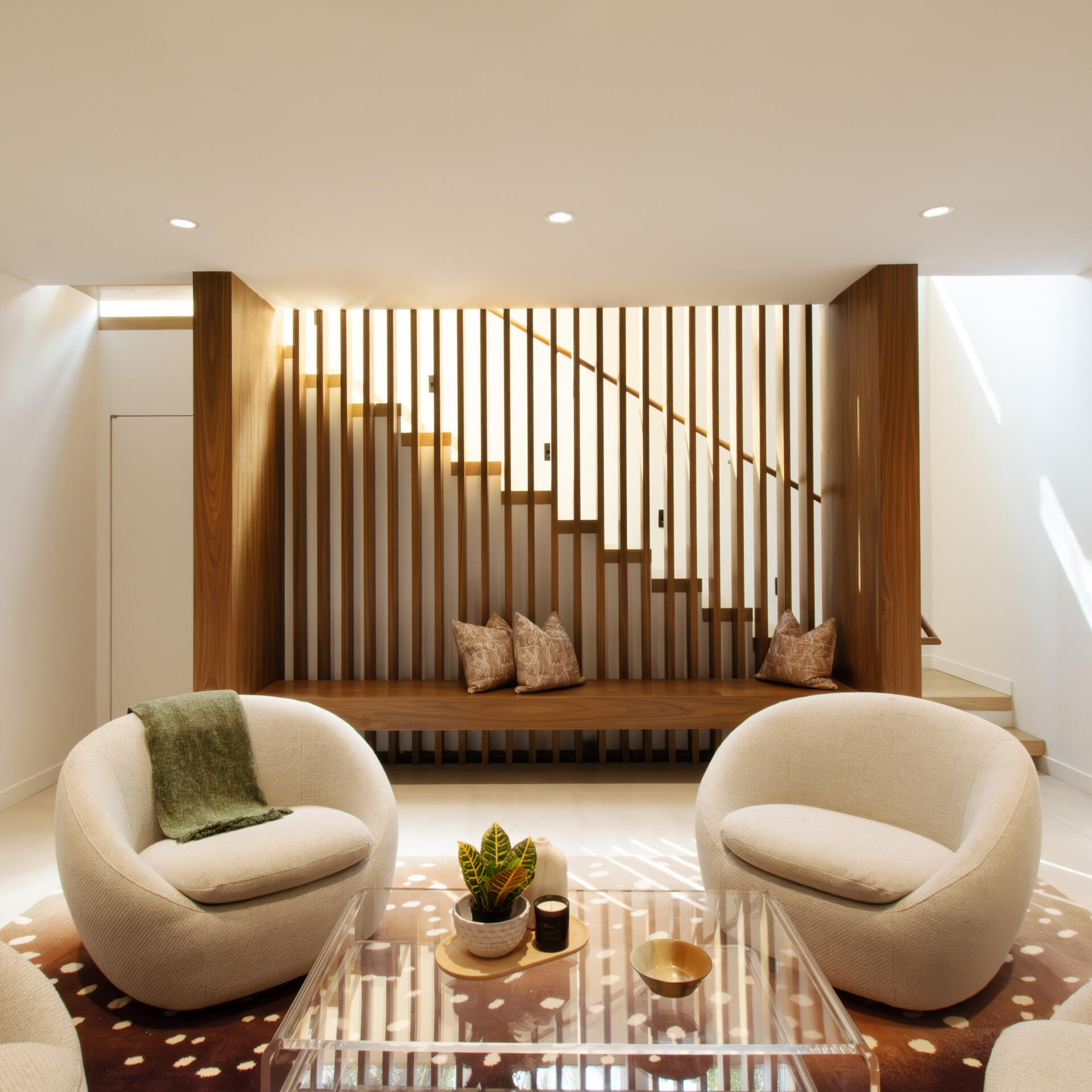
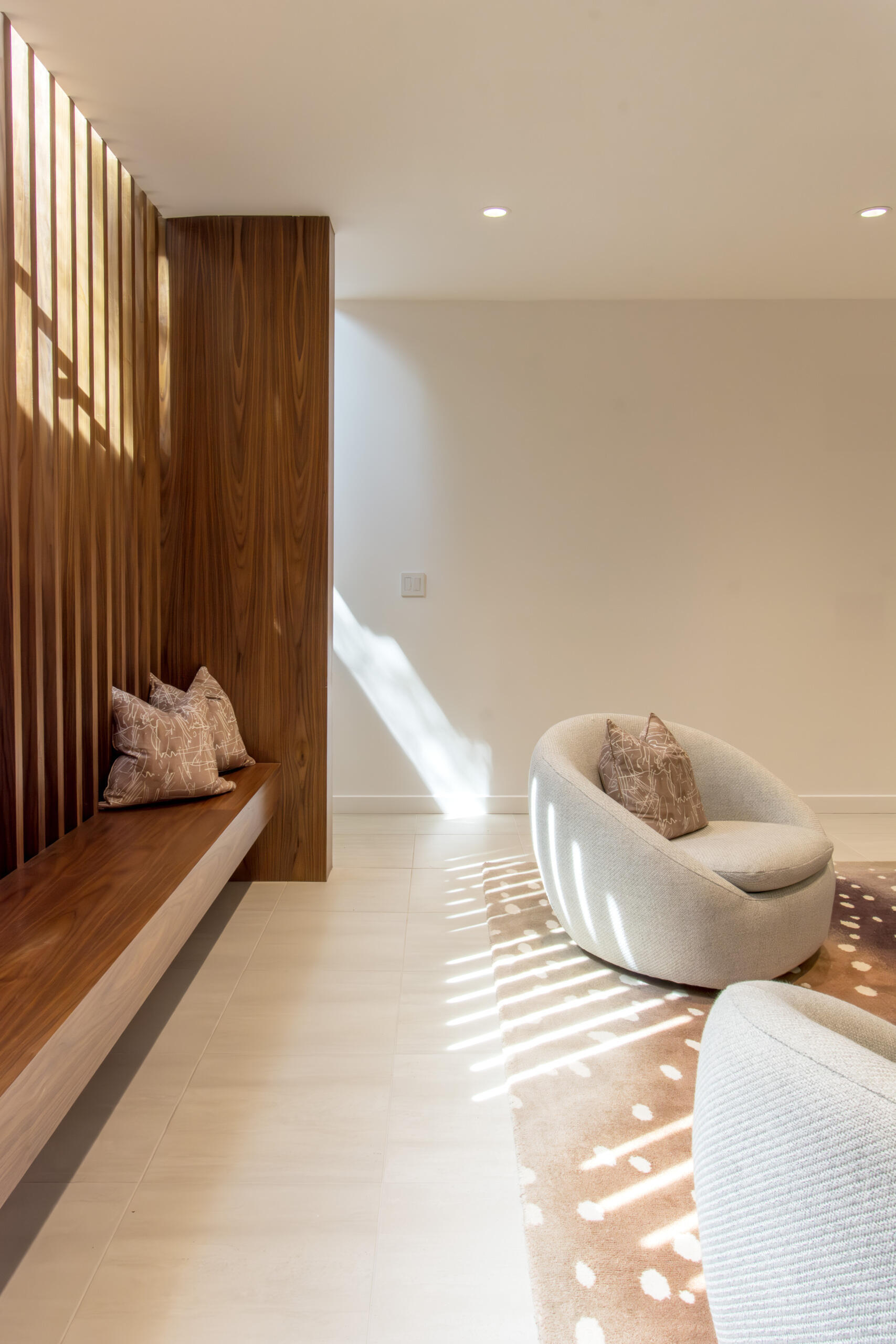
Front and rear staircases acts as both a circulation path and a source of natural light. As sunlight changes through the day, shadows move across the stair walls and flooring, turning the vertical circulation space into one of the most visually dynamic areas of the home.
An Upstairs Space Designed to Evolve Over Time
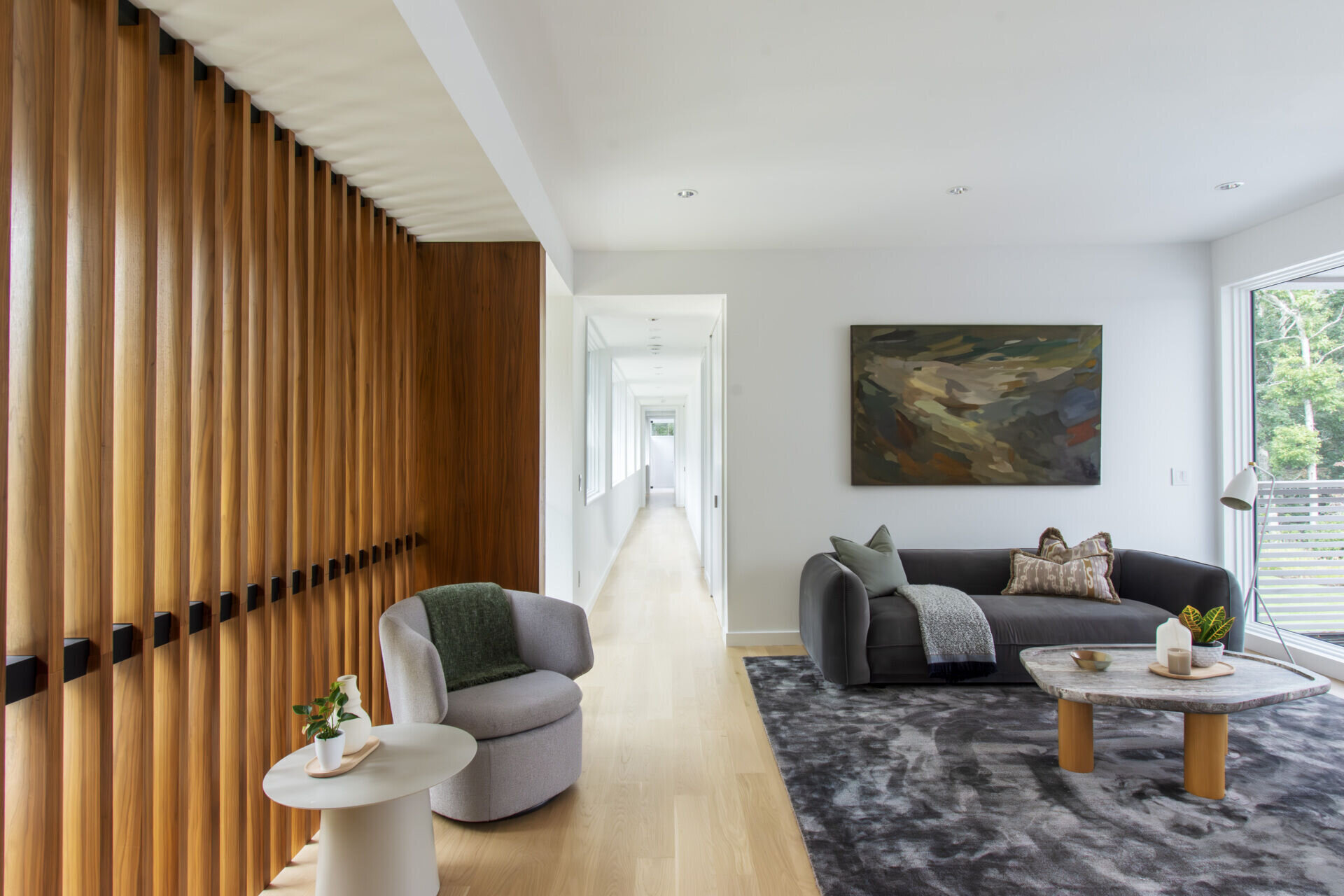
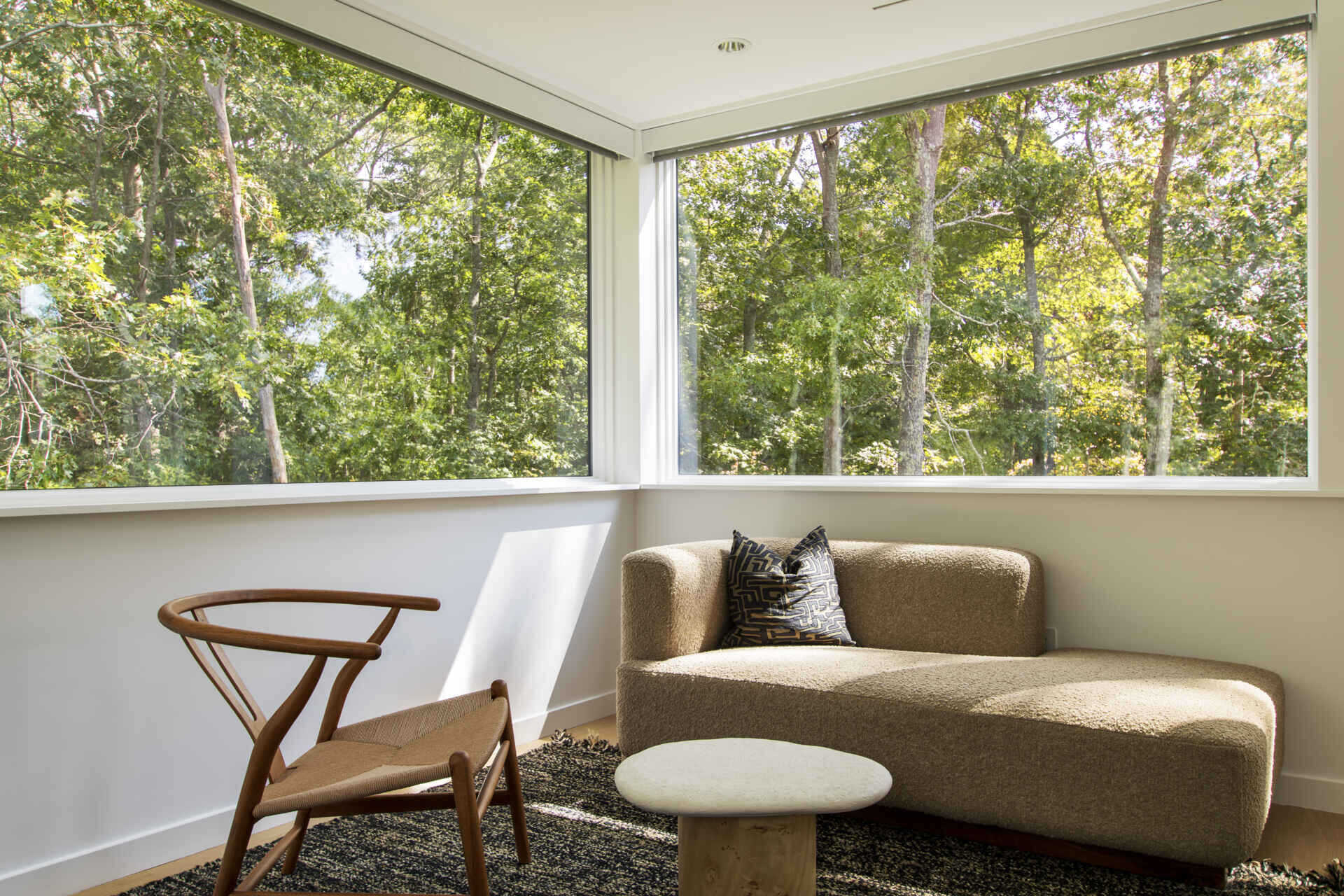
The second-floor flex space was designed to evolve alongside the family over time. Initially functioning as a play area, the open room can easily shift into a media space, lounge, study area, or additional gathering zone in the future.
Located near the bedroom wing, the space balances openness with separation from the more public entertaining areas downstairs.
A Calm and Light-Filled Office Space
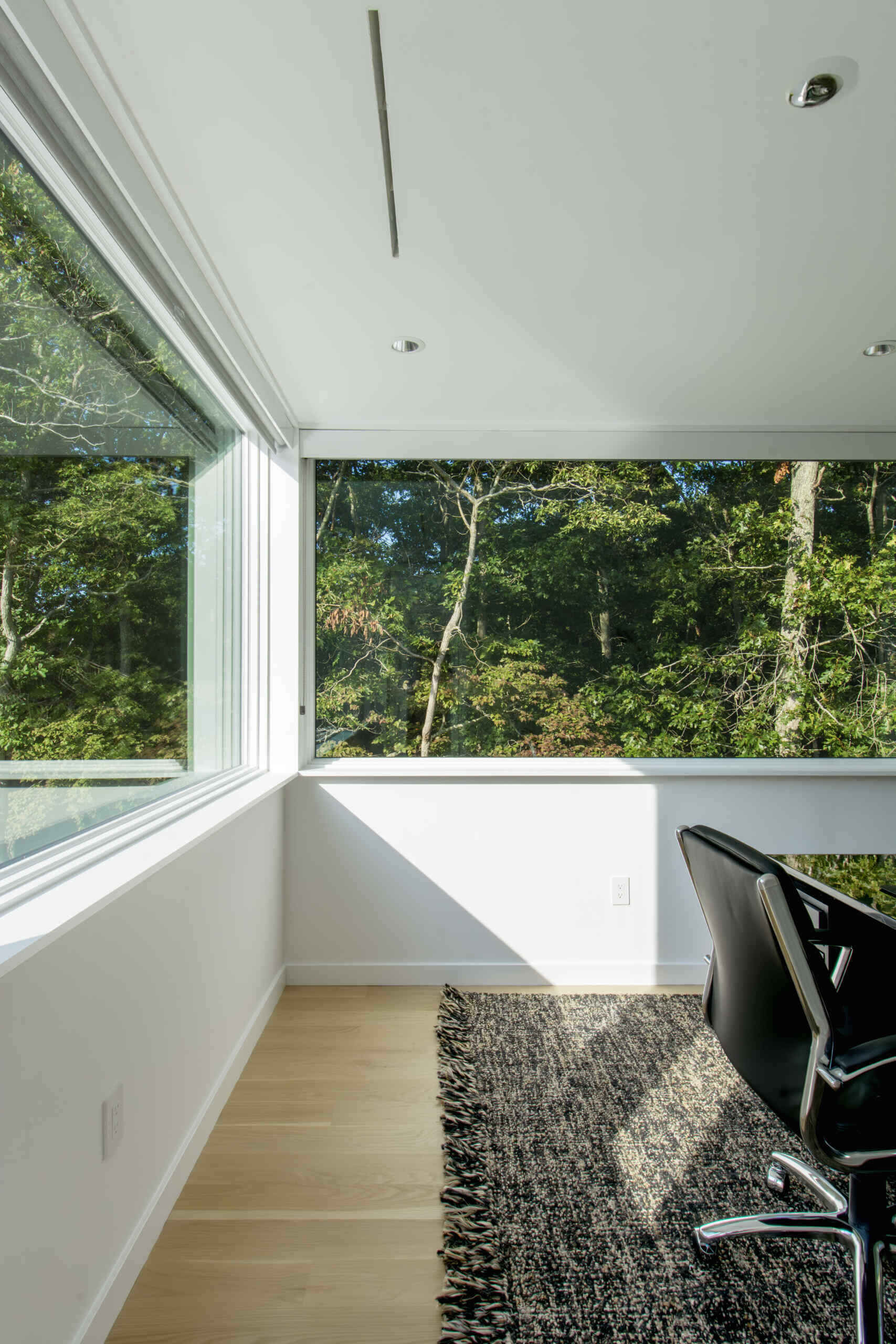
The home office takes advantage of the quiet wooded setting, using large windows to frame greenery while maintaining a sense of privacy. The restrained palette keeps distractions minimal, making the room feel calm and productive.
A Bedroom with Forest Views
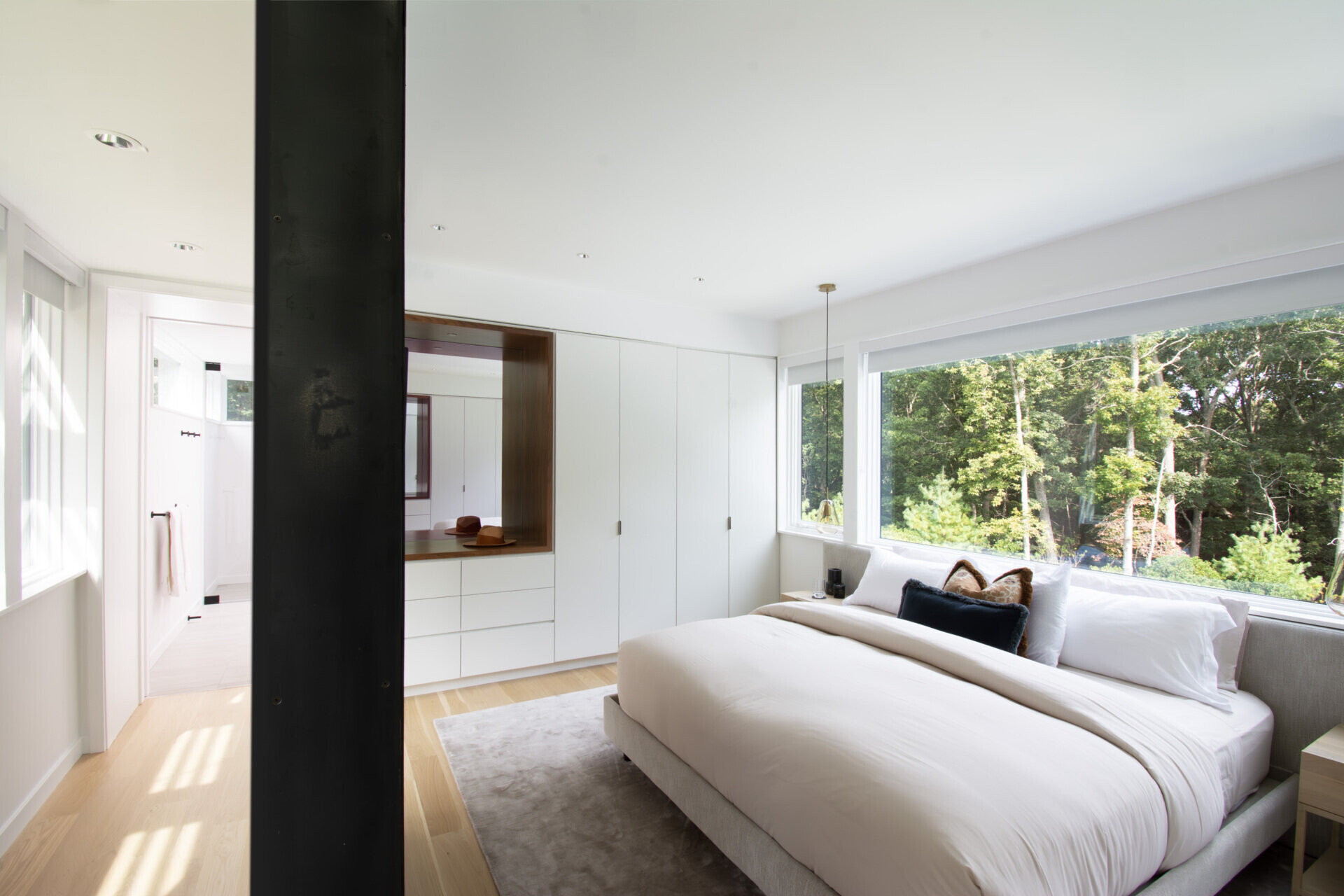
The primary bedroom continues the home’s connection to nature through expansive glazing and soft natural finishes. Morning light filters through the surrounding trees, while the orientation of the room maintains privacy without relying heavily on window coverings.
A Skylit Bathroom With Spa-Like Warmth
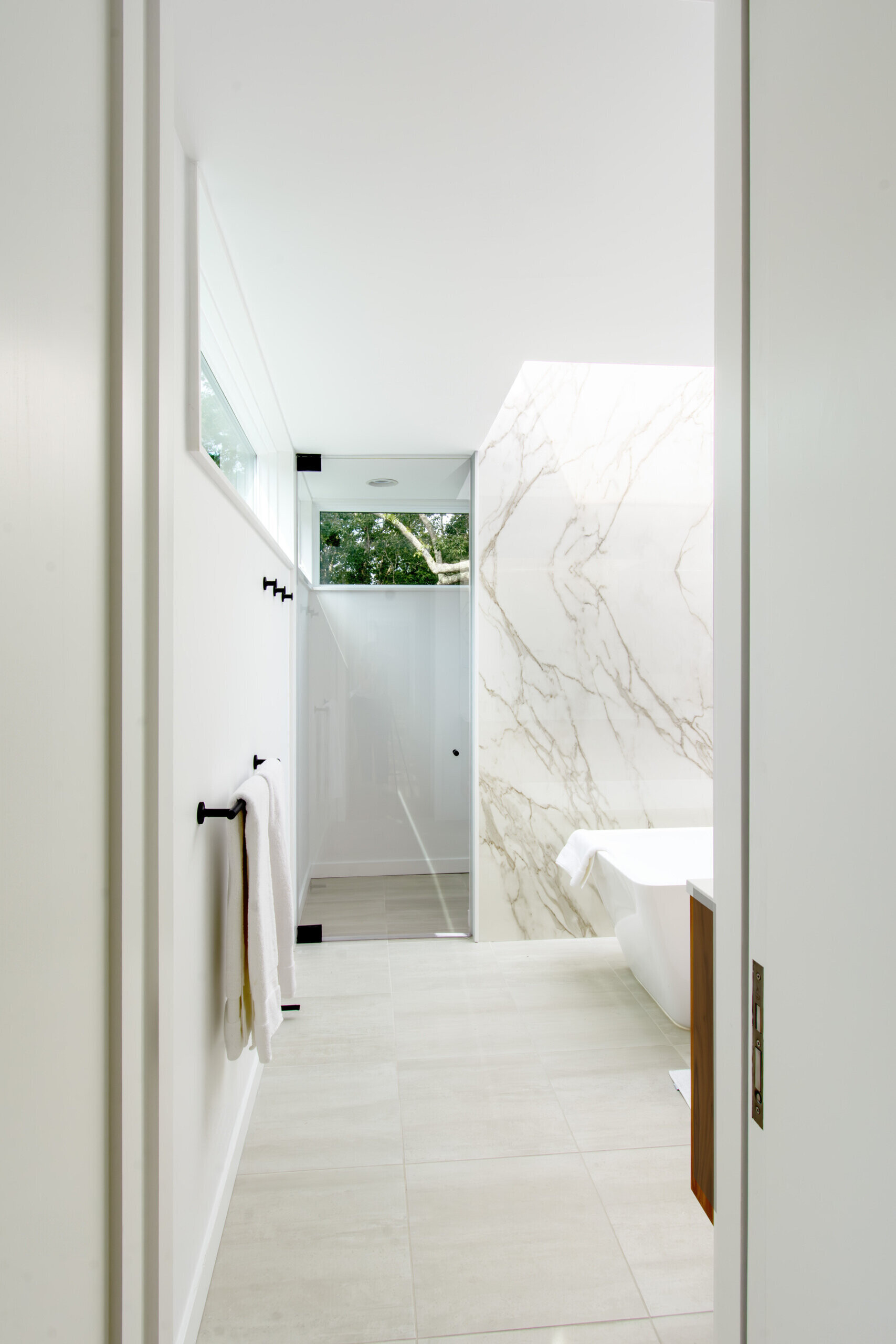
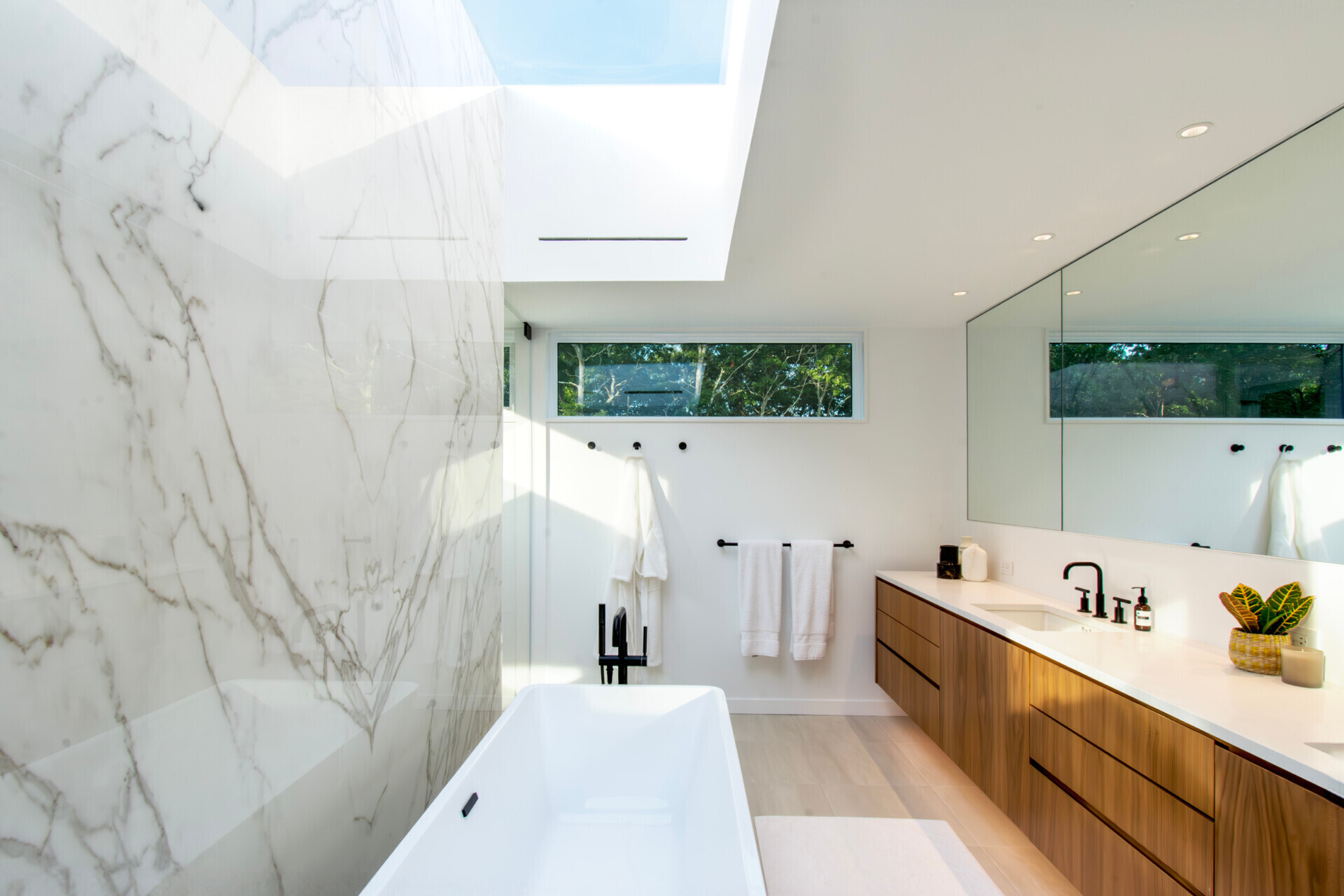
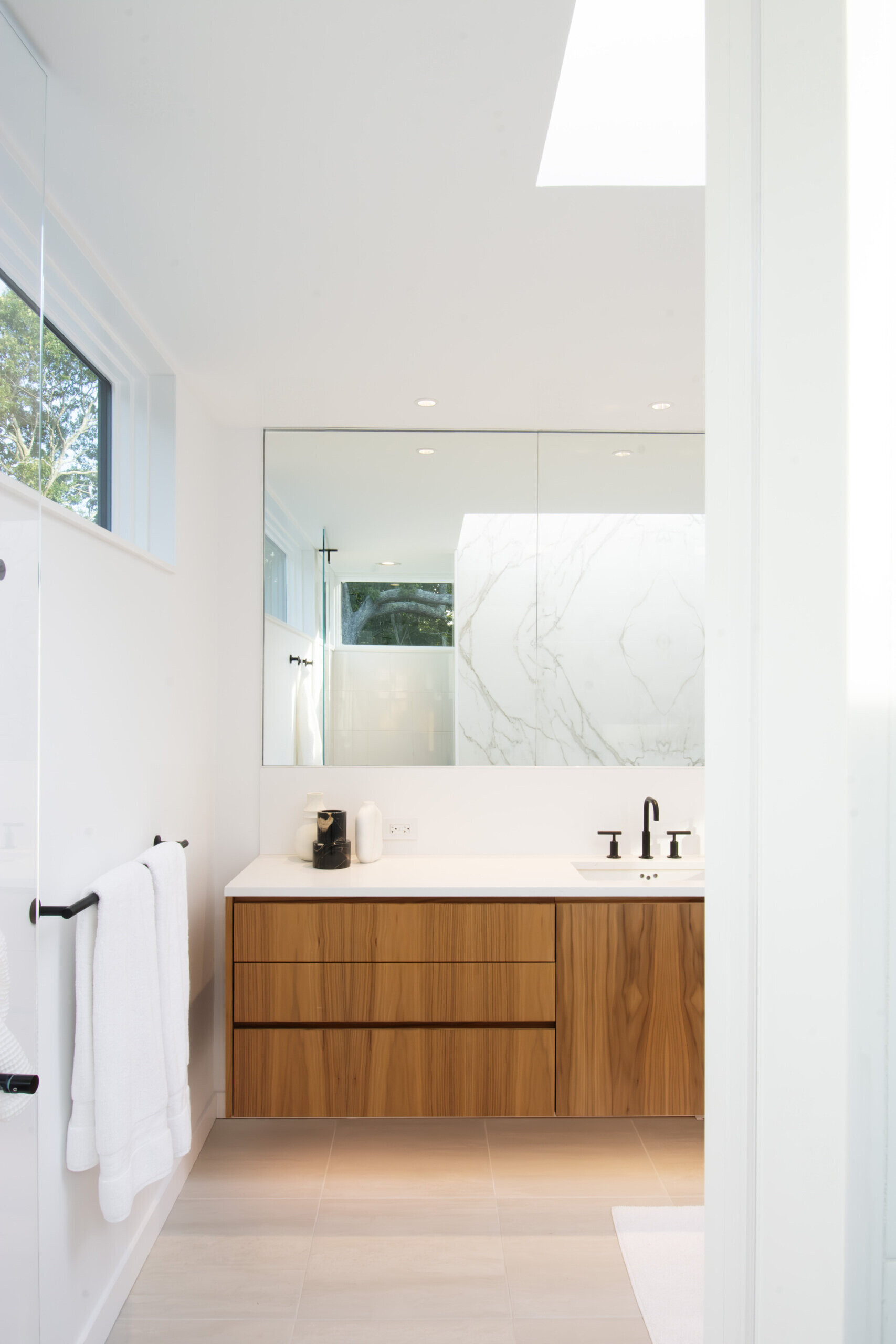
The primary bathroom receives daylight through oversized skylights that maintain privacy while filling the room with soft natural illumination. Light bounces across the pale material palette throughout the day, creating a bright but calming atmosphere.
The combination of cedar tones, stone surfaces, and filtered daylight gives the space a spa-like quality without feeling overly polished or formal.
A Cedar-Lined Sauna Hidden Below the Main Level
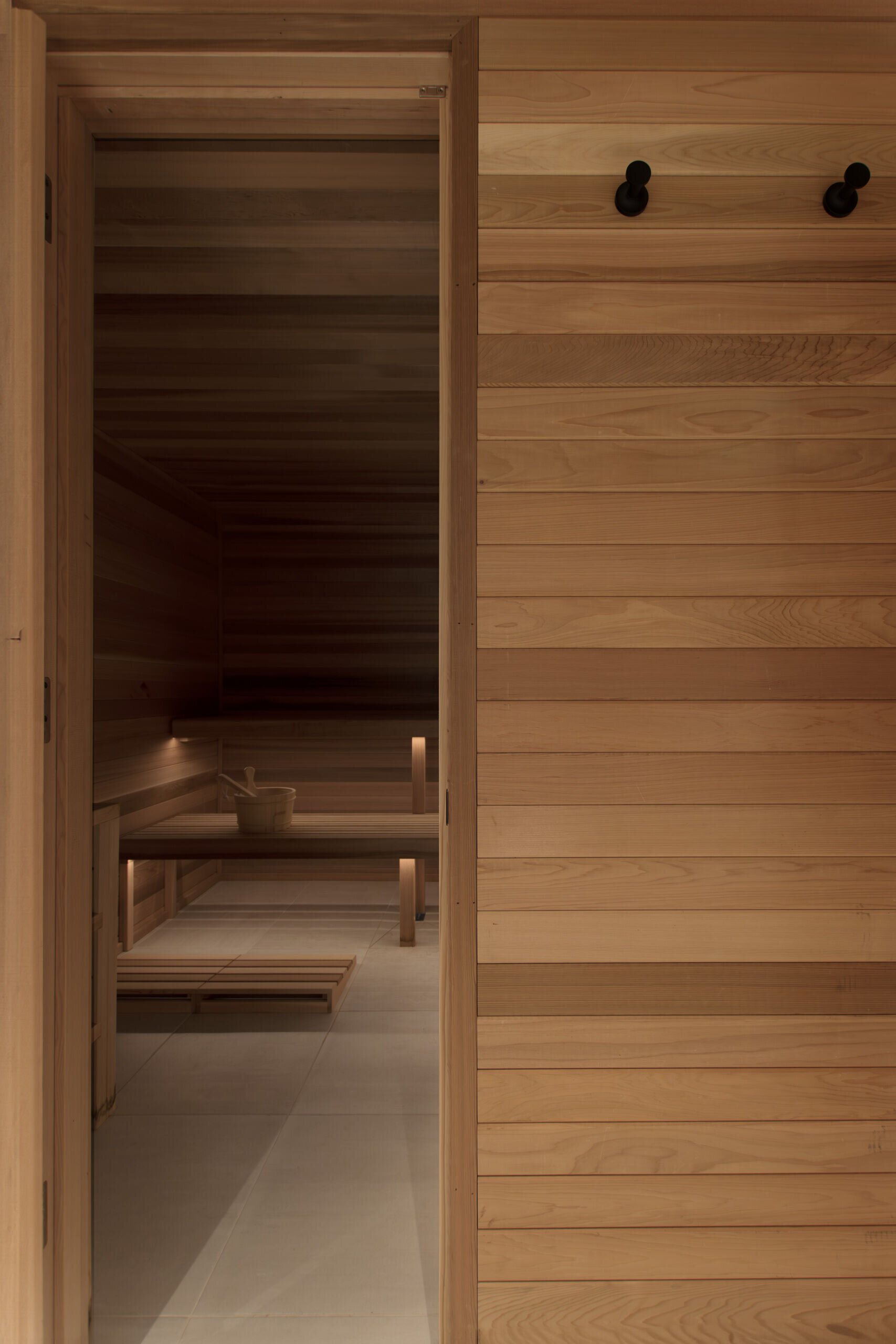
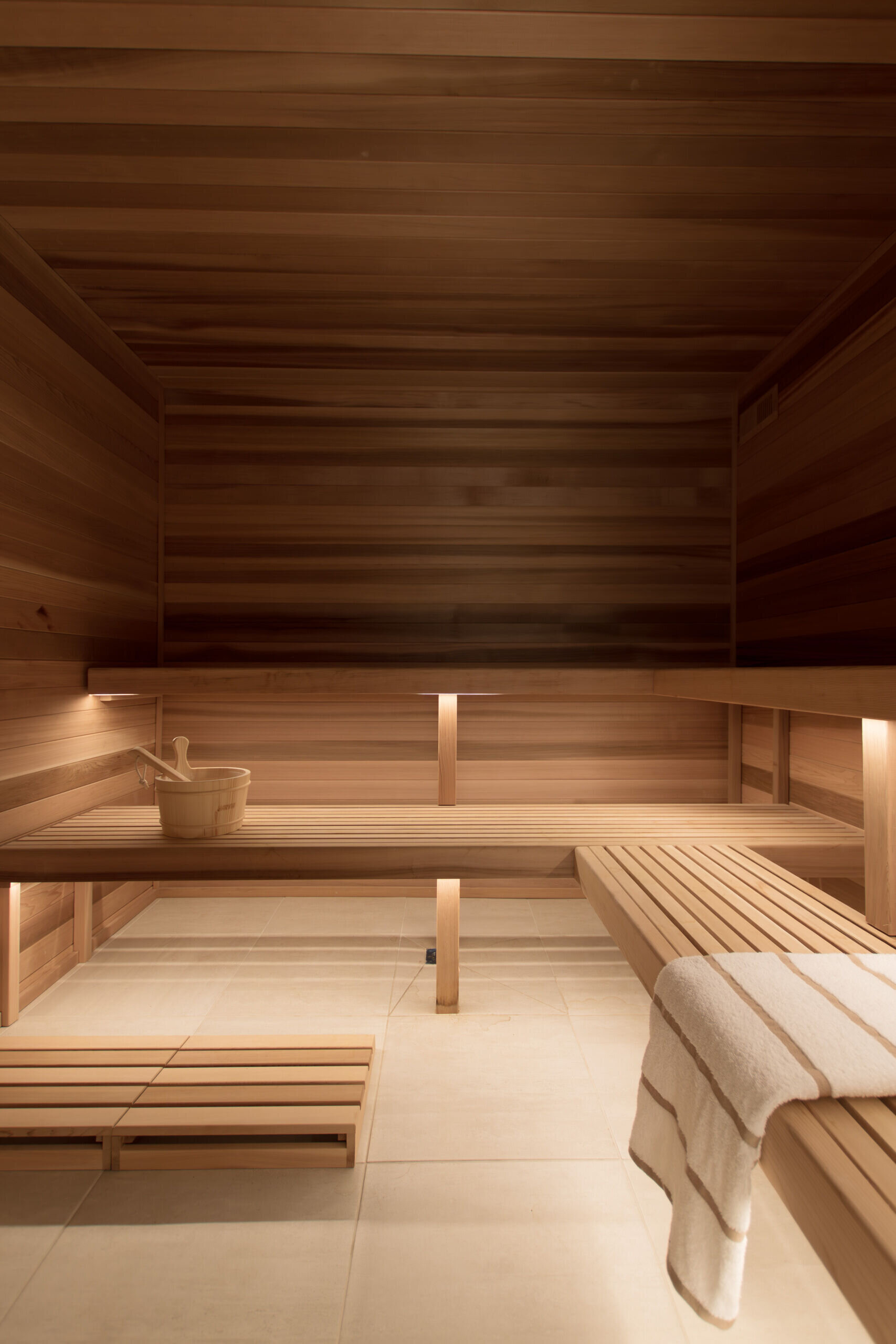
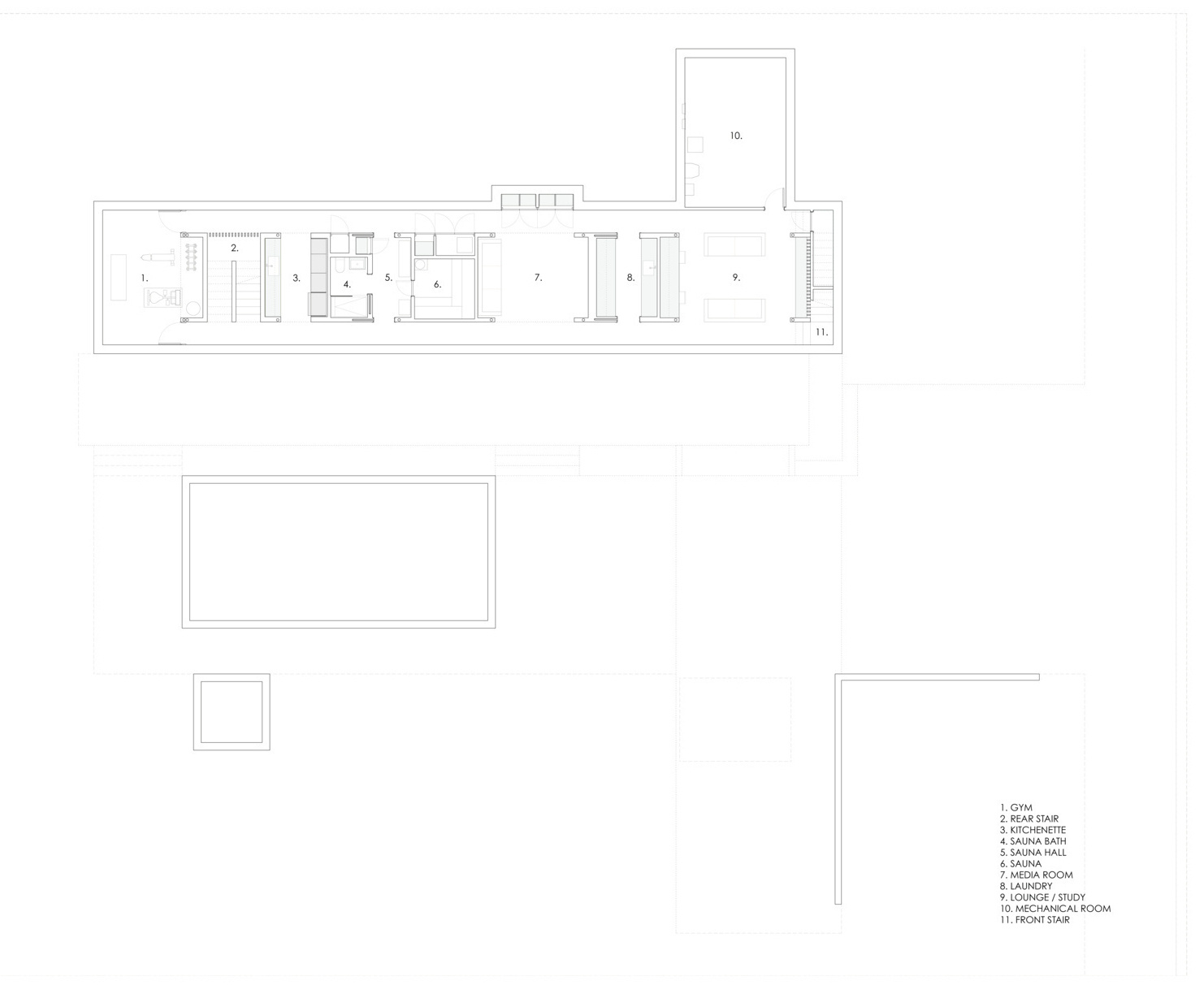
Located within the lower-level wellness spaces, the cedar-lined sauna adds warmth and texture to the basement suite. The use of cedar reinforces material continuity throughout the home while also creating a more intimate atmosphere in the enclosed space.
Positioned alongside the gym and lounge areas, the sauna helps transform the basement into more than just a secondary level of the house.
Warm Materials Continue Into the Lower Level
The lower-level lounge was designed with flexibility in mind, allowing the space to shift alongside the family’s changing needs. Along with the media room and gym, it creates an informal gathering area separate from the quieter bedroom zones upstairs.
Even below grade, the interiors avoid feeling dark or enclosed thanks to the consistent material palette and thoughtful lighting throughout the basement level.
A Rooftop Terrace Above the Trees
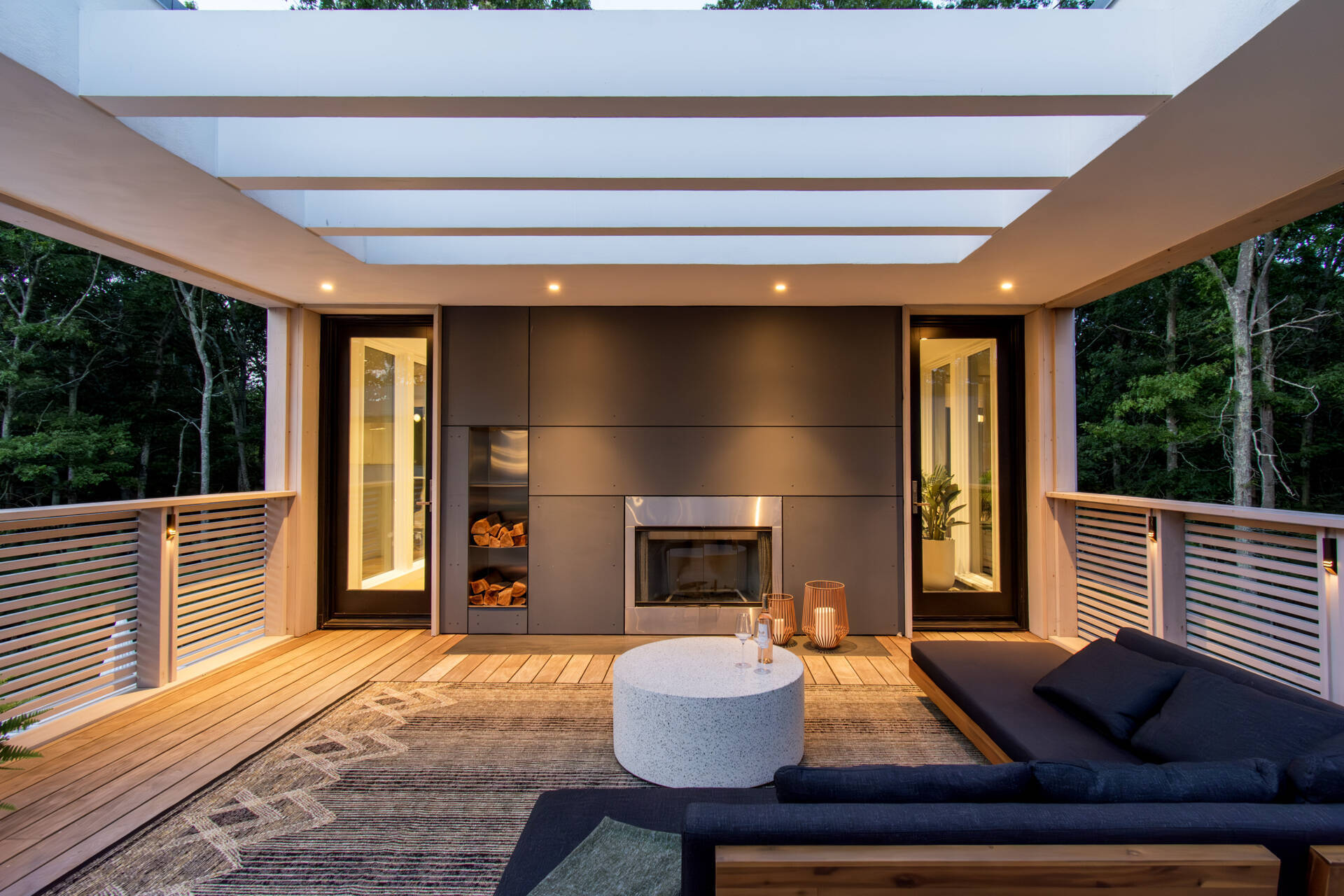
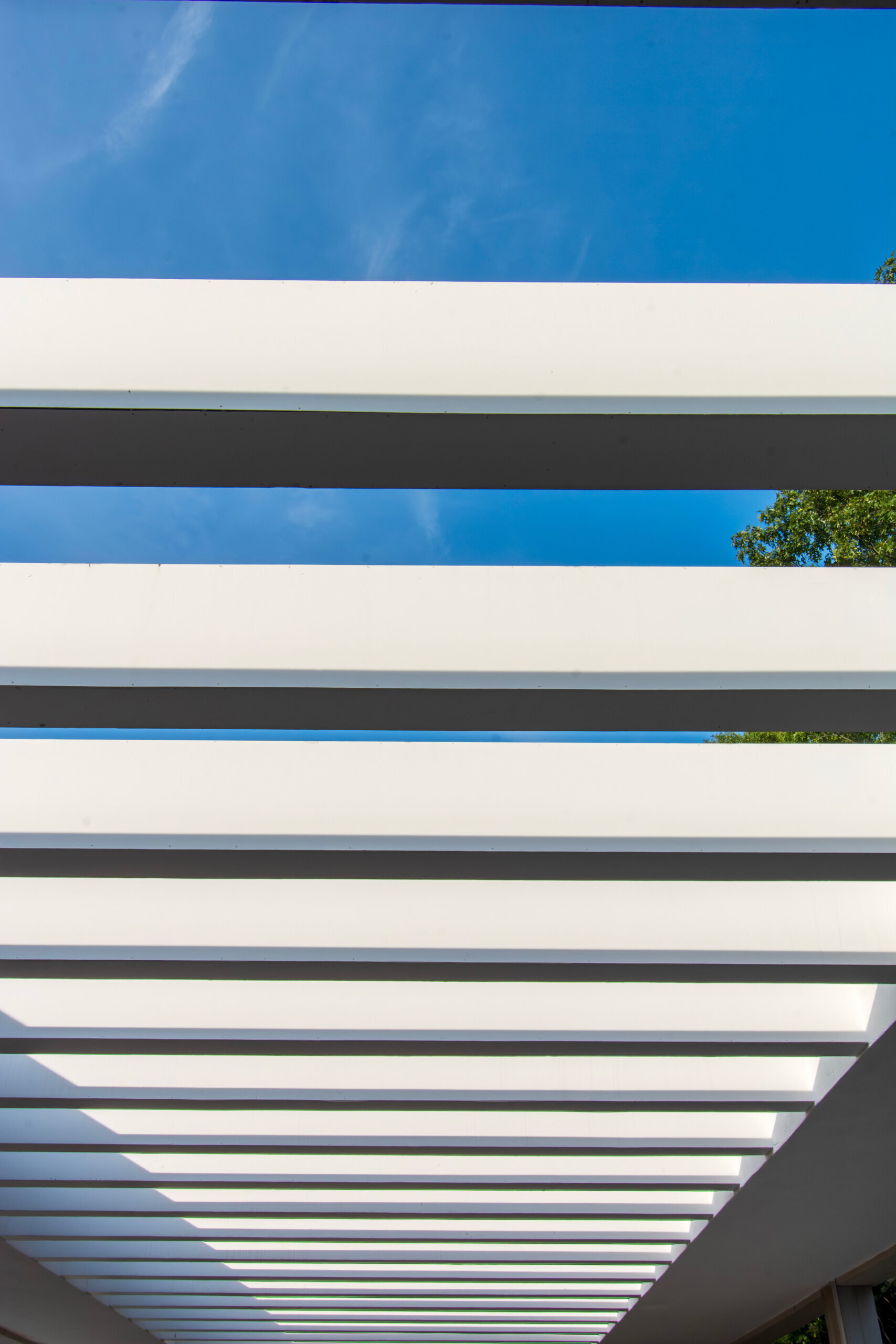
Above the main living areas, the roof deck offers another way to experience the wooded property from a different perspective. Elevated views across the tree canopy create a completely different atmosphere from the ground-level terraces below.
The roof garden also extends the home’s outdoor living opportunities across multiple seasons and times of day, adding another layer to the overall experience of the house.
How This Modular Home Was Installed in Just Two Days
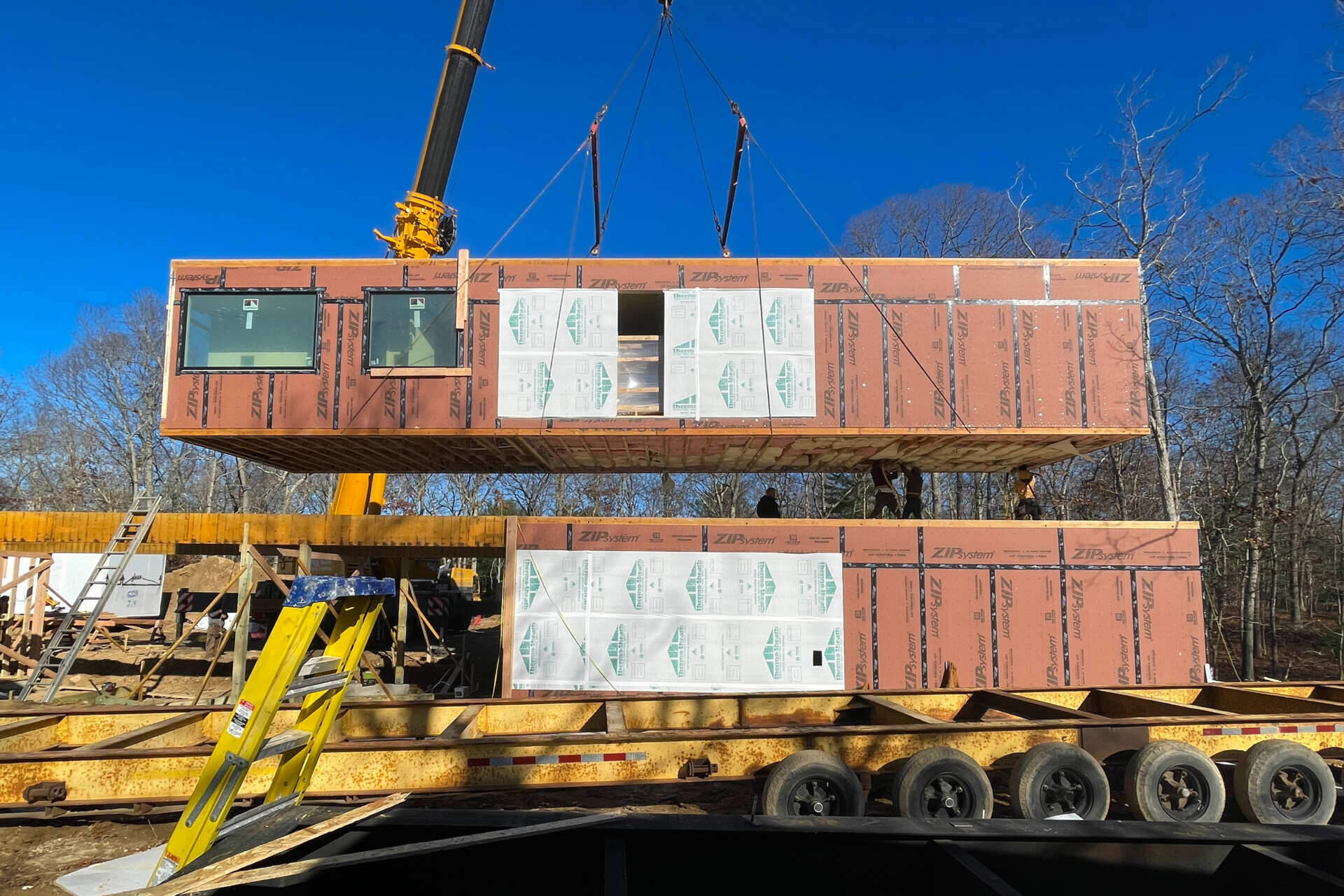
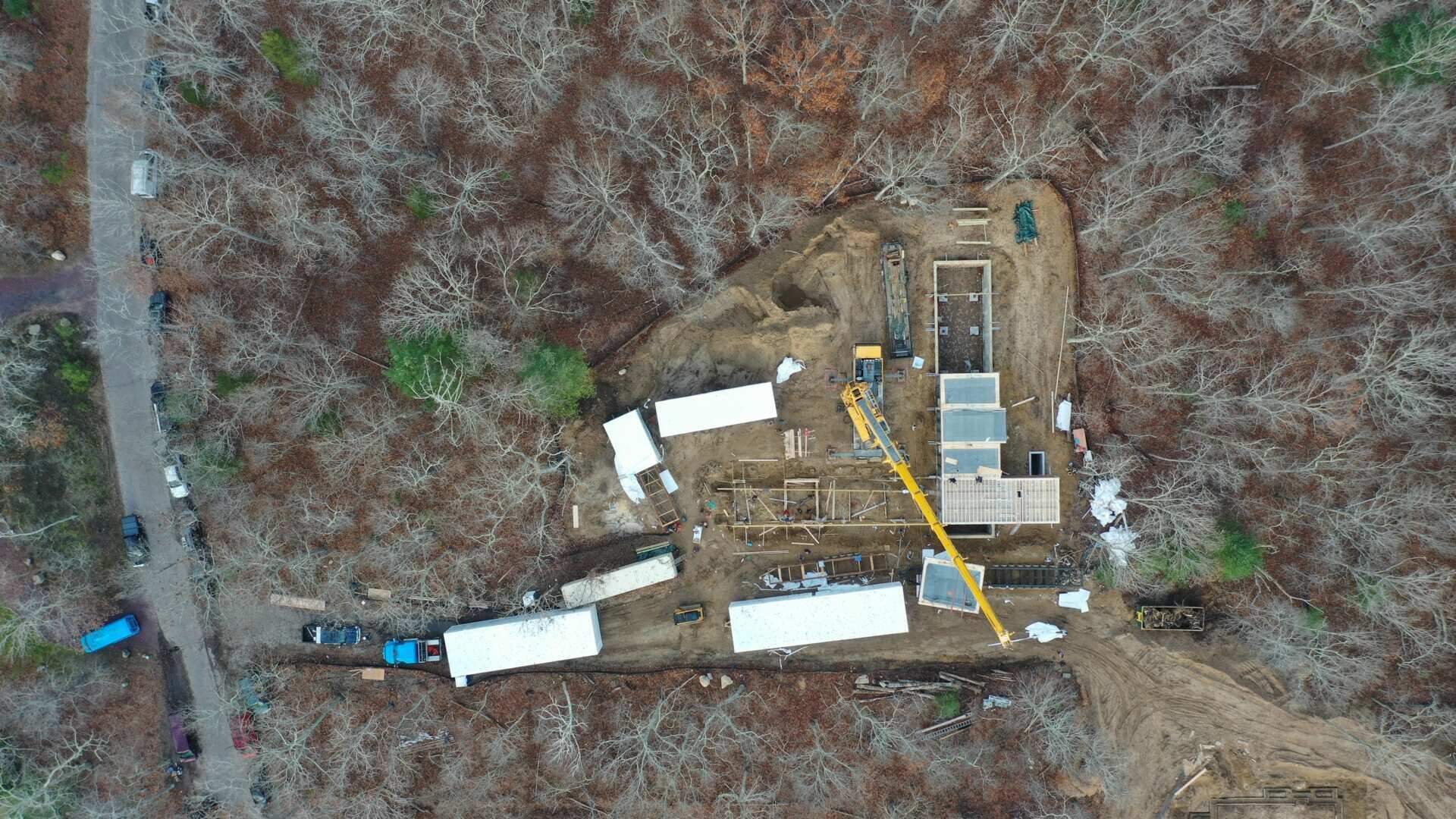
One of the most impressive aspects of the project is how quickly the house came together. While site work was underway in East Hampton, the home’s ten modules were fabricated simultaneously in Pennsylvania over four months.
By the time the modules arrived on site, they already included windows, cabinetry, finishes, fixtures, and major systems. Installation took just two days, followed by limited finishing work. The process significantly reduced on-site construction time while maintaining a high level of detail and finish quality.
A Layout Designed Around Privacy and Forest Views
The organization of the home prioritizes both privacy and openness. Guest rooms and family bedrooms occupy separate wings, allowing different parts of the house to function independently when needed.
Living areas face north, east, and west toward preserved woods, while circulation and service spaces line the southern edge of the home. The layout also supports natural cross ventilation through strategically placed windows, sliding doors, and skylights.
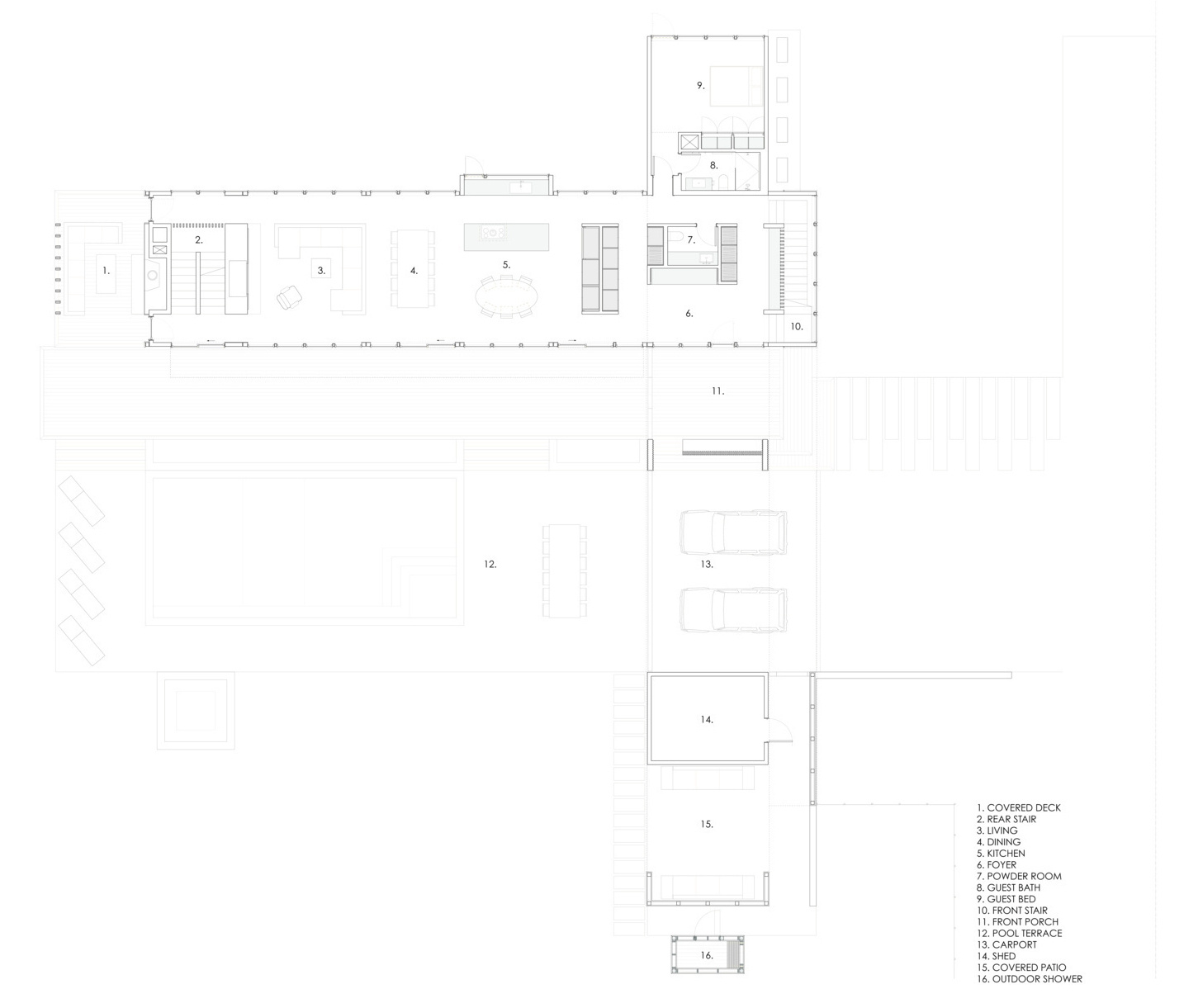
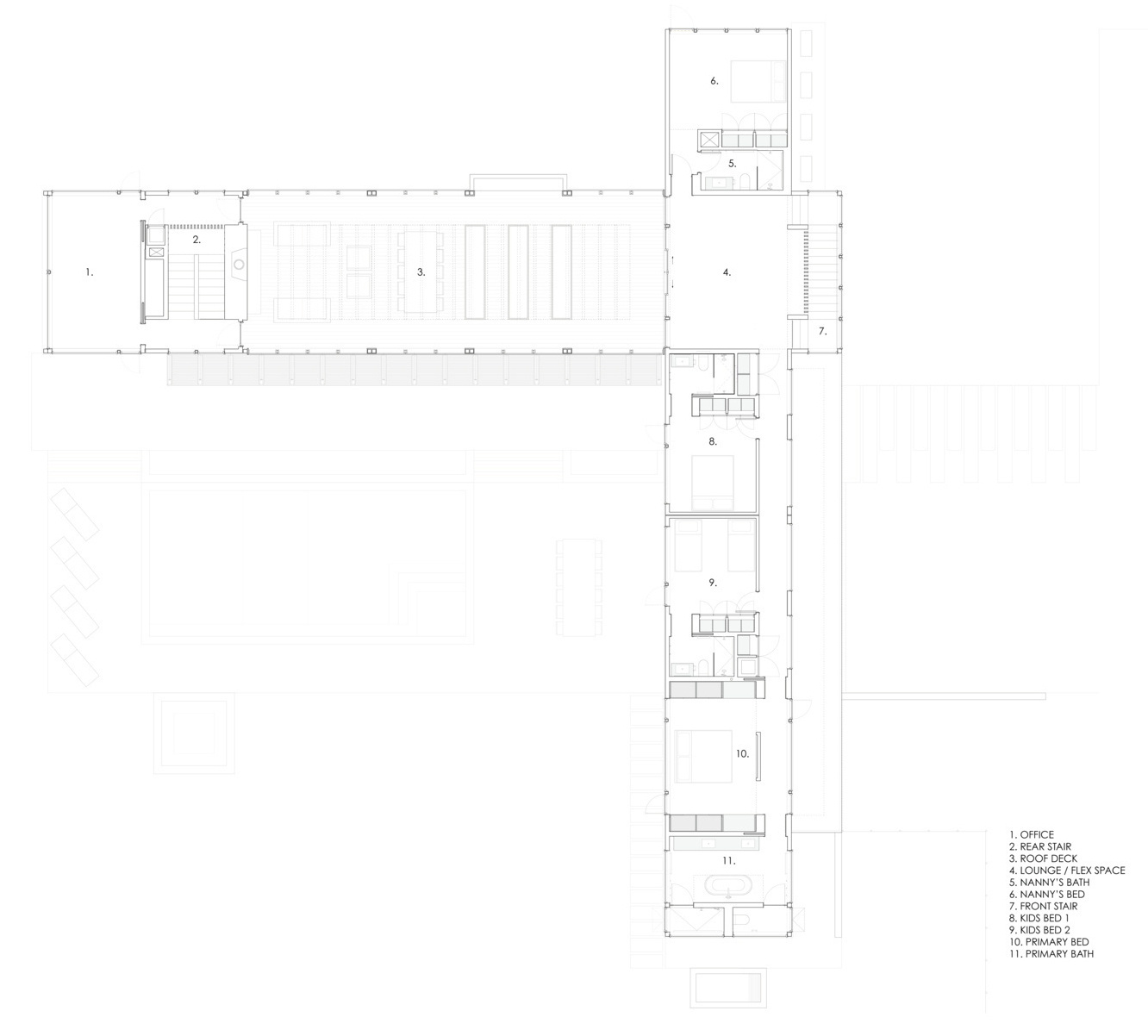
The Northwest Woods Residence shows how modular construction can deliver both architectural precision and warm, livable interiors. Through cedar materials, expansive glazing, layered outdoor spaces, and a layout shaped by the surrounding forest, the home balances efficiency with a strong sense of atmosphere.