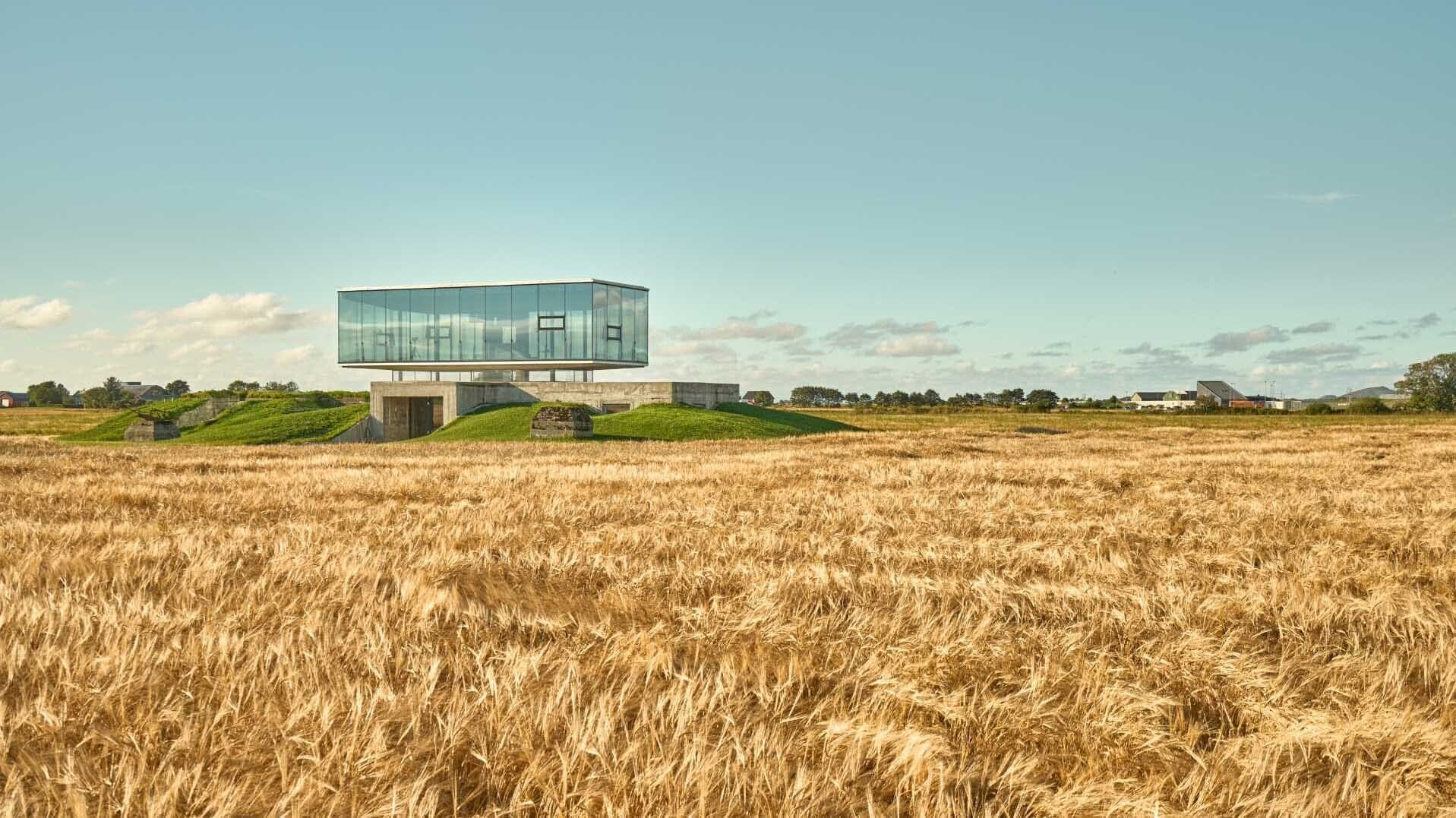
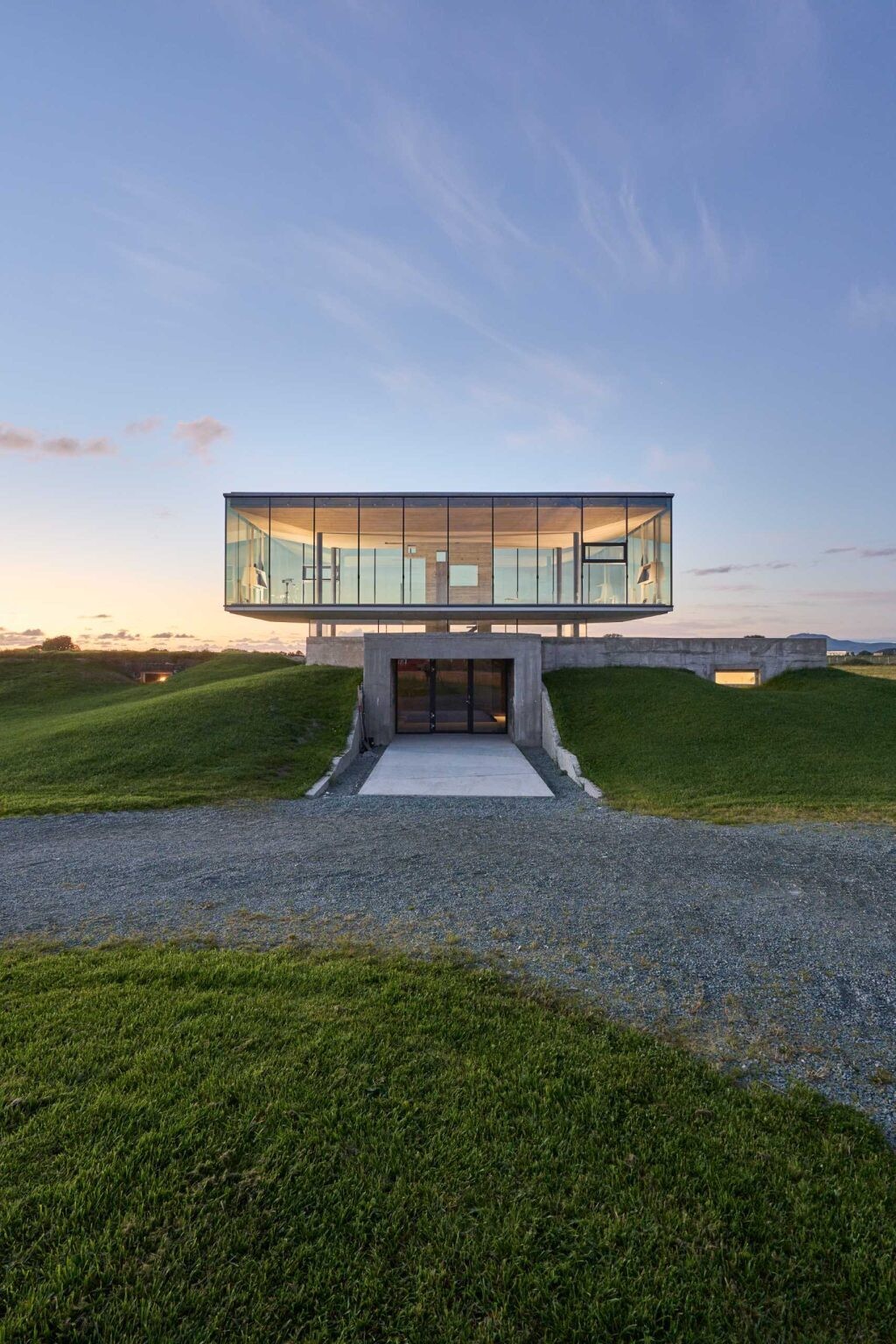
Military bunkers are usually built to disappear into the landscape, hidden behind thick concrete walls with one purpose in mind. Pavilion Brekstad takes that history and turns it into something completely different. Designed by ASAS arkitektur in Fosen, Norway, the former military structure has been transformed into a modern pavilion that welcomes people instead of keeping them out.
Created for the nearby farm, the building now hosts private celebrations, social gatherings, lectures, and customer visits. While the bunker remains the foundation of the project, its new role brings an entirely different experience, showing how an old defensive structure can become a place filled with light, conversation, and expansive views.
A Design Built Around Seeing the Landscape
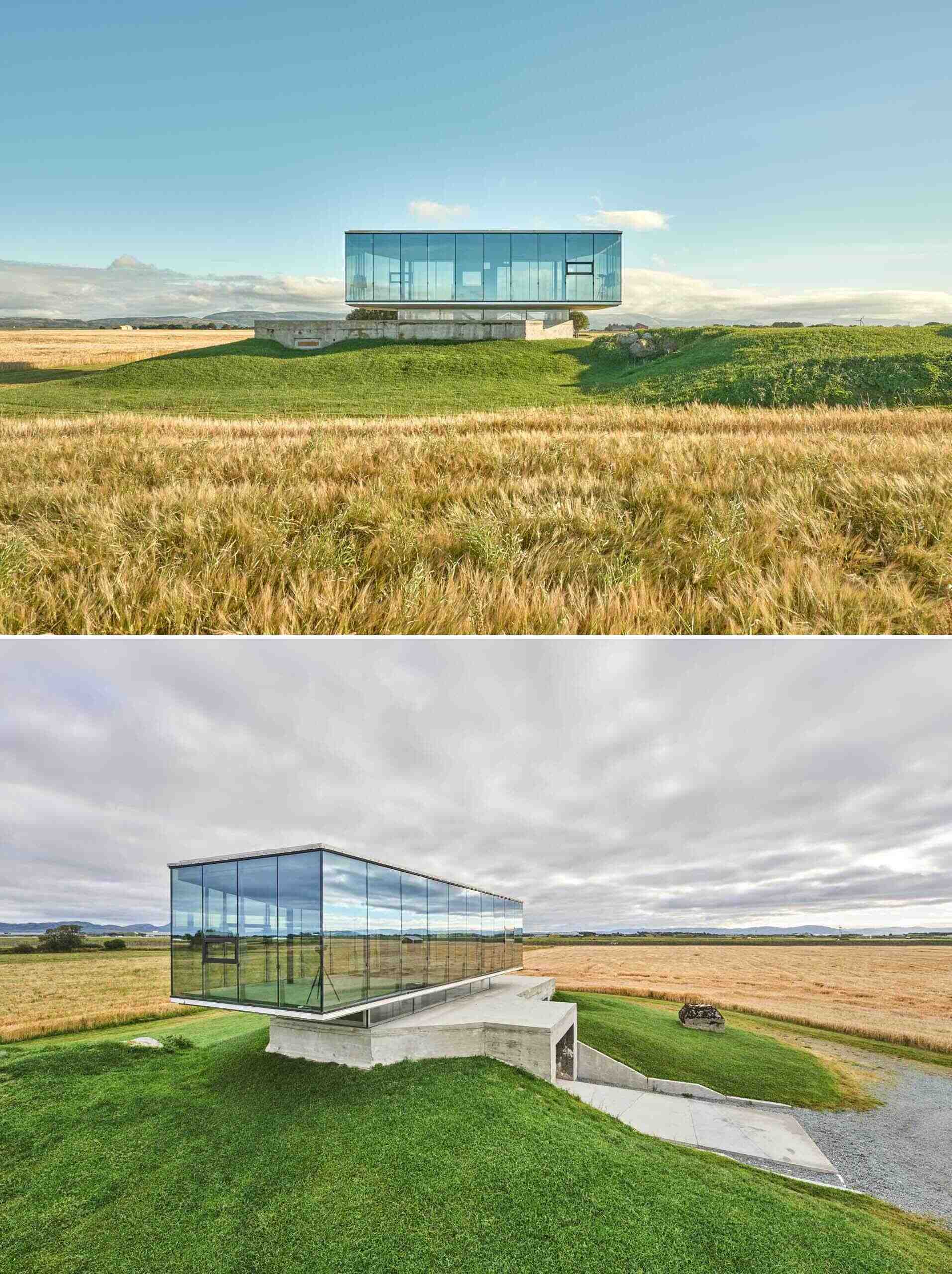
One of the guiding ideas behind the project is “to see and be seen,” a concept developed with the client that completely changes how the bunker interacts with its surroundings. Where the original building relied on thick walls and limited visibility, the new pavilion opens itself in every direction.
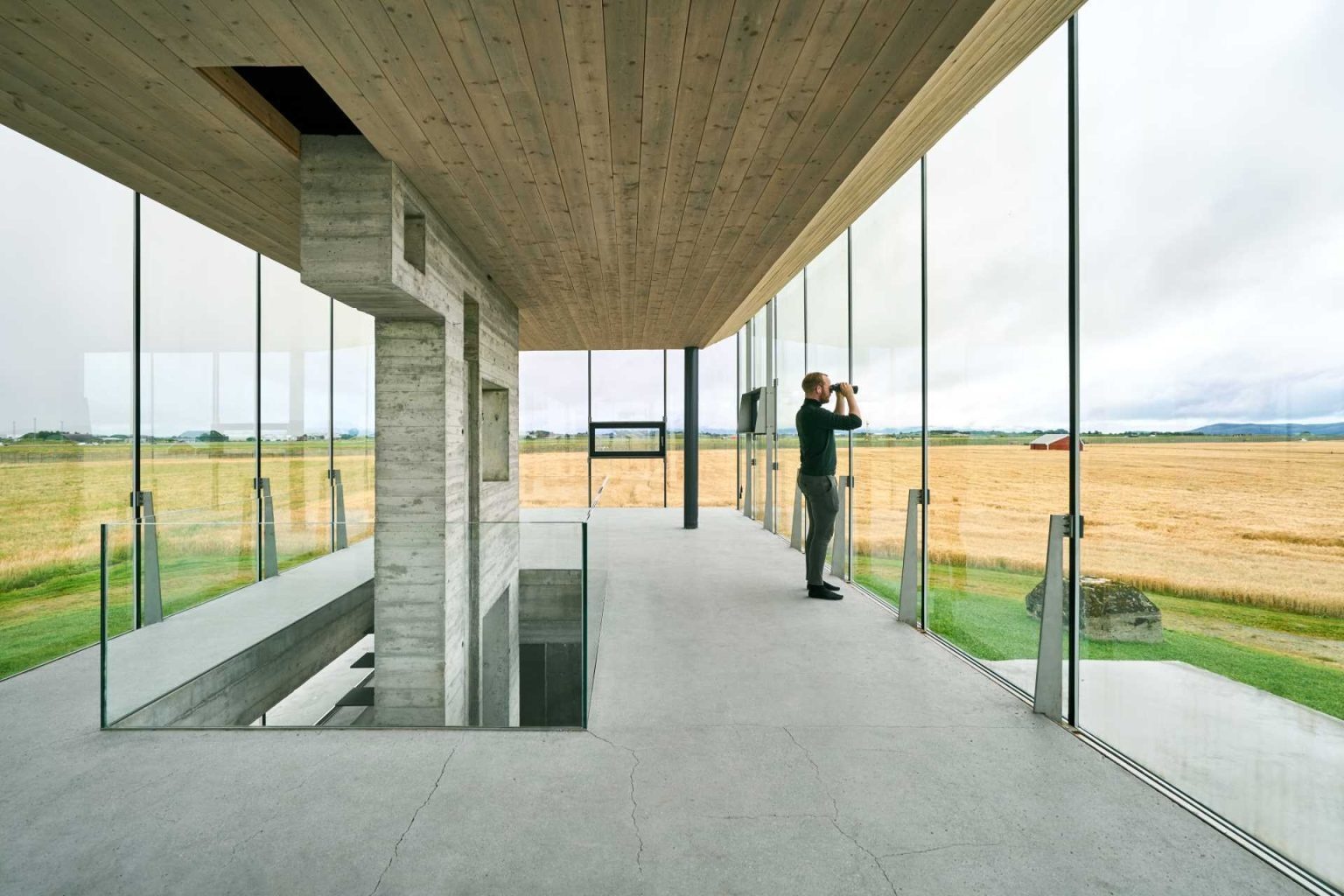
The contrast is immediate. The new structure appears to float above the preserved concrete base, replacing isolation with openness. Its transparent expression creates long sightlines across the landscape while making the building itself part of the scenery.
Preserving the Past While Adding Something New
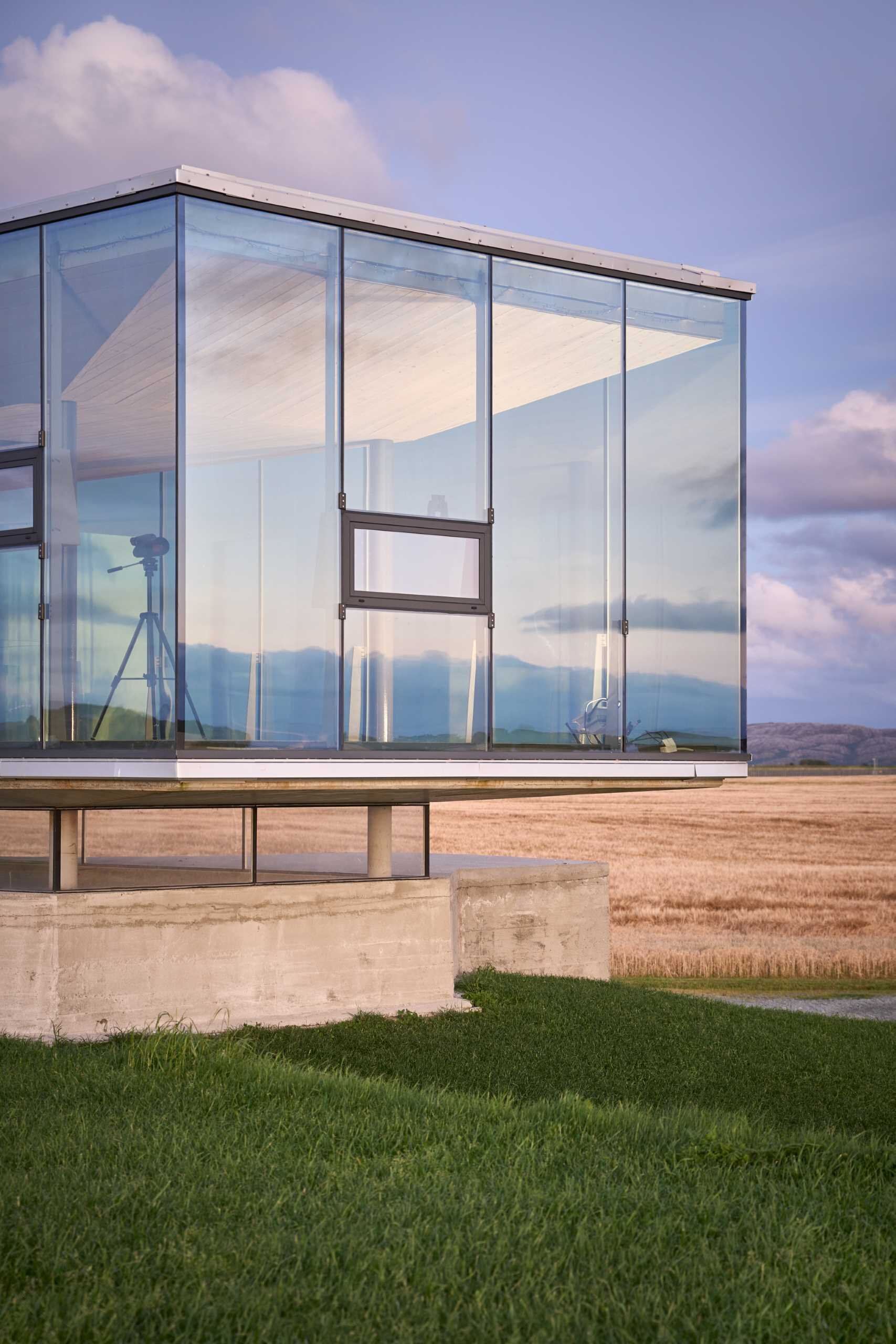
Instead of hiding the original bunker, ASAS arkitektur allows its heavy concrete walls and textured surfaces to remain visible. The massive base continues to tell the story of the building’s military past, while the new pavilion above introduces a lighter architectural language.
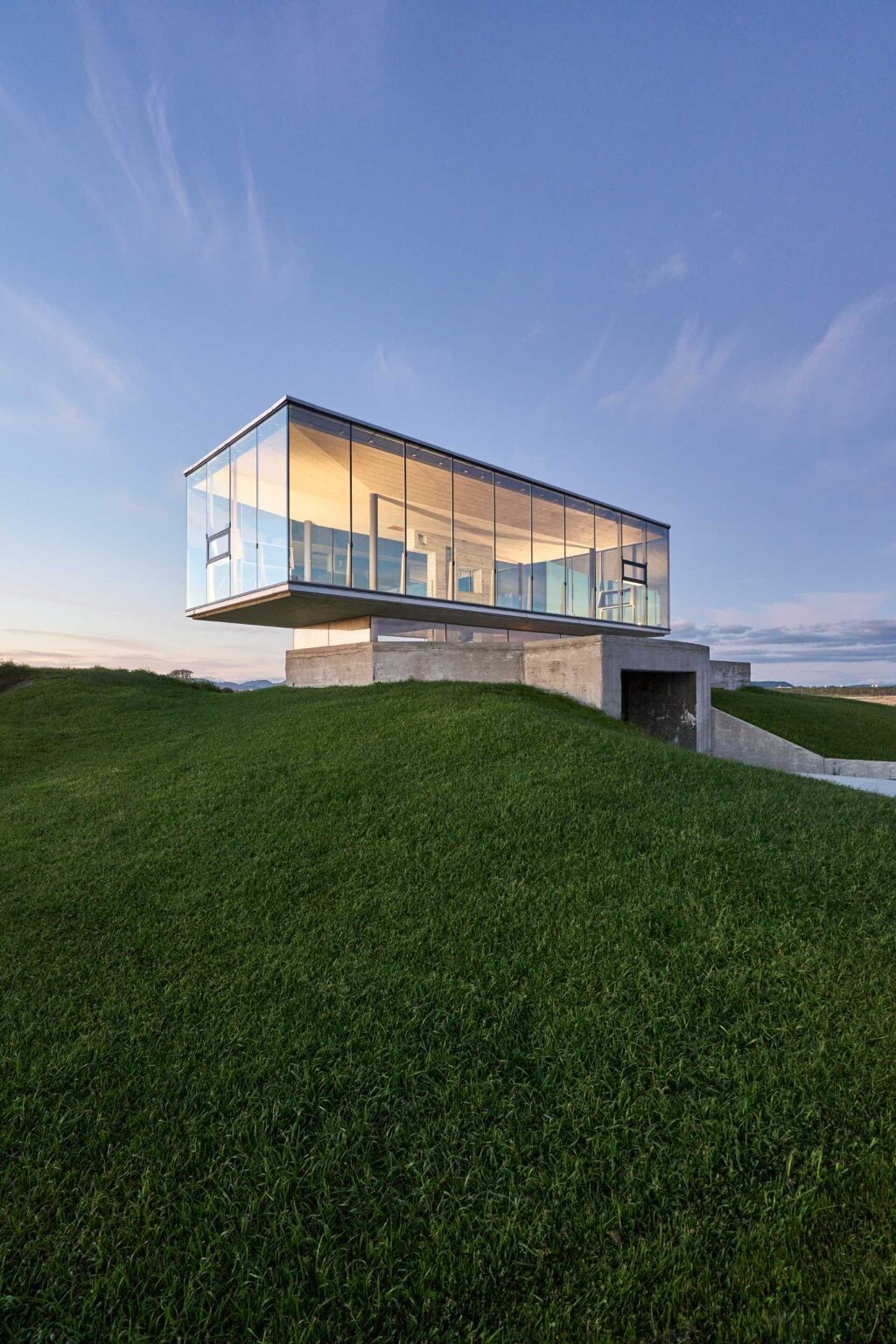
After exploring multiple concepts for the visible structure above ground, the architects settled on a simple rectangular form. The clean geometry creates an open, flexible interior that frames every direction of the surrounding landscape while fitting naturally onto the existing bunker.
A New Interior Begins Underground
Visitors still enter through the original military section, but the interior has been completely adapted for its new role. Spaces that once served military functions now accommodate a kitchen, toilets, and storage, providing everything needed for events of different sizes.
The open floor plan above makes it easy to rearrange furniture depending on the occasion, allowing the pavilion to shift between lectures, celebrations, and customer visits without changing the architecture itself.
A Staircase That Leads Toward the Light
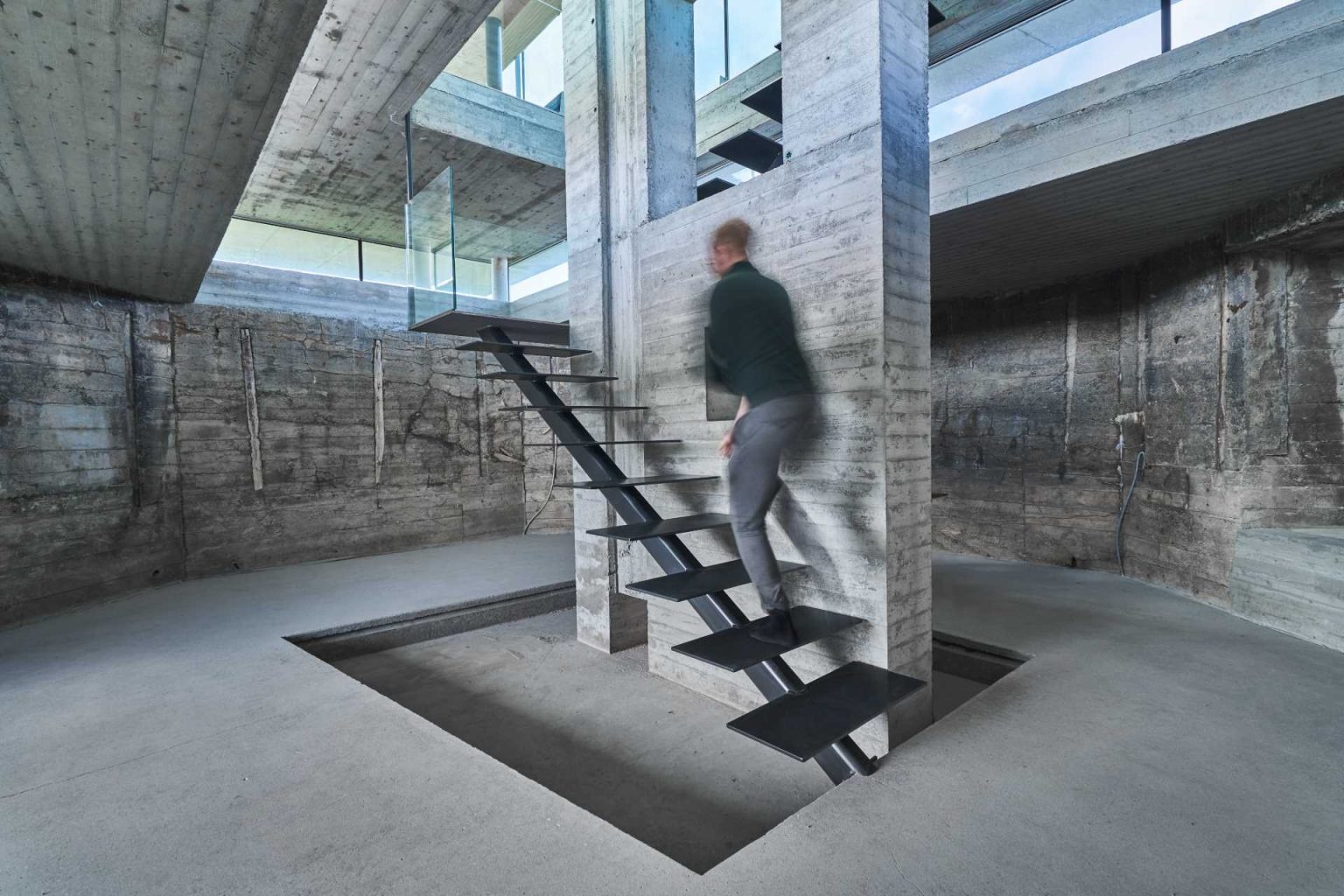
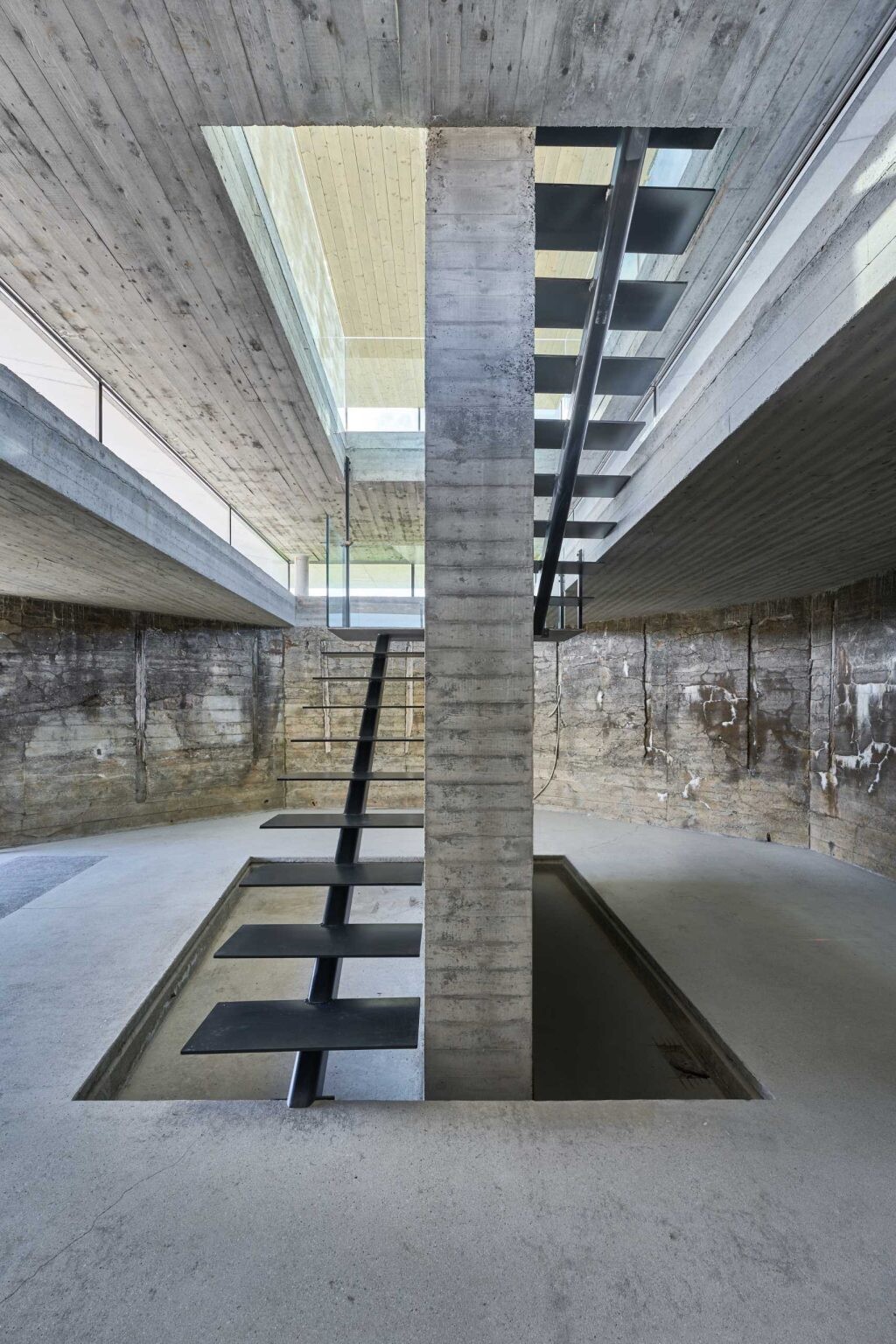
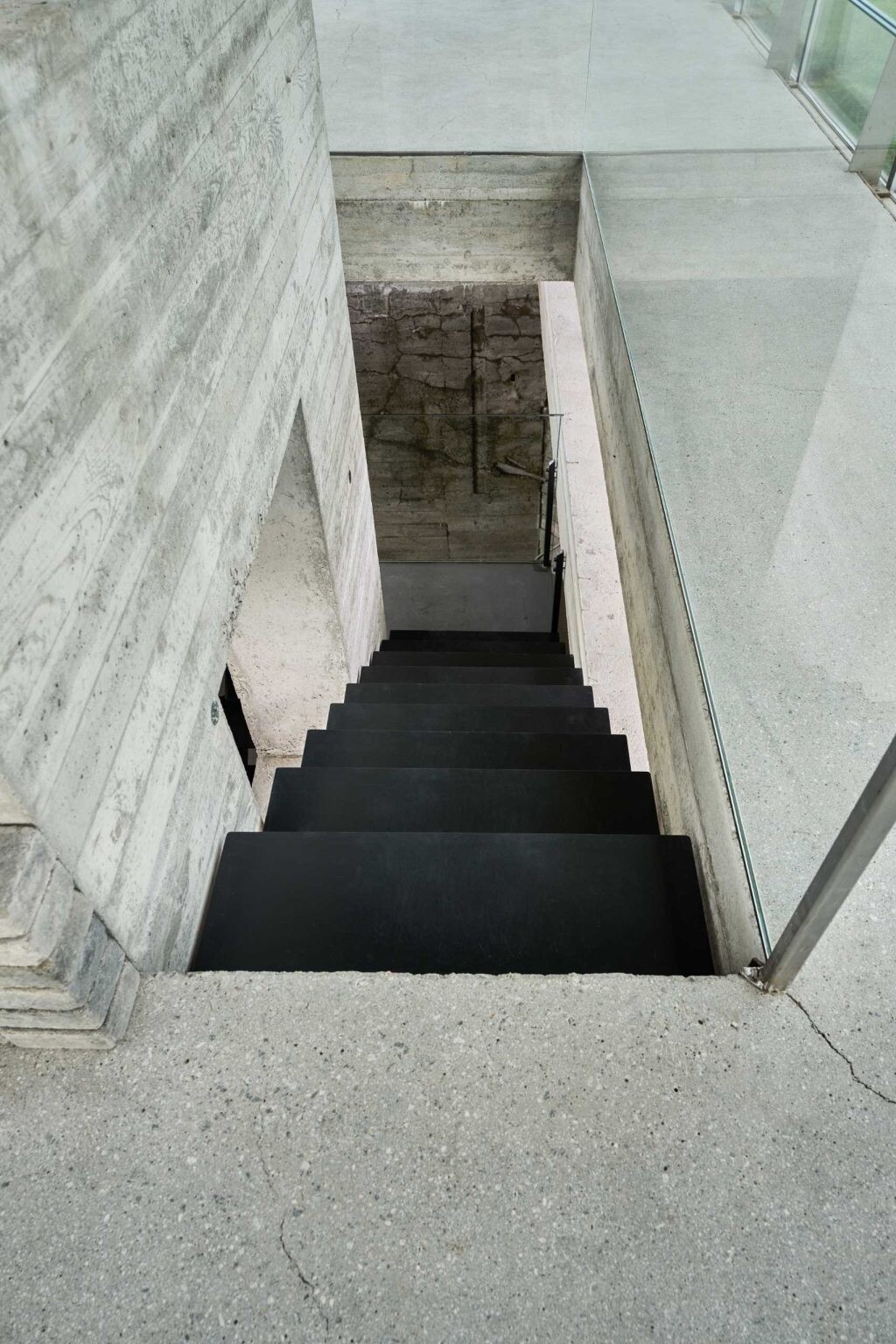
One of the most memorable features inside the pavilion is its staircase. Positioned as the central architectural element, it guides visitors from the enclosed concrete spaces below toward the bright event hall above.
Its form creates a strong visual moment while naturally directing movement through the building. The transition becomes part of the experience, moving from the bunker’s enclosed atmosphere into a space surrounded by daylight.
Framed by Norway’s Landscape
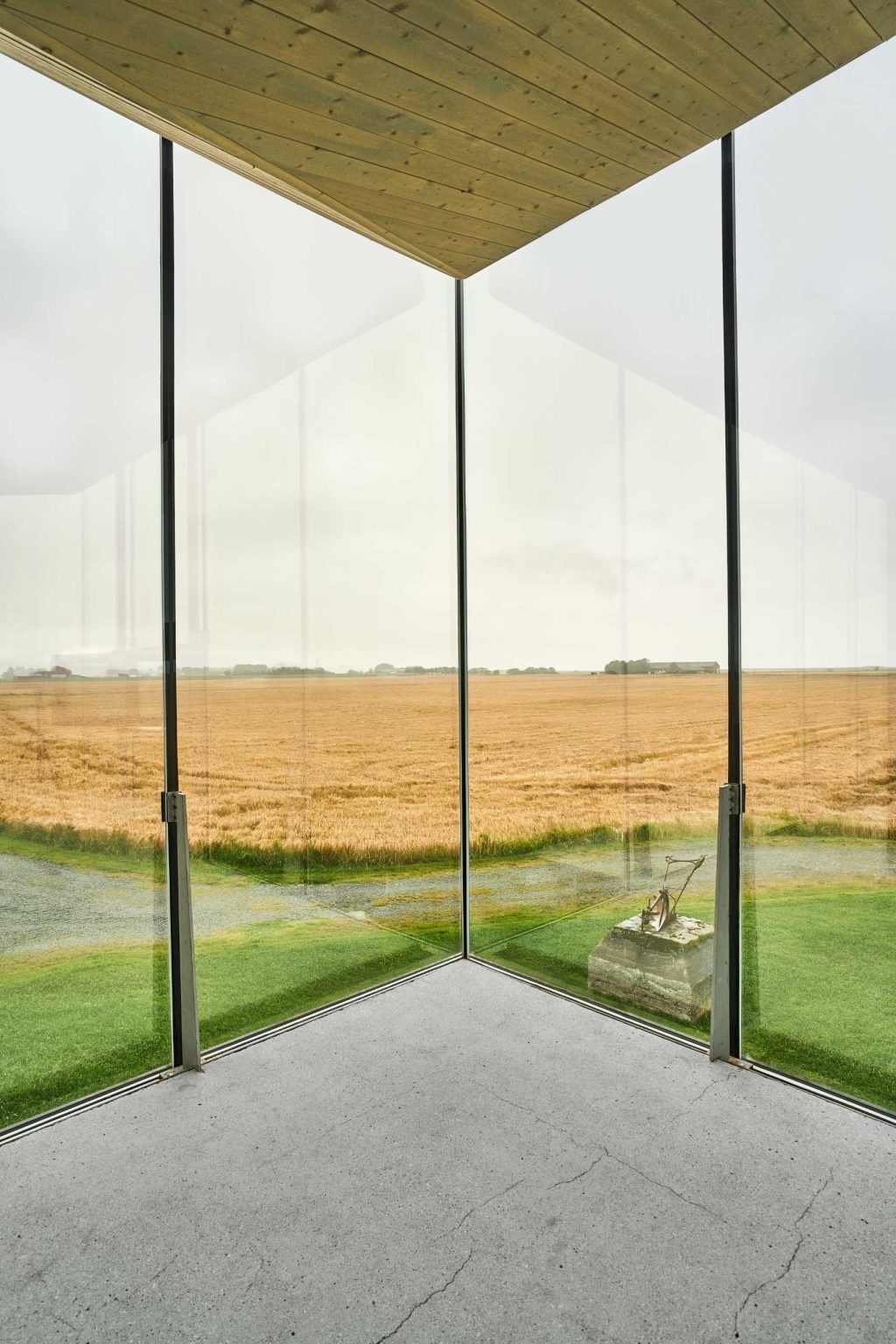
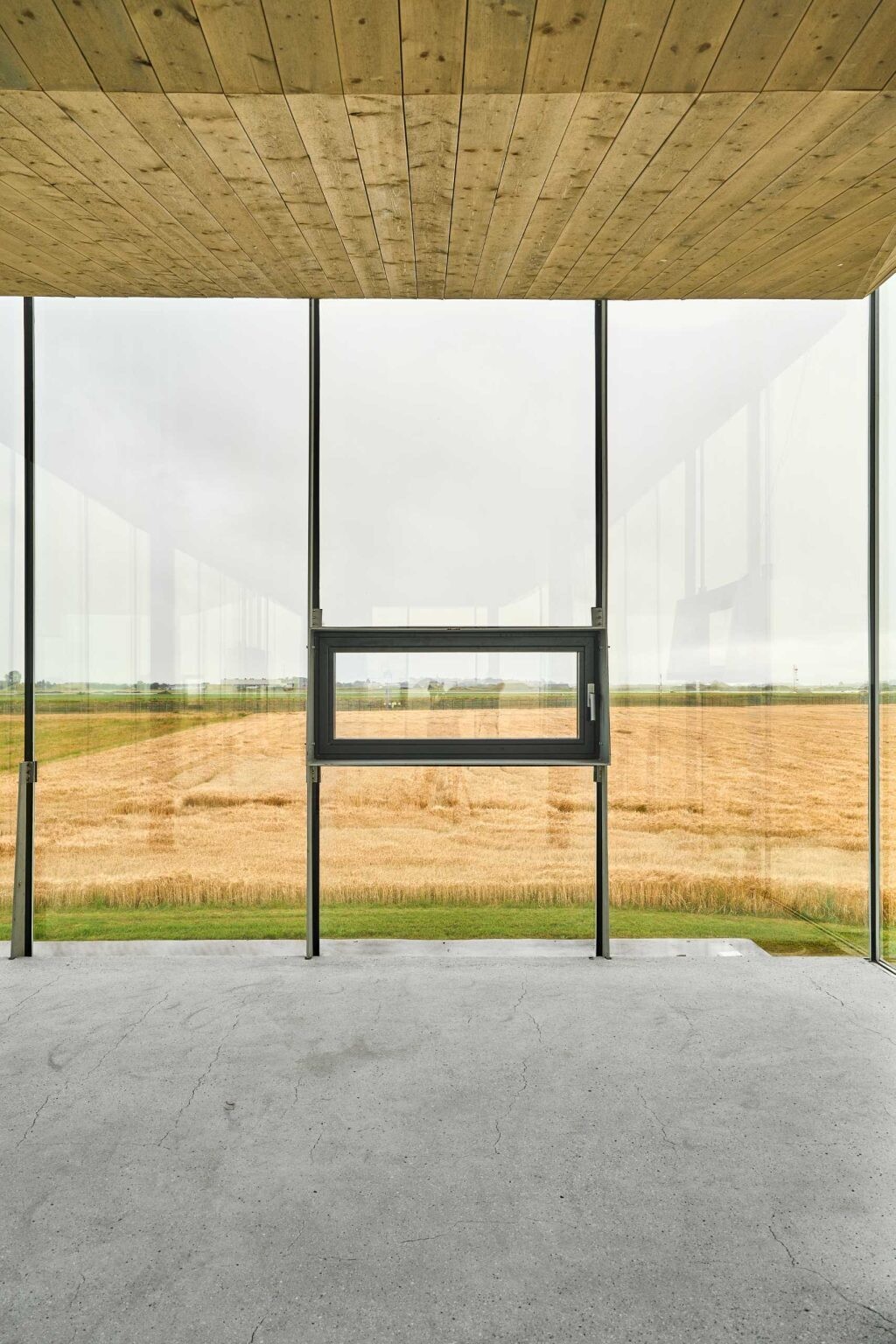
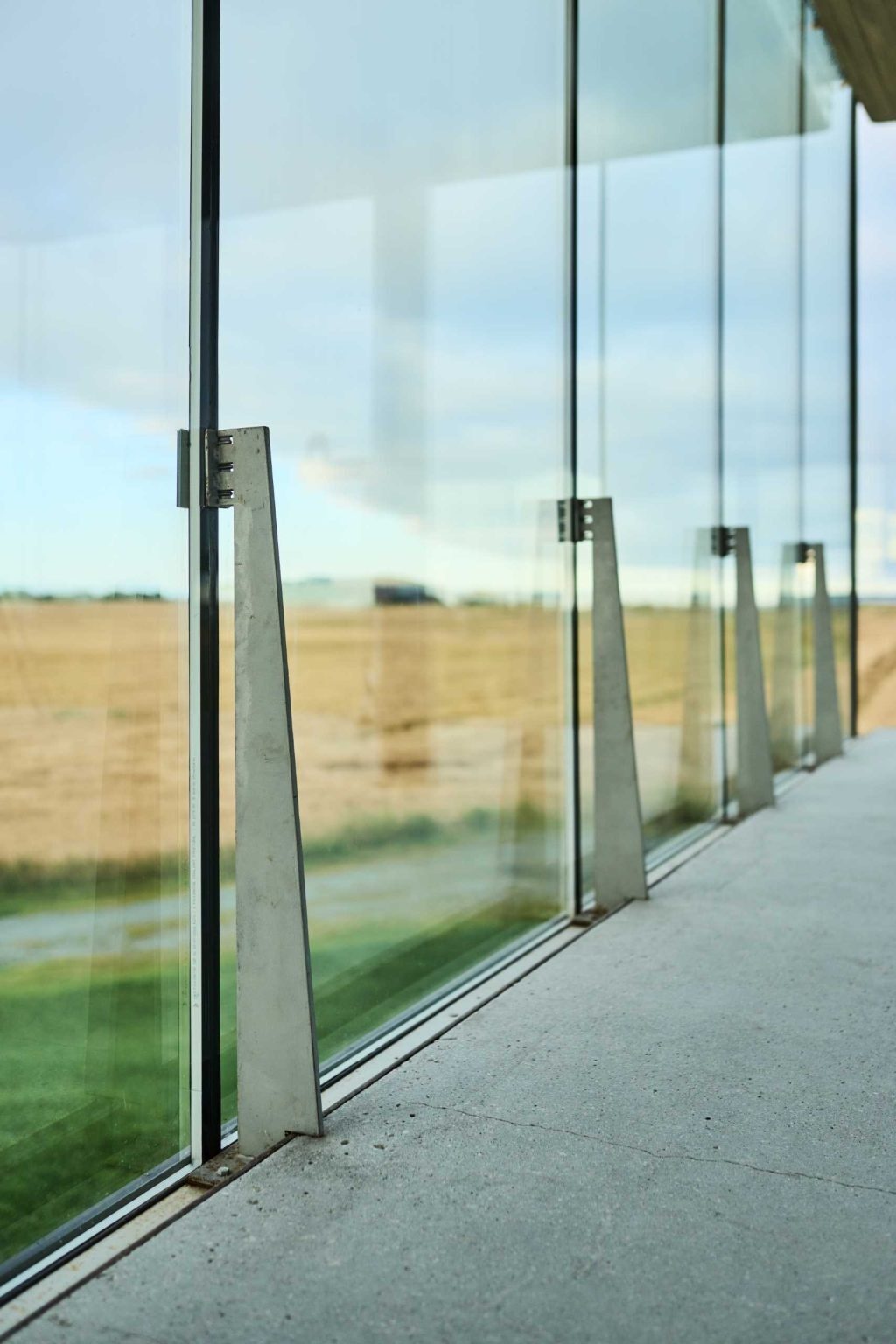
The upper event space is surrounded by floor-to-ceiling glass that delivers uninterrupted 360-degree views. Nature, local wildlife, and the nearby air base all become part of the experience, giving every gathering a constantly changing backdrop.
Steel, glass, and concrete form the primary material palette, while wood introduces warmth throughout the interior. Together, the materials balance the industrial character of the original bunker with a welcoming atmosphere suited to its new purpose.
Pavilion Brekstad shows how adaptive reuse can completely change the way a building is experienced without erasing its history. By preserving the bunker’s solid concrete foundation and introducing a transparent pavilion above, ASAS arkitektur has transformed a place once built for defense into a flexible venue filled with light, views, and new possibilities.