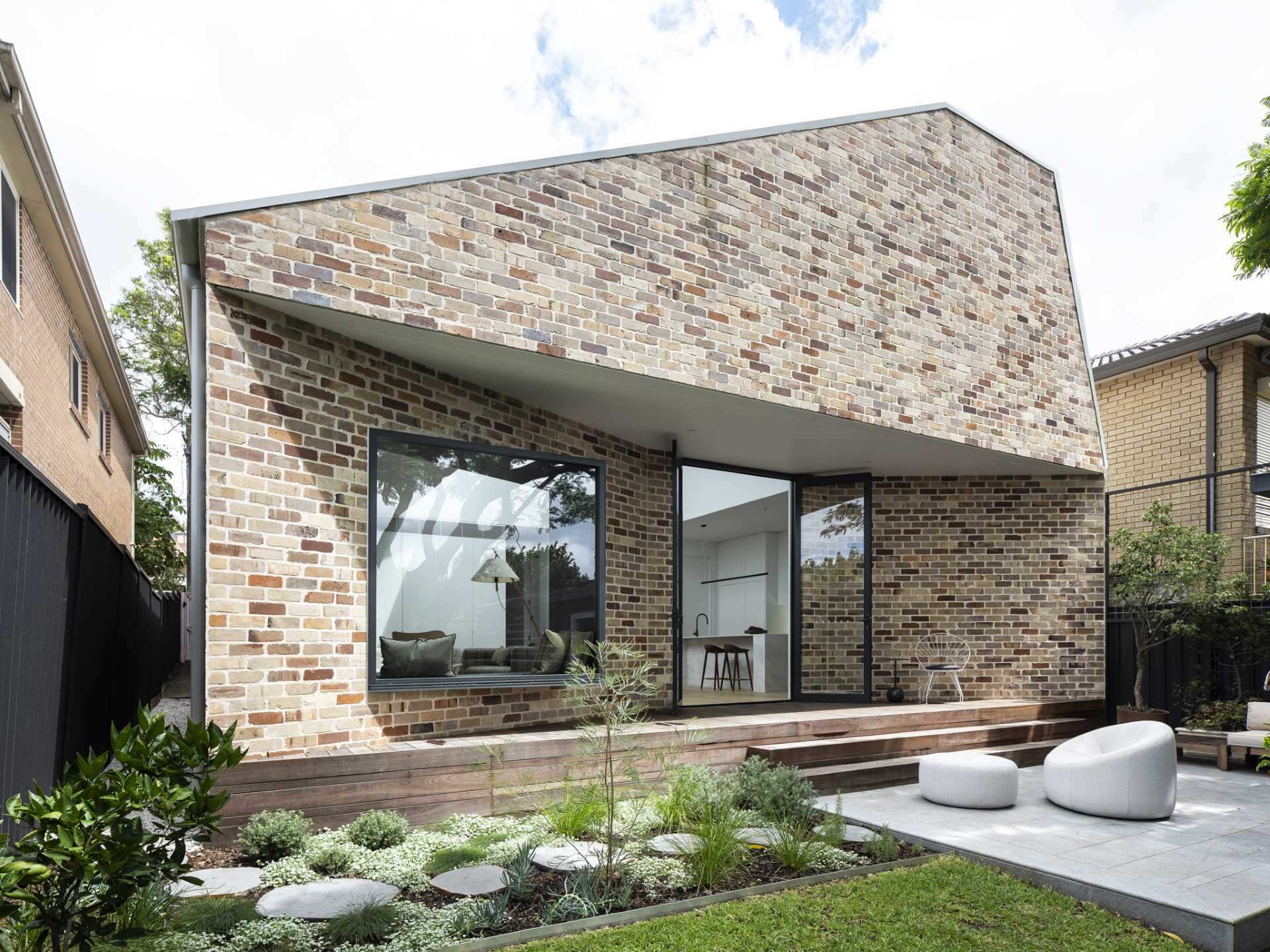
In Hurlstone Park, a suburb of Sydney, Australia, Carla Middleton Architecture completed a renovation that expands a charming cottage into a bright and functional family home. Designed for a family of five, the project preserves much of the character that made the original house appealing while introducing a geometric rear addition built from recycled bricks.
Working within a tight budget, the design keeps the existing cottage and two established jacaranda trees that sit at opposite ends of the property. The result is a home that combines old and new through material choices, natural light, and practical family-focused spaces.
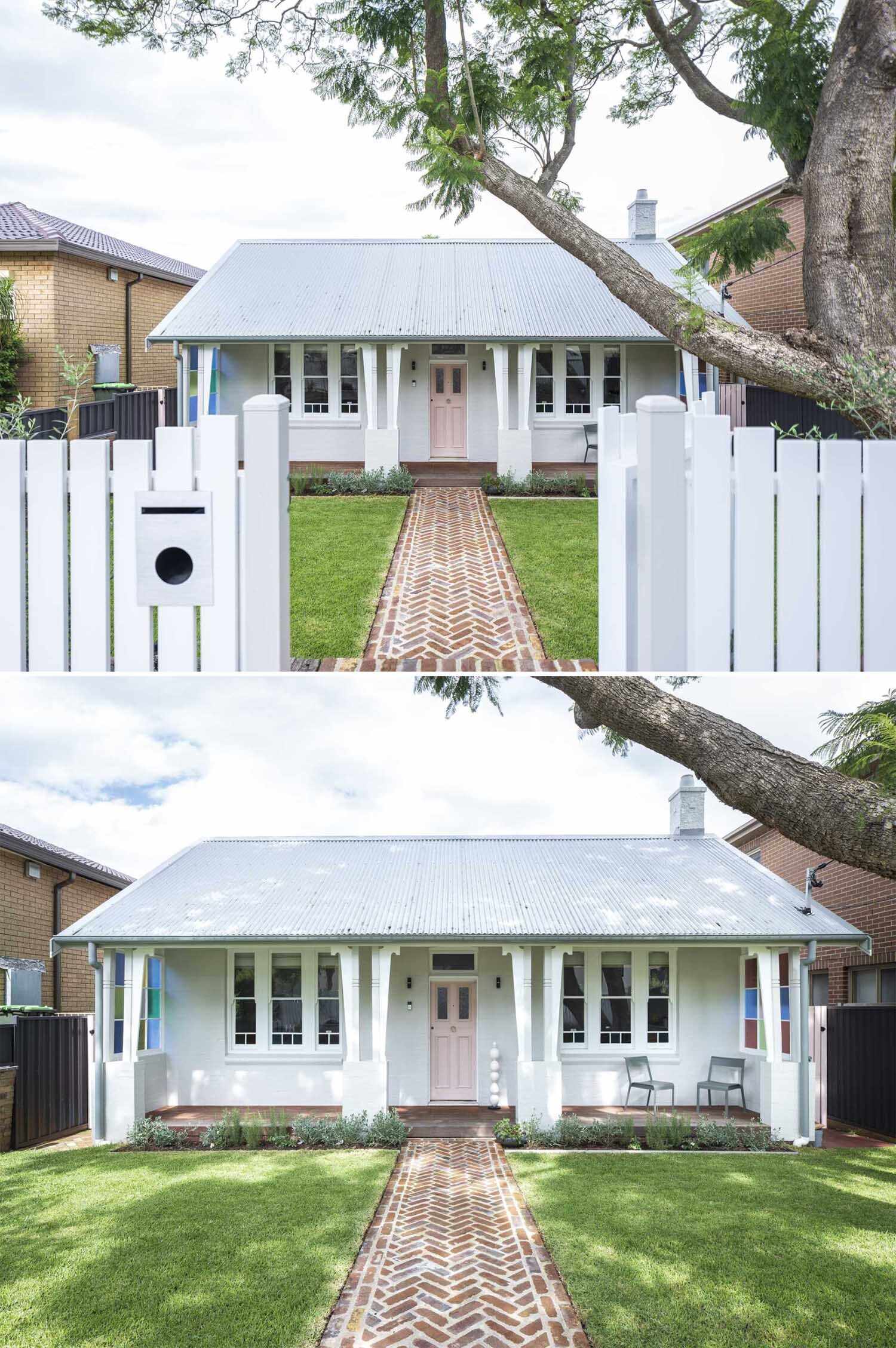
A Traditional Cottage With a New View Beyond
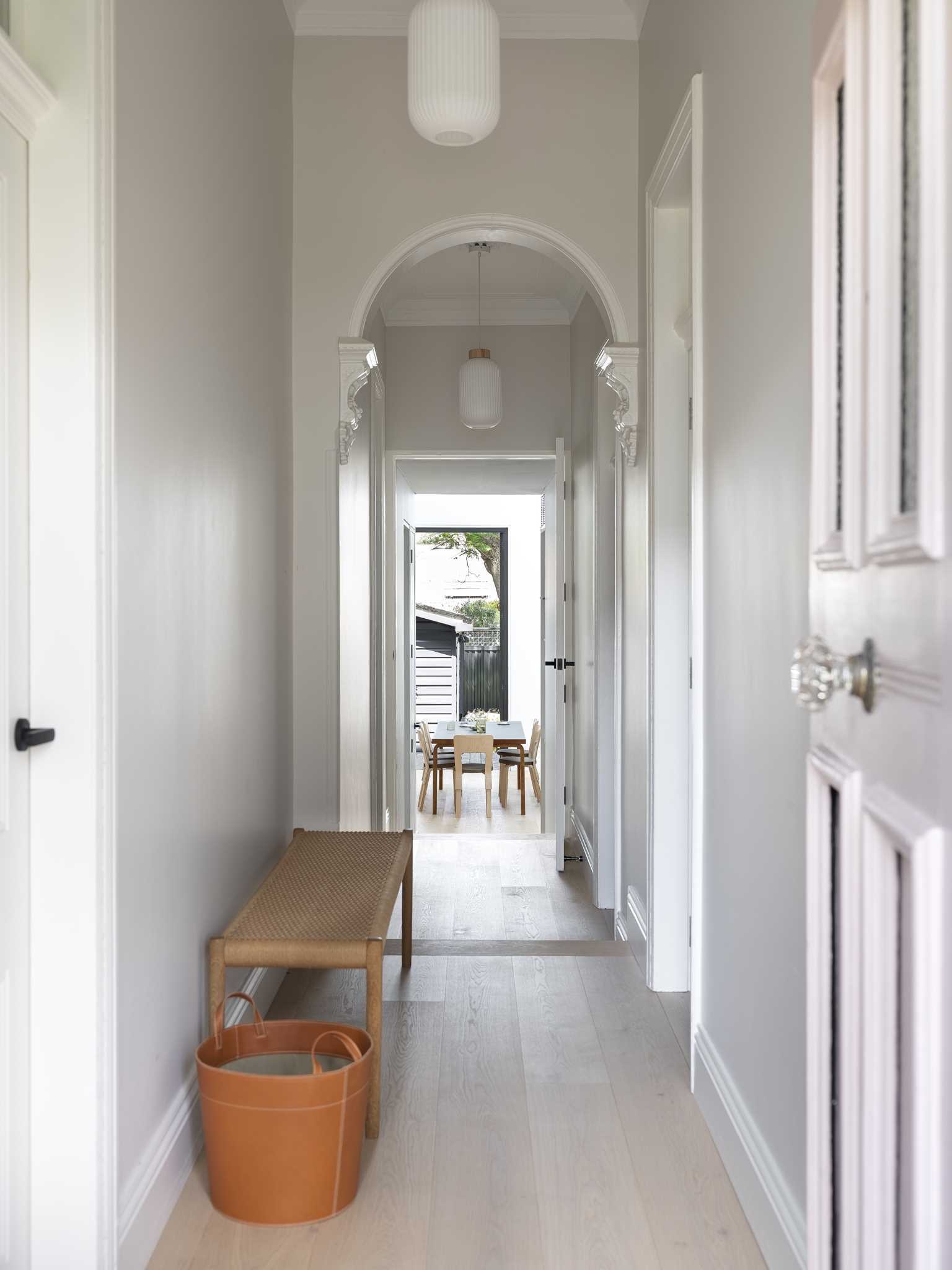
Stepping through the original entryway reveals one of the renovation’s most effective moments. Instead of hiding the addition, the view extends through the house toward the new living spaces and backyard, immediately hinting at the transformation waiting behind the traditional frontage.
The original floor plan was restored and reorganized to provide four generously sized bedrooms, allowing the home to better accommodate family life while maintaining a connection to its earlier character.
Recycled Bricks Shape a Distinctive New Addition
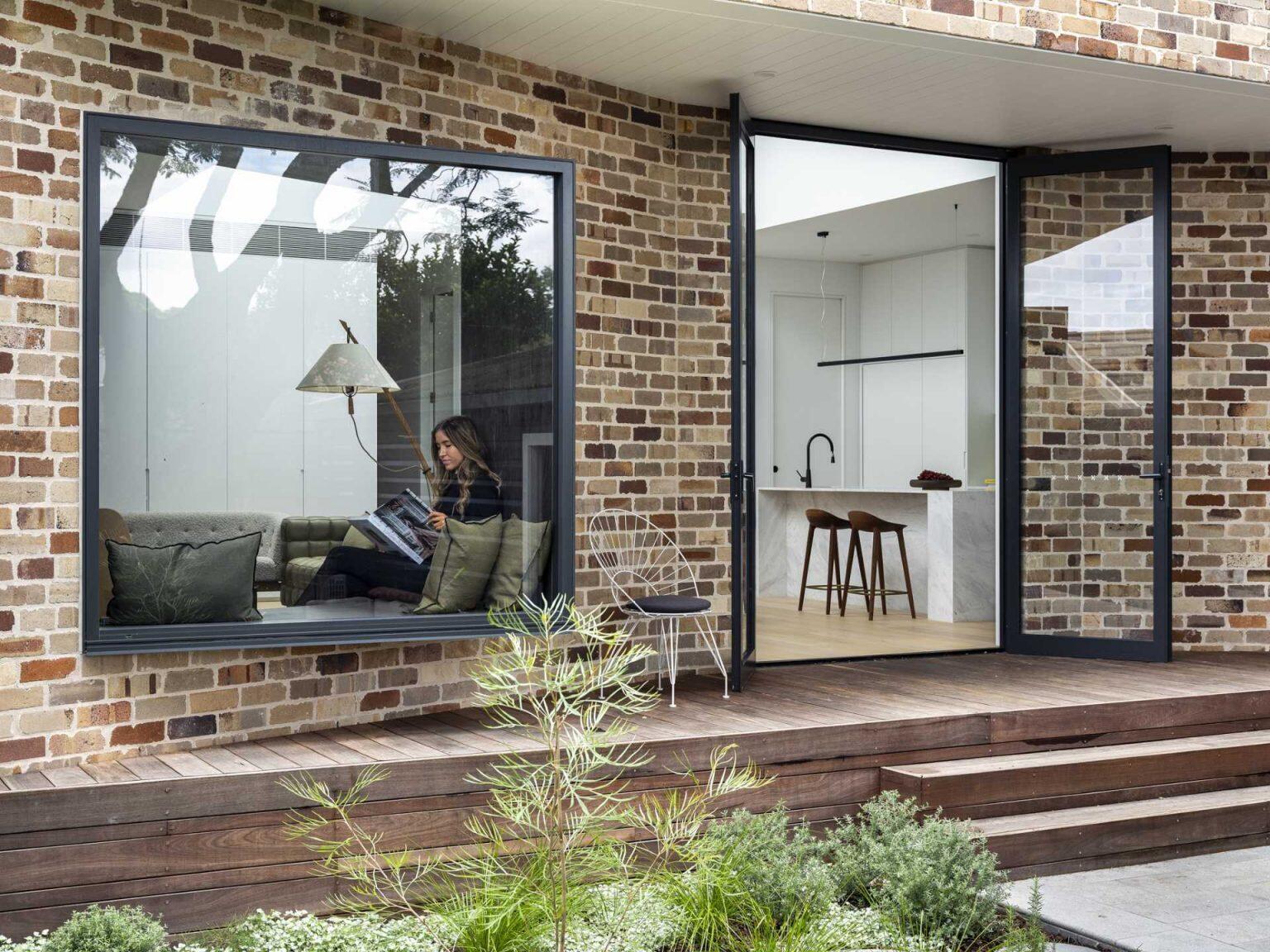
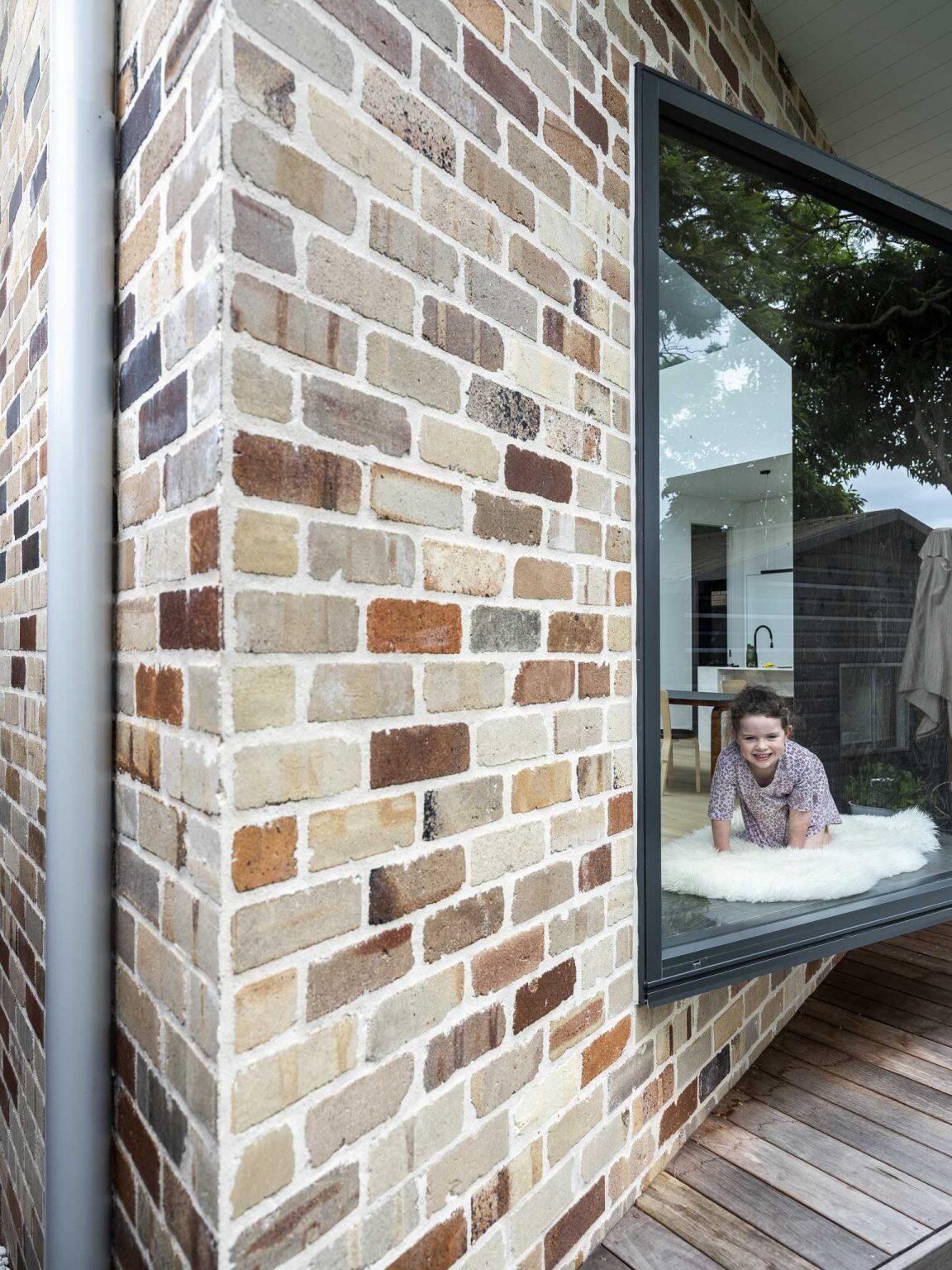
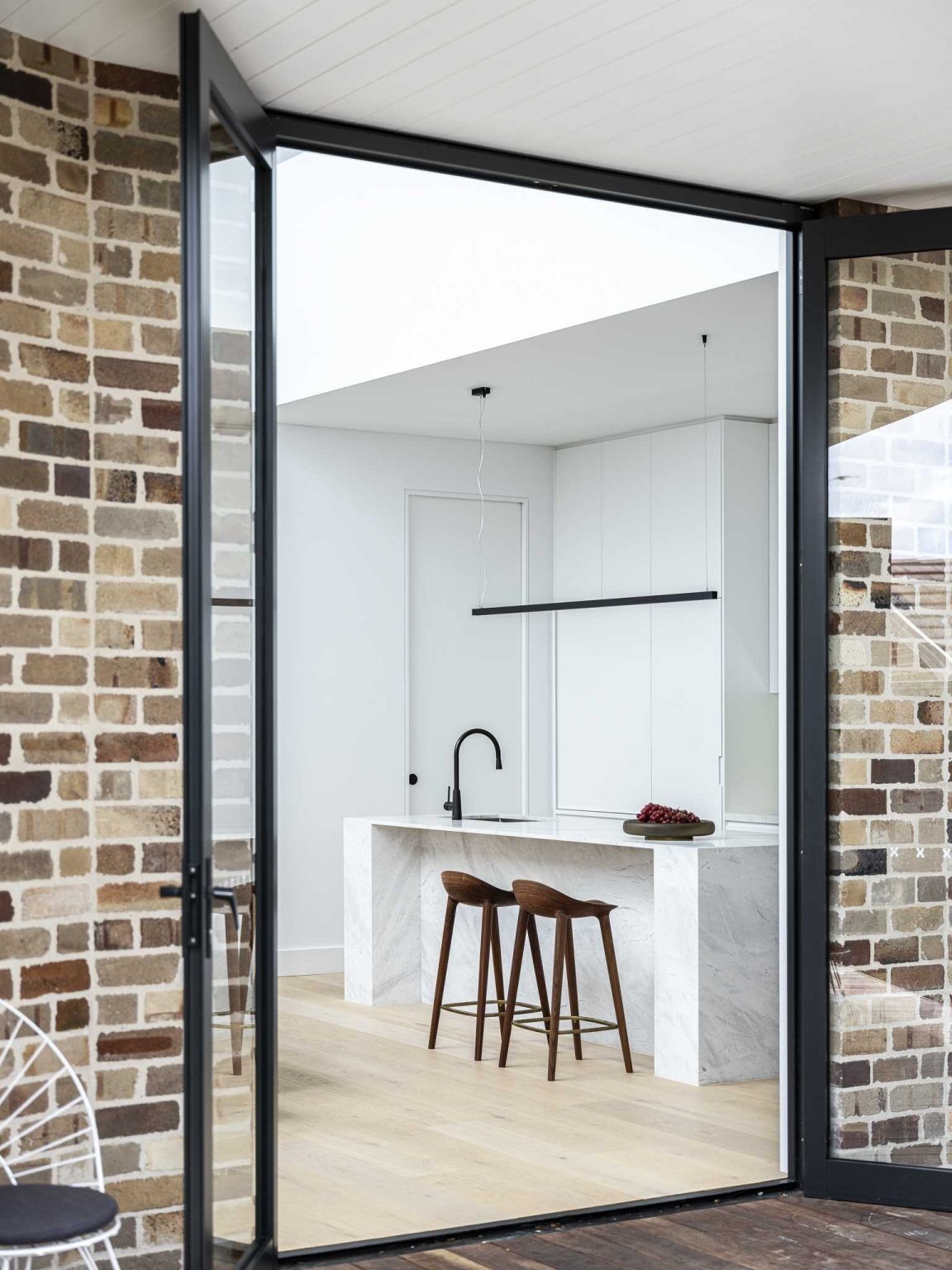
The rear extension introduces a bold geometric form constructed from recycled bricks. Its sculptural appearance creates a clear contrast with the cottage while still feeling connected through its warm material palette.
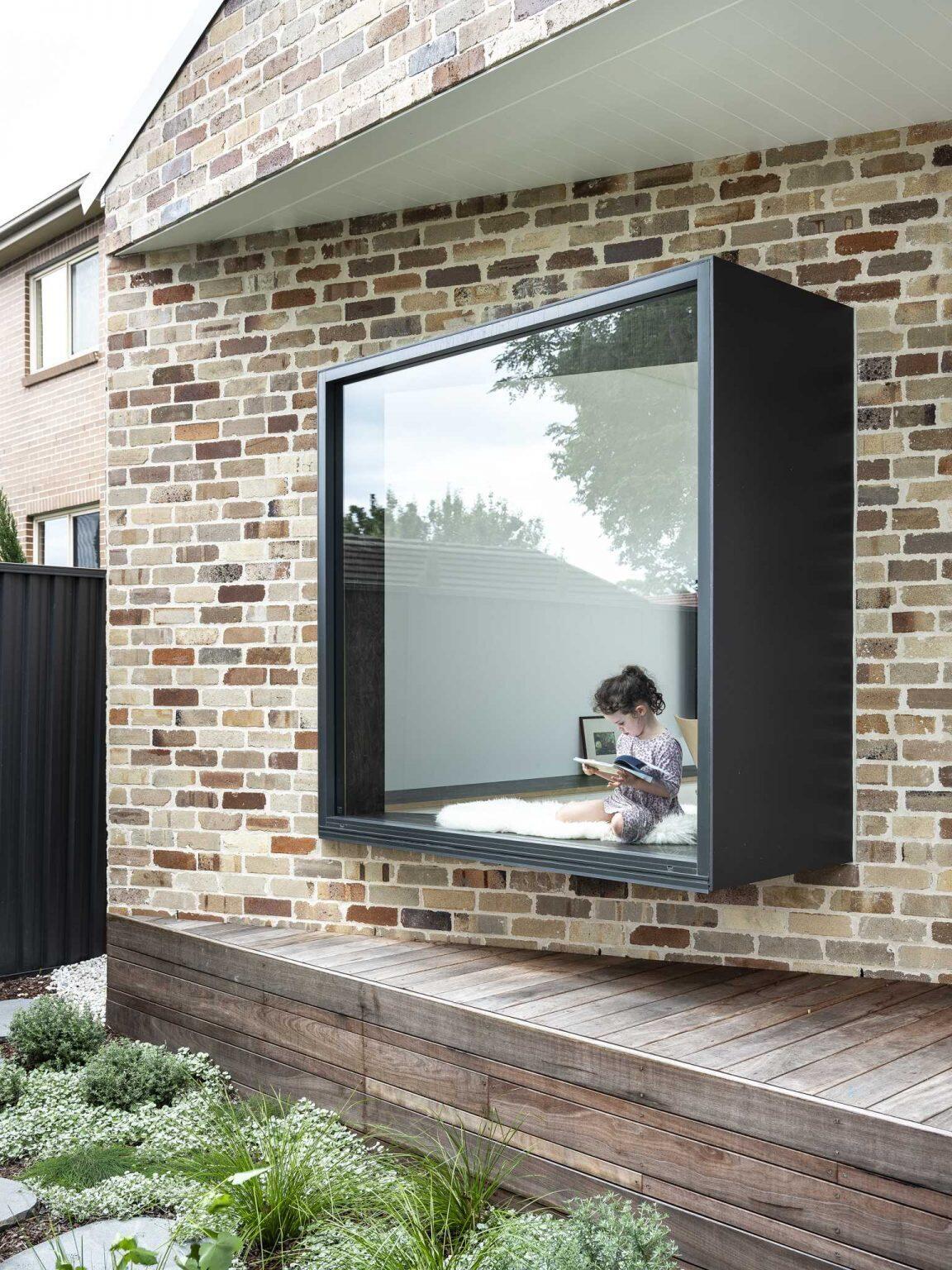
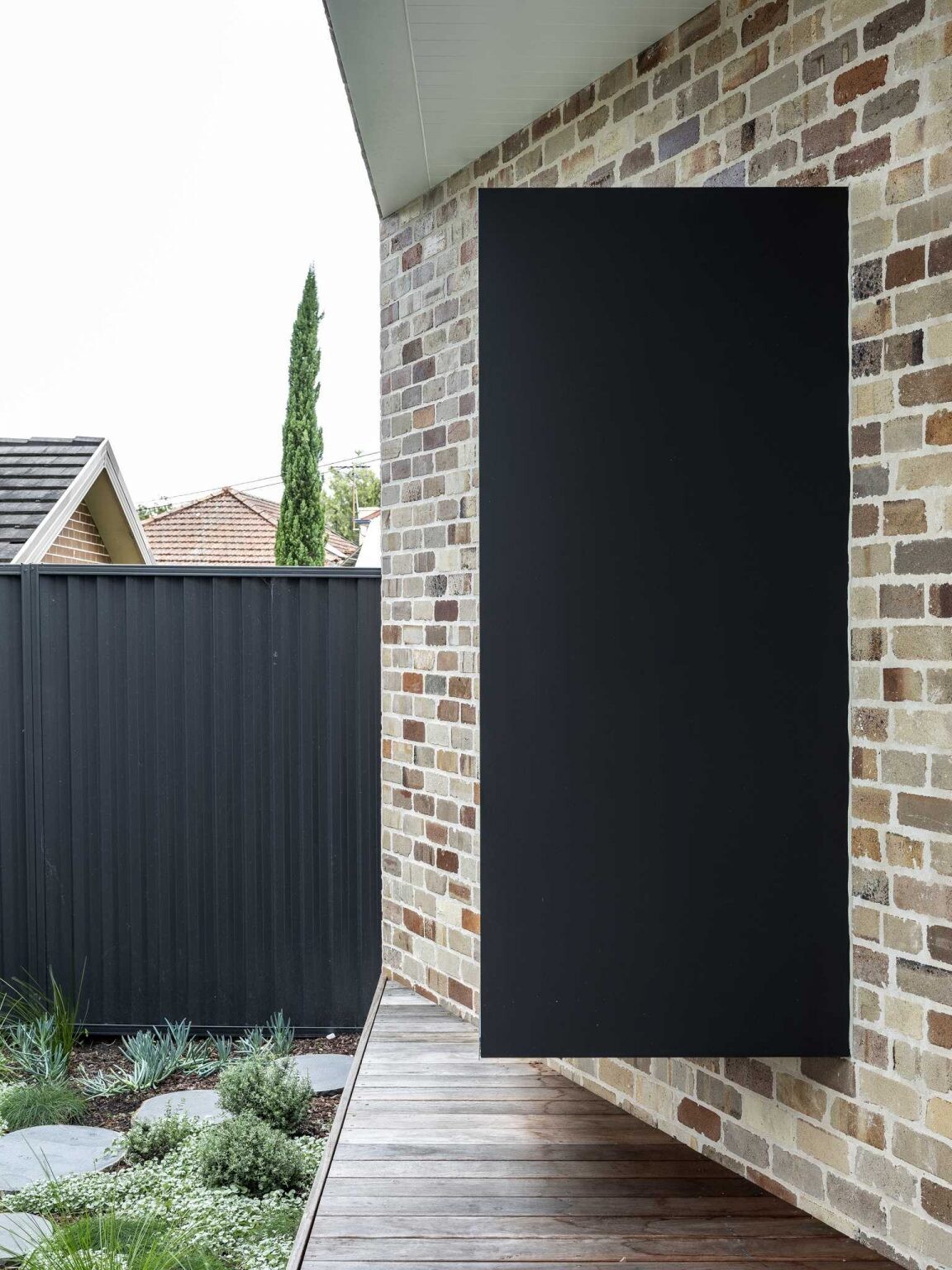
A generous overhang extends over the timber deck, providing shade and creating a comfortable outdoor area. The addition’s angled geometry also serves a practical purpose. One section projects outward to create a built-in window seat that extends beyond the living room wall line, adding extra usable space inside.
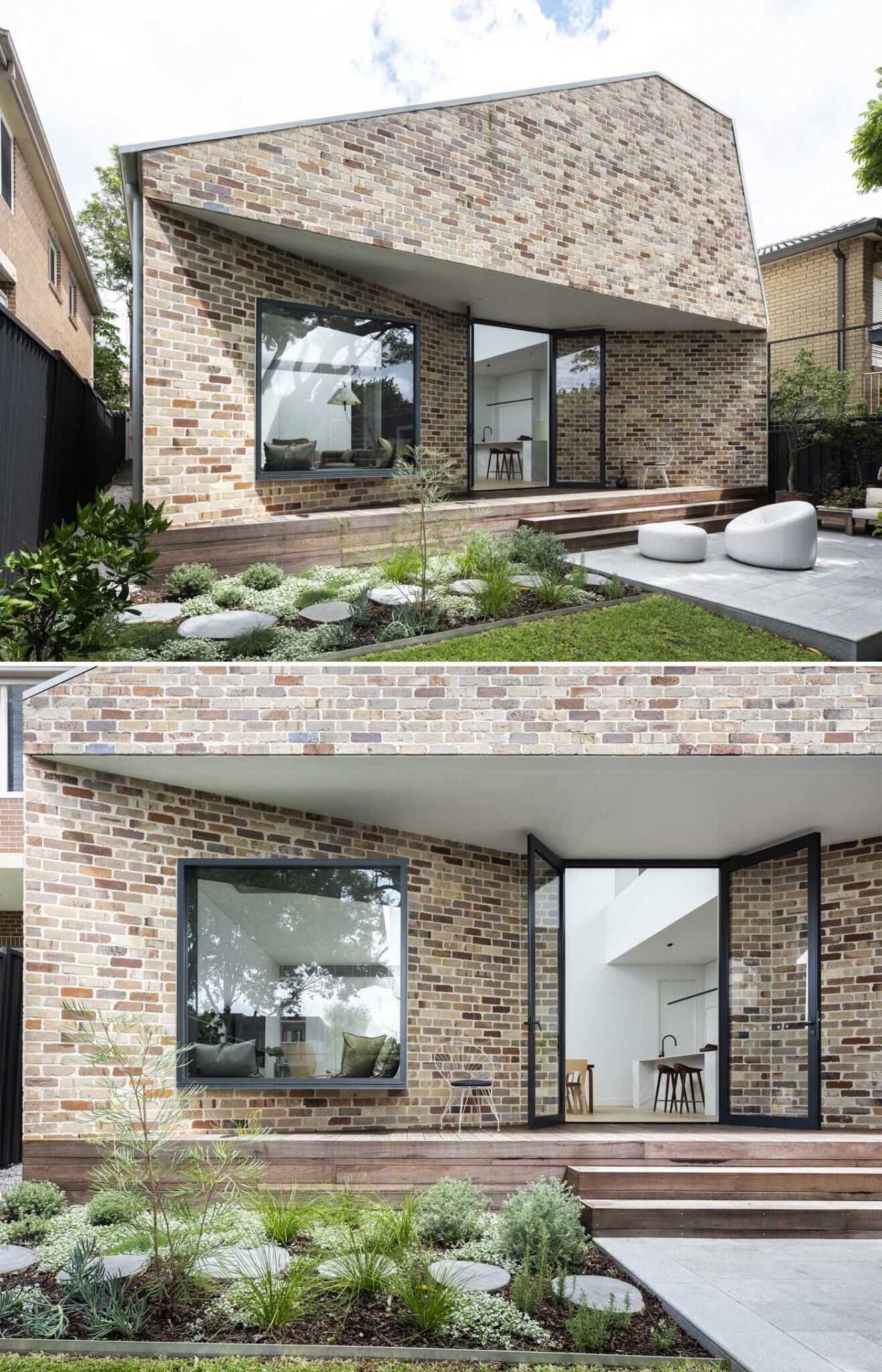
Black-framed windows and doors stand out against the textured brickwork, bringing a contemporary edge to the extension’s exterior.
The architecture was shaped by the placement of large skylights, which influenced the roof form and helped direct views away from neighboring two-storey homes while drawing sunlight into the interior throughout the day.
A Bright Open-Plan Interior Filled With Natural Light
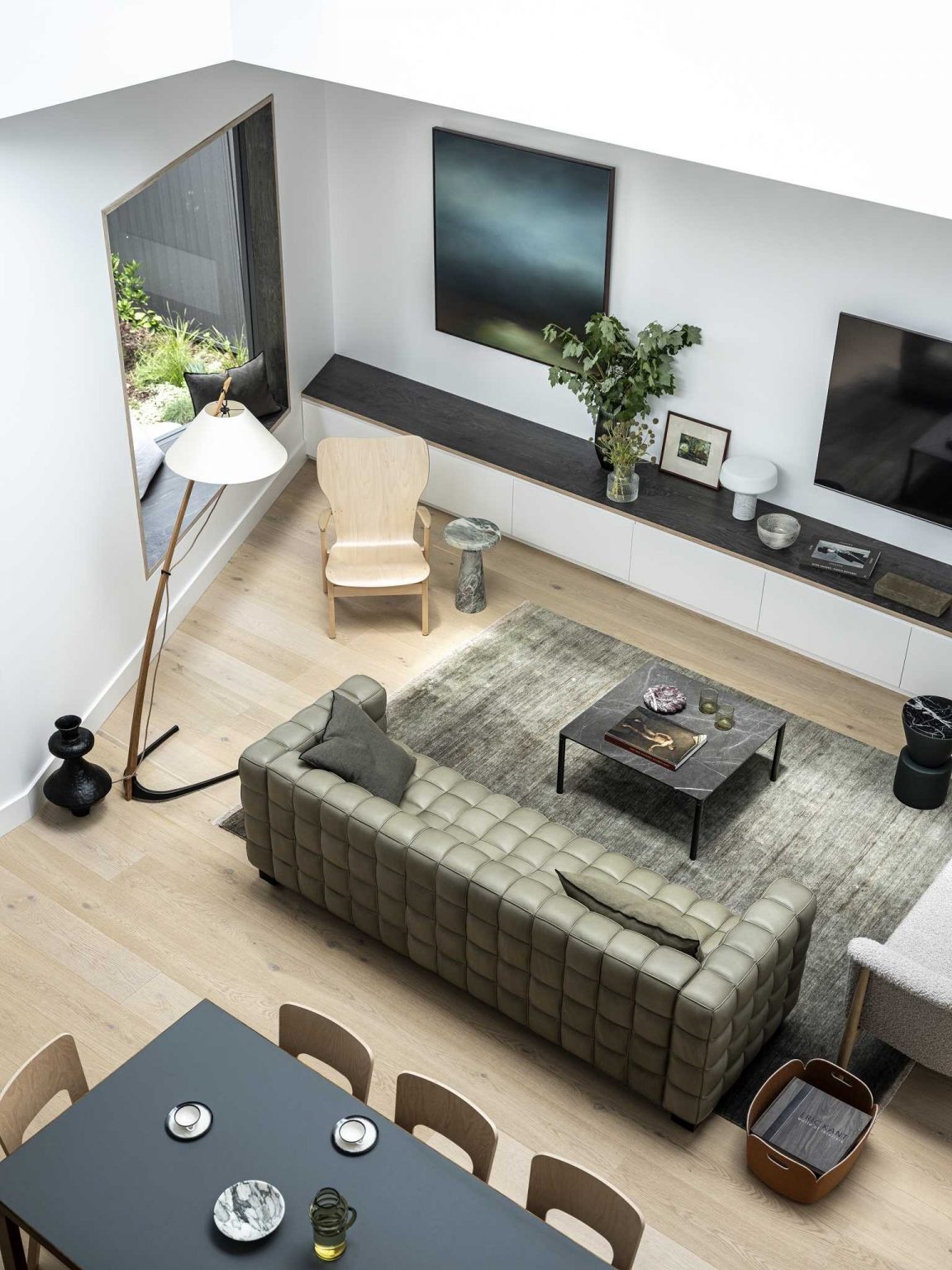
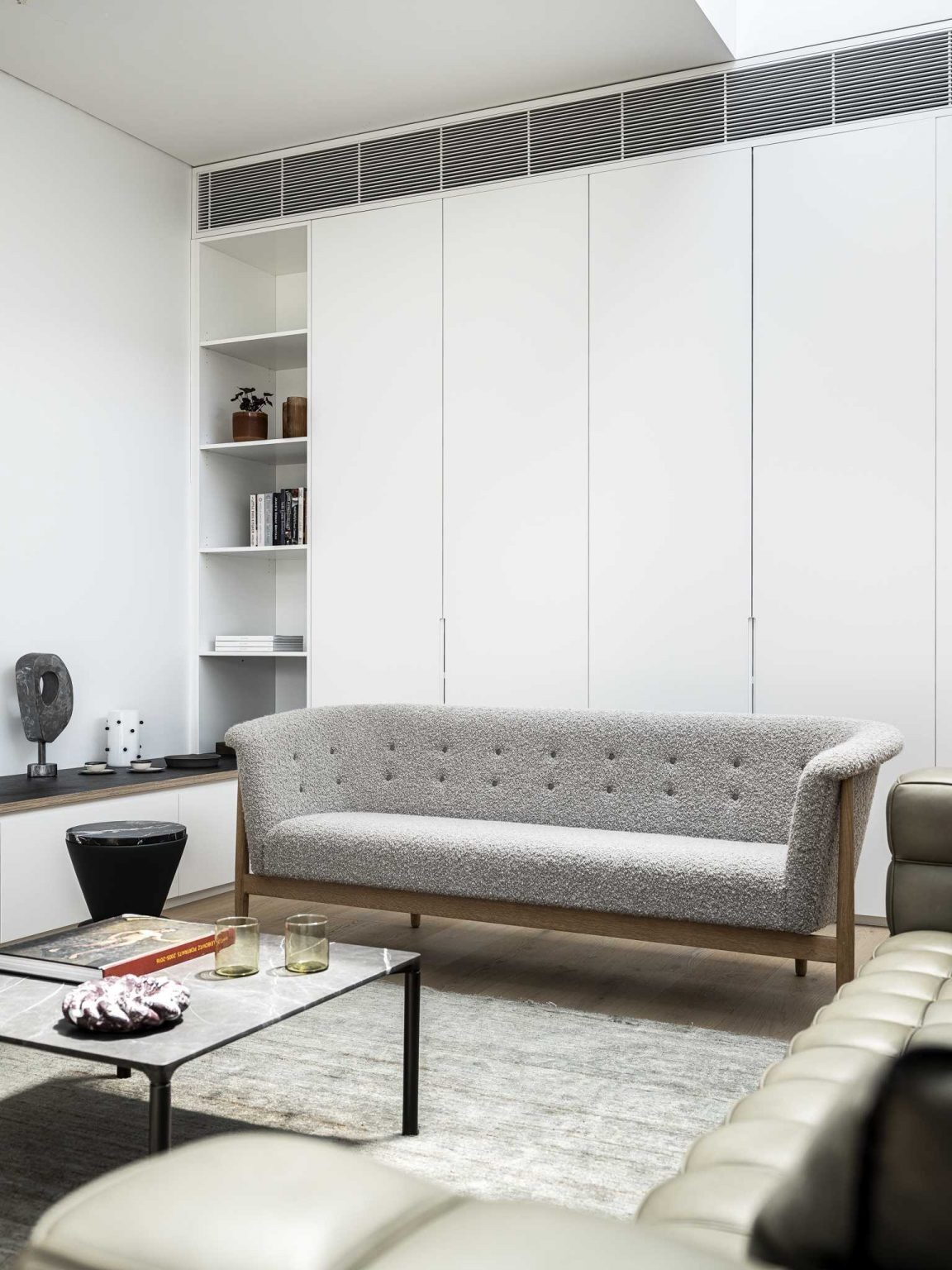
Inside, the extension opens into a crisp white living environment that combines the living room, dining area, and kitchen into one connected space.
Natural light is a defining feature. Large skylights positioned on both the northern and southern sides of the home bring sunlight deep into the interior from morning through evening. The raised roofline helps pull additional northern light into the living areas, creating bright spaces without sacrificing privacy.
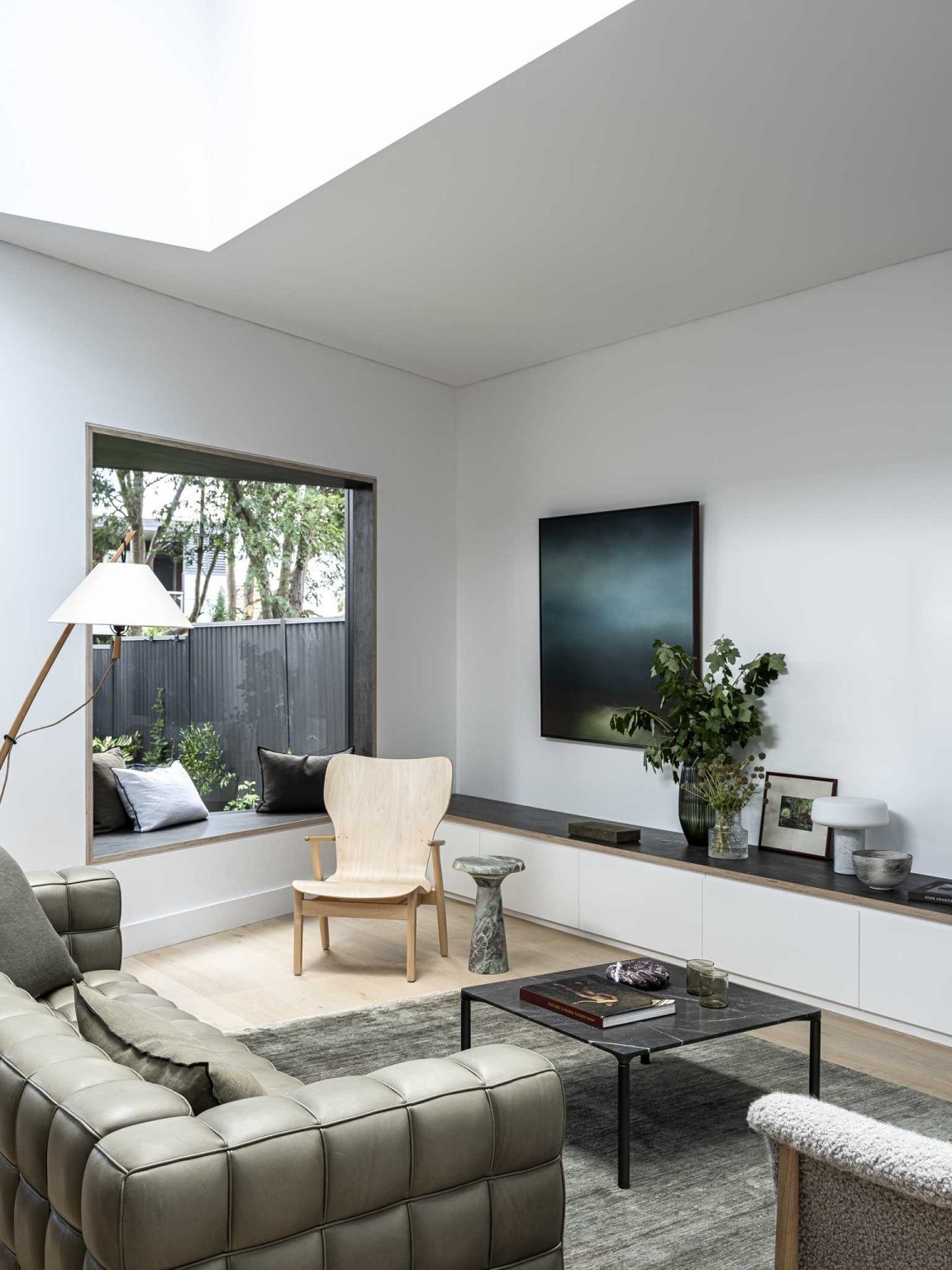
The angled bay window becomes a standout feature in the living room. It creates extra floor area while providing a comfortable place to sit and enjoy views toward the garden and the rear jacaranda tree.
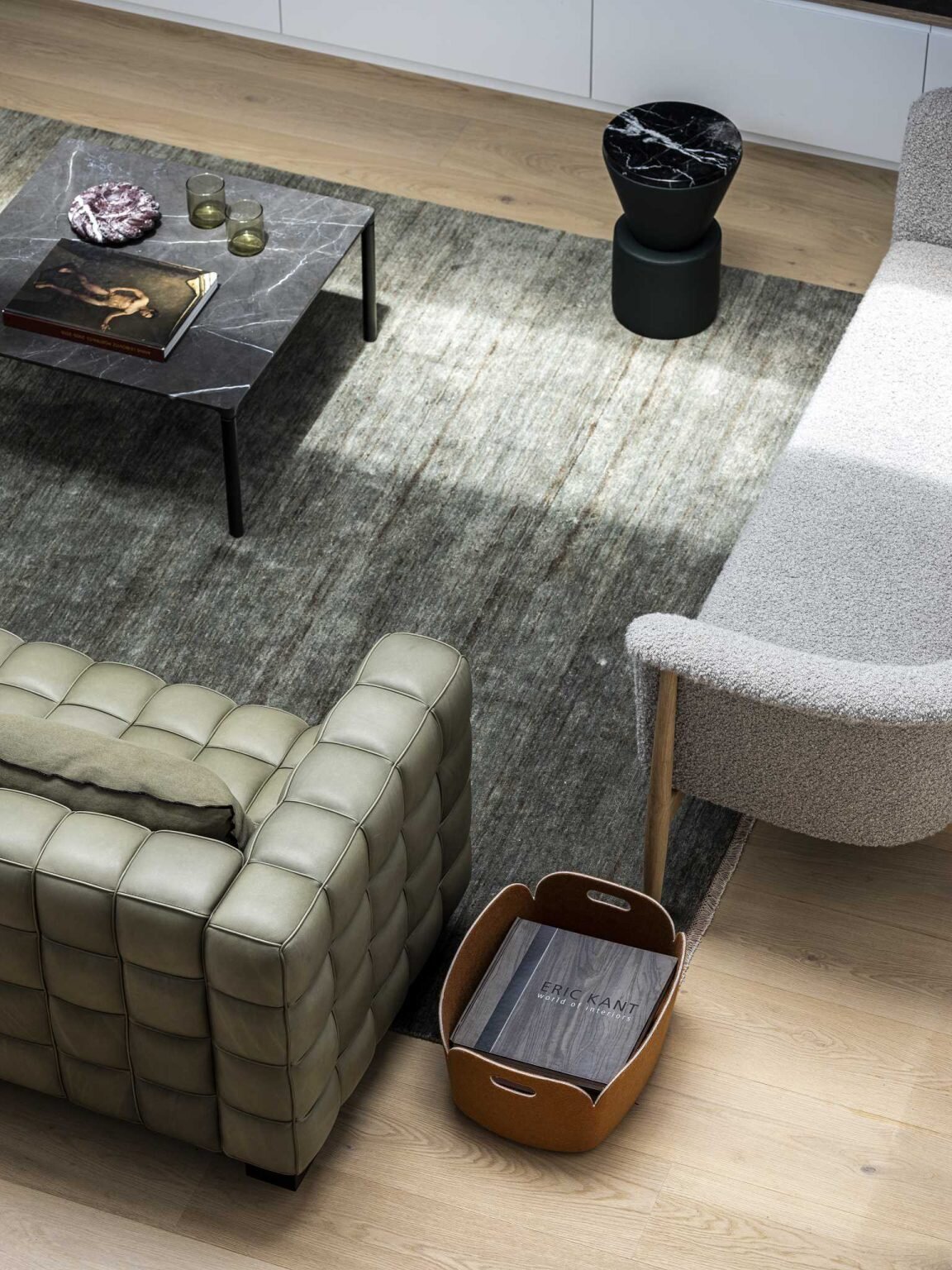
Timber detailing adds warmth throughout the space. A timber surface wraps from the window seat into the cabinetry beneath the television, creating visual continuity across the room. Additional full-height storage helps keep the open-plan area uncluttered and practical for family living.
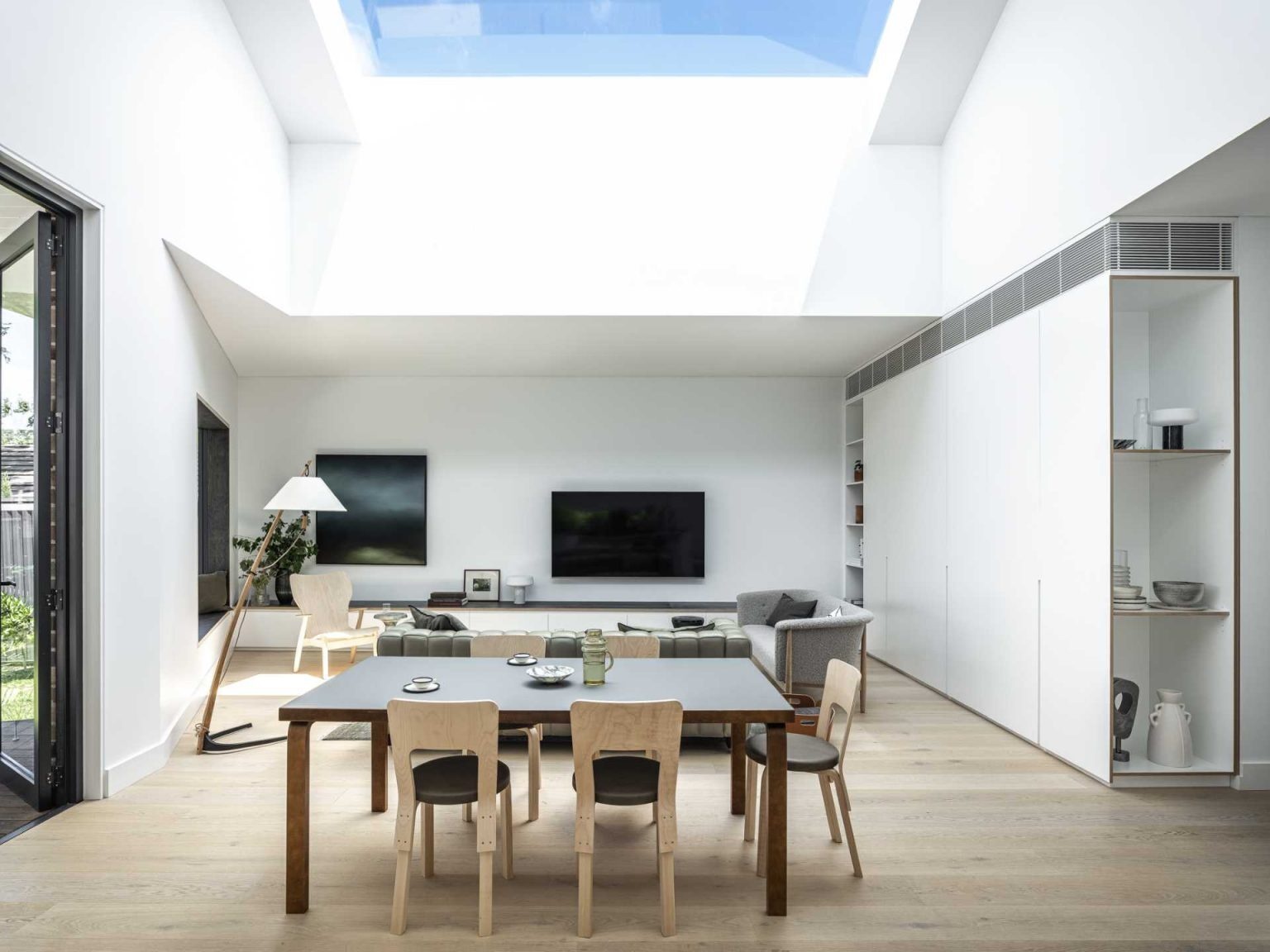
A Dining Space Positioned Beneath the Sky
Located between the living room and kitchen, the dining area occupies one of the brightest parts of the house. A large overhead skylight draws sunlight directly into the space, creating changing patterns of light throughout the day. This simple move turns the dining table into a natural gathering point within the home.
The skylight also contributes to passive heating during winter months, helping warm the interior and reducing reliance on artificial heating.
A Minimalist Kitchen With Functional Details
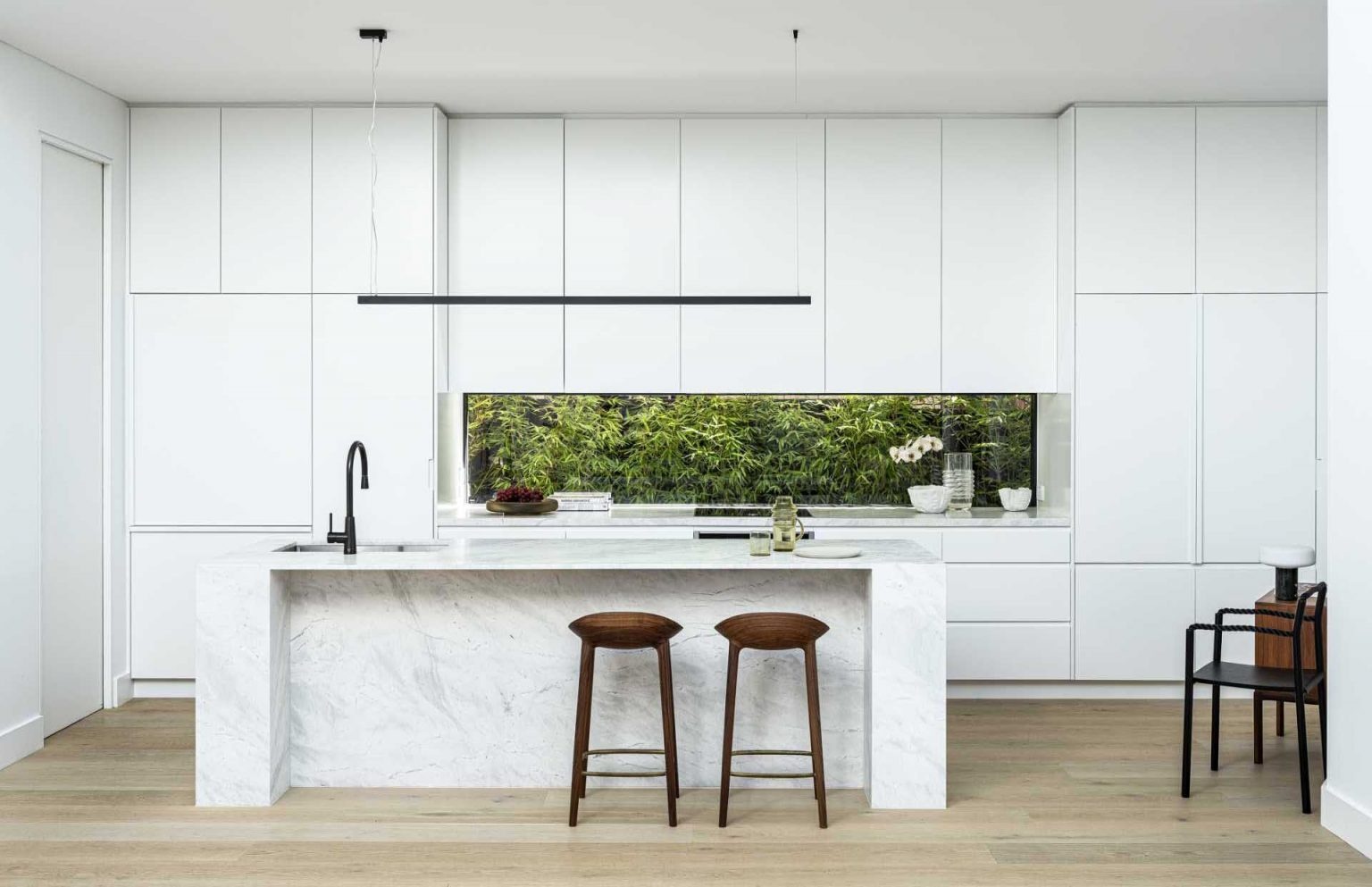
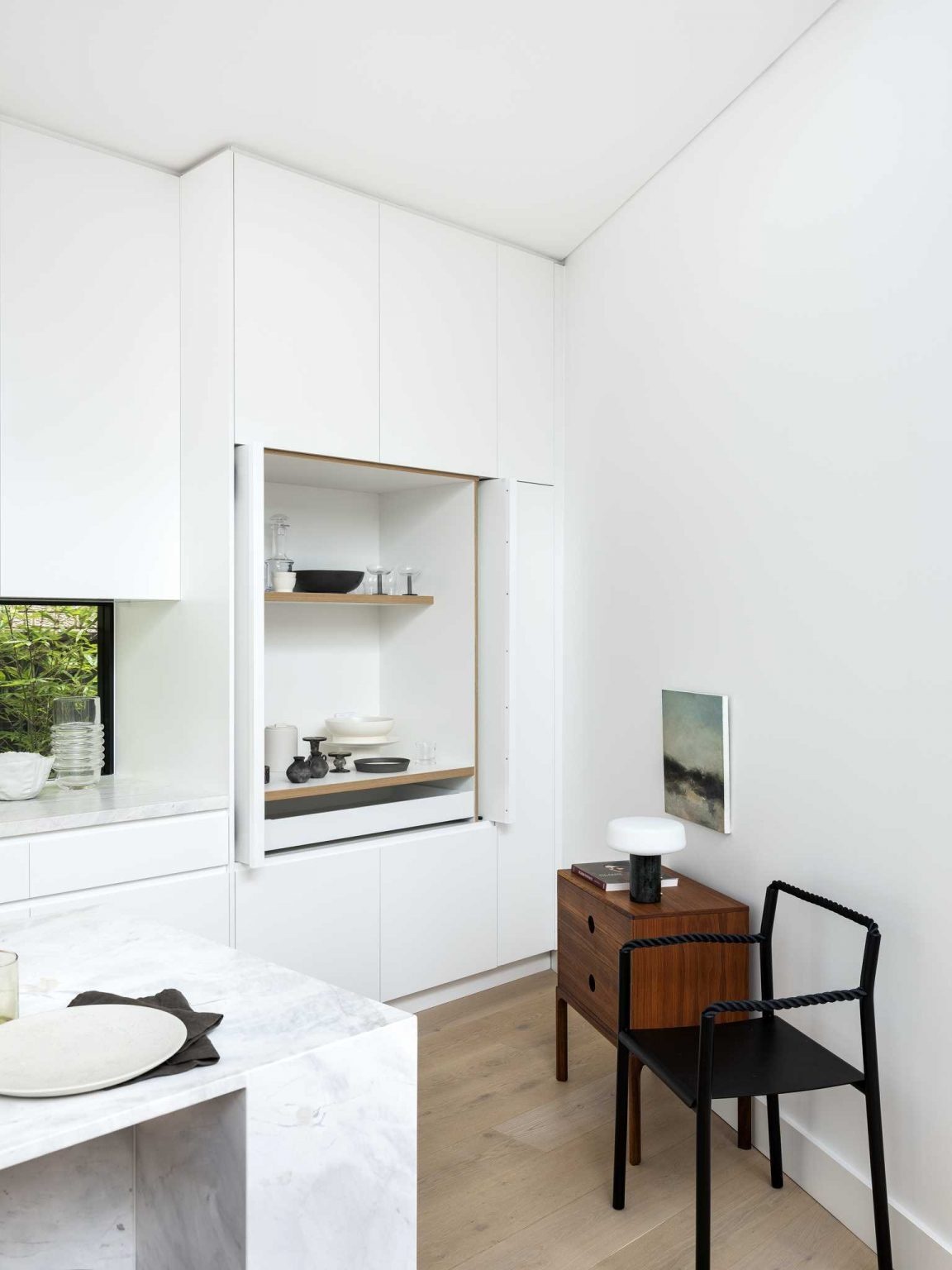
The kitchen continues the home’s clean and understated aesthetic. Floor-to-ceiling white cabinetry provides extensive storage while maintaining a streamlined appearance.
A window positioned between sections of cabinetry acts as a backsplash, introducing natural light and a view outside where a solid wall might normally be found.
At the center of the room, an island adds valuable preparation space while housing the sink. Together, these elements create a kitchen that feels open, efficient, and visually calm.
Bedrooms That Balance Old and New
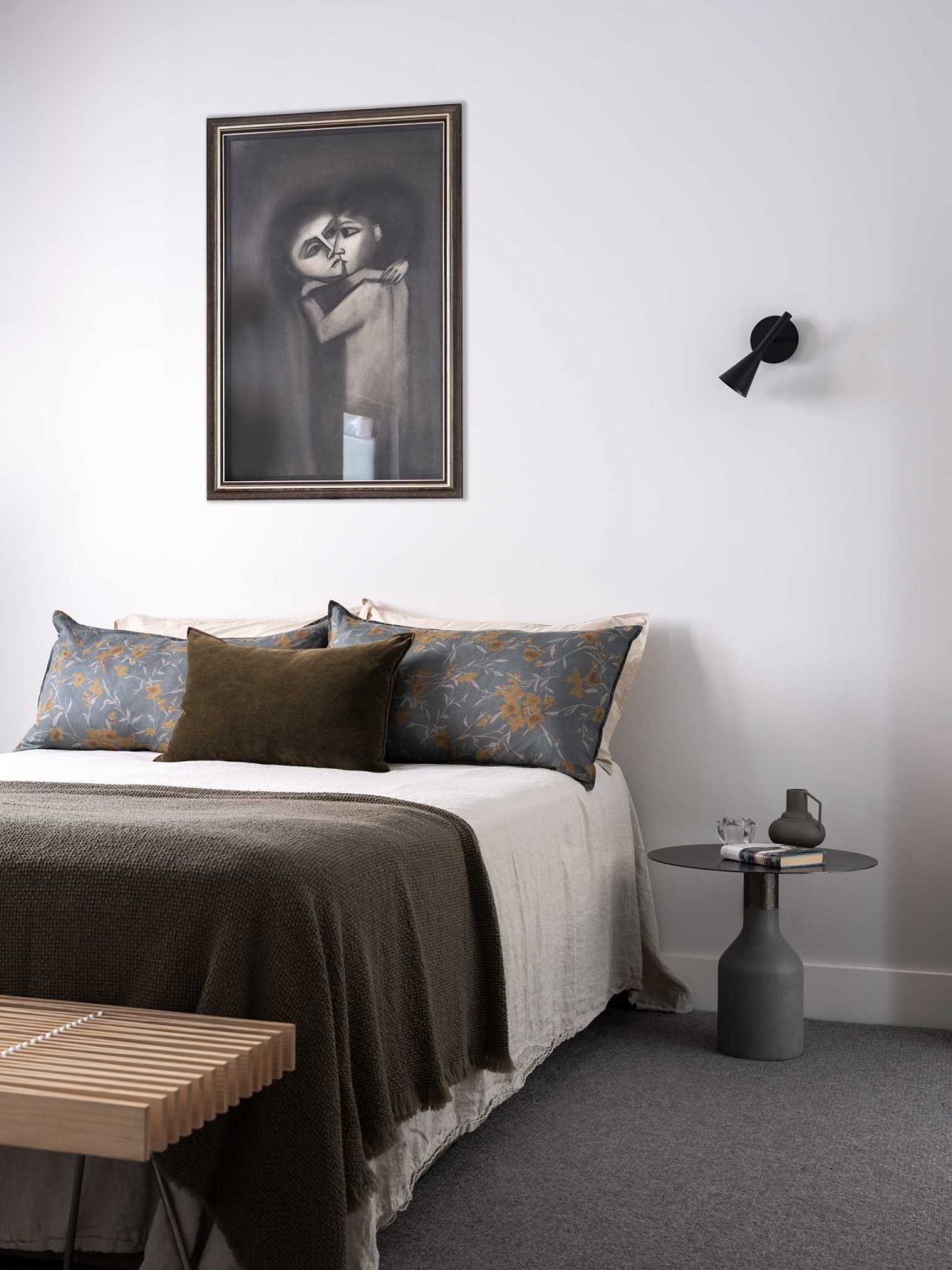
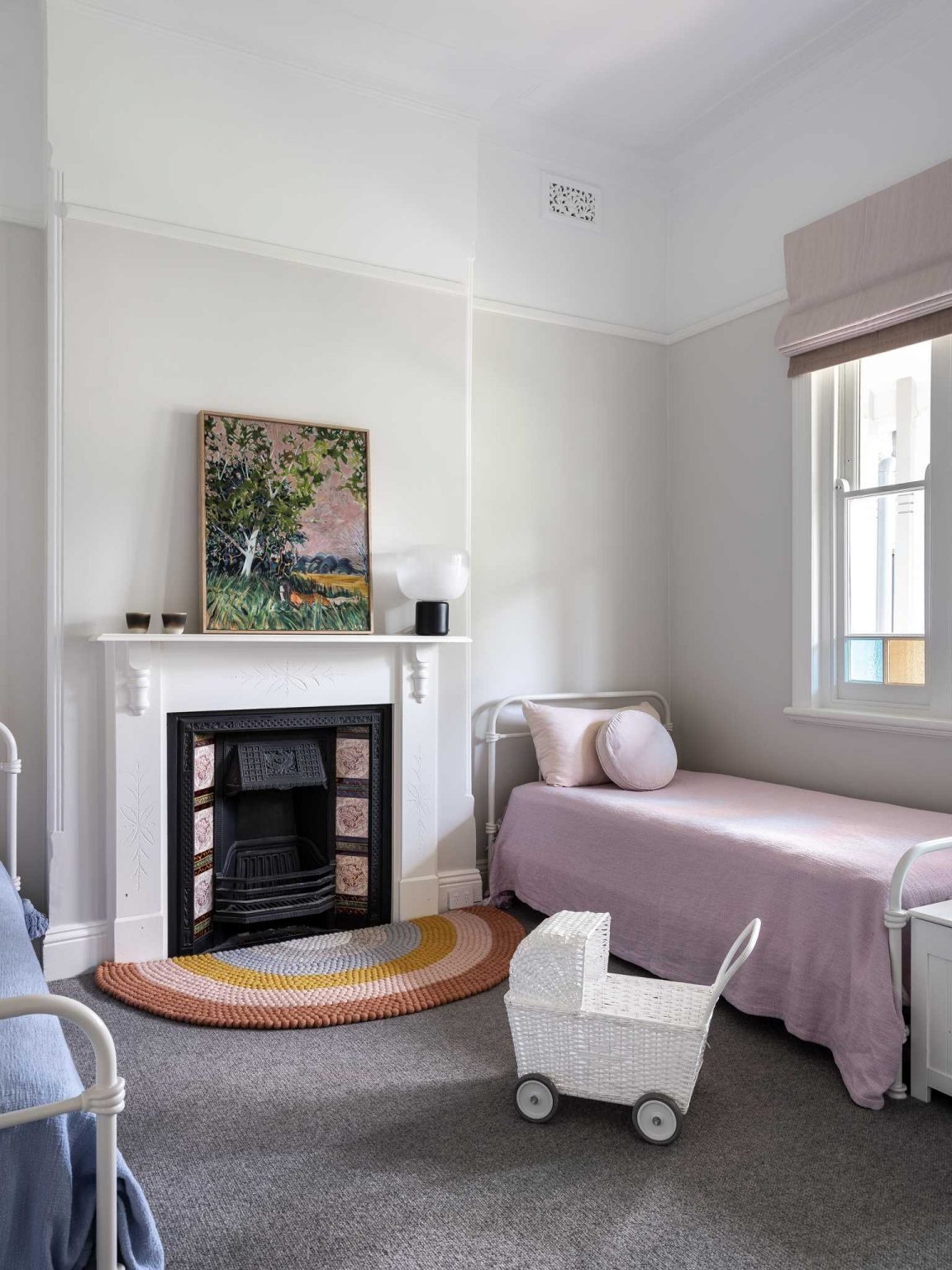
The home’s bedrooms embrace a contemporary approach through soft color palettes, light walls, and grey carpeting.
While the spaces have been modernized, traces of the original cottage remain. In the child’s bedroom, the existing fireplace has been retained, providing a reminder of the home’s earlier history and creating a connection between past and present.
This blend of preserved elements and updated finishes helps maintain the character of the original house while supporting modern family needs.
Two Bathrooms With Different Personalities
The bathrooms each bring their own character to the home.
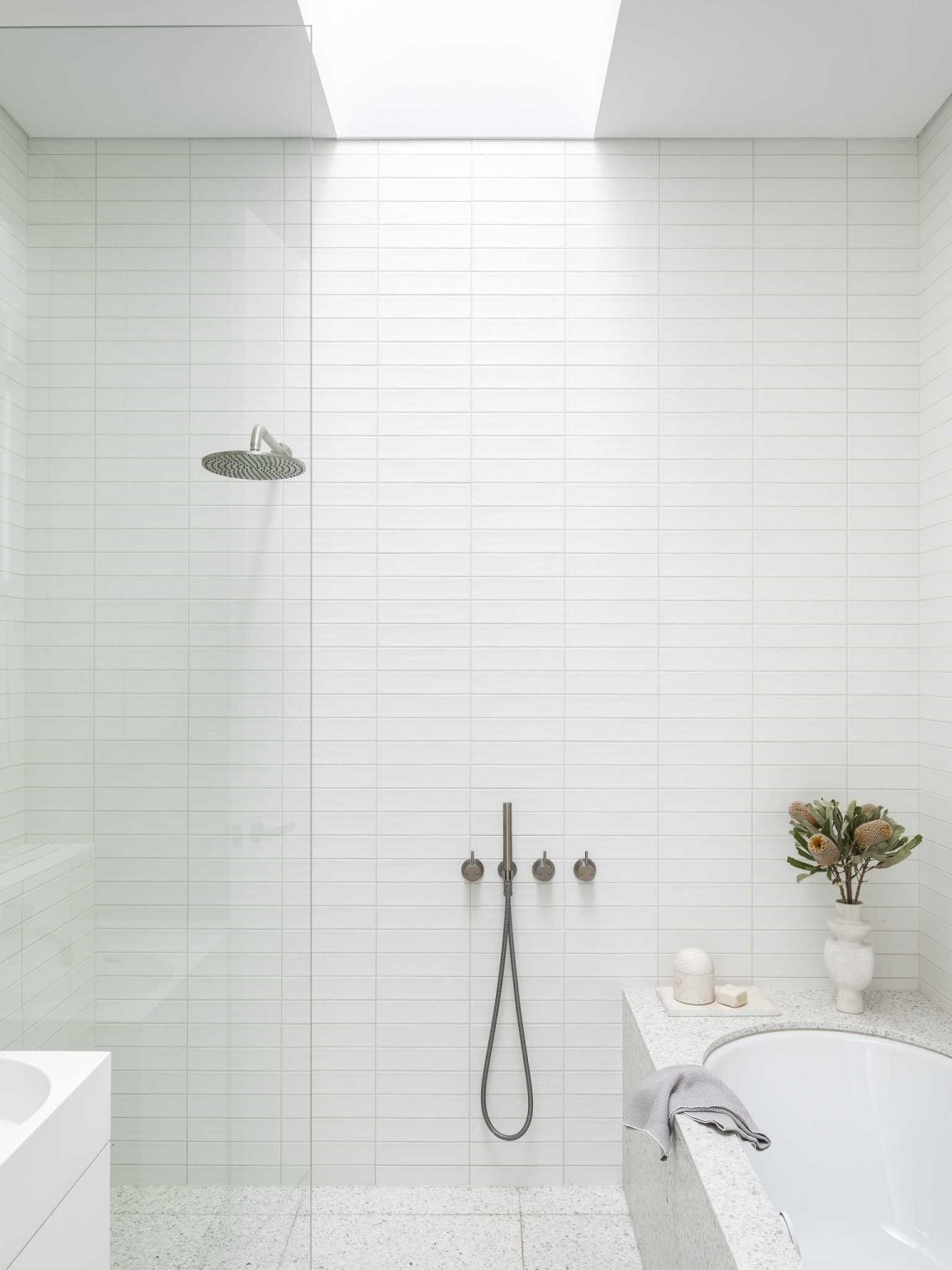
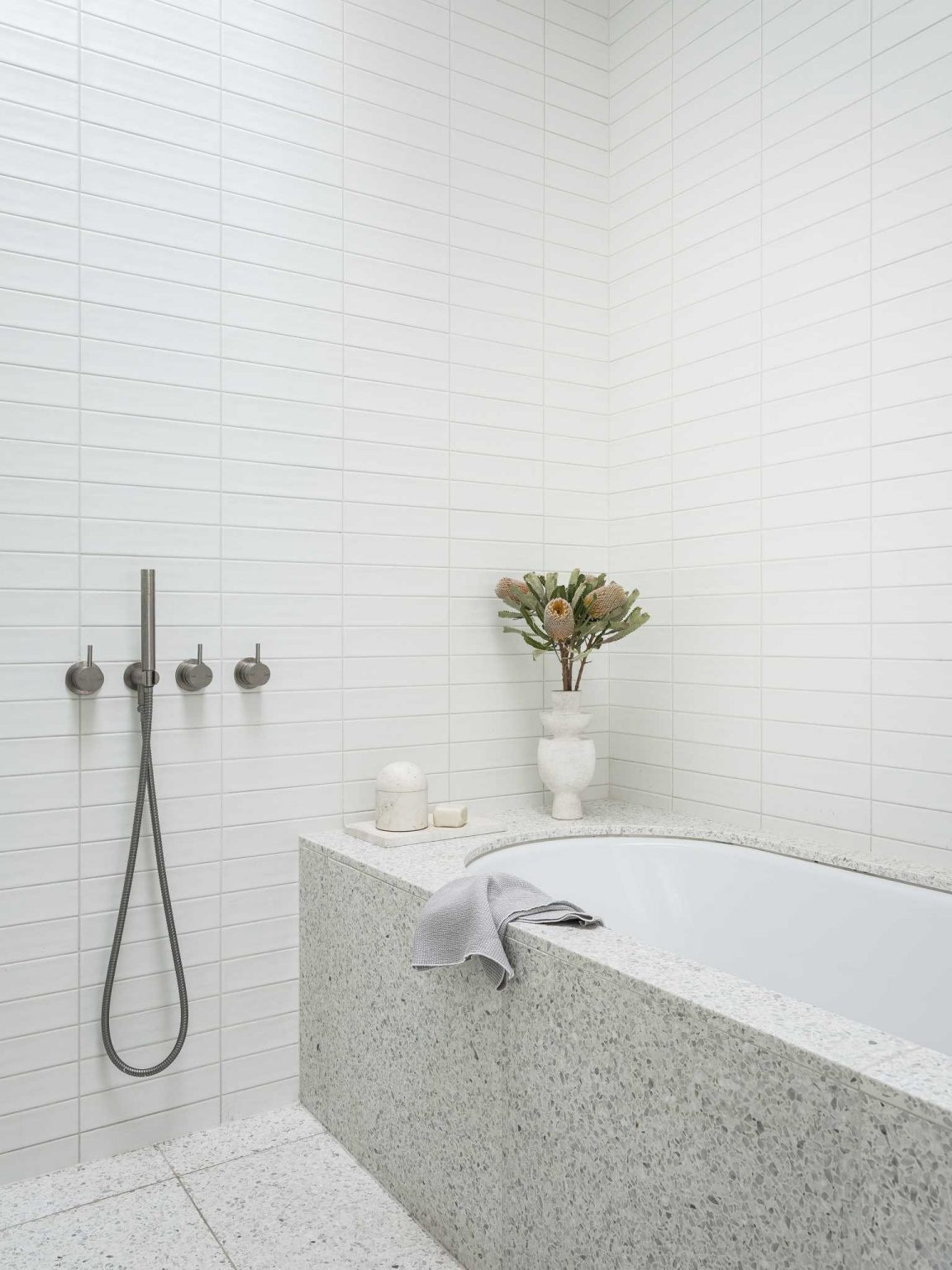
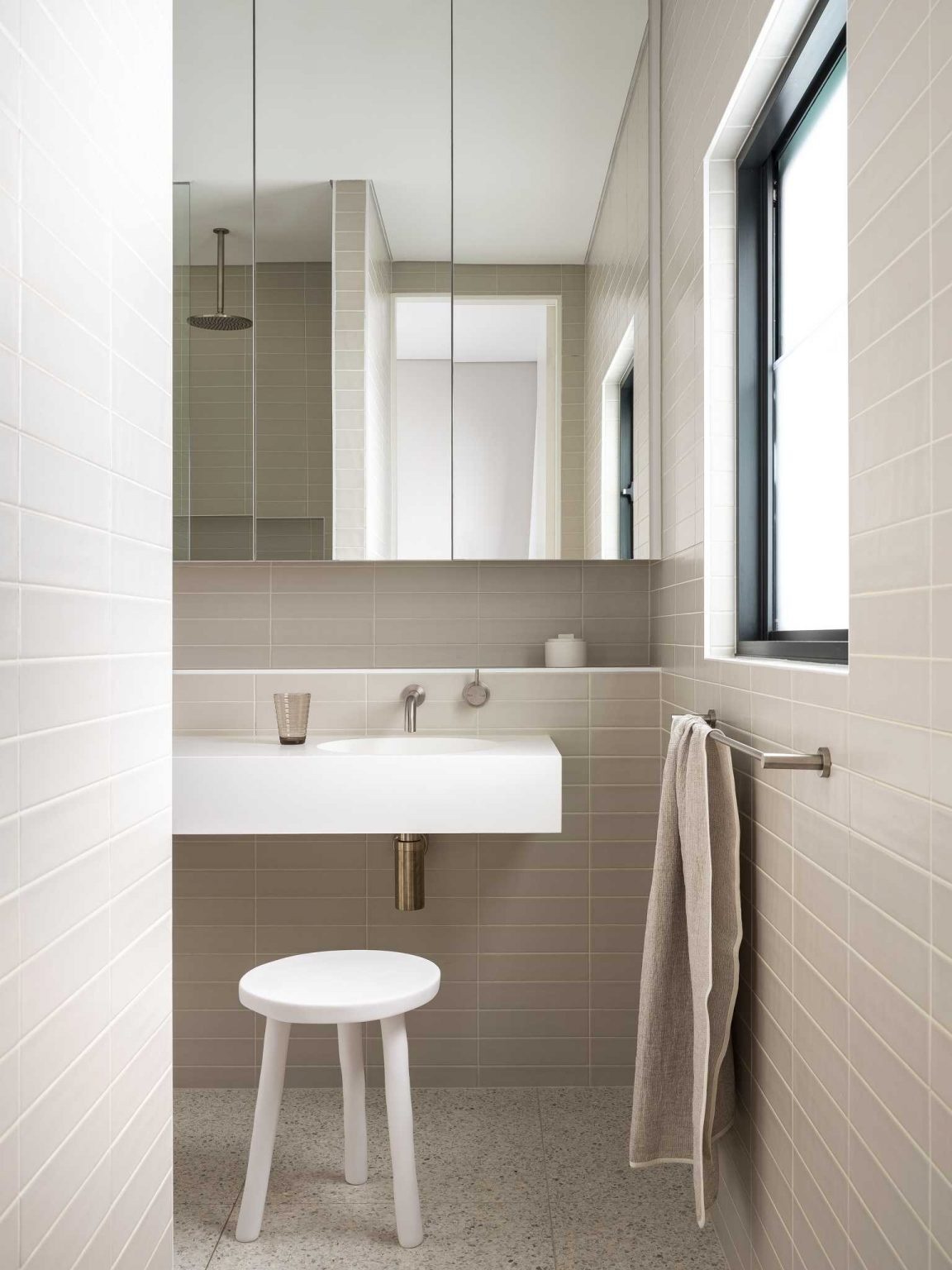
One bathroom features tiled walls and a built-in bathtub, creating a clean and contemporary appearance. The second bathroom introduces a warmer, more earthy palette that offers a different atmosphere while maintaining the home’s overall modern aesthetic.
Additional skylights in the bathrooms bring natural light into these spaces while also providing ventilation through operable openings that help release warm air.
Practical Spaces Designed for Everyday Use
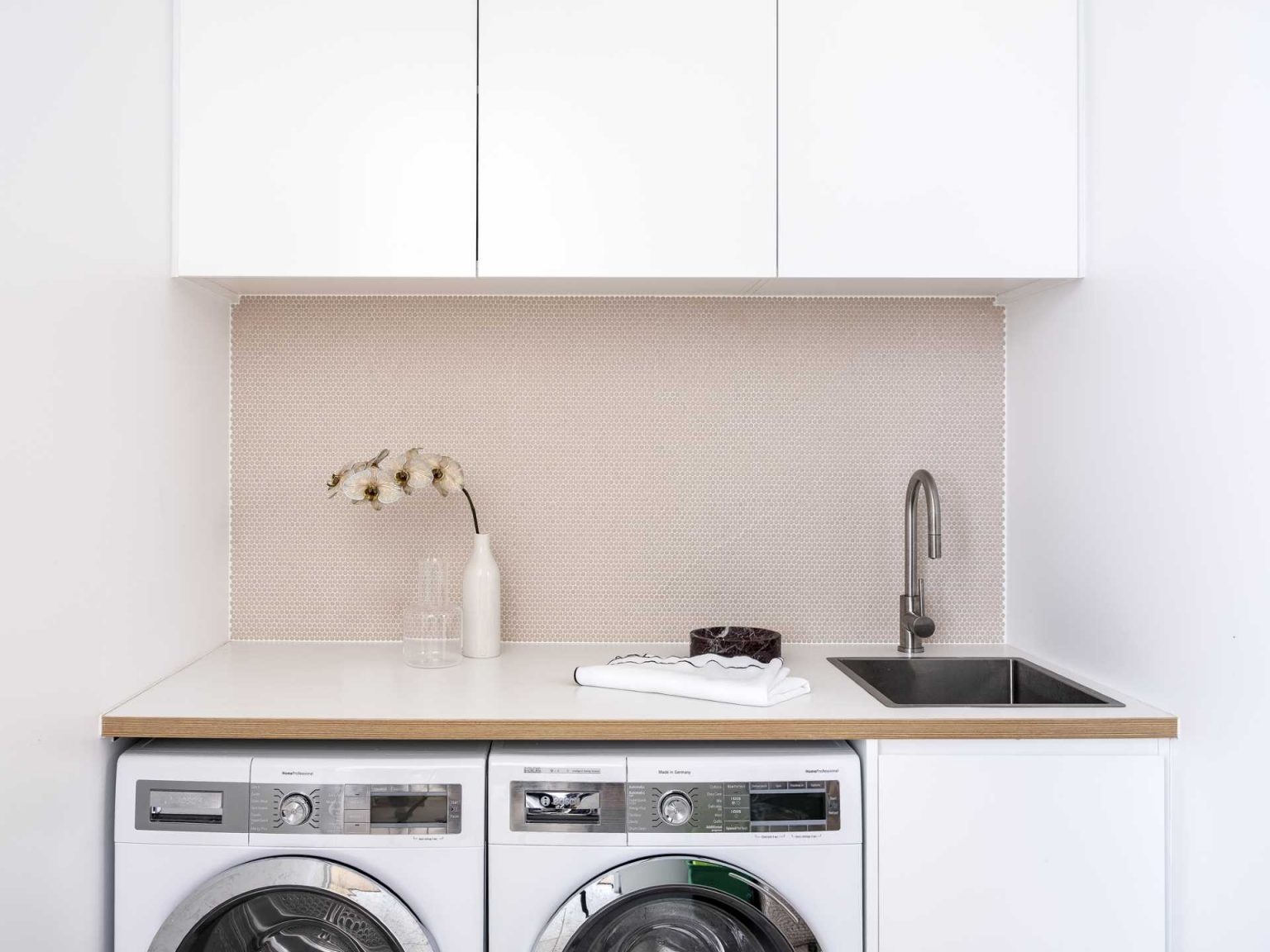
The renovation extends its focus on functionality into the laundry room. A countertop stretches across the washing machine and dryer, creating a convenient folding area, while cabinetry provides valuable storage.
Beyond the visible spaces, the home incorporates several sustainable features. Solar panels contribute to energy production, rainwater tanks support garden irrigation, and cross ventilation helps move cooling breezes from the front of the house through to the rear doors.
By preserving the original house, protecting mature jacaranda trees, and introducing a recycled brick extension filled with light, Carla Middleton Architecture has created a home that feels both familiar and new.