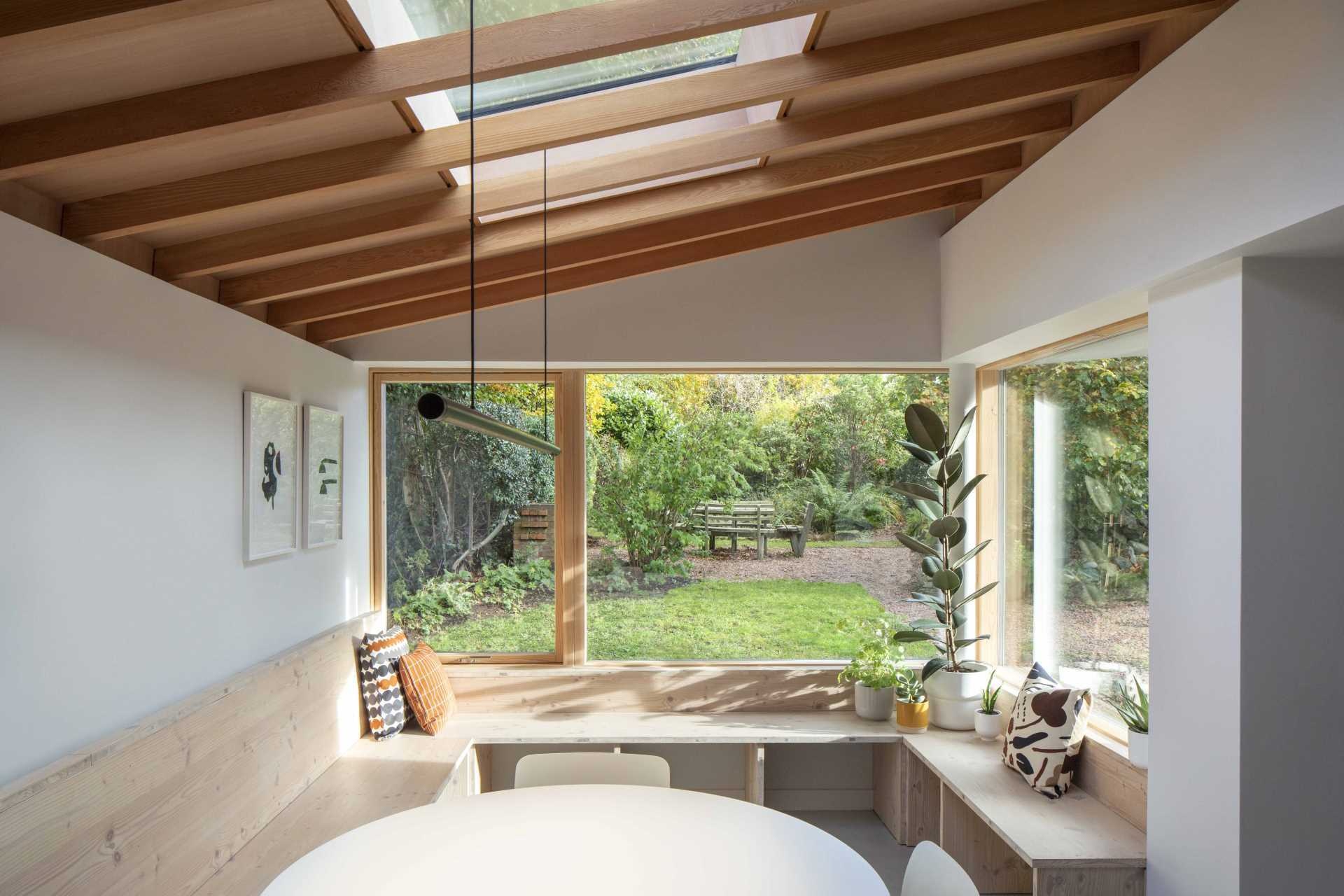
In the Conservation Village of Buchlyvie, Stirlingshire, Scotland, Loader Monteith Architects transformed a 1980s cottage through a smart internal reconfiguration and a modest rear extension.
The original cottage was divided into a series of small, dark rooms that limited natural light and disconnected the home from its expansive rear garden. The homeowners wanted a brighter, more open environment that would strengthen the relationship between indoor and outdoor spaces while creating room for modern family living.
Instead of relying on a large addition, the architects developed a compact extension and reorganized the ground floor layout, introducing new spaces for dining, studying, cooking, and everyday family life.
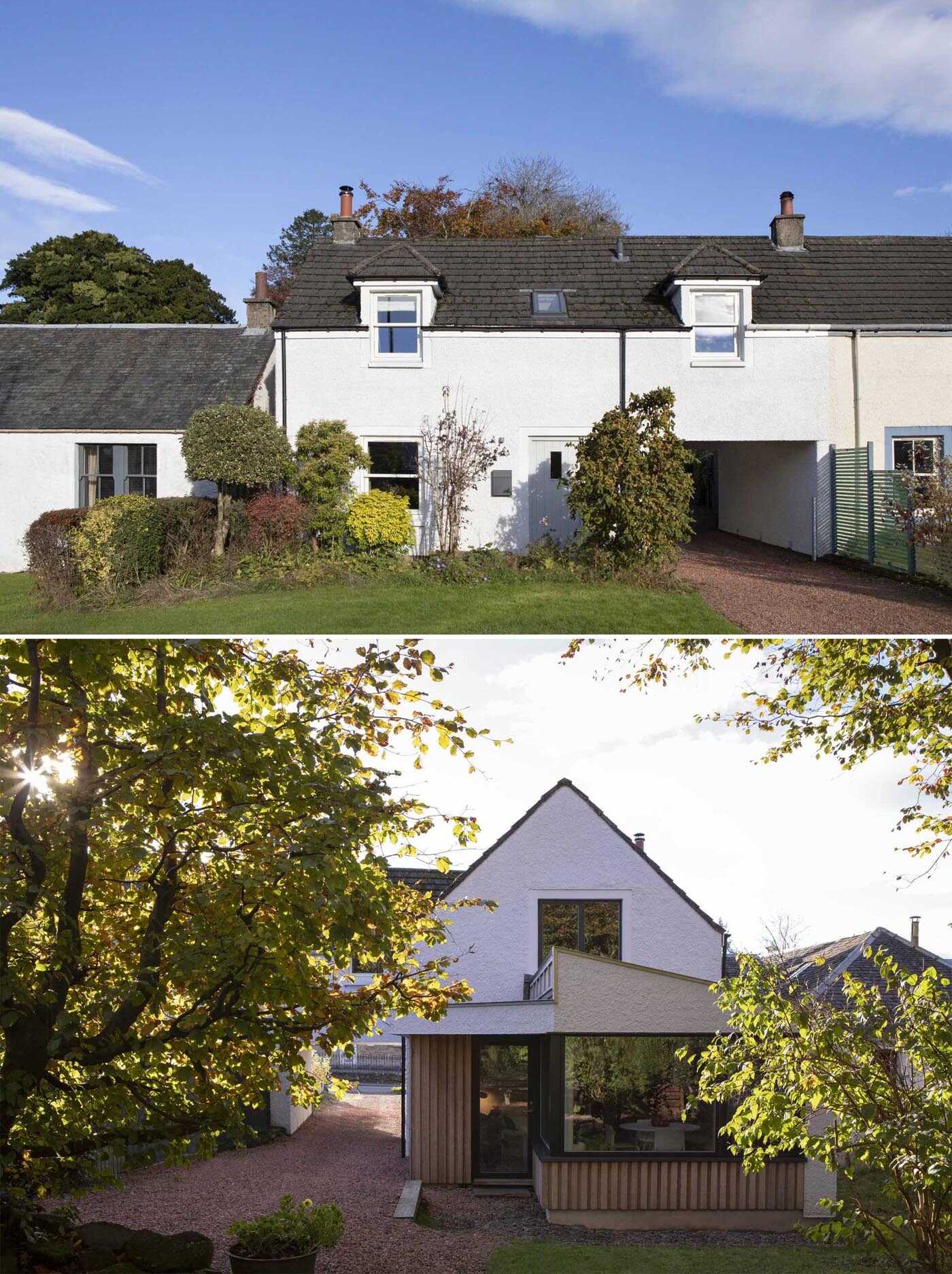
Opening the House to the Garden
One of the biggest challenges was overcoming the home’s inward-looking layout. The original arrangement separated rooms from one another and blocked views toward the garden beyond.
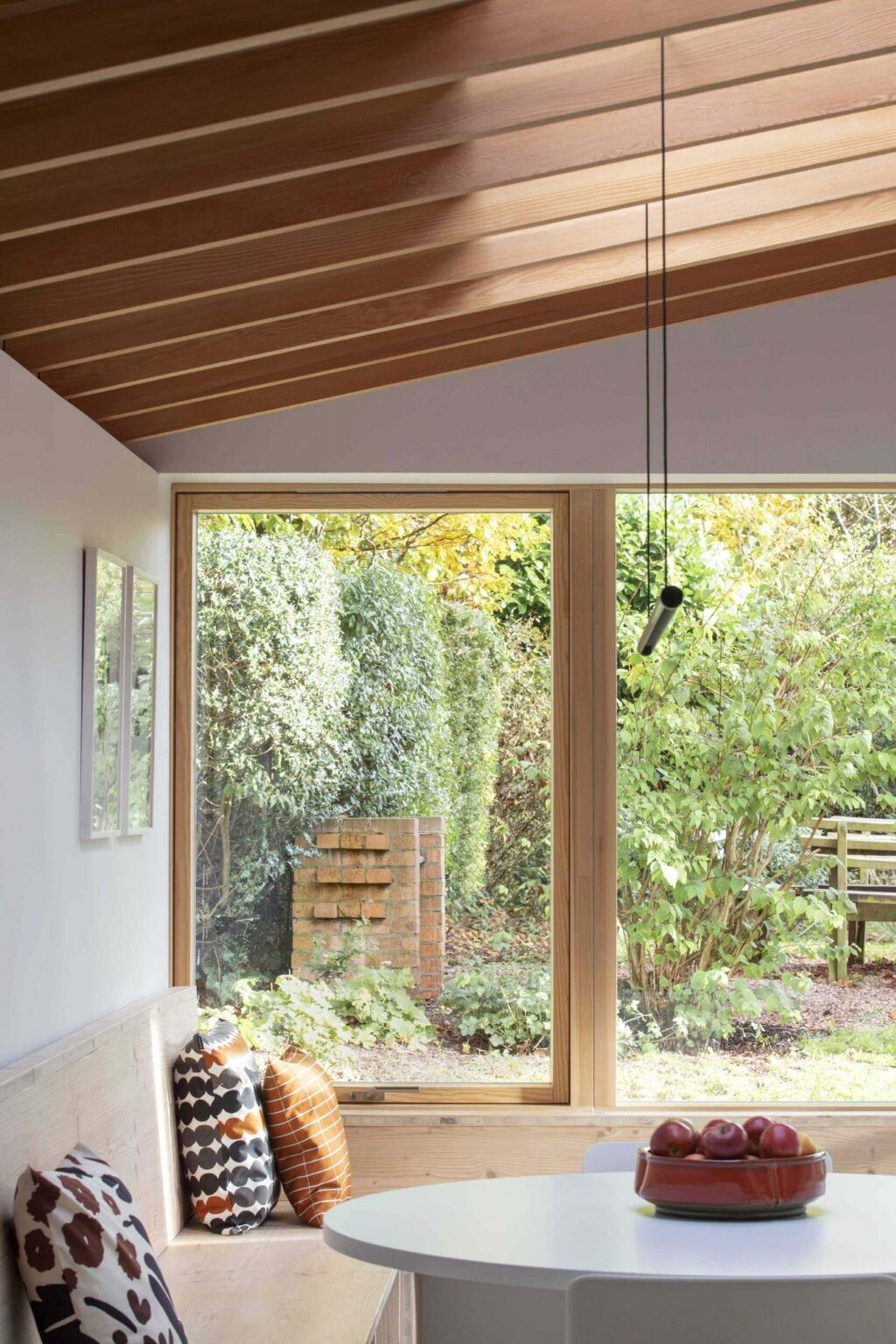
The new design changes that experience entirely. Large windows draw daylight deep into the floor plan, while the extension creates a natural connection between the interior and the landscape outside.
The Douglas Fir Window Seat That Steals the Show
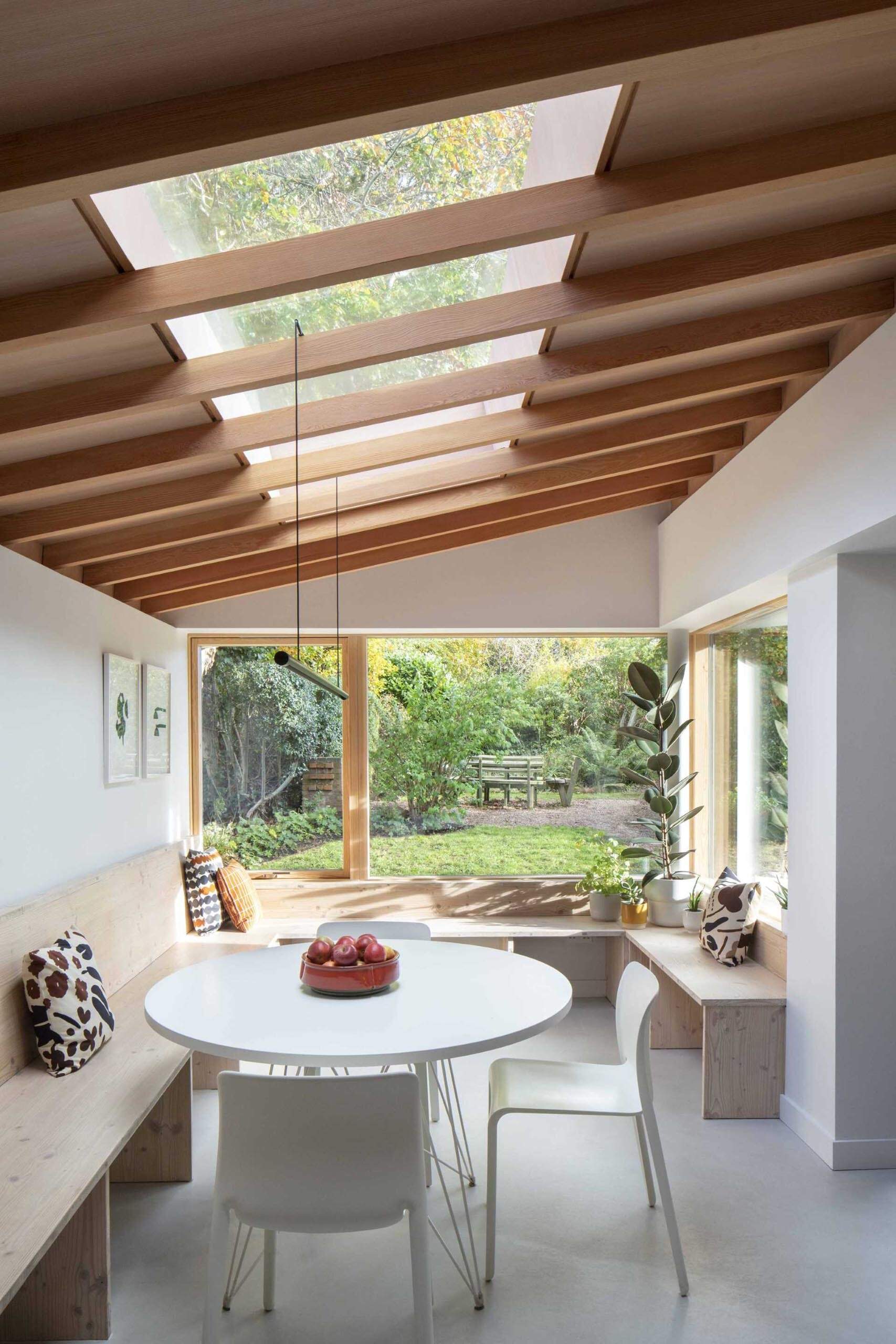
The standout feature of the extension is undoubtedly the custom Douglas fir window seat.
Designed in a generous U-shape, the built-in bench wraps around the corner of the new addition, creating a comfortable place to sit and enjoy views of the garden from multiple angles. The seating follows the line of the windows, turning the extension into a space that feels immersed in greenery.
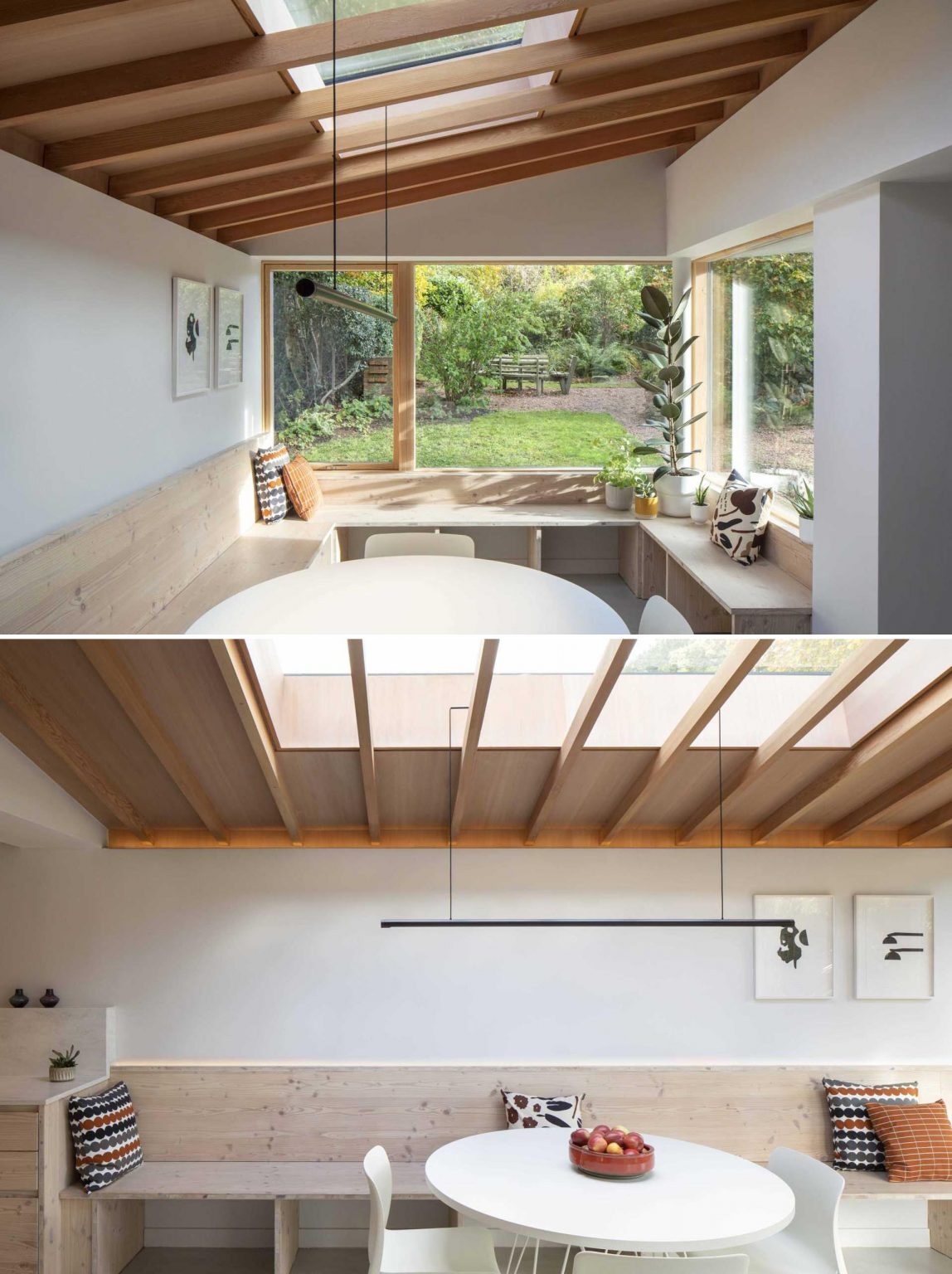
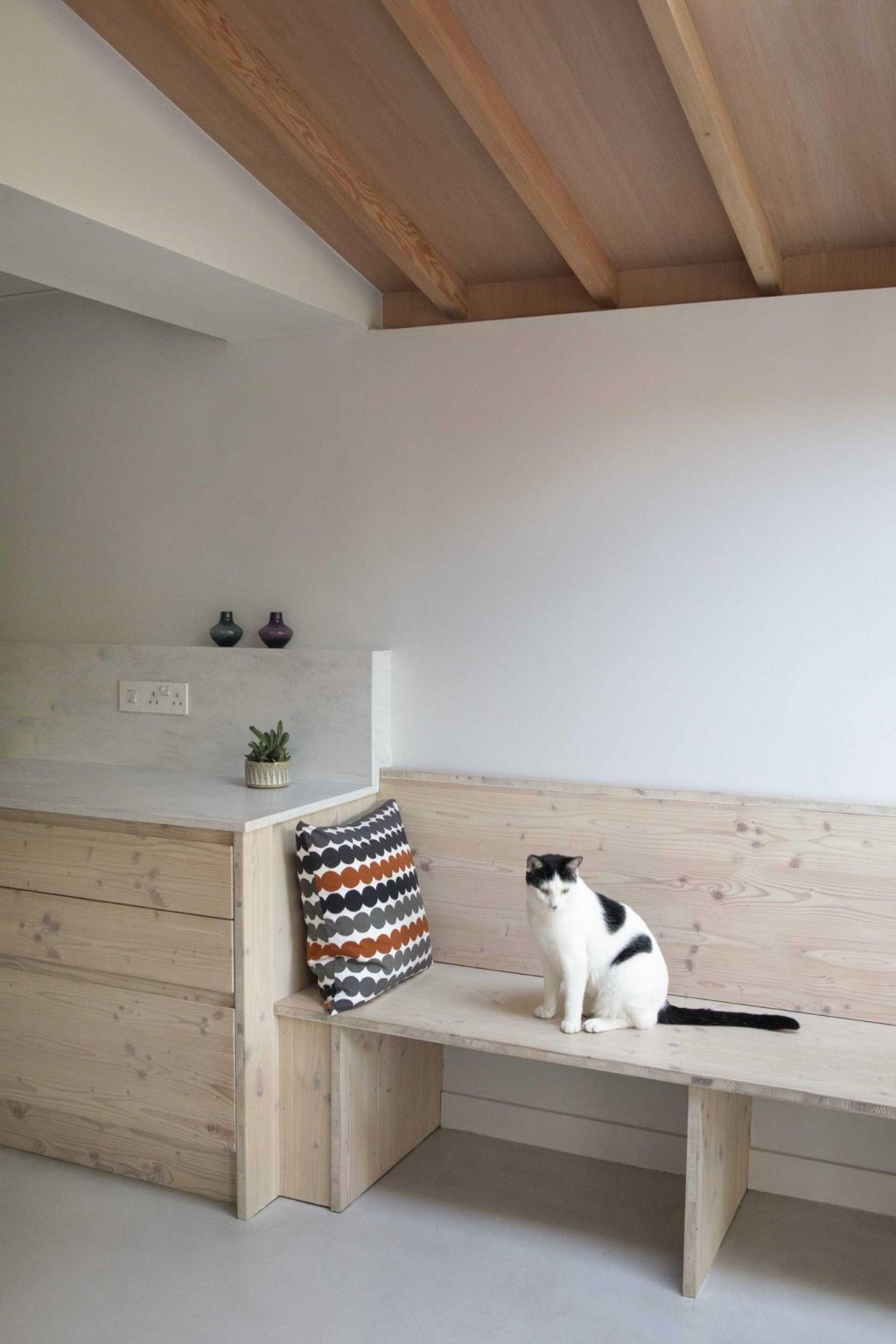
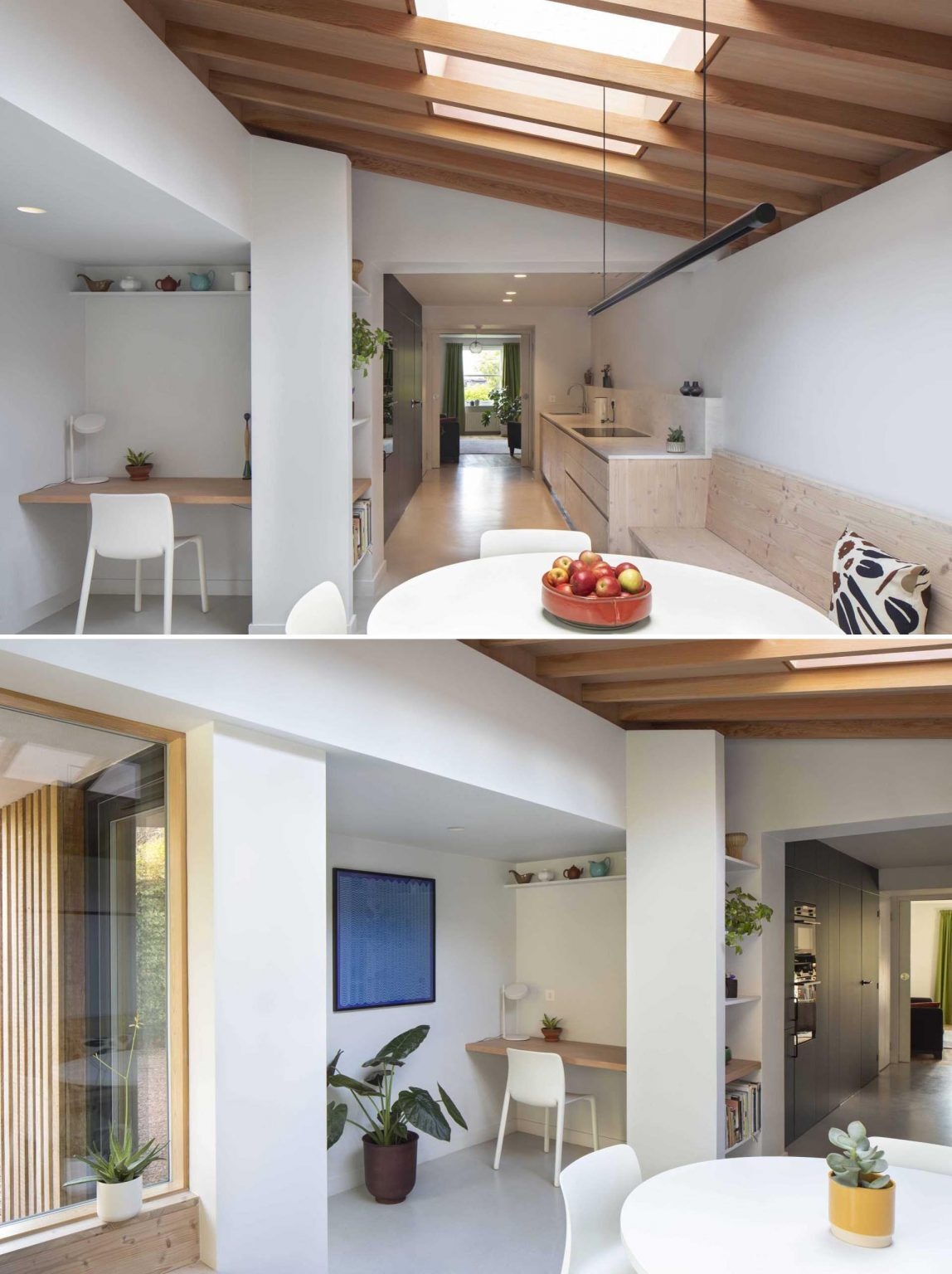
The design doesn’t stop there. The bench continues along the wall to serve the dining area before seamlessly connecting with the kitchen cabinetry. This continuous timber element helps tie the entire extension together while giving the interior a distinctive character.
Whether used for reading, gathering with family, or simply enjoying the changing seasons outside, the window seat becomes one of the most inviting spaces in the home.
Natural Materials Bring Warmth and Texture
The extension balances contemporary design with a warm and welcoming material palette.
Exposed timber beams draw the eye upward and emphasize the volume created by the folded roof form. Their natural texture introduces warmth throughout the space while highlighting the craftsmanship of the structure itself.
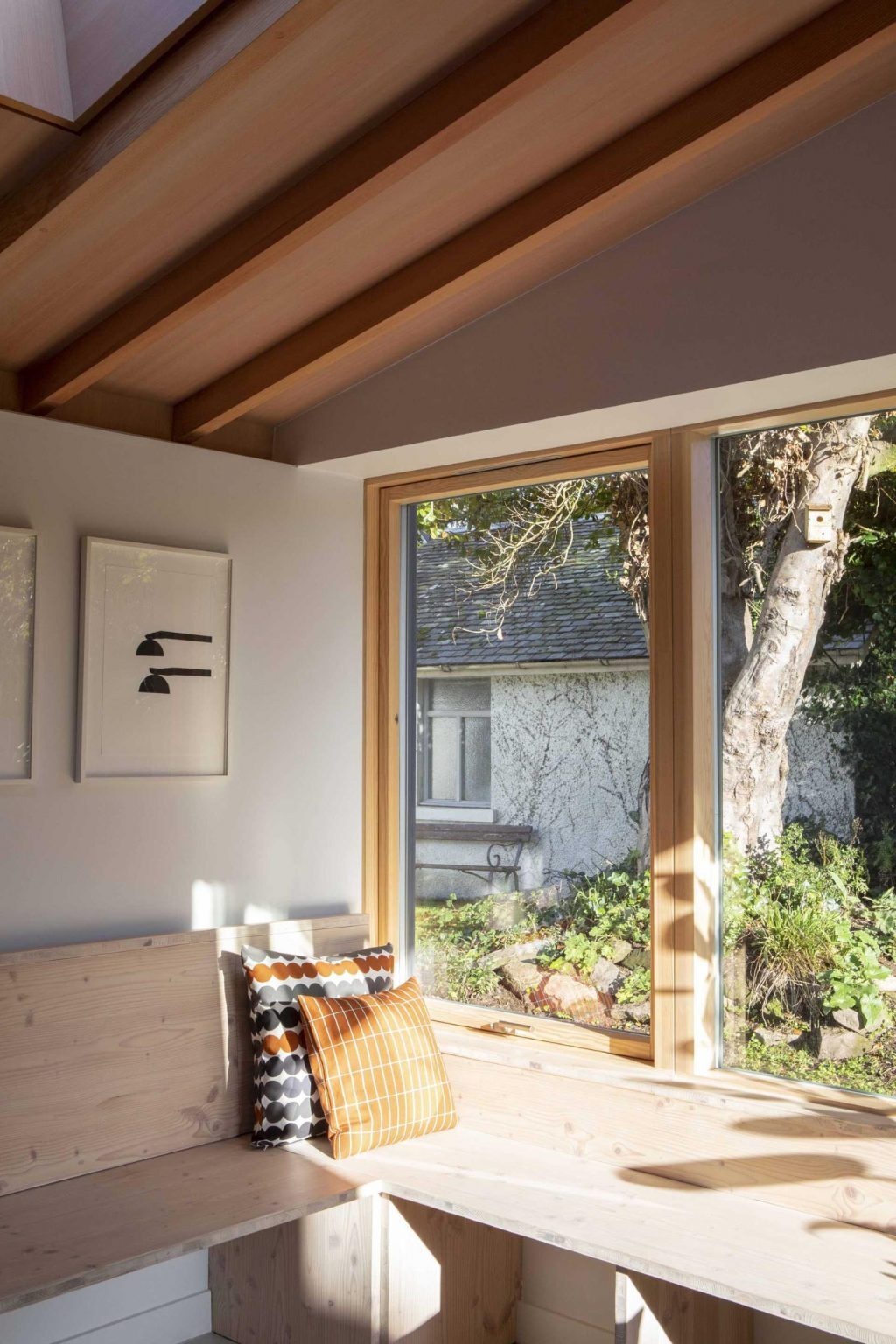
Soft white walls keep the interiors bright and uncluttered, allowing natural light to bounce throughout the home. Underfoot, a light micro cement floor provides a clean and durable surface that complements the timber details without competing for attention.
Together, these materials create a calm backdrop that enhances the architecture and allows the garden views to remain a focal point.
A Kitchen Designed to Connect Every Space
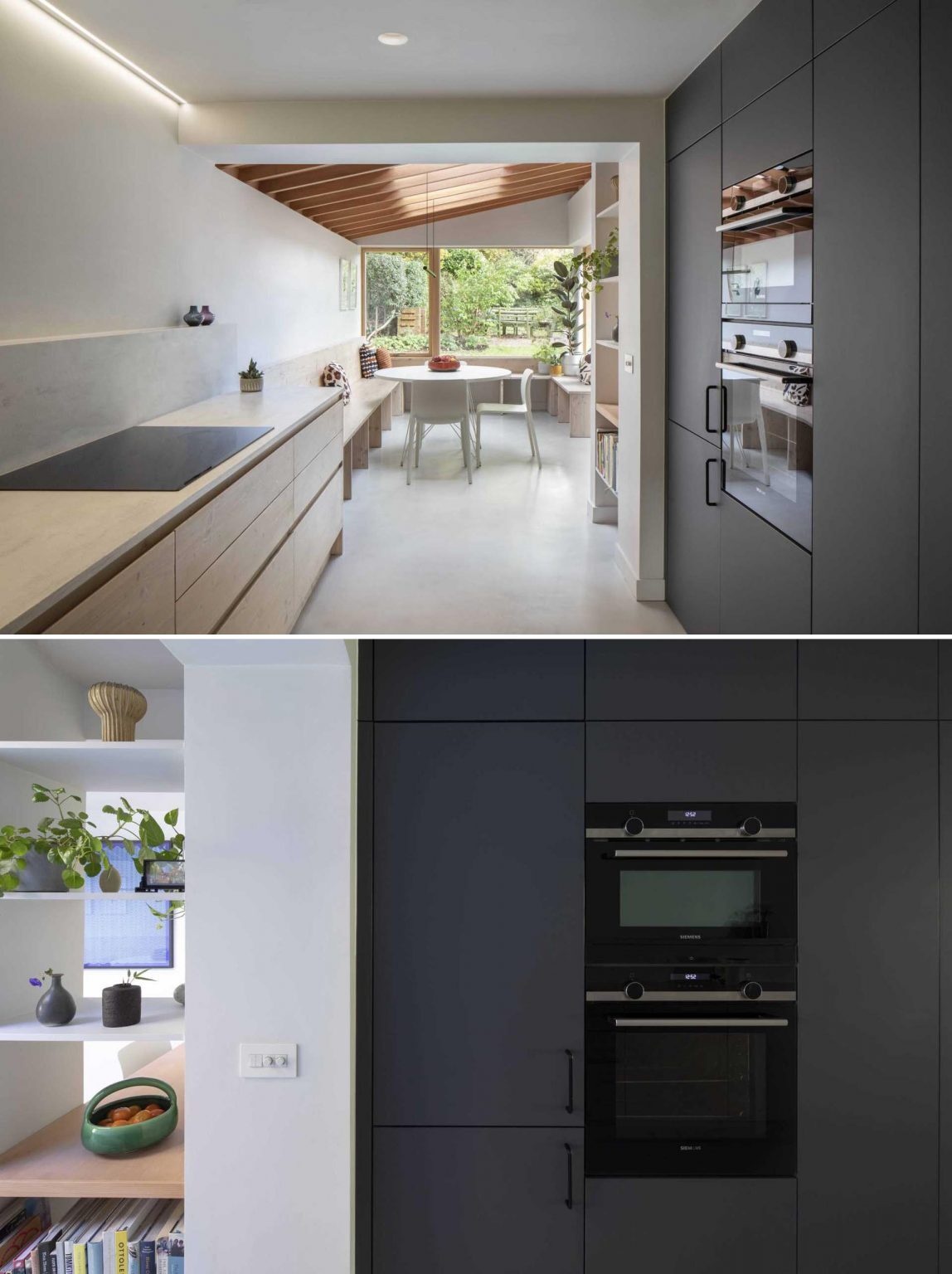
At the center of the reconfigured layout is a galley-style kitchen that acts as a bridge between old and new.
Positioned between the existing sitting room at the front of the house and the new dining space at the rear, the kitchen creates a clear connection across the entire ground floor. Family members can move easily between spaces while maintaining sightlines and conversation.
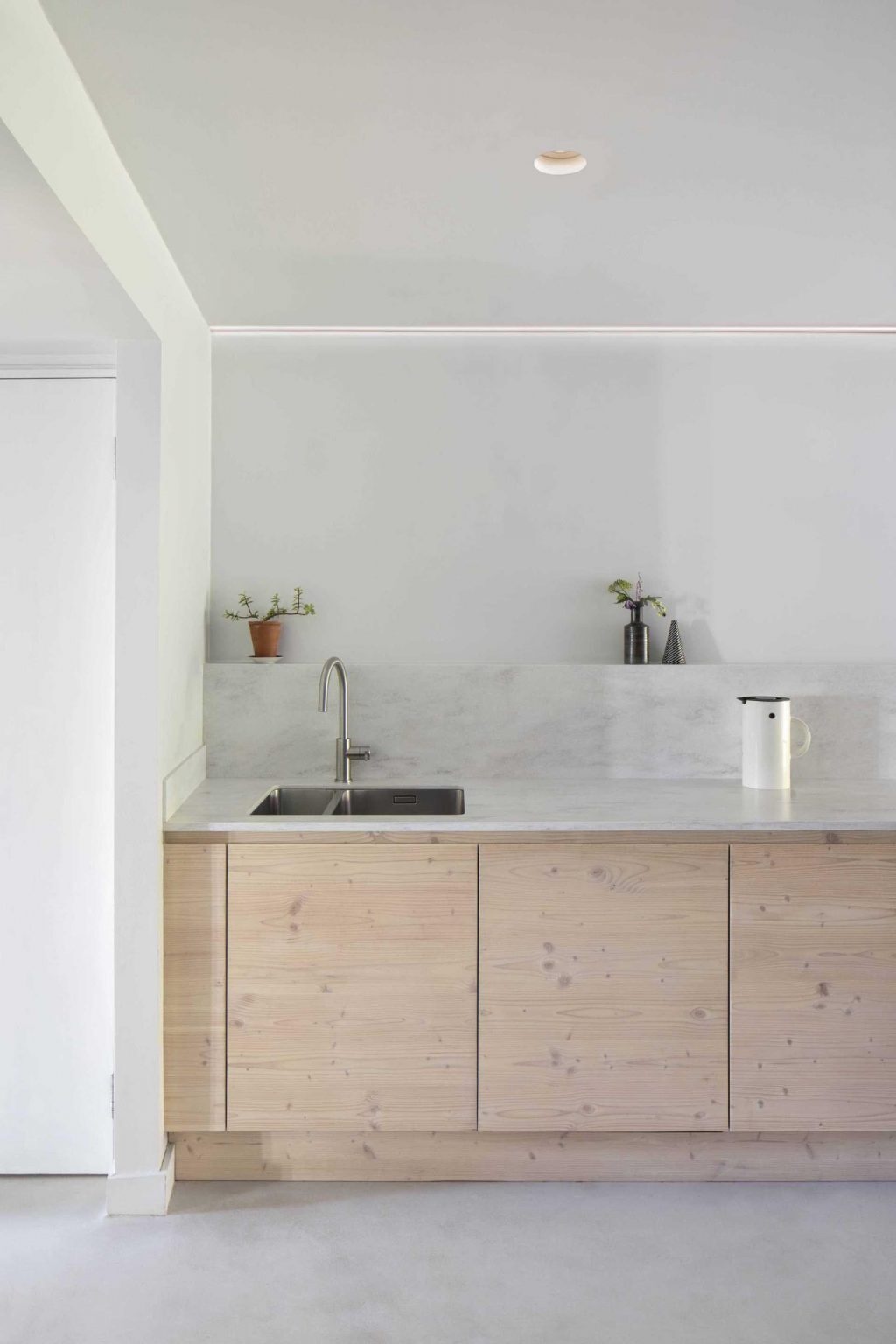
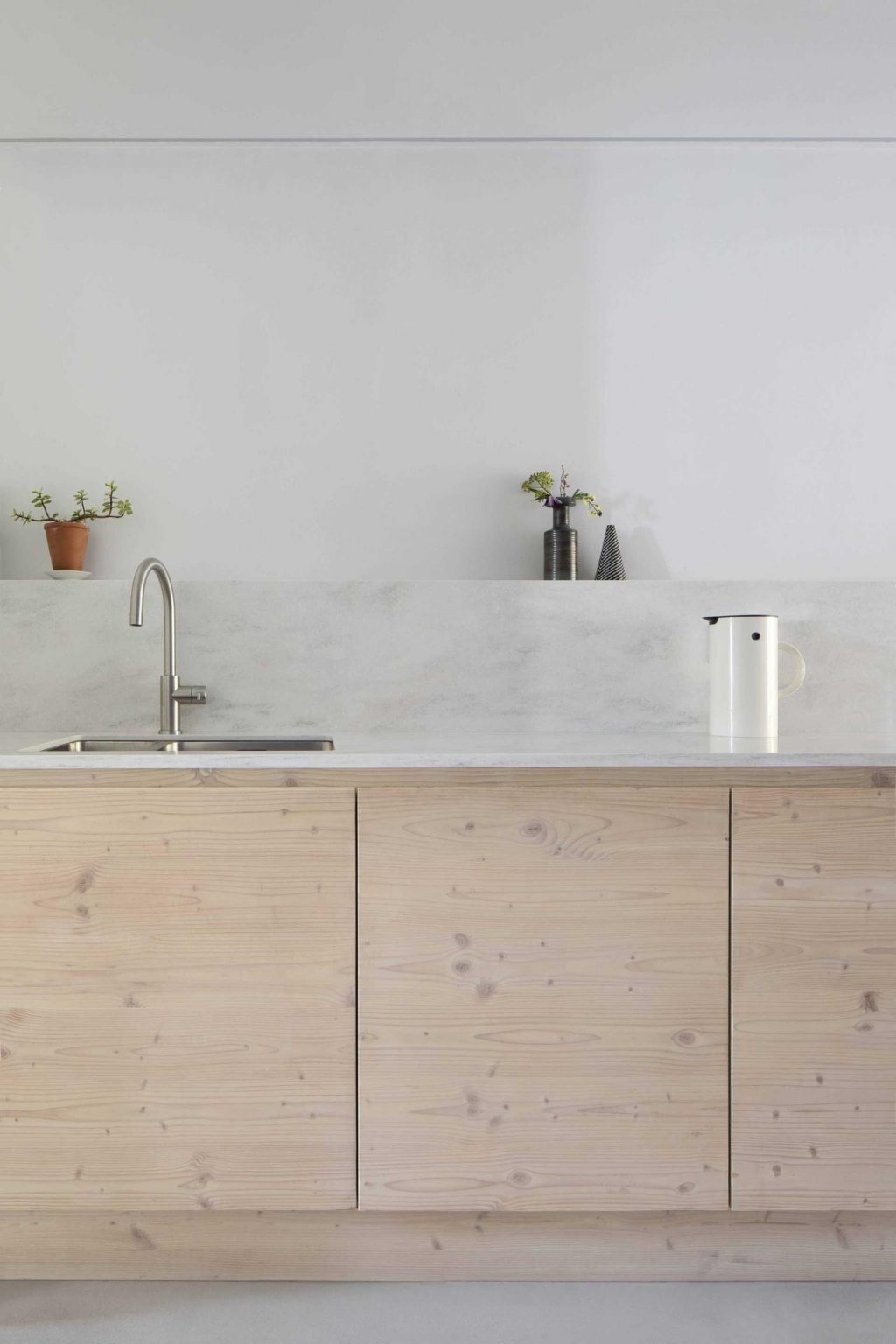
Custom-built by Archispek, the kitchen features an ultra-matte finish that complements the home’s restrained material palette. Its clean lines and understated detailing allow the surrounding architecture and timber features to take center stage.
A Study Nook With a View
Alongside the kitchen is a compact study nook designed to support everyday family activities.
A Douglas fir shelving and desk creates a subtle separation from the kitchen while maintaining visual connections across the space. Children can complete homework or creative projects while remaining within sight of parents working in the kitchen nearby.
The shelving also provides an opportunity to display books, objects, and personal collections, adding another layer of character to the interior.
A Warm Glow After Dark
As evening arrives, the atmosphere of the extension shifts once again.
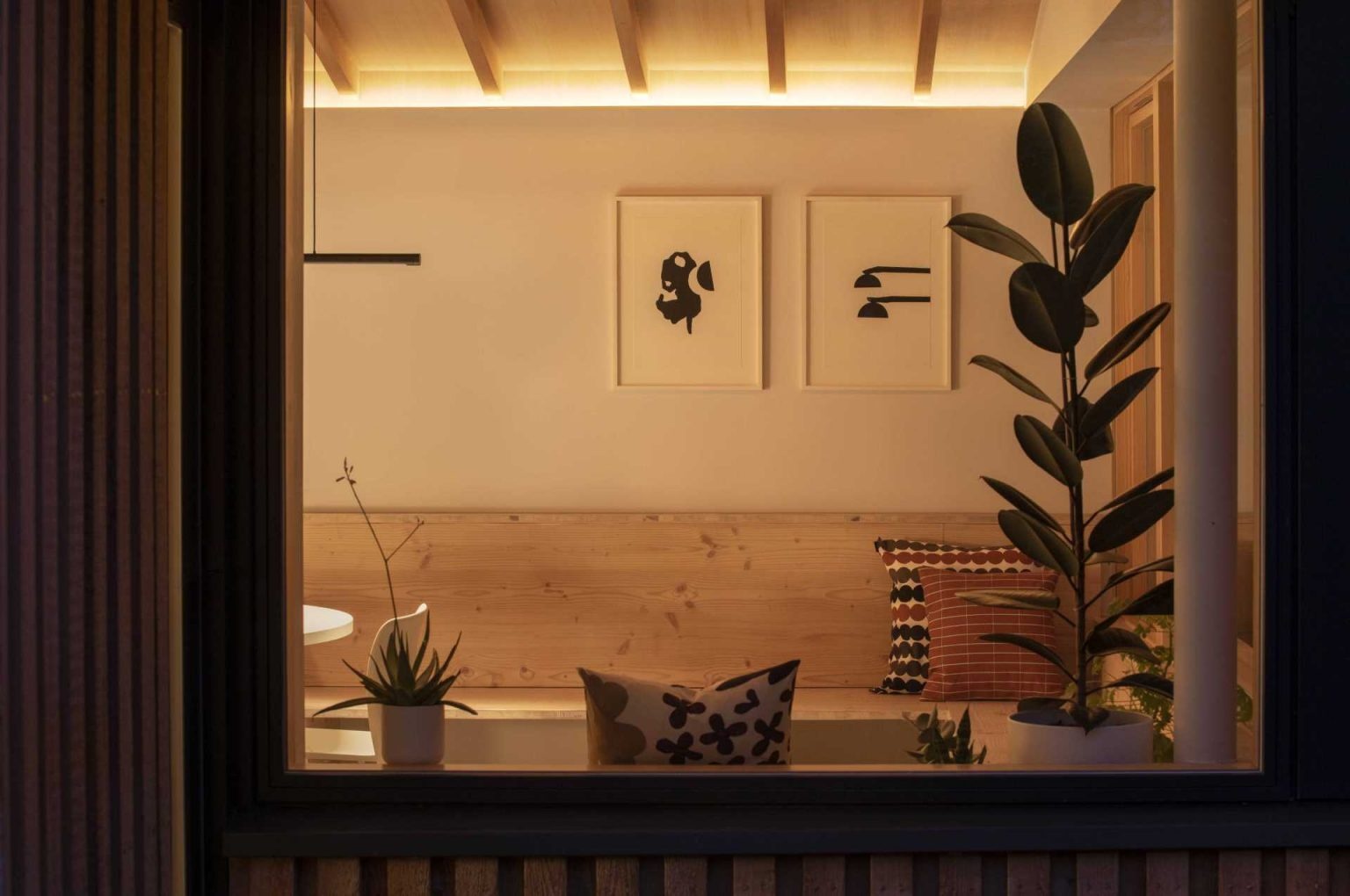
Interior lighting highlights the rich tones of the exposed timber ceiling, creating a warm glow that spreads throughout the space. The timber structure becomes even more prominent after sunset, bringing texture and depth to the interiors.
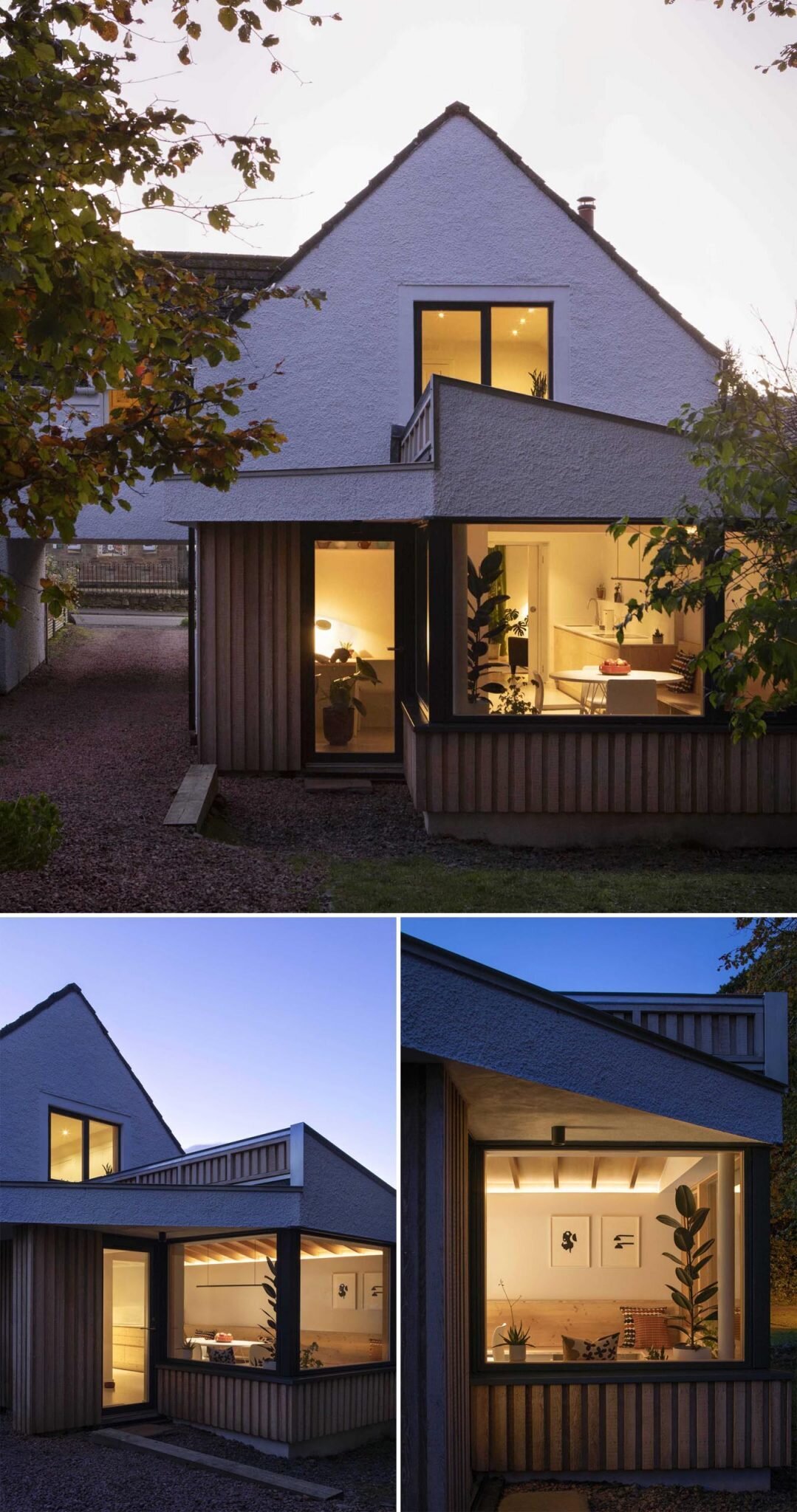
The effect is especially striking when viewed from the garden, where the illuminated extension acts as a welcoming lantern attached to the original cottage.
Origami House proves that transforming a home isn’t always about building bigger. Through a compact extension, smarter planning, and a strong focus on light, materials, and family connection, Loader Monteith Architects has turned a dark and compartmentalized cottage into a bright contemporary home.