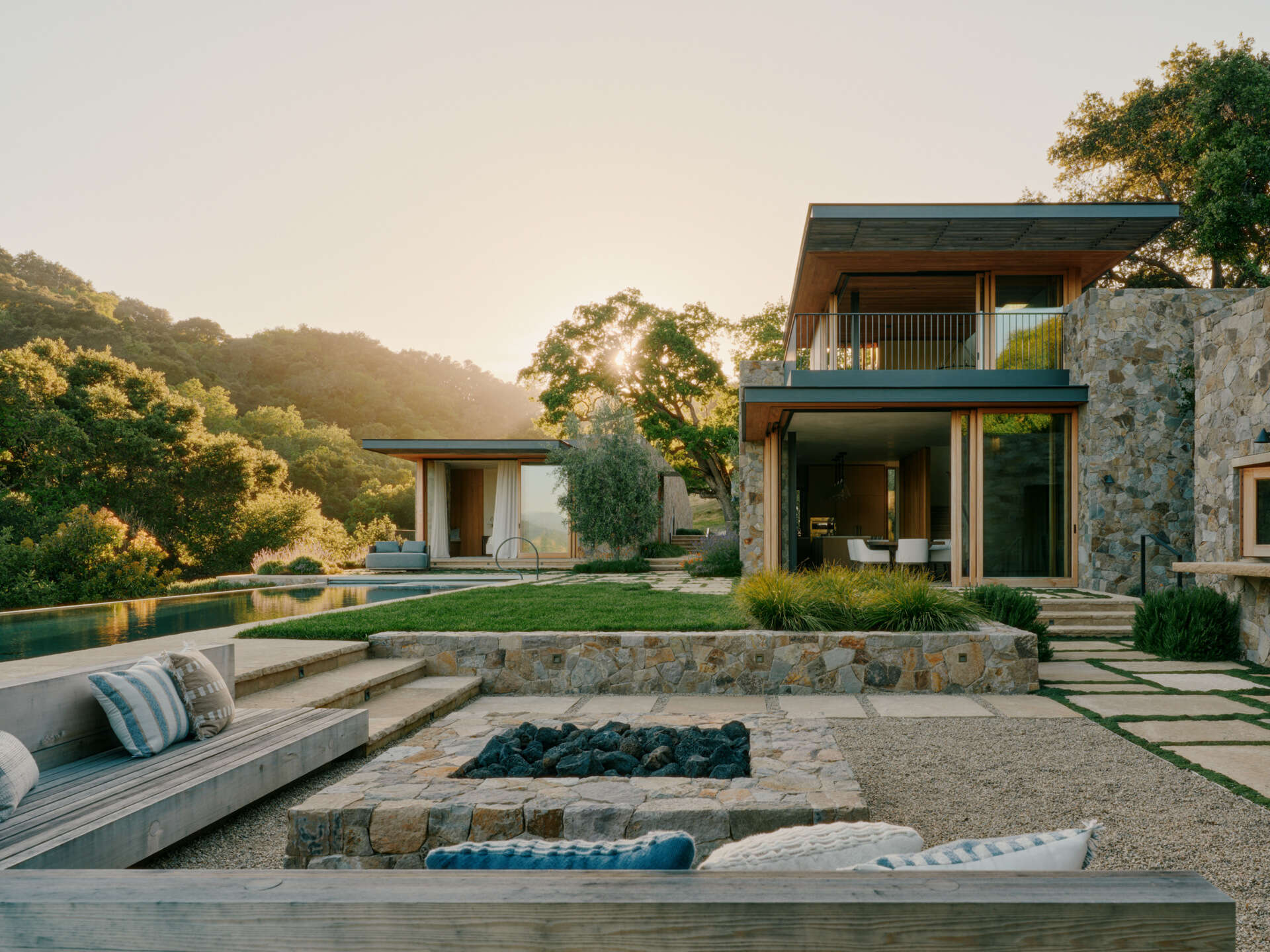
Set high in the Santa Lucia Preserve near Carmel, California, Stone Villa by Feldman Architecture brings together modern architecture and the warmth of traditional Tuscan villas. Positioned within a protected landscape between Carmel and Big Sur, the home sits across a 28-acre property surrounded by rolling hills, trees, and open meadowland.
Inspired by years of travel through the Italian countryside, the homeowners wanted a place where family and friends could gather while still feeling immersed in the landscape. Feldman Architecture translated those influences into a series of modern stone pavilions that stretch across the ridge, creating a home that feels expansive, relaxed, and closely tied to the scenery around it.
Four Pavilions Across the Hillside
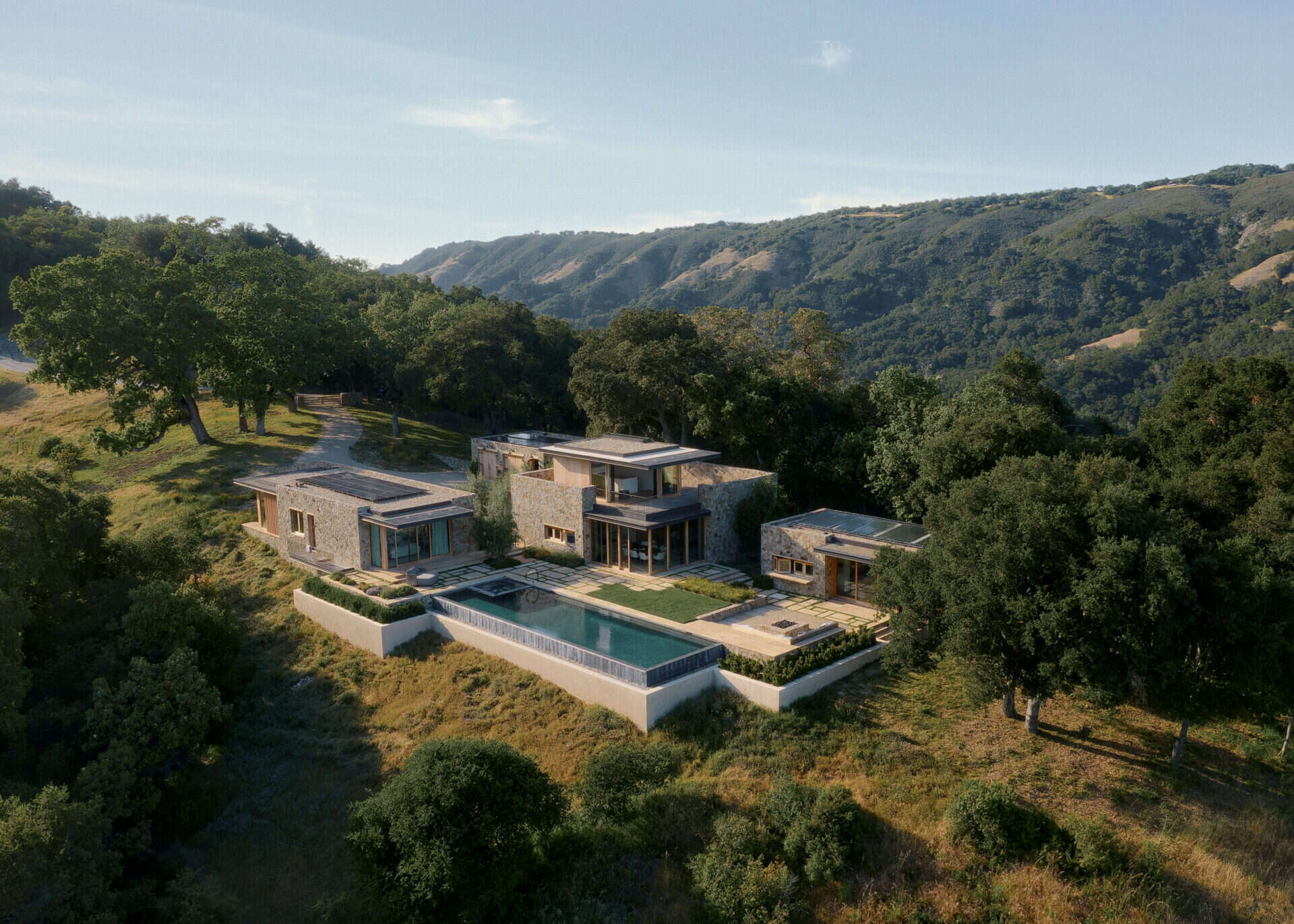
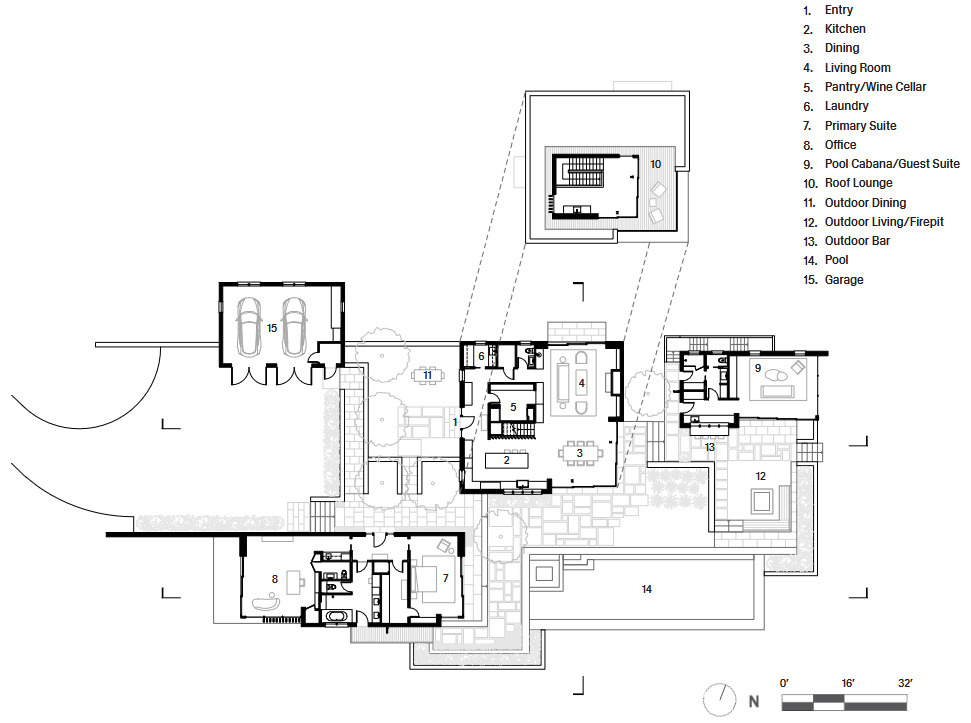
Instead of creating one large structure, the home was divided into four separate stone buildings that step naturally with the contours of the land. The layout includes a living pavilion, a private owner’s suite with office, a guest suite and pool cabana, and a detached garage.
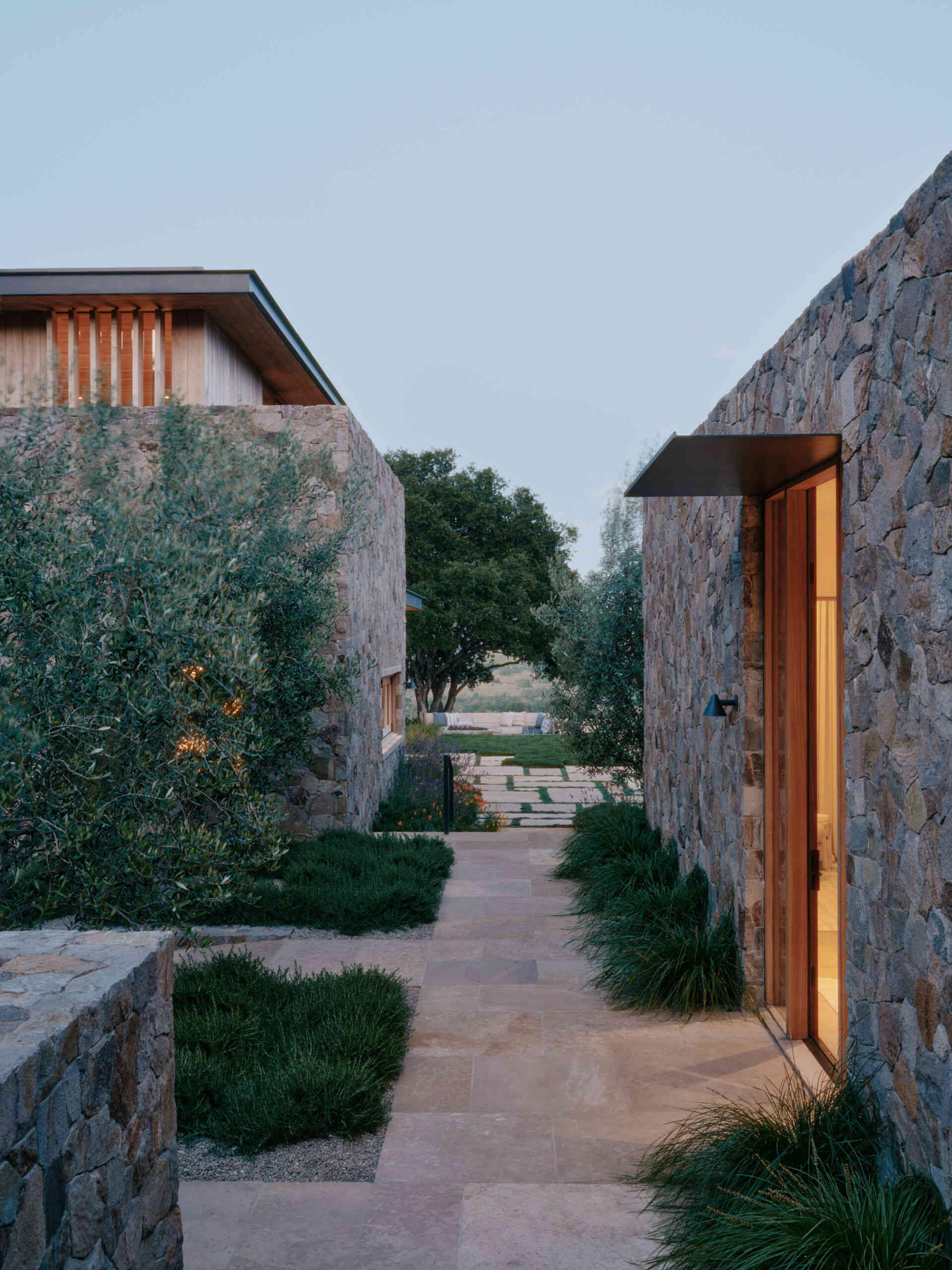
This arrangement helps the property feel more like a small village tucked into the hillside. Pathways, gardens, and breezeways link each structure together, creating moments where the outdoors becomes part of the experience of moving through the home. The design also reduced the overall footprint, helping the buildings sit more lightly across the narrow ridge.
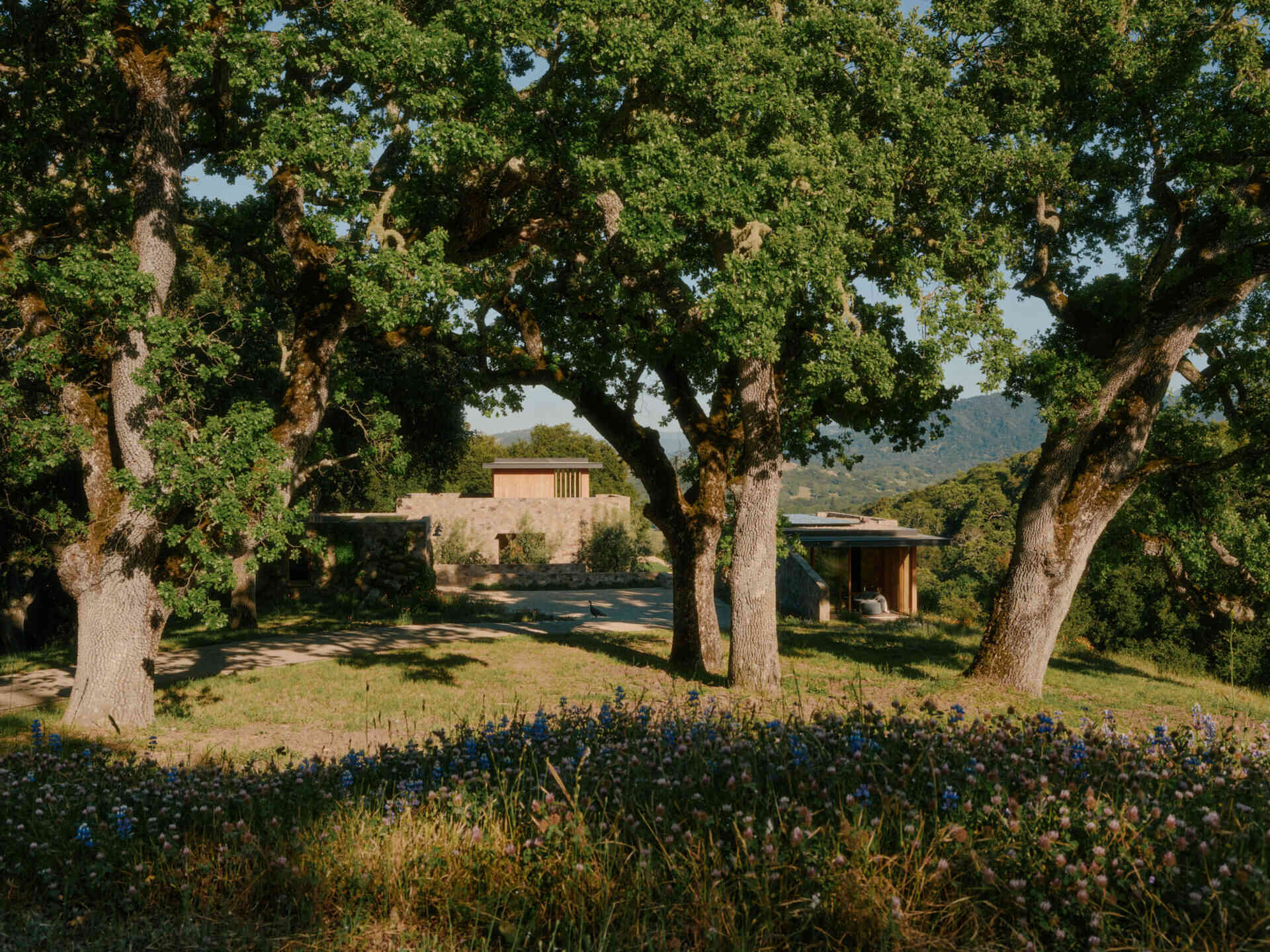
A tower and rooftop deck rise above the main pavilion, offering elevated views across the preserve and into the surrounding tree canopy. From above, the house appears almost woven into the landscape.
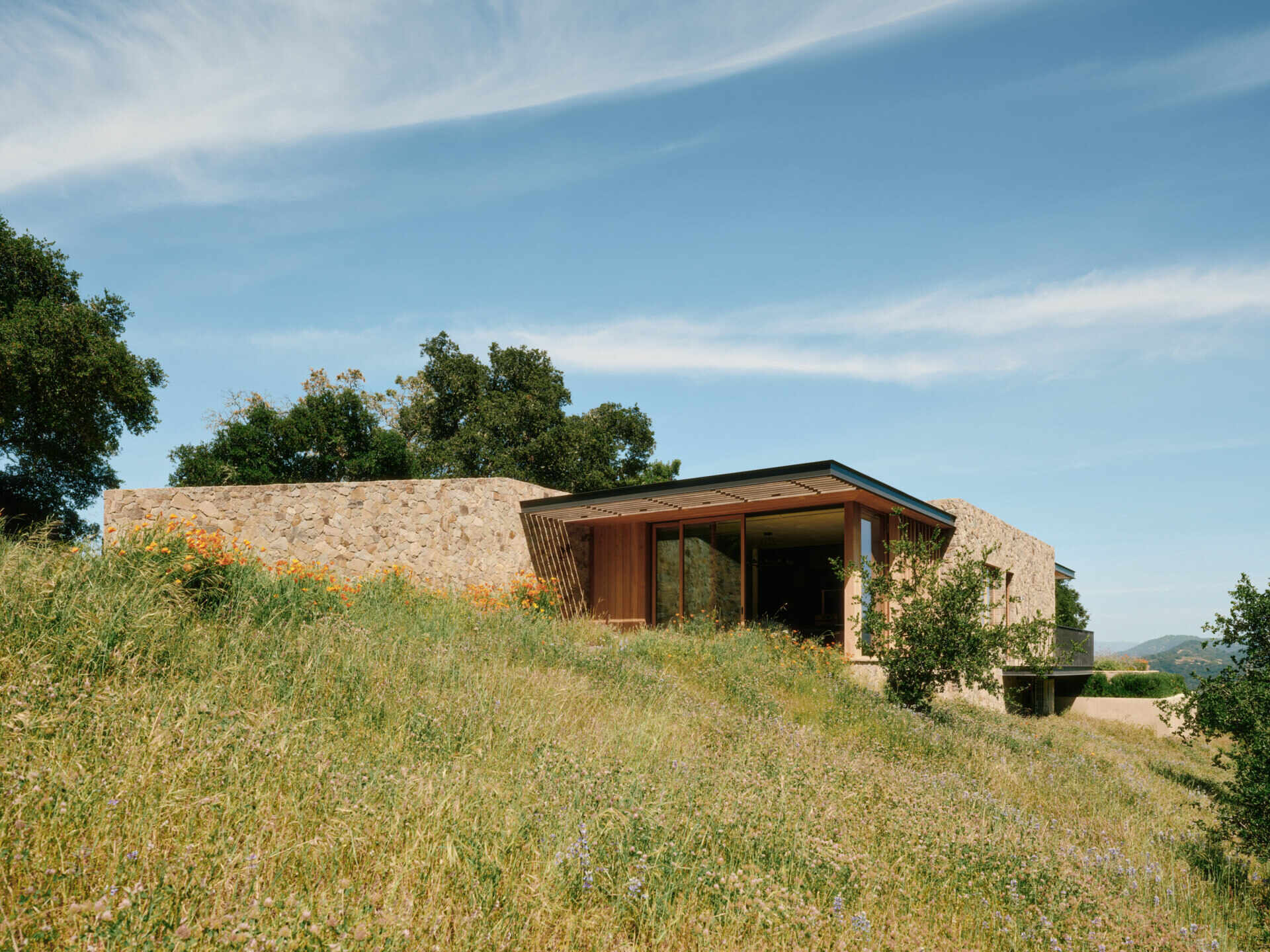
St. Helena Cottage Stone and Reclaimed Teak
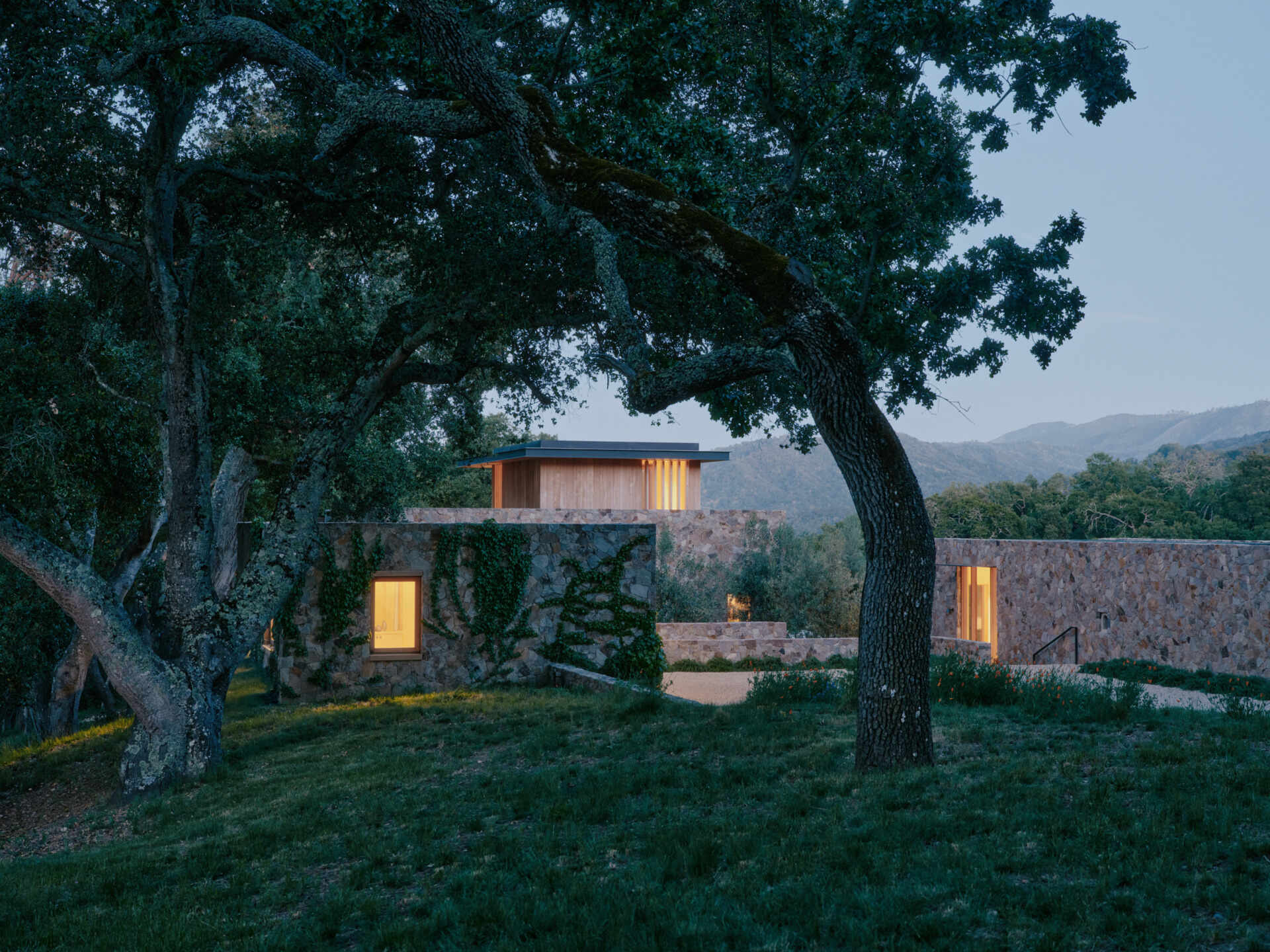
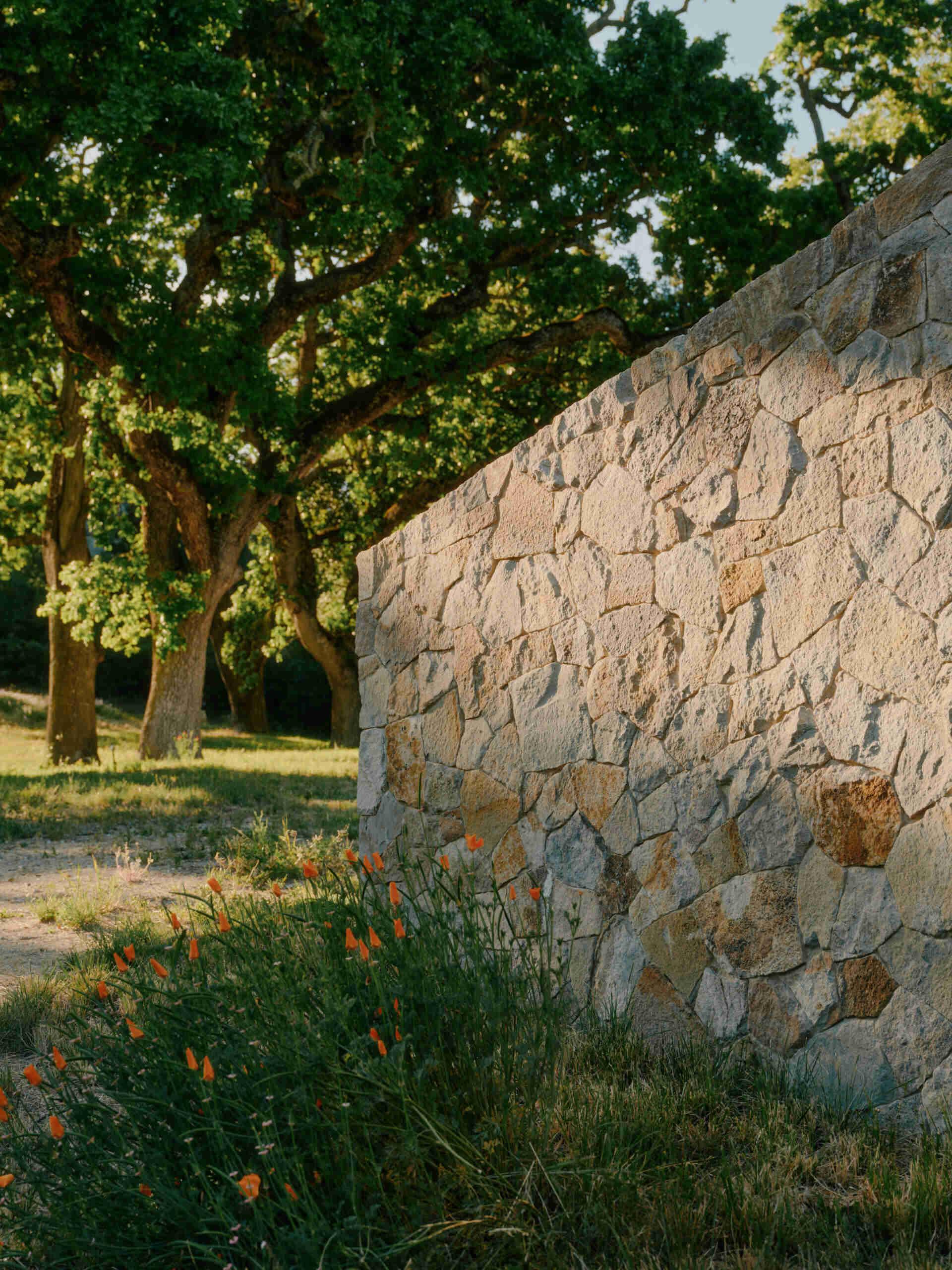
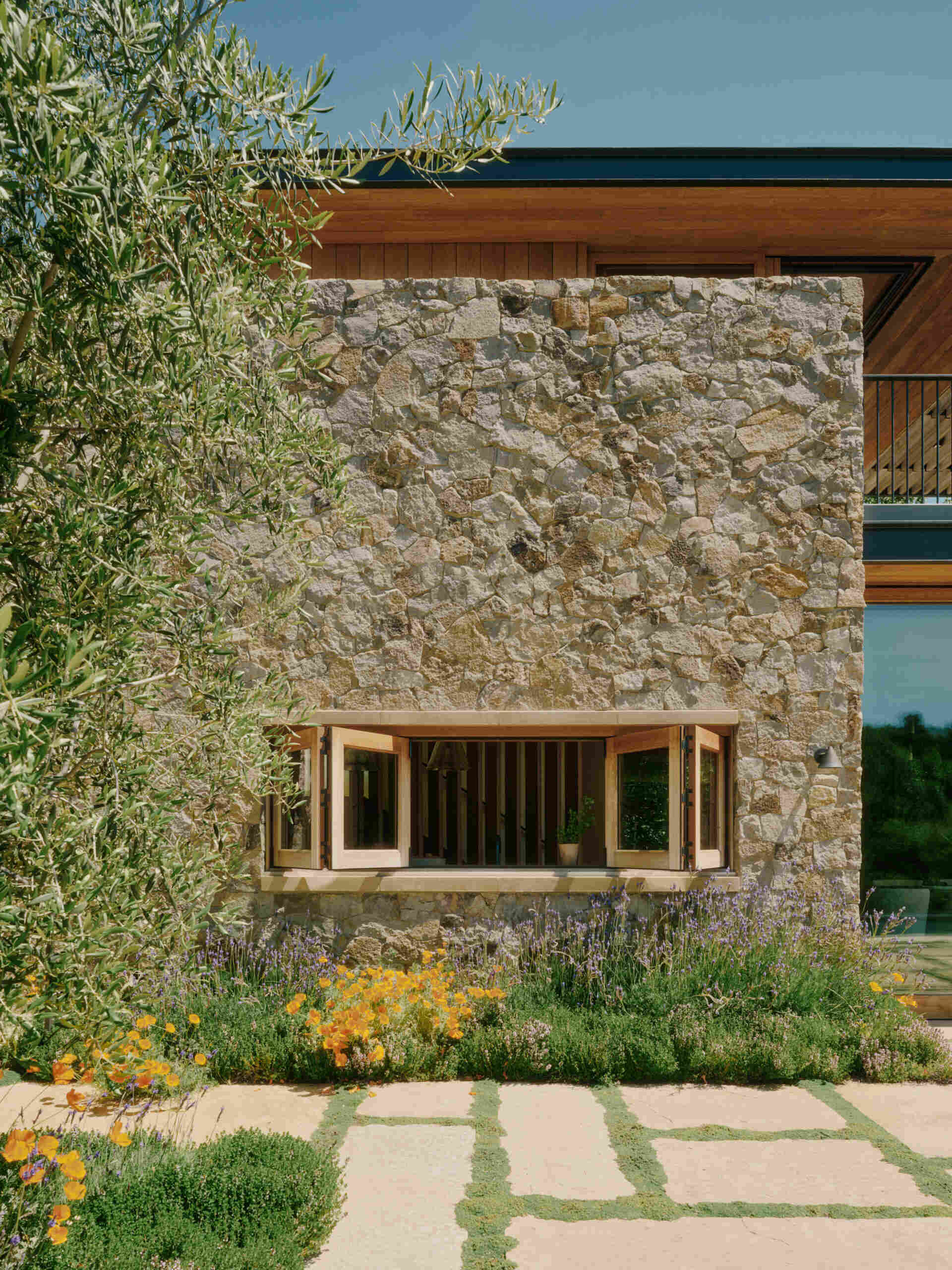
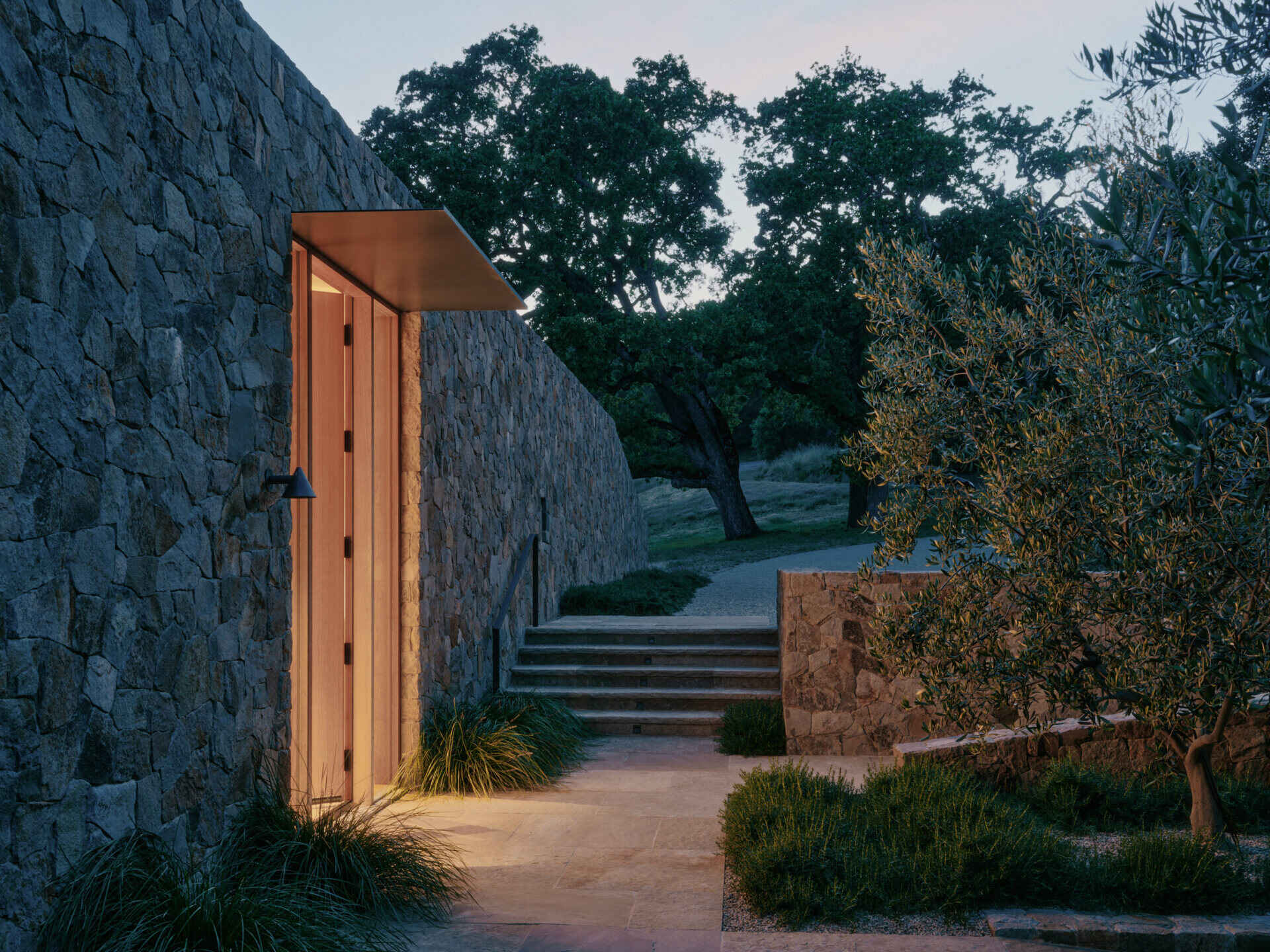
The exterior palette focuses on natural materials that age beautifully over time. Thick granite walls give the buildings a sense of permanence while also echoing the rugged terrain of the preserve.
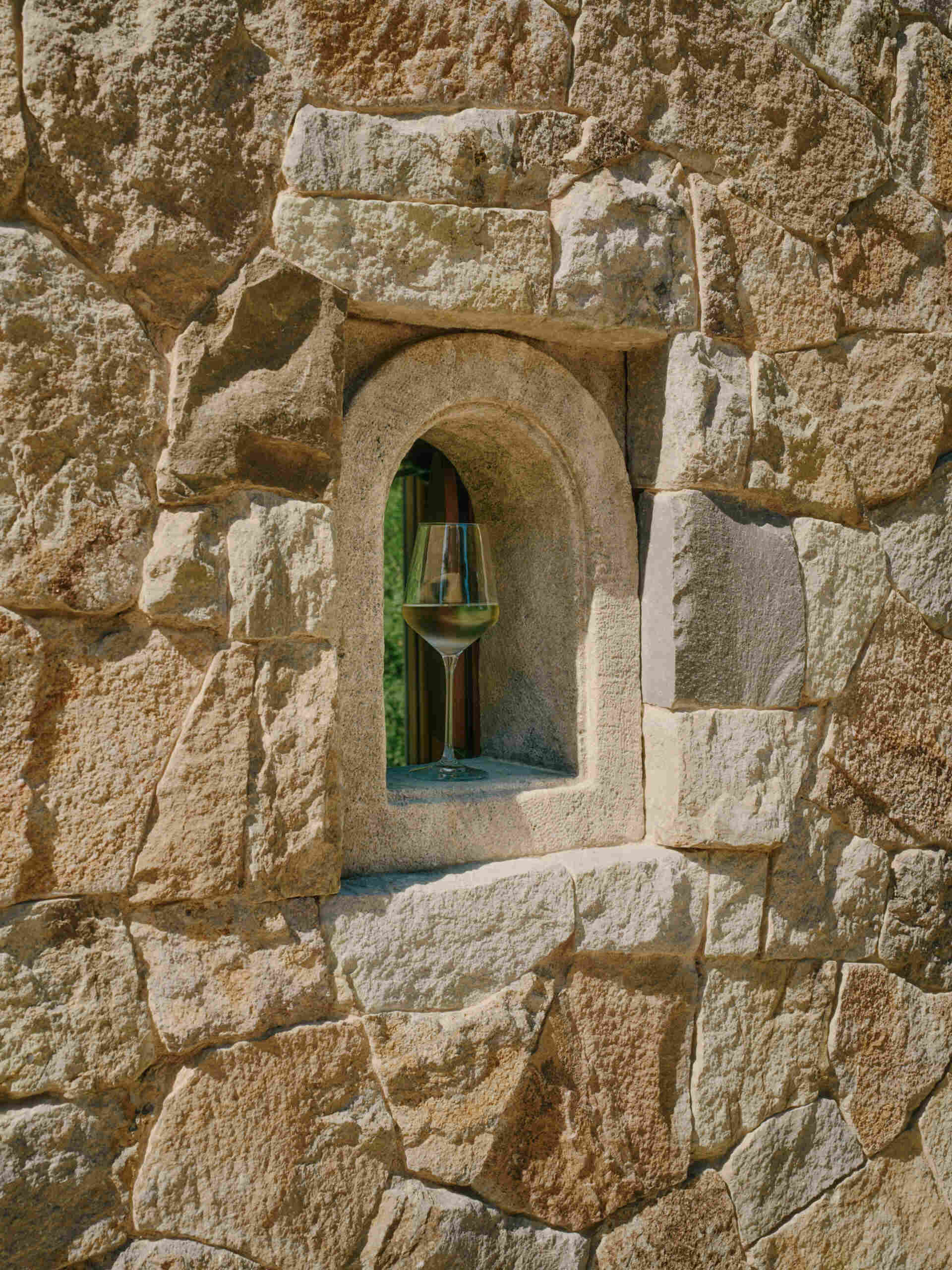
Locally sourced St. Helena Cottage stone wraps the pavilions, adding texture and warmth against the dry California landscape. Reclaimed teak introduces another layer of softness, balancing the heavier stone surfaces with rich wood tones.
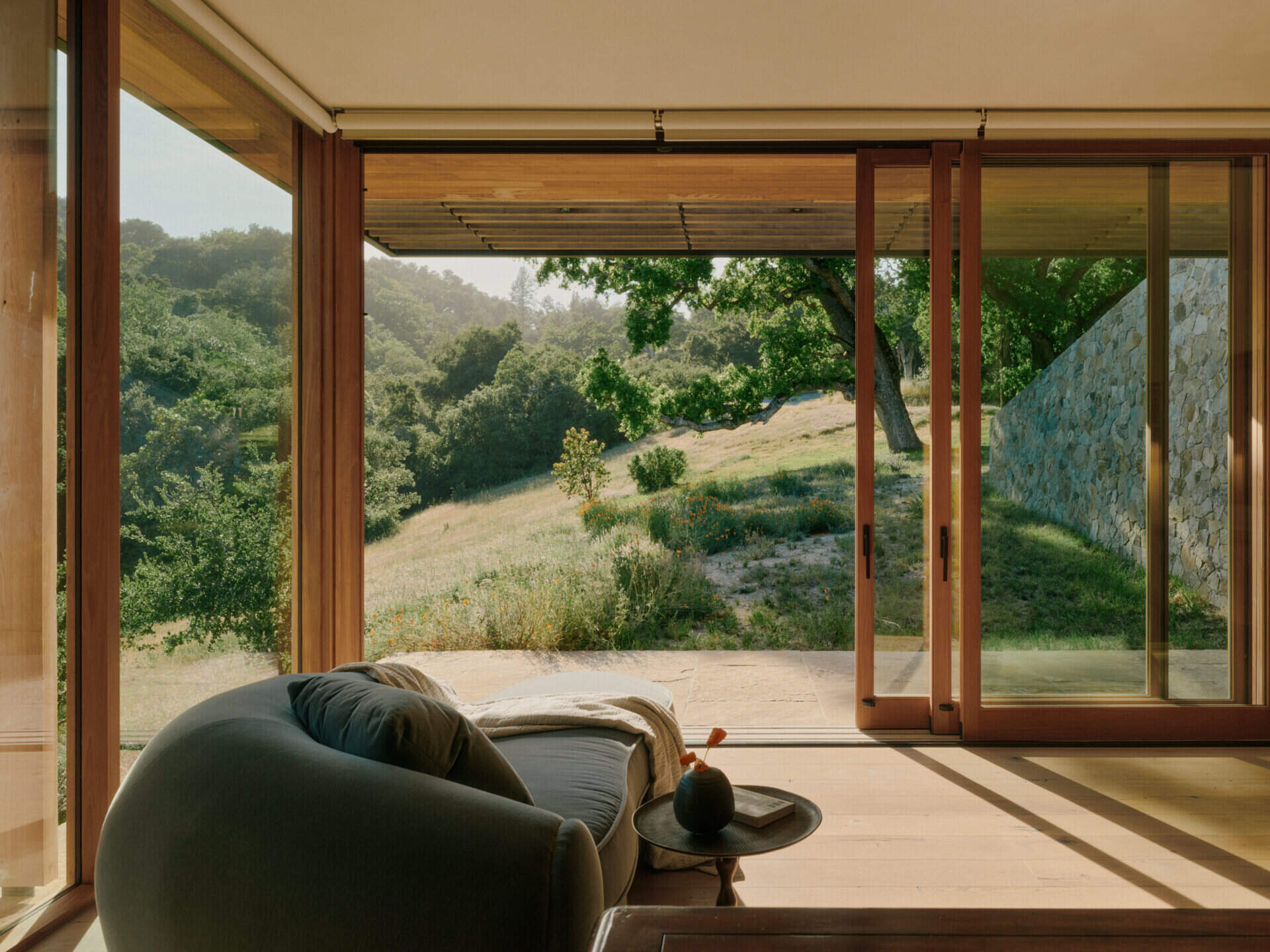
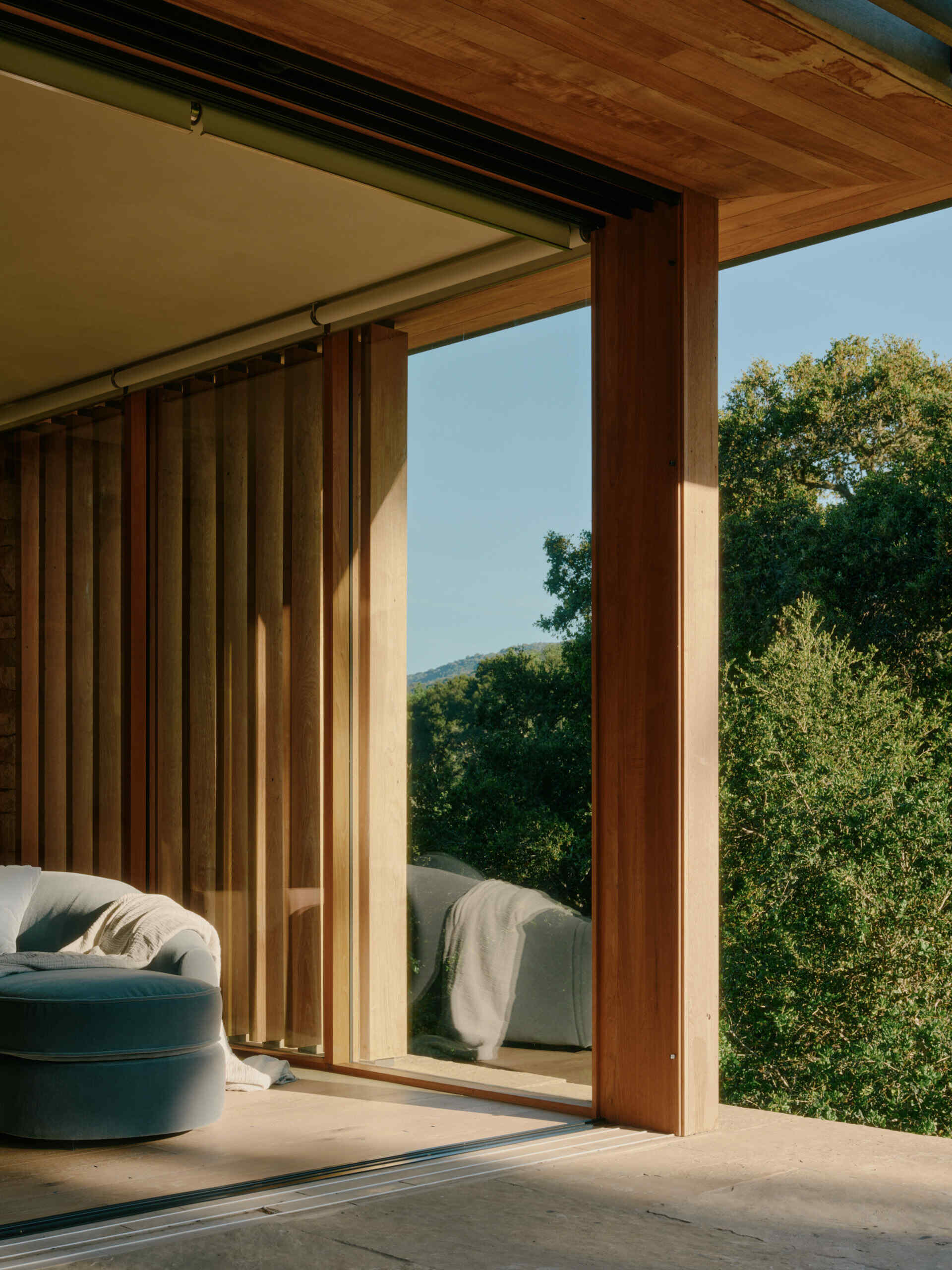
Large openings carved into the walls frame valley views while deep overhangs provide shade throughout the day. Together, the materials create a home that feels both substantial and welcoming without relying on excessive ornamentation.
A Quiet Space Between the Pavilions
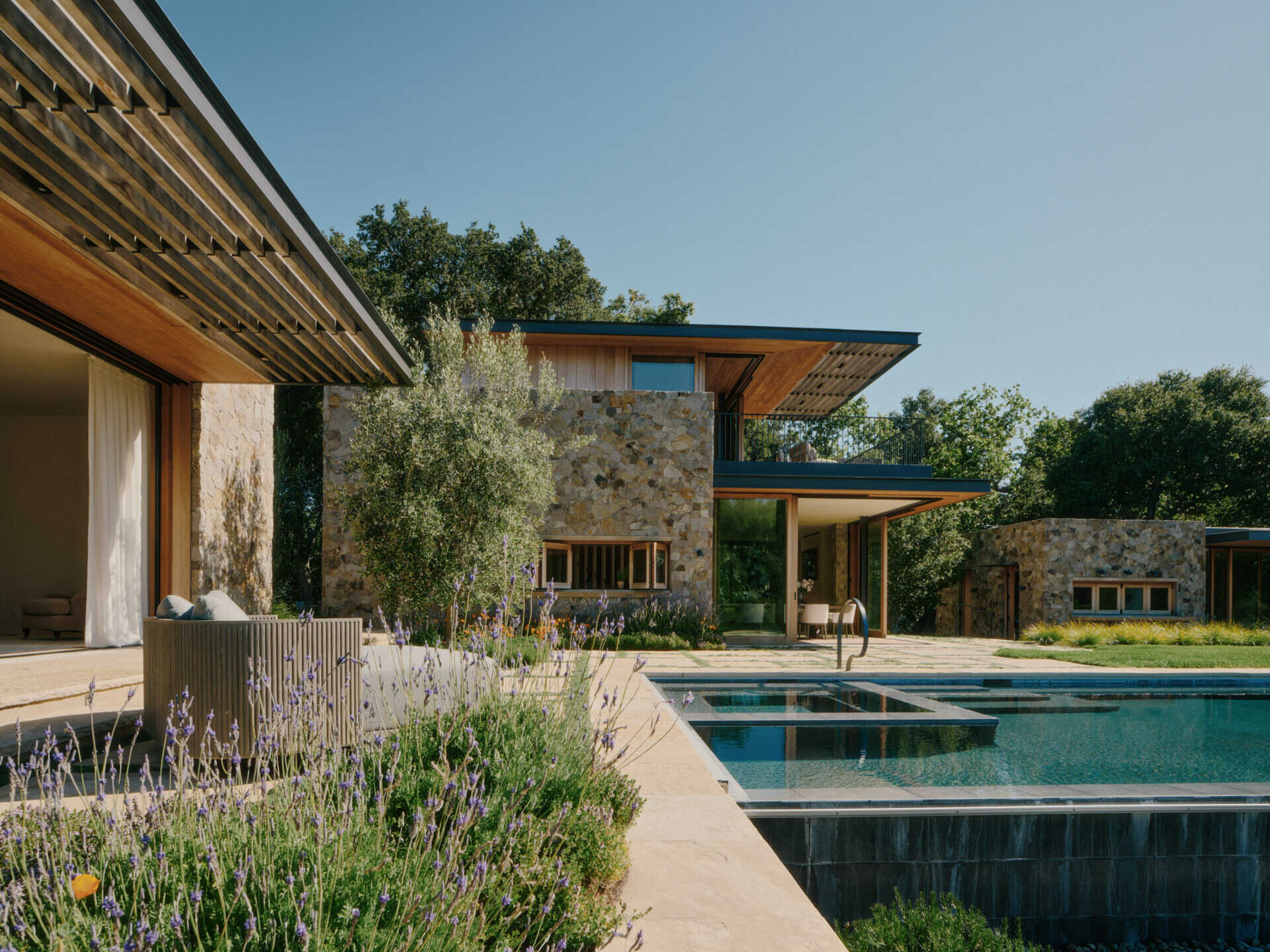
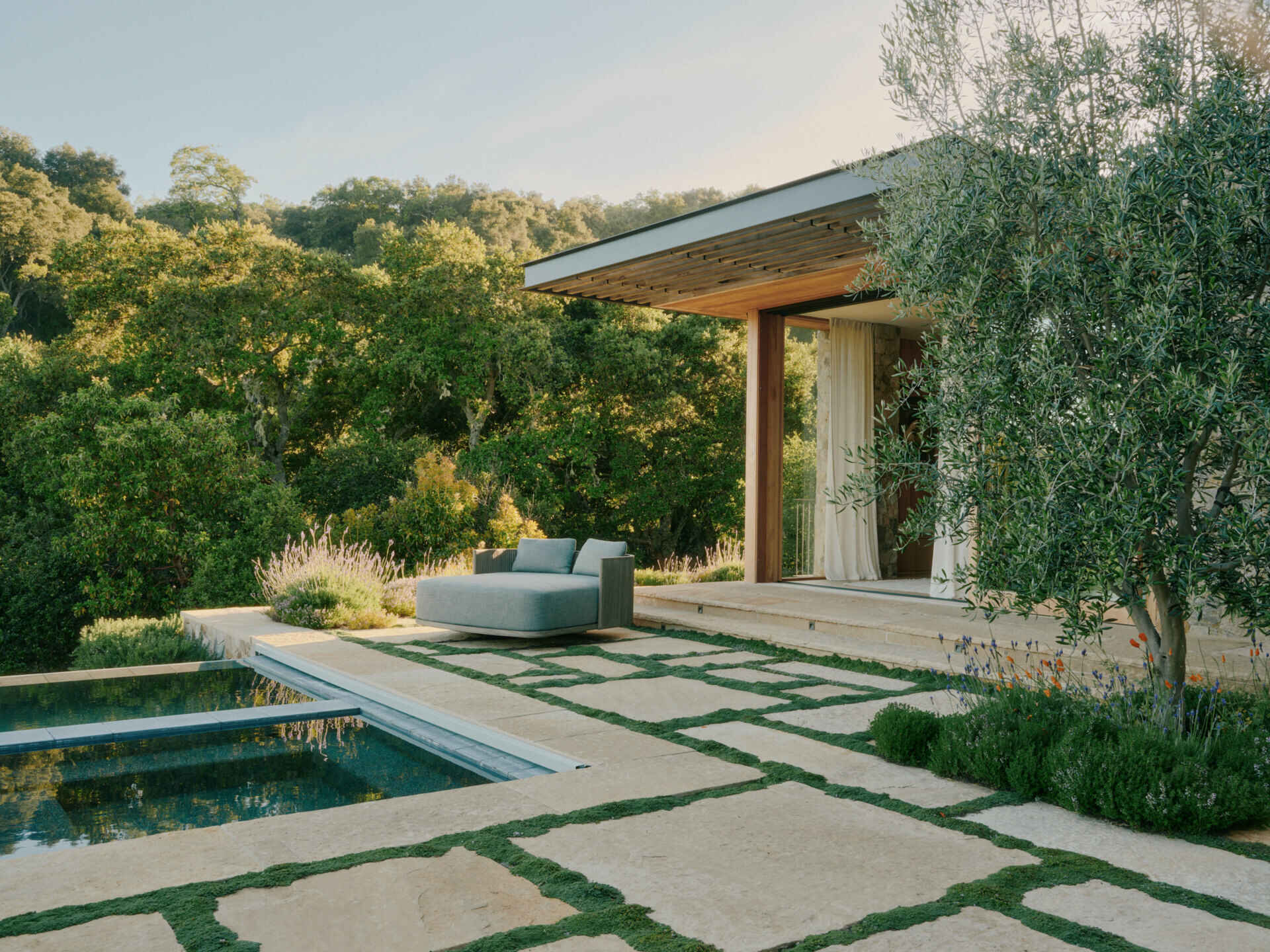
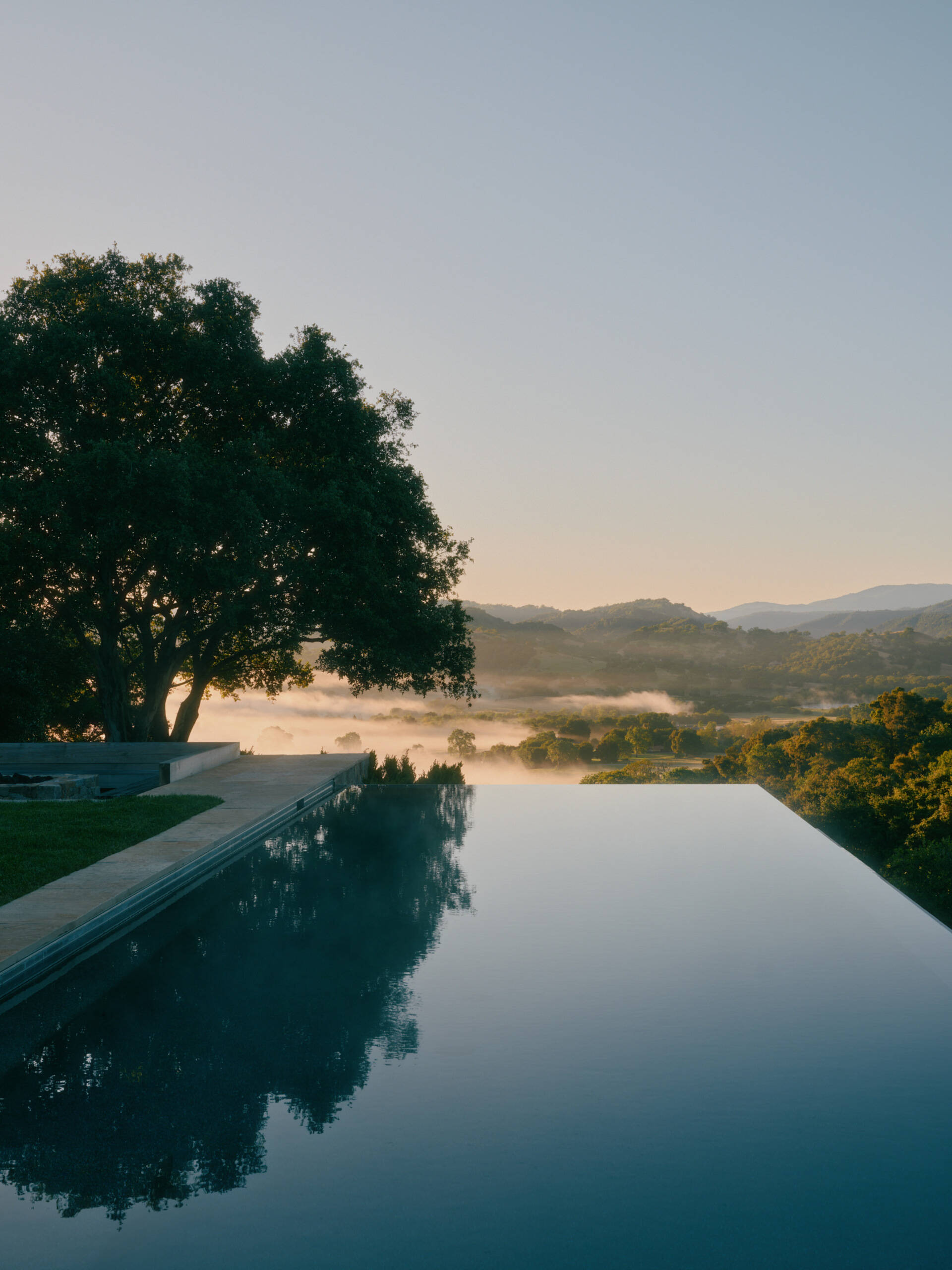
The pool area sits between the detached structures, becoming a natural gathering point within the property. Surrounded by stone walls, pathways, and planting, the space feels sheltered while still remaining open to expansive views beyond the ridge.
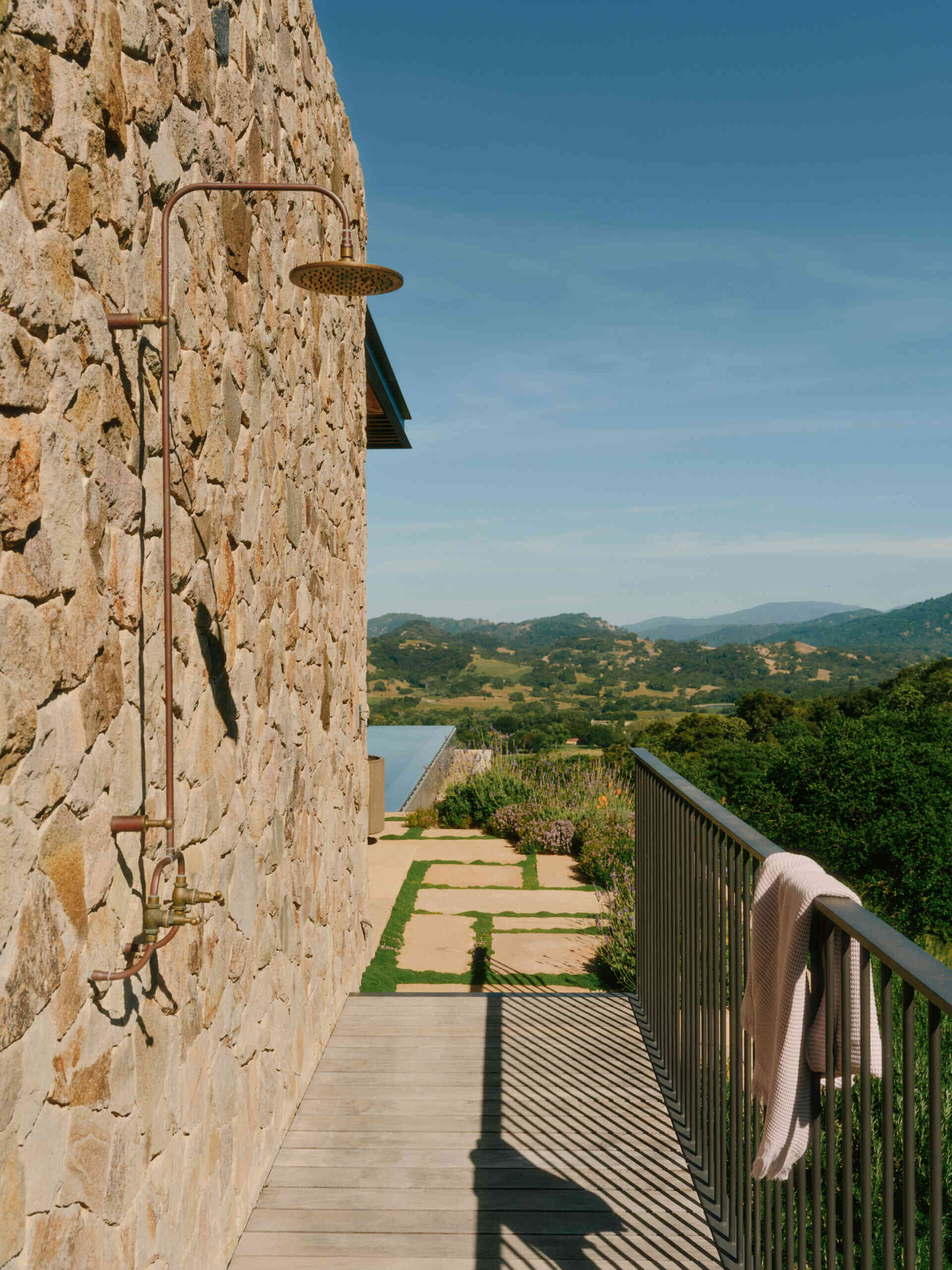
An outdoor shower continues the relaxed atmosphere of the pool zone, reinforcing the indoor-outdoor lifestyle woven throughout the property. Materials remain consistent with the rest of the home, allowing the pool area to feel like an extension of the architecture instead of a separate feature.
From morning light to late afternoon shadows, the changing landscape becomes part of the experience around the water.
Gardens That Guide Movement Through the Property
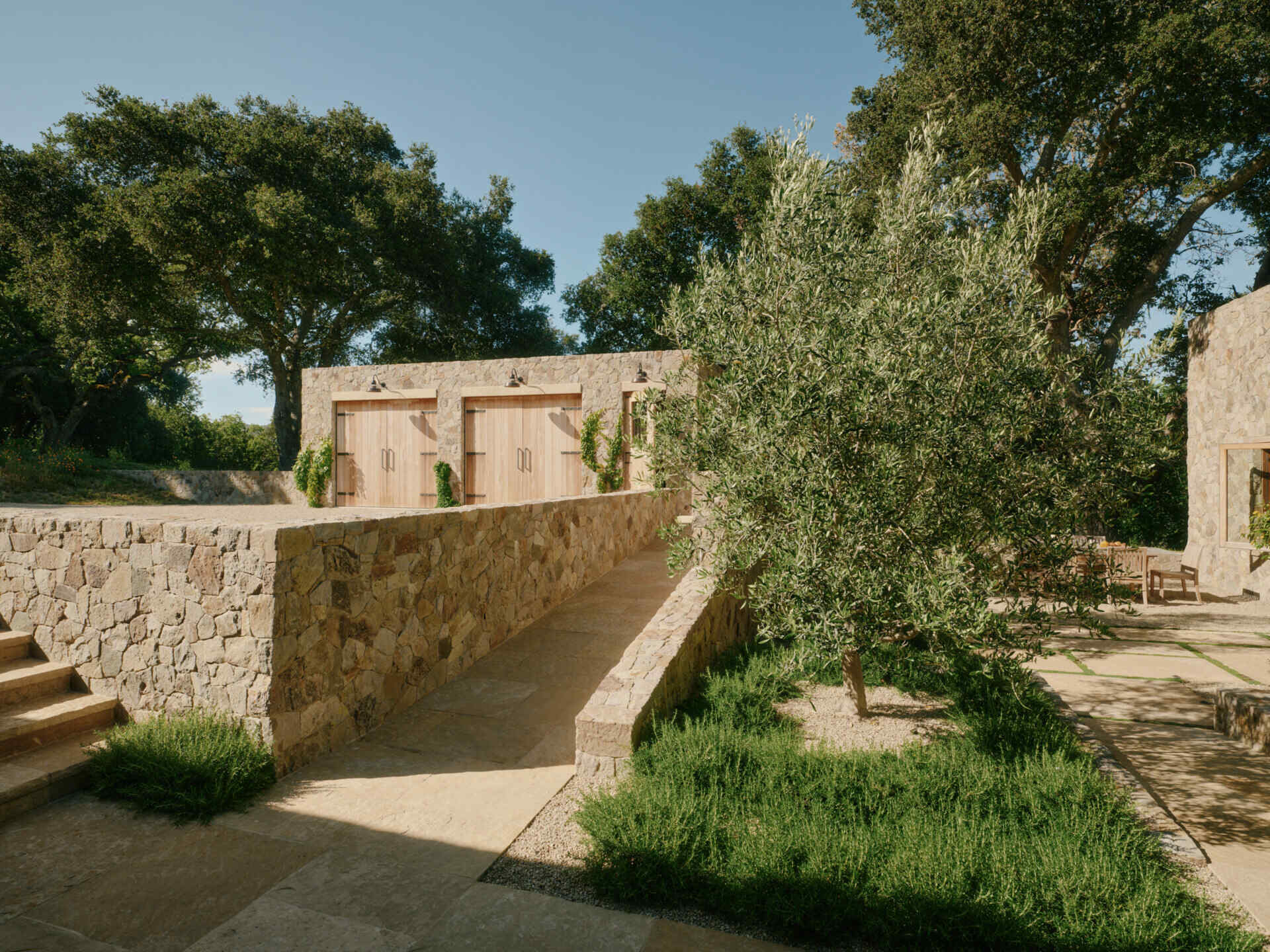
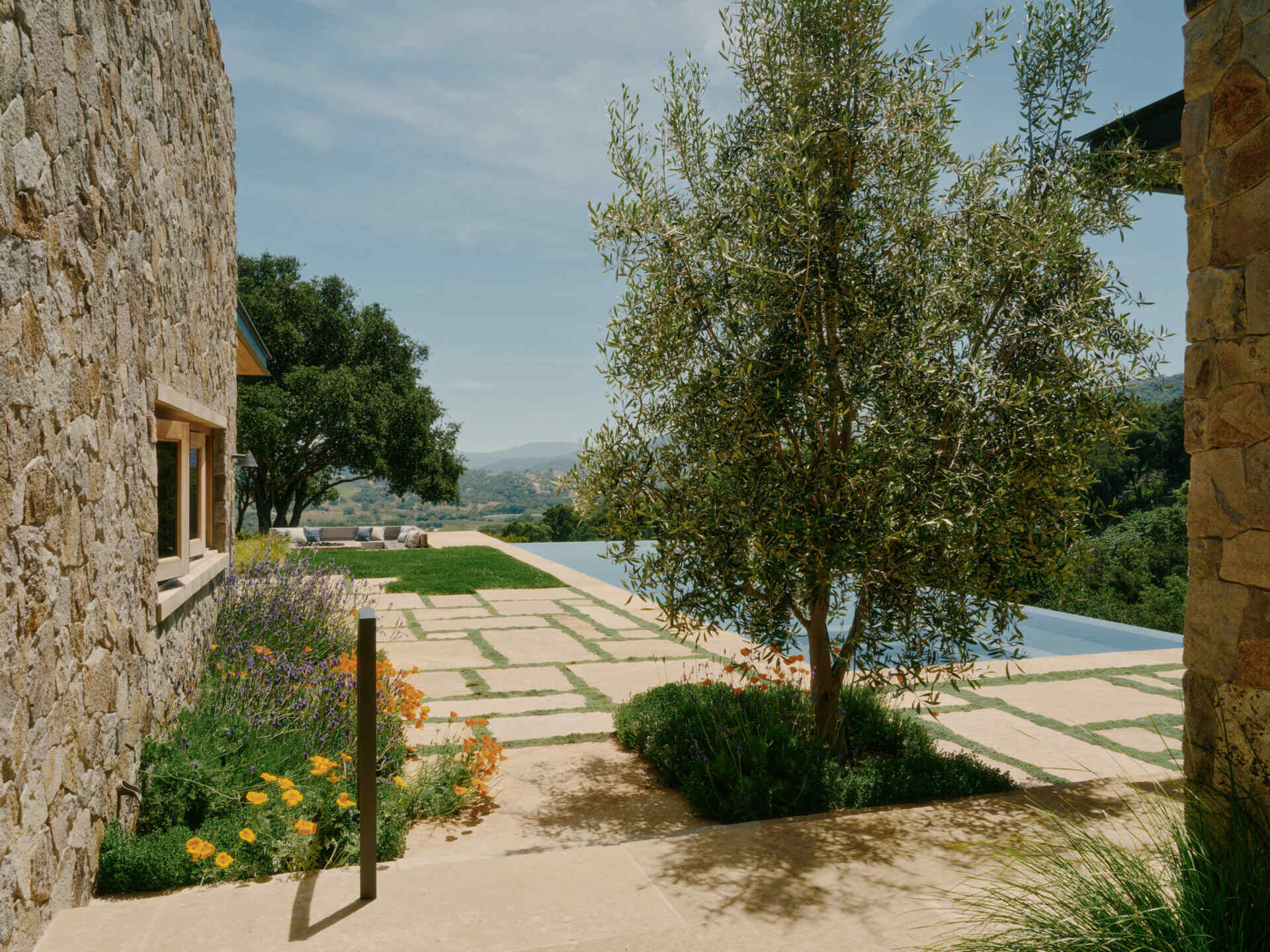
Landscape design plays a major role in how the home is experienced. Pathways weave between the detached pavilions, encouraging movement through gardens, courtyards, and planted outdoor spaces.
Drought-tolerant landscaping was selected to suit the climate while also restoring habitat across the site. Native planting softens the edges of the stone structures and helps reconnect the previously overgrown hillside meadow with the surrounding preserve.
Designed for Long Evenings Outside
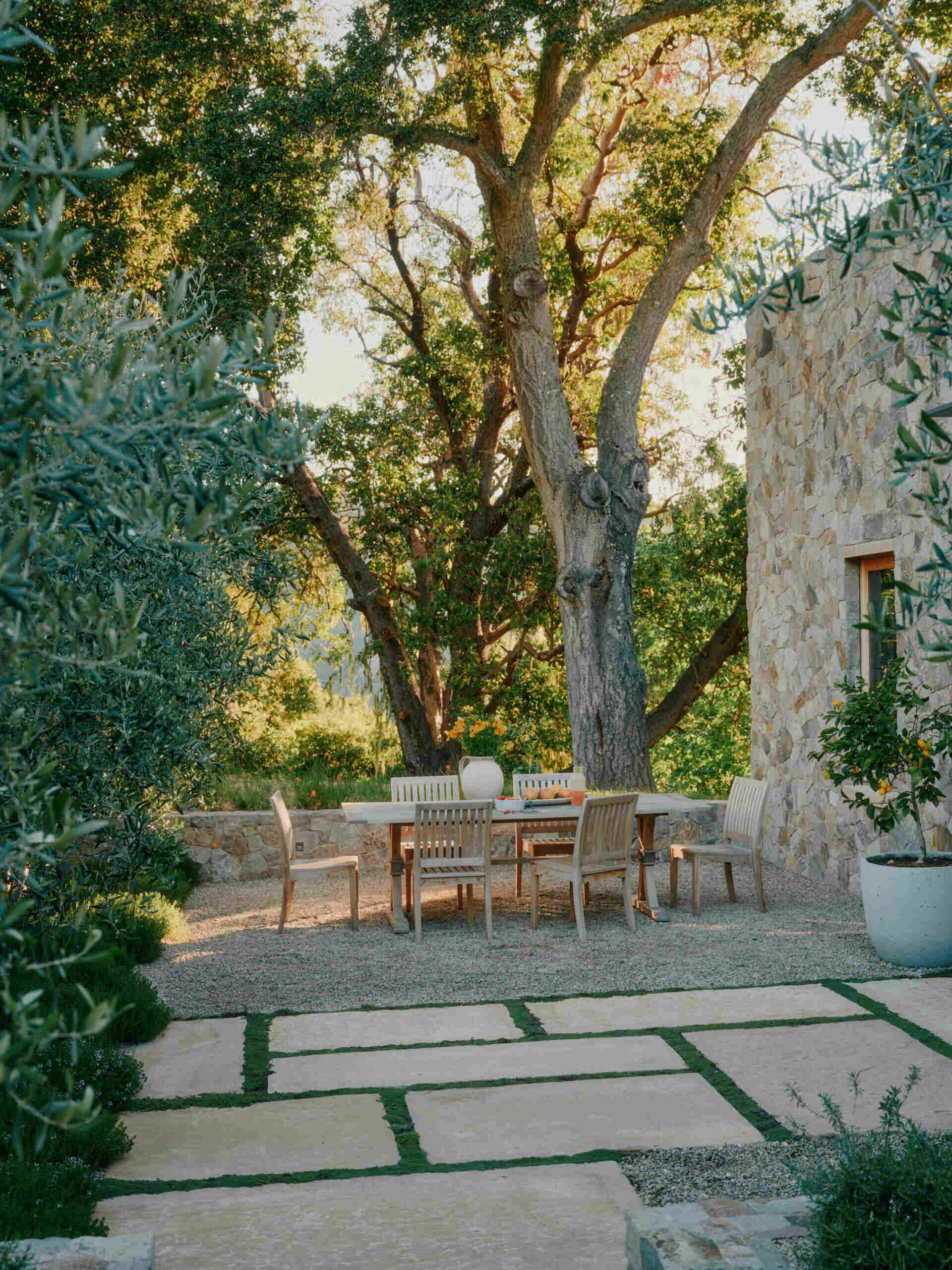
Outdoor living is spread throughout the property, with gathering areas positioned between the pavilions and along the ridge. A firepit area creates a natural place to pause in the evening, while outdoor dining spaces open directly from the main living areas.
The separation between structures allows each outdoor zone to feel distinct. Some spaces are open to sweeping views, while others feel more enclosed by stone walls and planting. Breezeways between the buildings also help pull air through the property, making the outdoor areas comfortable throughout the warmer months.
A Warm Arrival Through Stone and Shadow
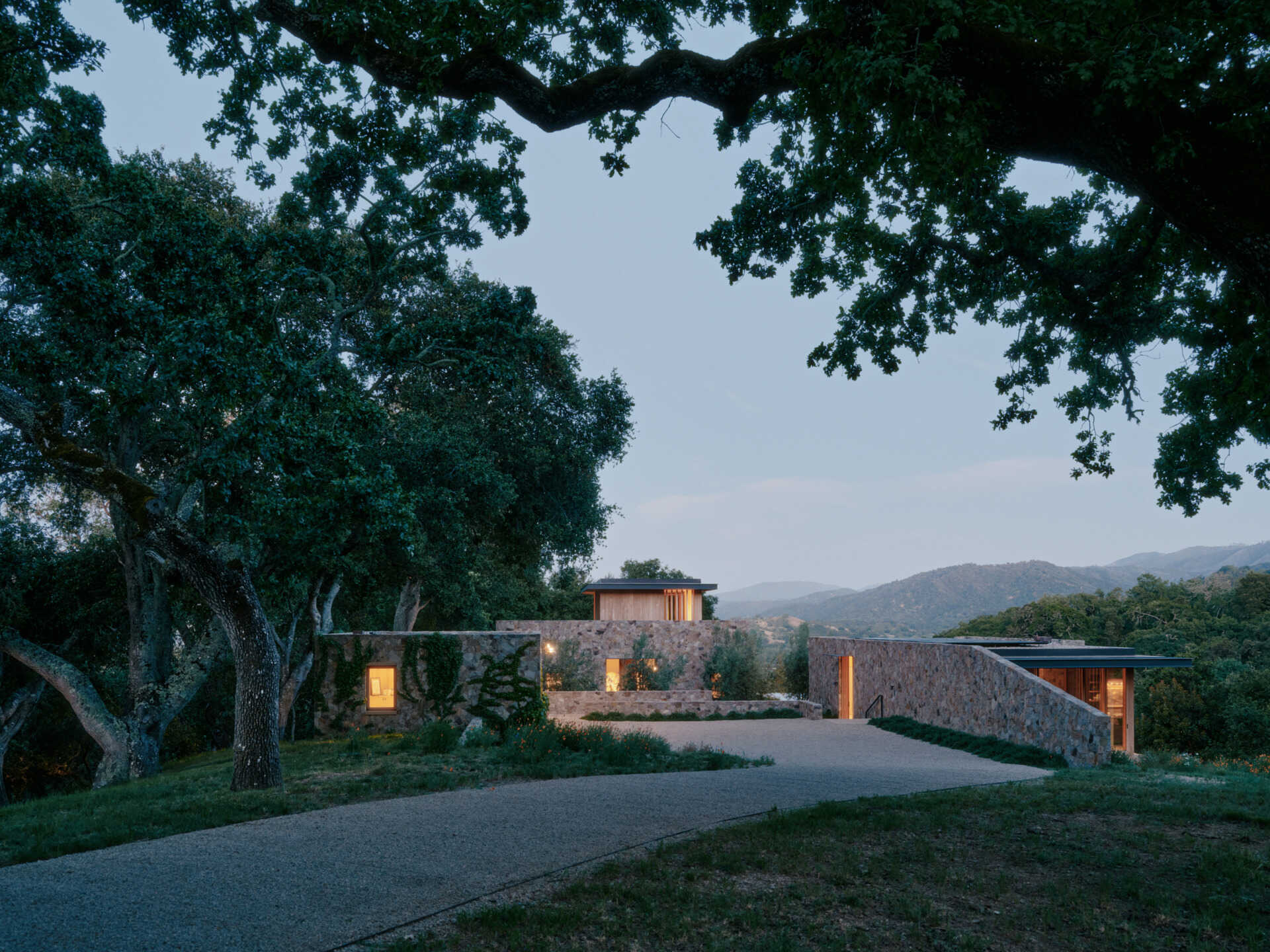
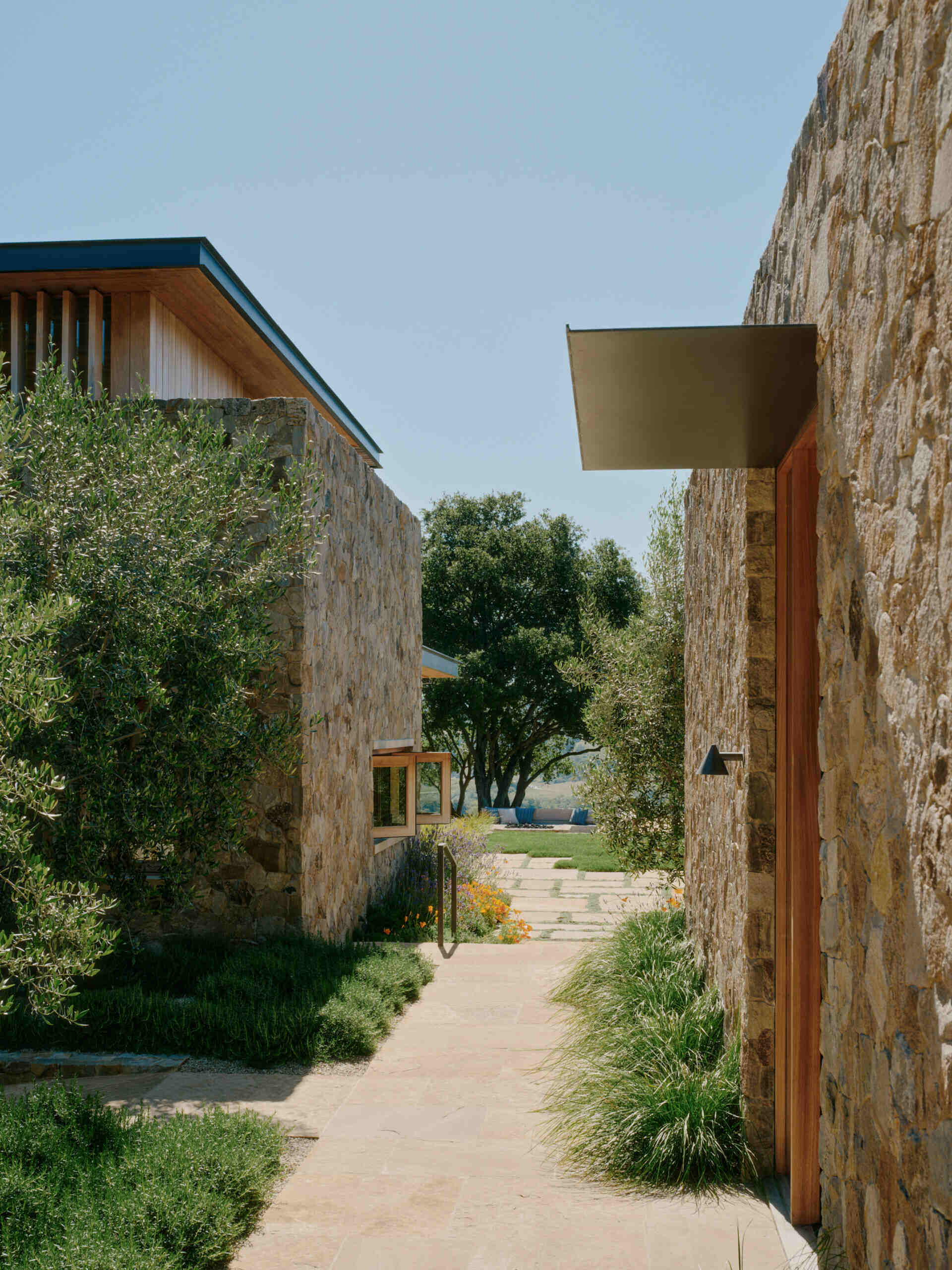
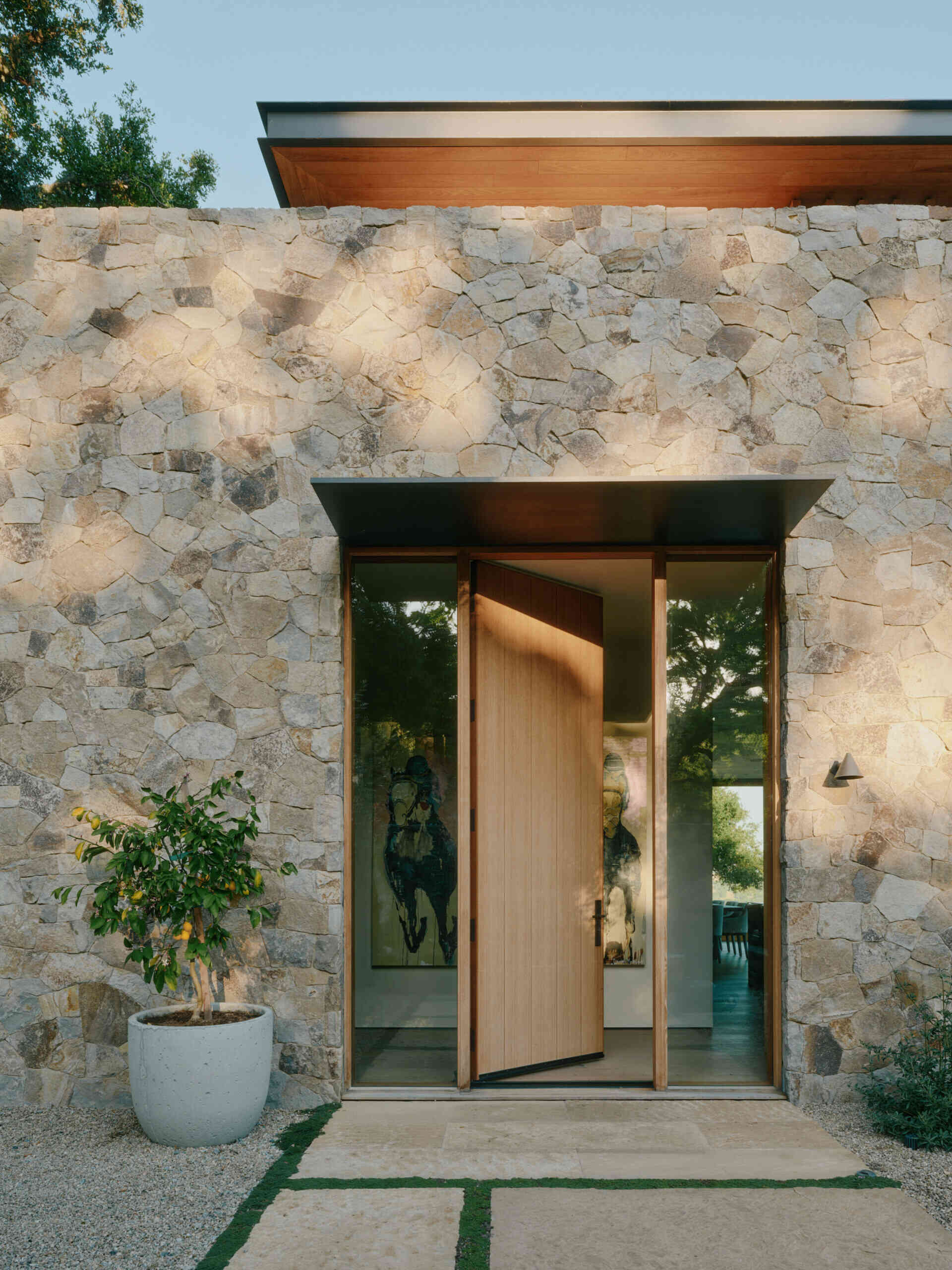
Approaching the entrance feels intentionally understated. Stone walls guide visitors toward recessed openings shaded by deep overhangs, creating contrast between bright sunlight and cooler sheltered spaces.
The entry sequence unfolds gradually through pathways and courtyards before reaching the front door itself. Instead of relying on a dramatic facade, the home reveals itself piece by piece through texture, shadow, and framed glimpses of the landscape beyond.
Natural materials continue through the doorway, helping the transition from exterior to interior feel seamless.
Open Interiors Framed by Valley Views
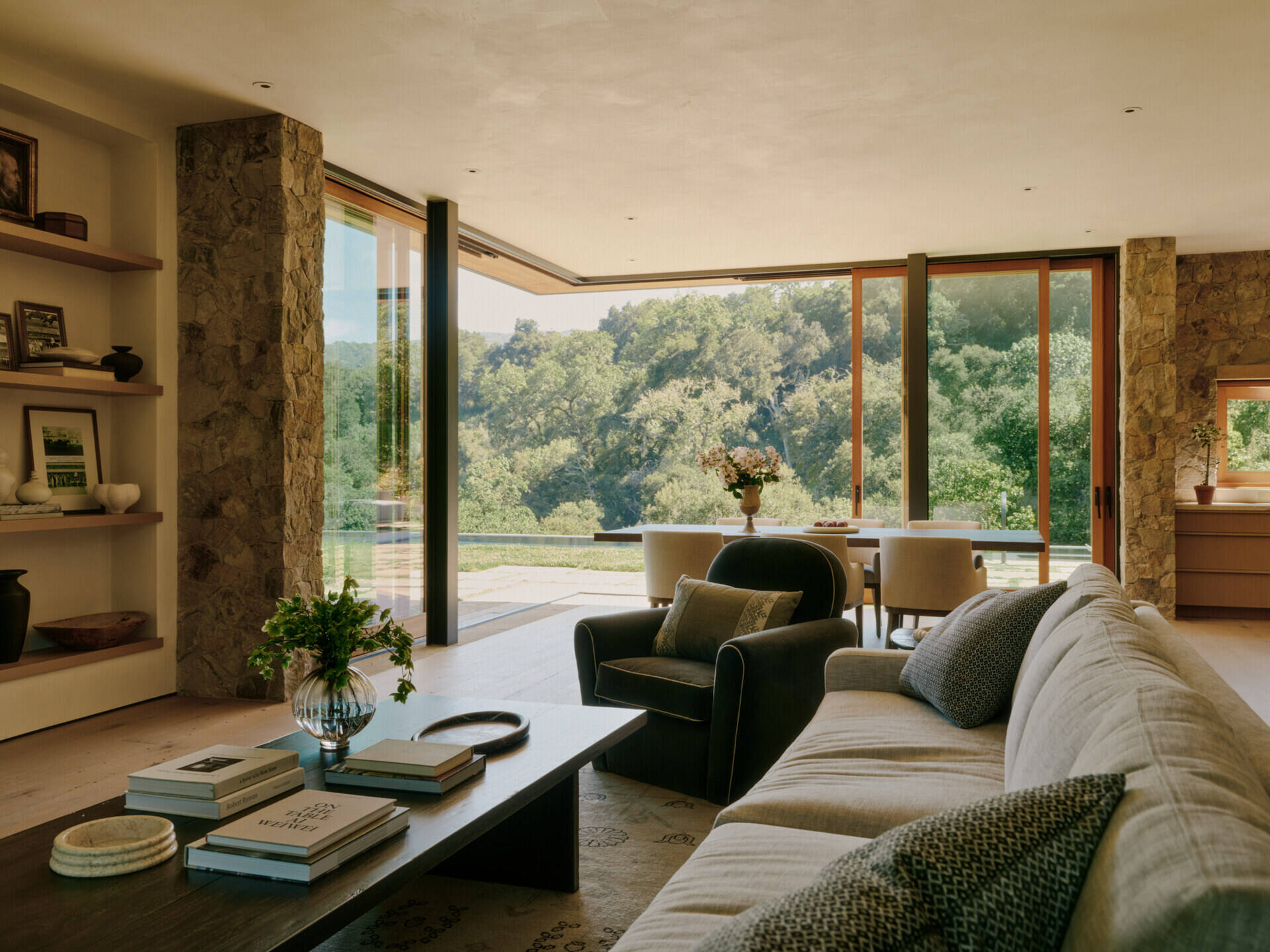
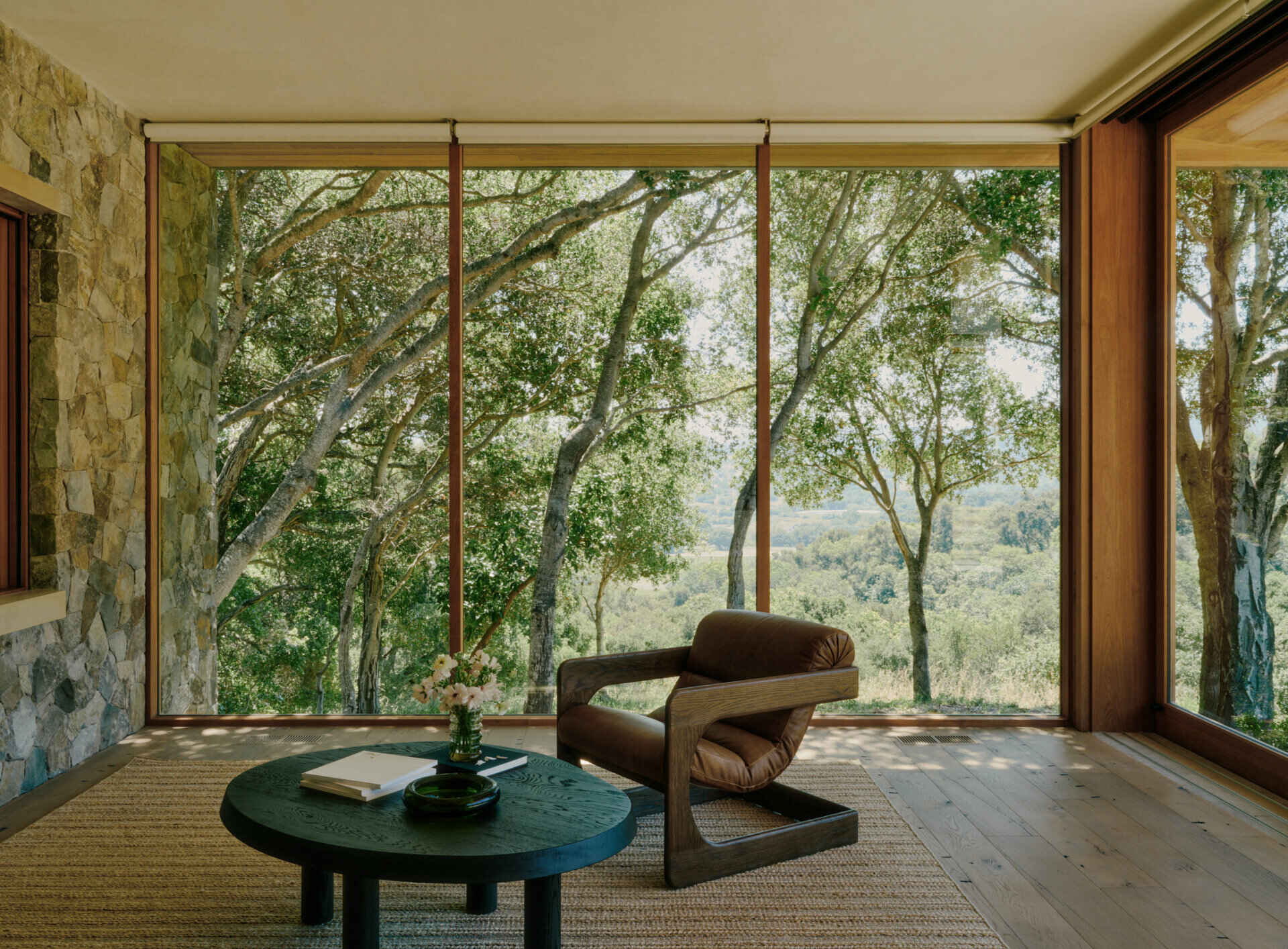
Inside the main pavilion, the living and dining areas open toward panoramic views across the preserve. Large openings pull natural light deep into the interior while maintaining a strong visual connection to the surrounding hills and trees.
Stone, wood, and warm neutral finishes create a relaxed atmosphere that echoes the exterior palette. The openness of the plan allows the living and dining zones to flow together naturally, while high ceilings and large expanses of glass help the spaces feel expansive without becoming overwhelming.
A Functional Space With Warm Materials
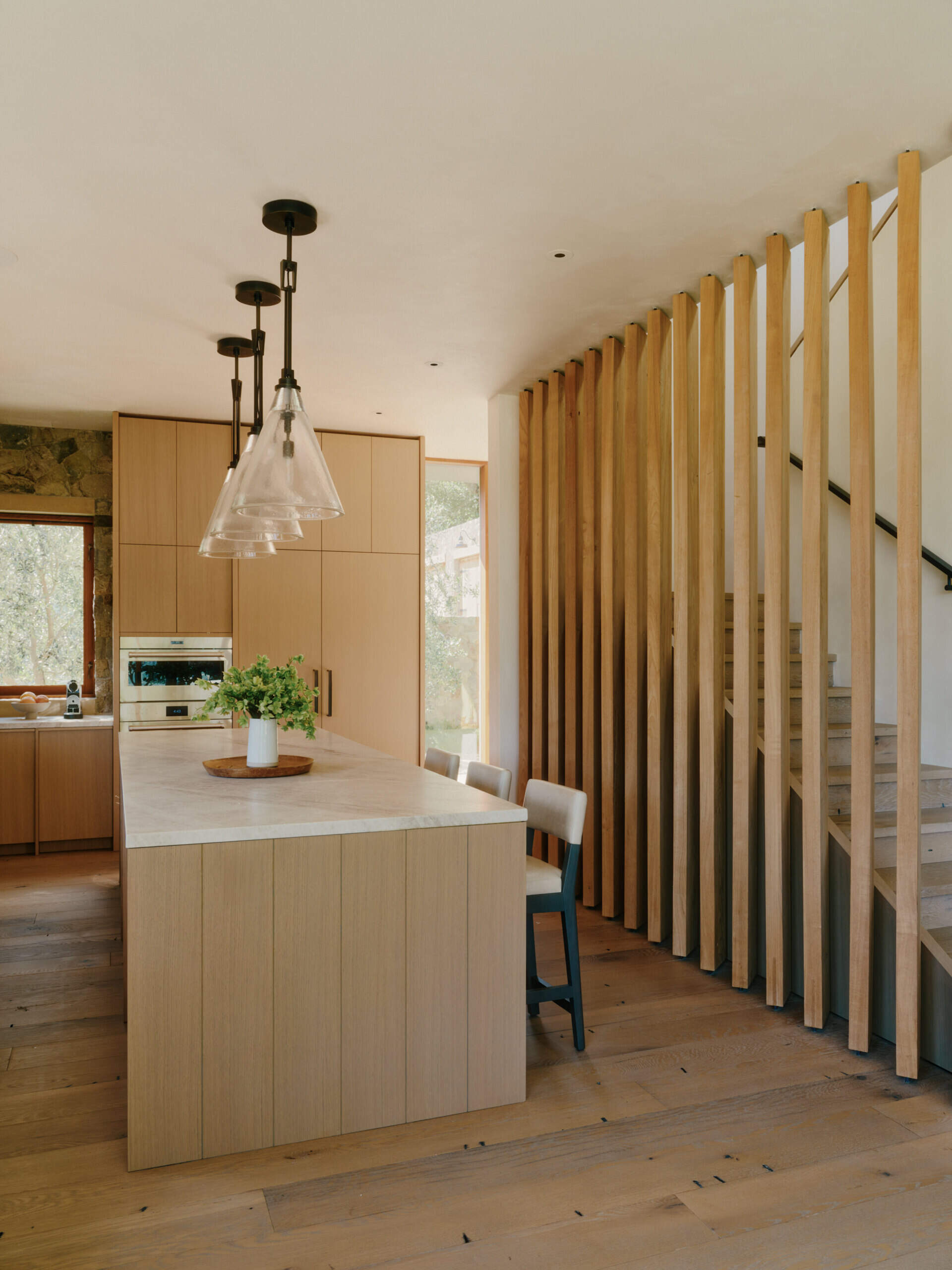
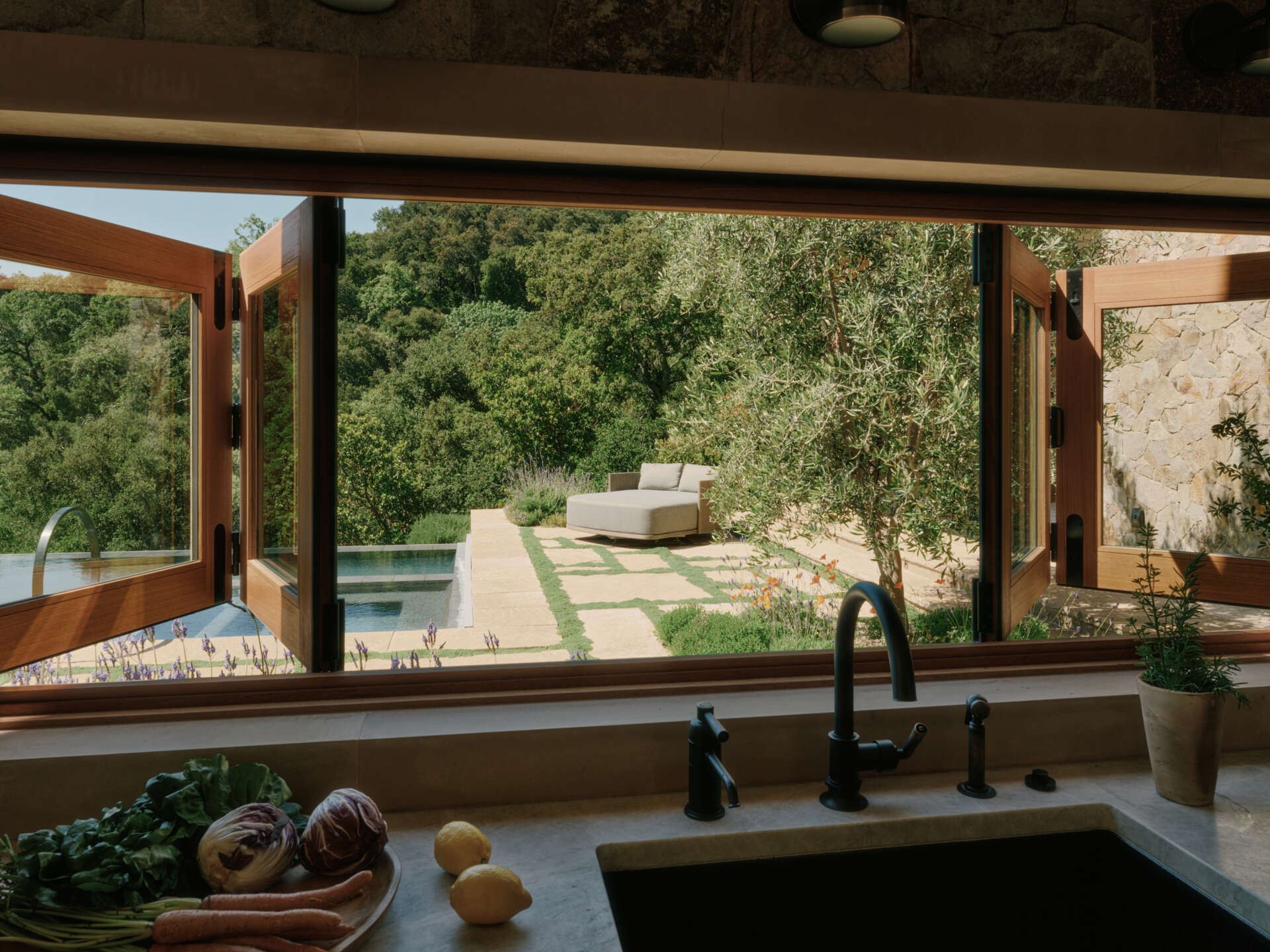
The kitchen combines wood finishes, stone surfaces, and clean-lined cabinetry. Large openings keep the space visually tied to the outdoor areas, allowing natural light to shape the atmosphere throughout the day.
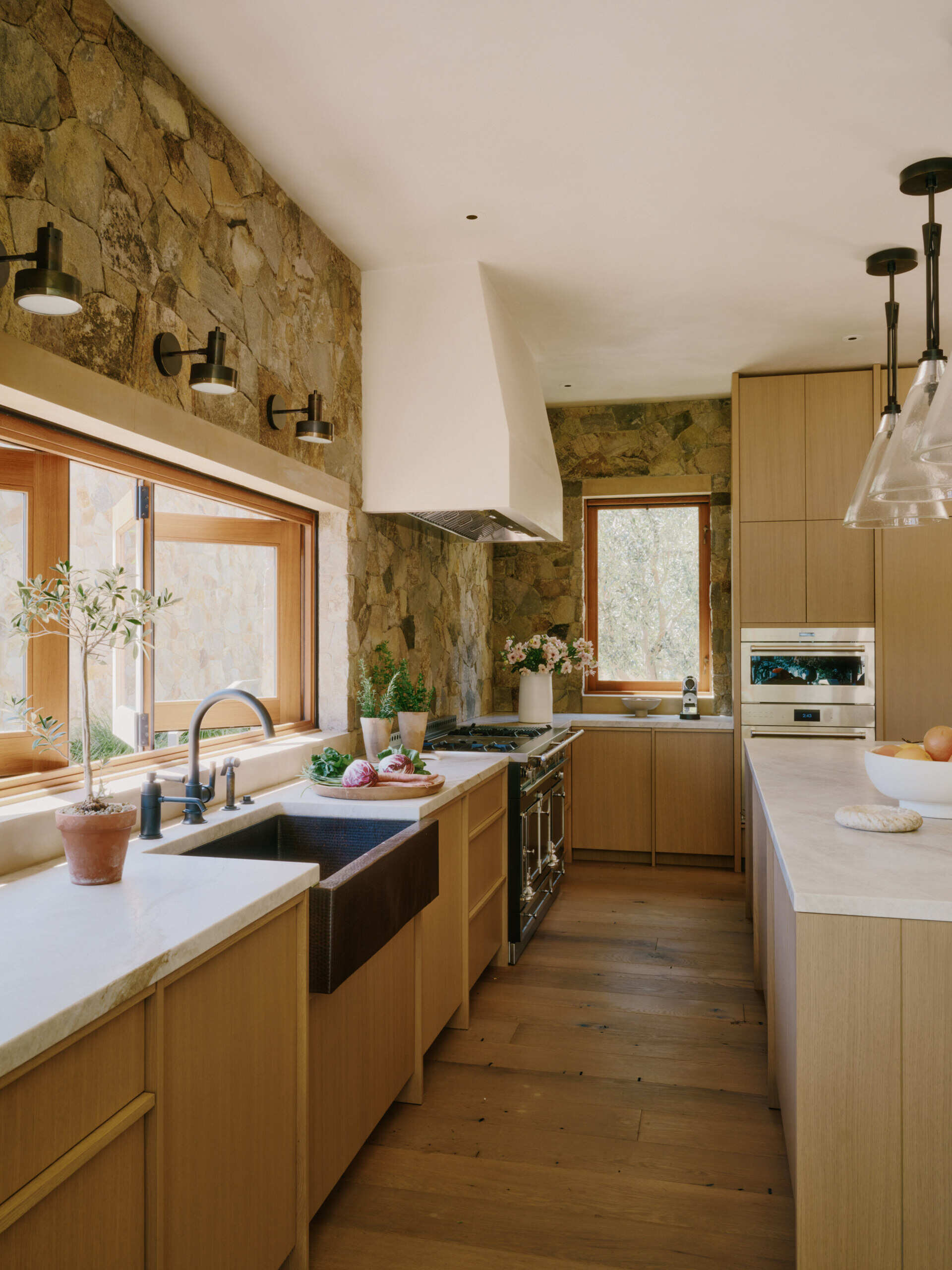
Its position within the main pavilion makes it central to gatherings, whether connected to the dining space indoors or extending toward outdoor entertaining areas nearby.
A Workspace Looking Into the Landscape
Located within the owner’s pavilion, the office takes advantage of the property’s elevated position and surrounding scenery. Large openings frame views through the trees while bringing natural light into the workspace.
The quieter location away from the main living pavilion allows the office to feel more private while still remaining visually linked to the rest of the property through pathways and gardens.
A Calm Space Above the Preserve
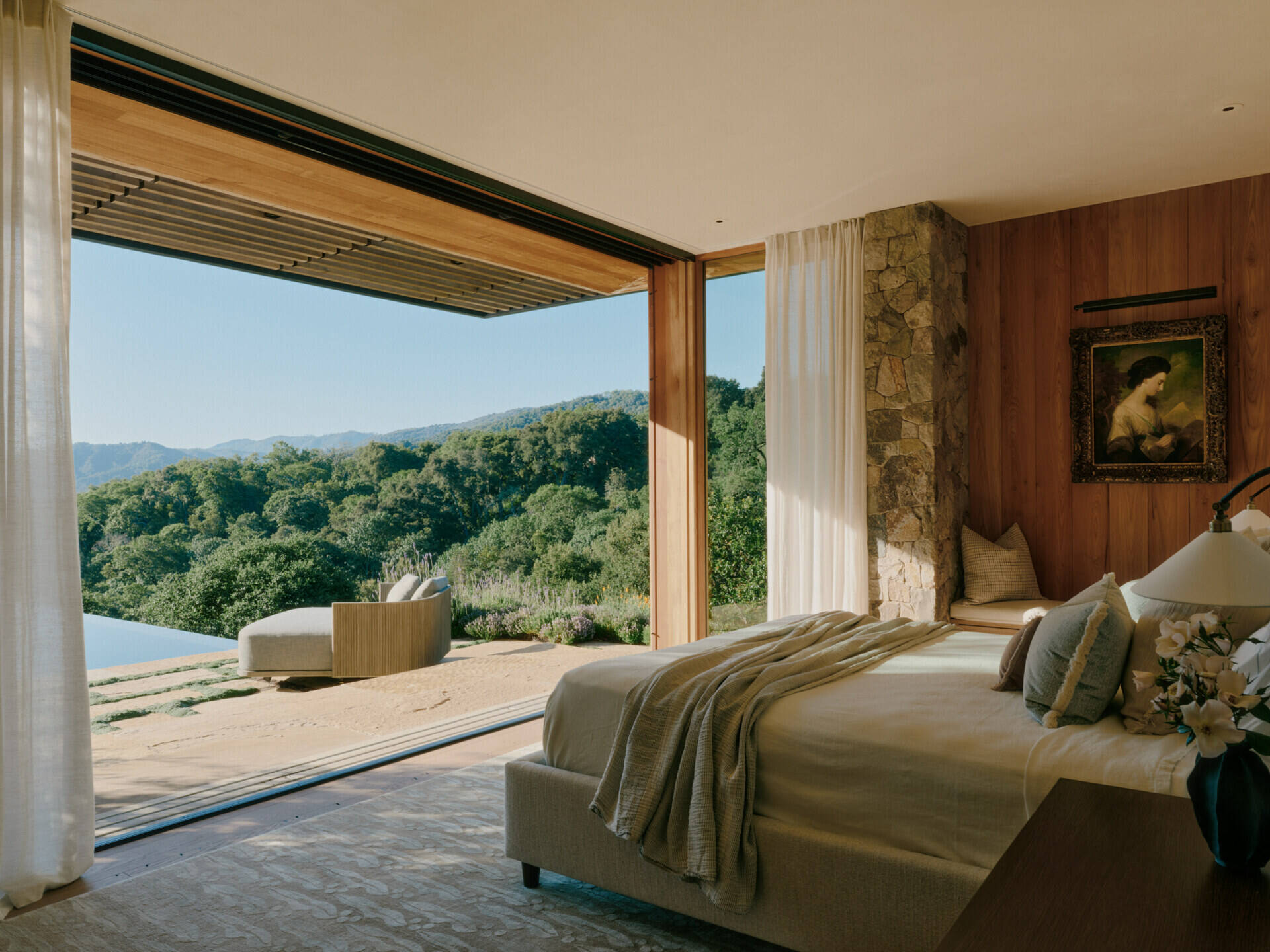
The bedroom suite continues the warm, understated palette seen throughout the property. Stone walls, wood finishes, and soft natural light create a space that feels comfortable and relaxed without relying on excess decoration, while a sliding door opens the room to the pool area.
Natural Materials and Filtered Light
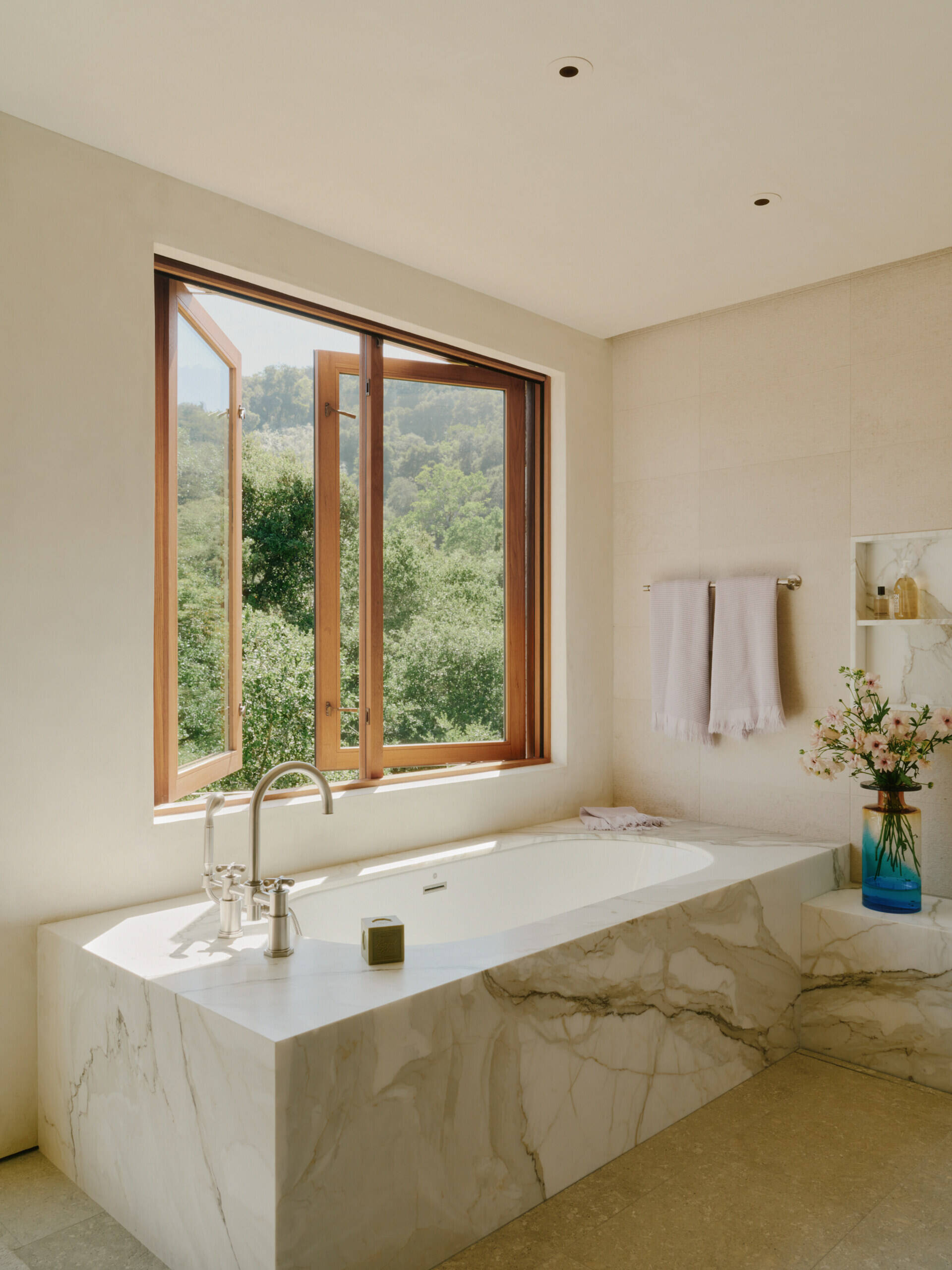
In the bathroom, simple detailing and a built-in bathtub allows the materials themselves to stand out, creating a quiet atmosphere that feels consistent with the architecture as a whole. Views toward planting and sky help maintain a visual connection to the outdoors even within more private spaces.
A Private Pavilion for Visitors
The detached guest suite sits alongside the pool cabana, giving visitors their own separate area within the property. This layout allows guests to enjoy privacy while still remaining closely linked to the outdoor gathering spaces nearby.
A Layout Designed Around Movement and Views
The floor plan moves away from the idea of one continuous structure. Instead, the property is experienced through movement between separate pavilions connected by pathways, gardens, and open-air courtyards.
Stone Villa shows how traditional inspiration can evolve into something distinctly modern without losing warmth or character. Through stone pavilions, natural materials, and open-air connections, Feldman Architecture created a home that feels closely tied to the landscape of California’s Santa Lucia Preserve.