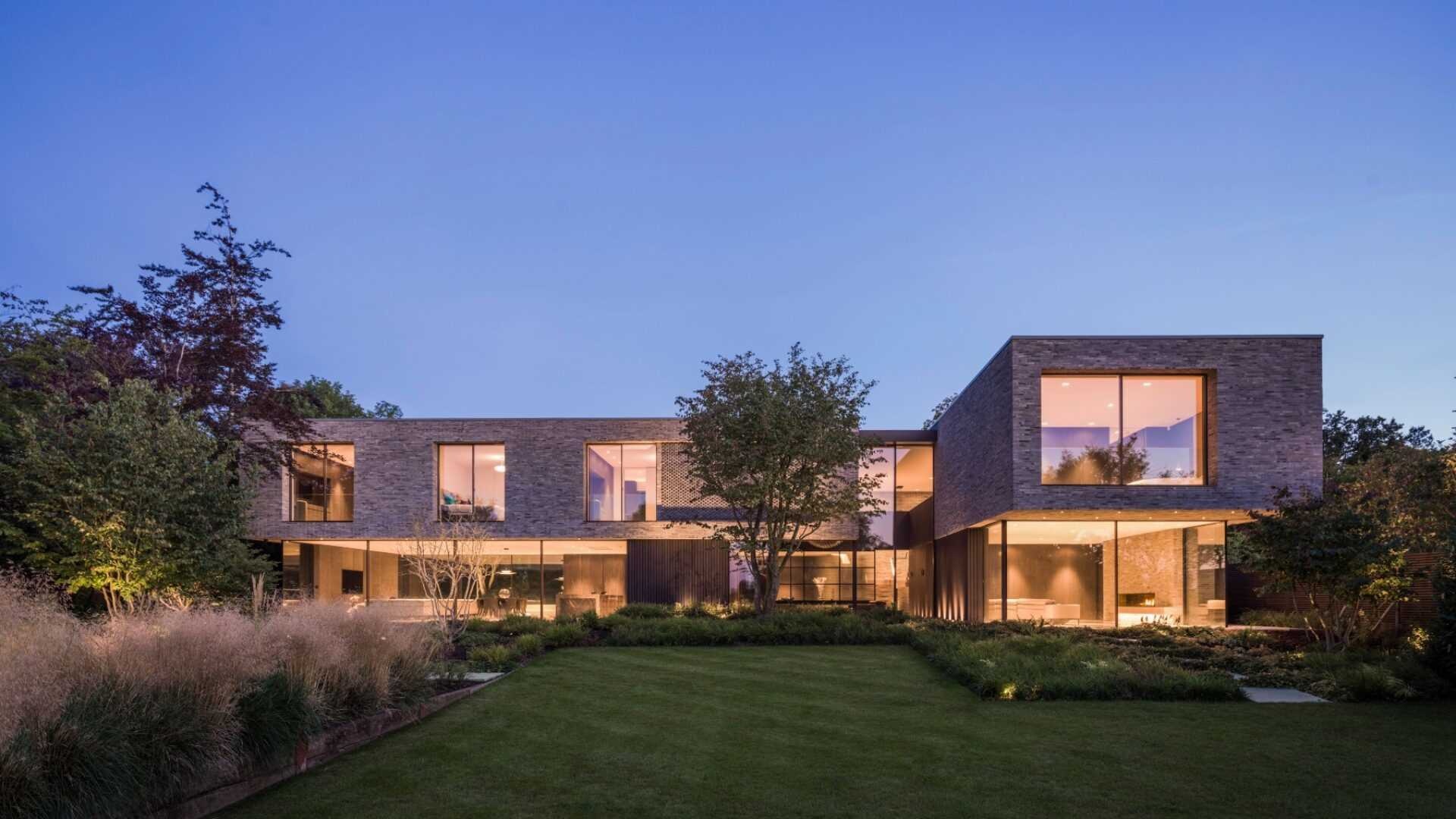
In Totteridge, England, an area known for large traditional detached houses, Gregory Phillips Architects has created a contemporary family home that stands apart from its neighbors. Built on the site of an aging bungalow where the owners had lived for many years, the new house responds to both its surroundings and a complex planning context, including the Totteridge Conservation Area and the Greater London Green Belt.
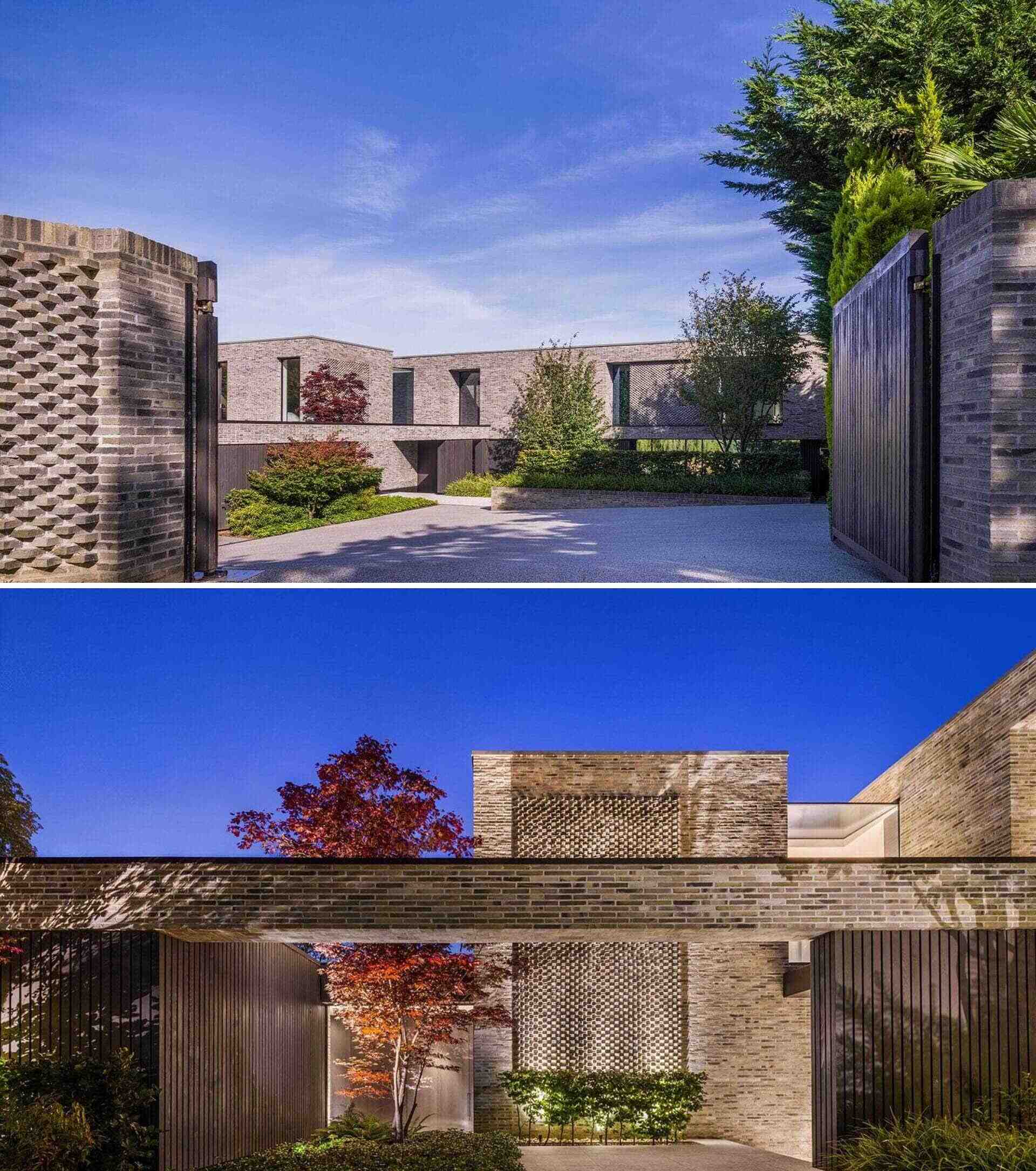
An Exterior Defined by Waterstruck Brickwork
The first thing that catches the eye is the extensive use of waterstruck grey bricks from Petersen Tegl. Unlike standard bricks, waterstruck bricks are produced using water during the moulding and release process, creating subtle texture and natural variation in color. These differences give the exterior a rich, layered appearance that changes depending on the light and weather conditions.
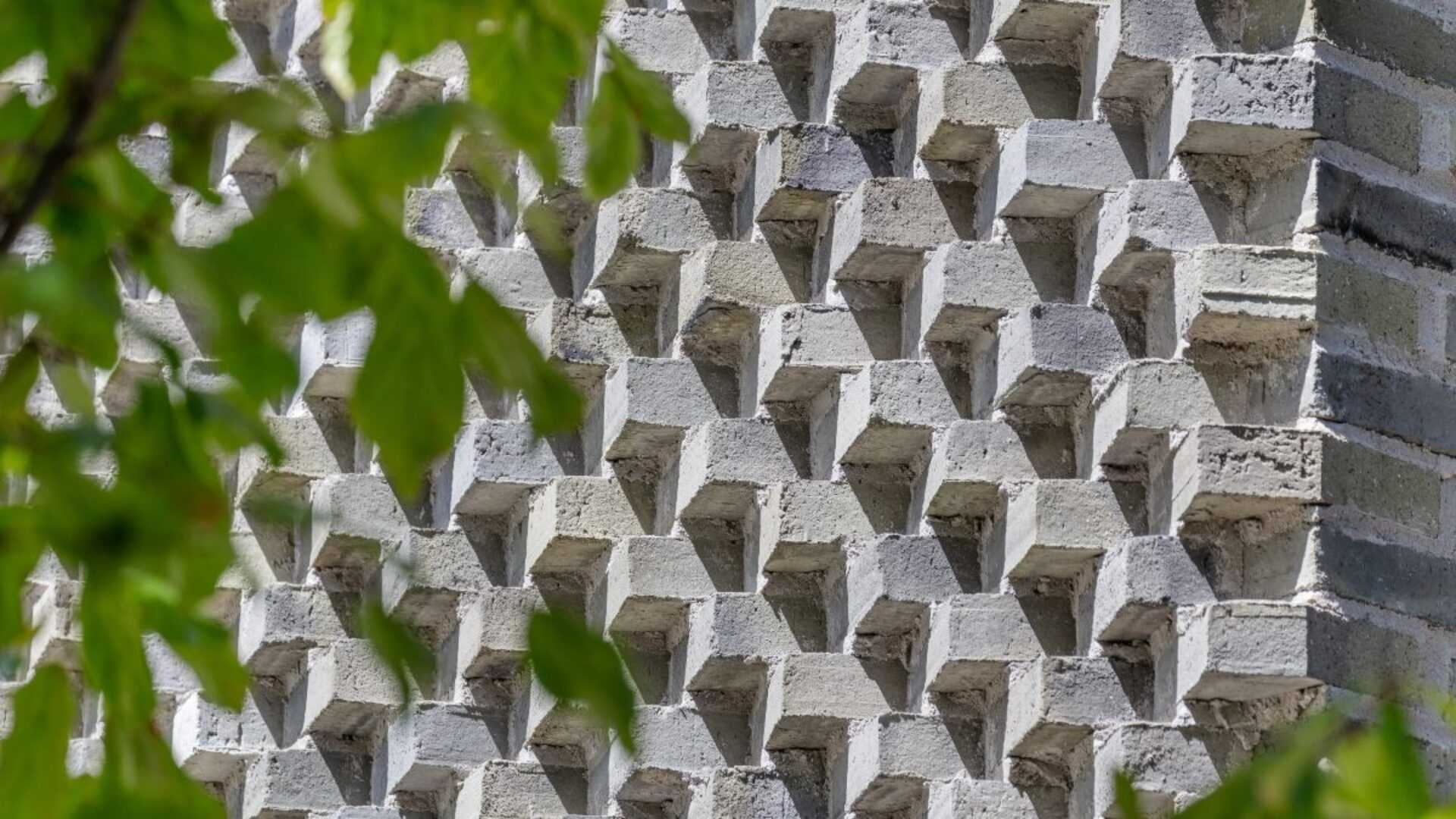
Gregory Phillips describes the project as an “essay in brickwork,” and it is easy to see why. Across the exterior, multiple brick-laying techniques add visual interest and depth. One of the most striking examples is the saw-tooth brickwork, where bricks are positioned at a 45-degree angle. When sunlight moves across the facade, the angled surfaces create dramatic highlights and shadows that transform the appearance of the walls throughout the day.
Balancing Privacy at the Front and Openness at the Rear
The design takes full advantage of the site’s orientation. Facing south toward the street, the front elevation is composed of a series of solid brick volumes punctuated by deeply recessed windows. Some reveals extend up to a meter deep, creating dramatic shadow lines while helping provide solar shading.
At the rear, the character changes completely. Large expanses of glazing open the house toward the garden and the greenbelt landscape beyond. Minimal structural elements support the glass, allowing uninterrupted views and creating a much stronger relationship between the indoor and outdoor spaces.
Timber, glass, and steel were selected for their longevity and quality, while highly insulated lightweight stud walls fill the spaces between the structural steel frame.
A Minimal Interior Anchored by Concrete and Oak
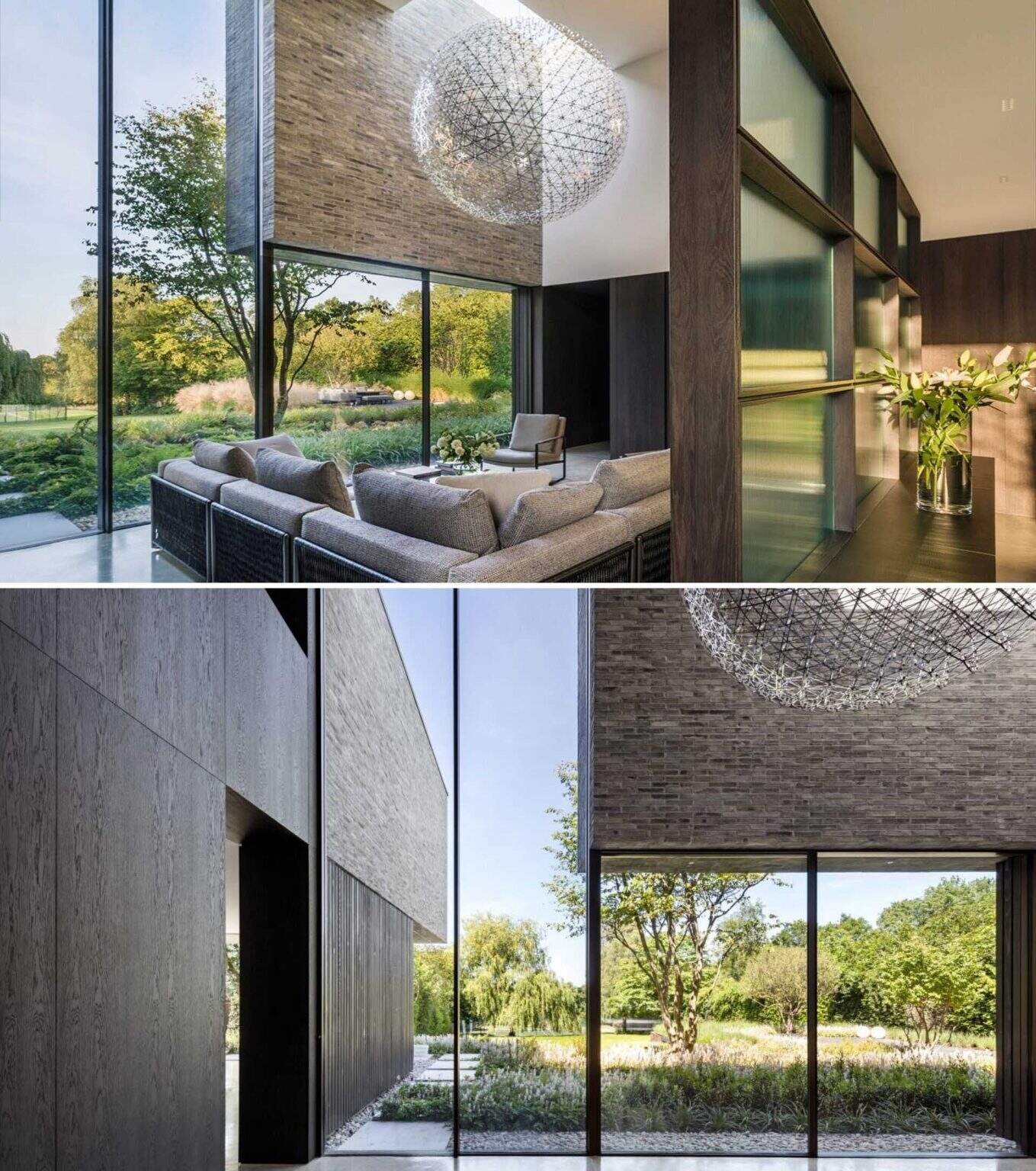
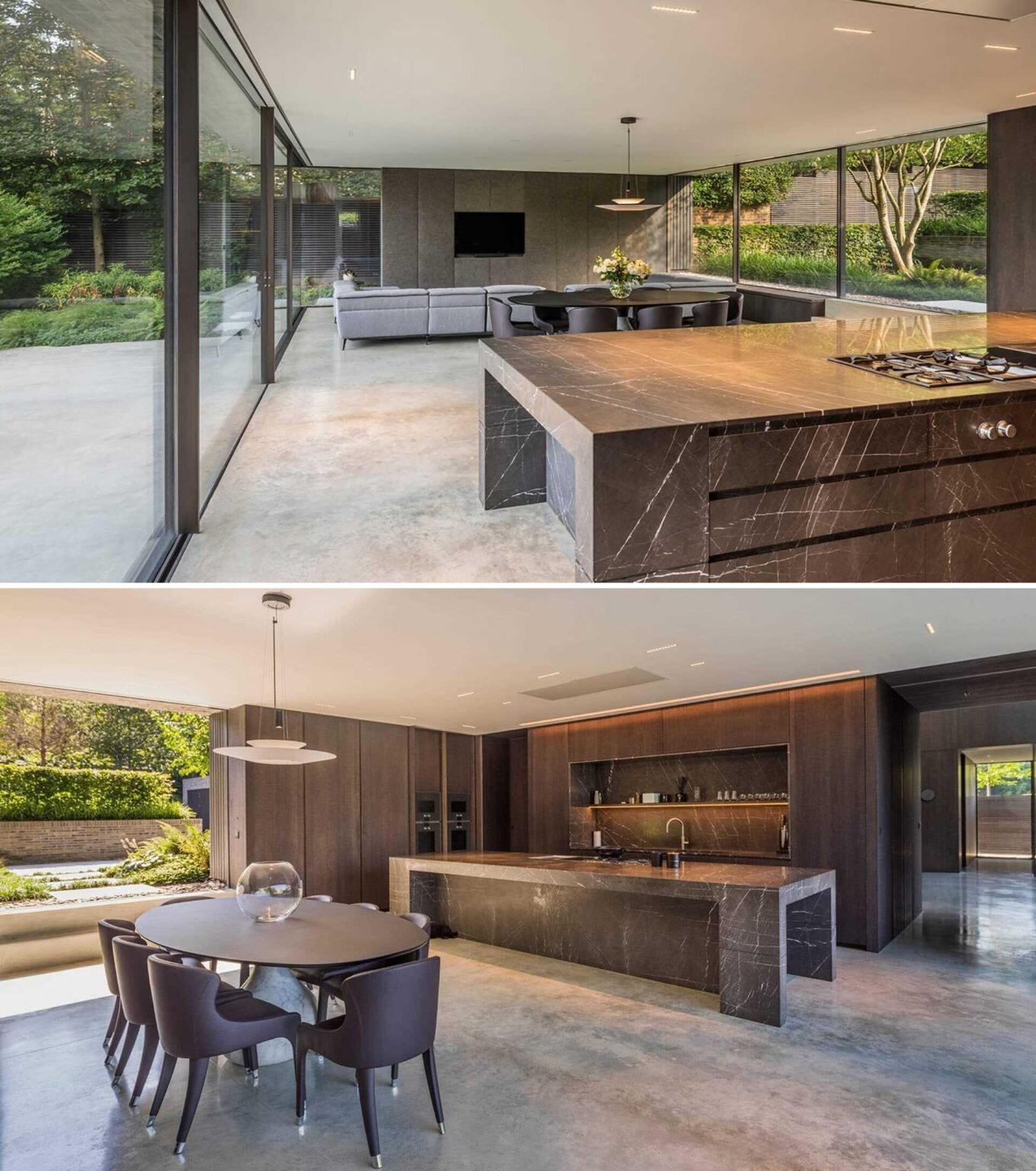
Inside, the material palette becomes simpler but no less impactful. Polished concrete flooring runs throughout the main living spaces, bringing durability and a clean contemporary look. Furnishings are kept minimal, allowing the architecture and materials to take center stage.
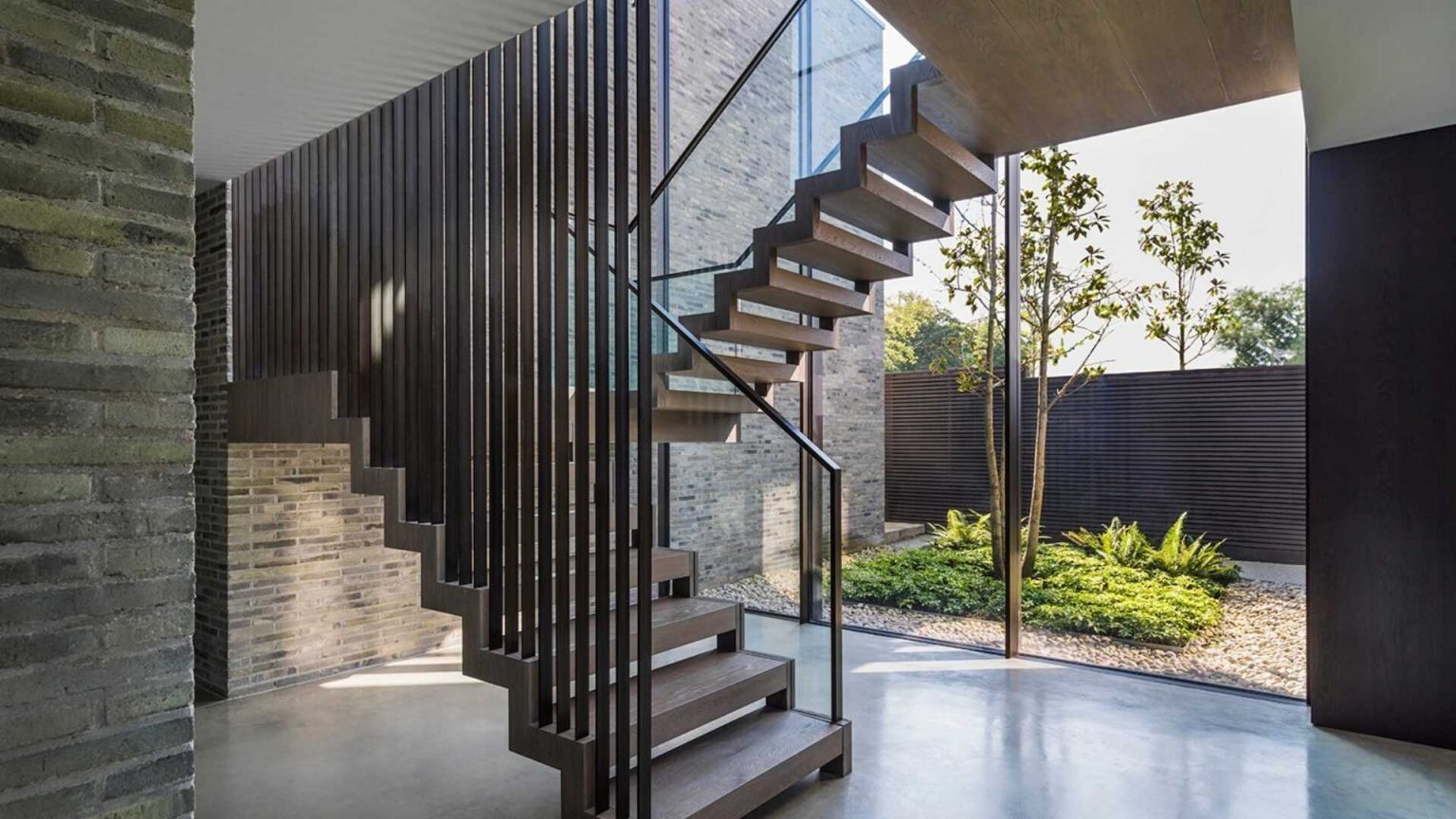
A custom-built steel staircase introduces a sculptural element, while natural stone surfaces add texture and contrast. Together, these materials create a refined interior that feels cohesive from room to room.
Positioned to take advantage of the home’s layout, the kitchen enjoys views toward both sides of the garden. Large windows bring natural light into the space throughout the day, helping blur the line between the interior and the landscape outside.
Dark Oak Creates Continuity Throughout the Interior
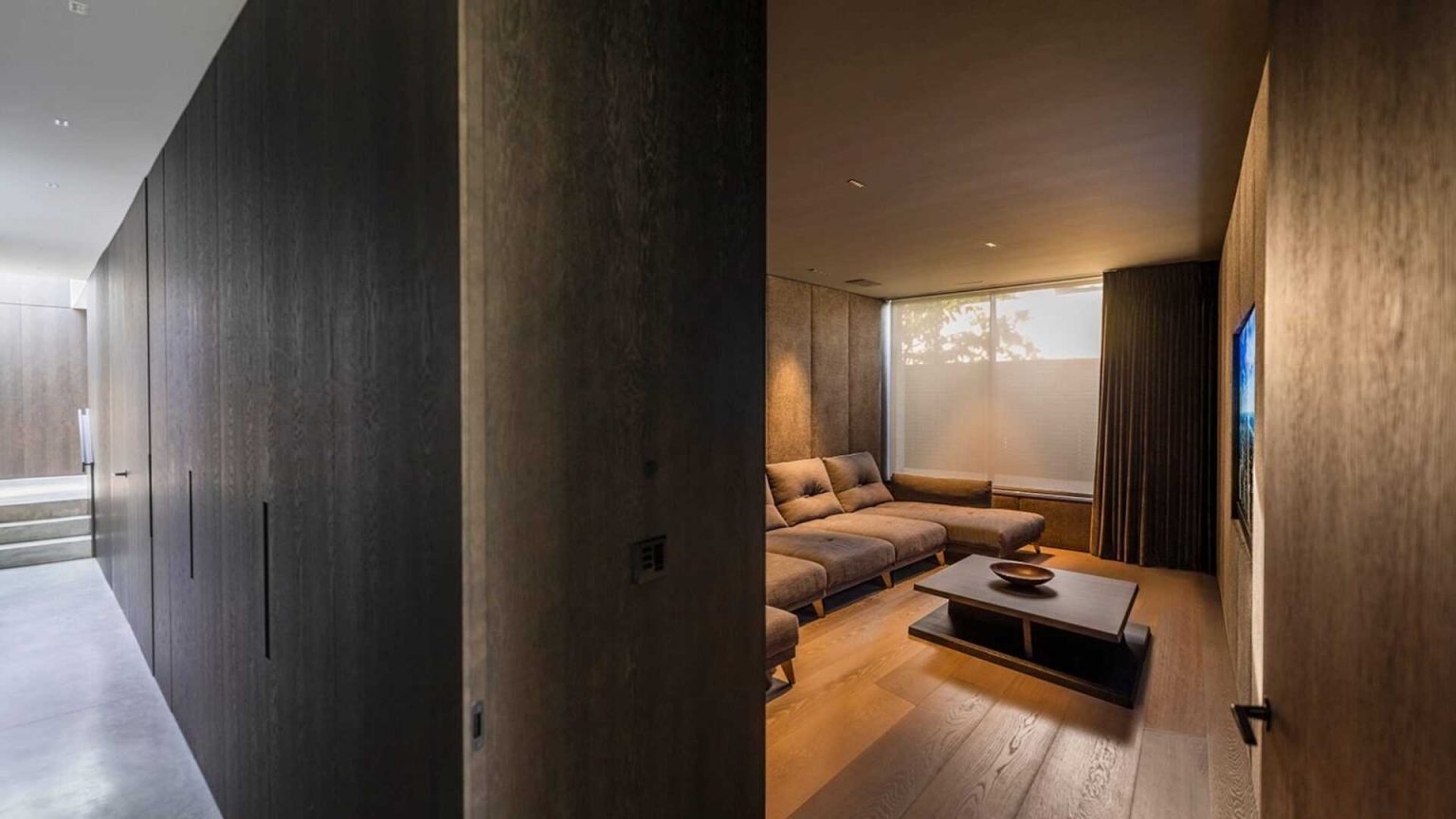
One of the most consistent design elements inside the home is the use of dark stained oak boards. The material appears throughout the house in a variety of applications, helping create visual continuity across different spaces.
Oak is used for wall paneling, cabinet fronts, shelving, internal doors, and even the front entrance door. It also appears in the staircase handrails and balustrades, adding warmth and texture against the concrete, steel, and stone finishes.
The repeated use of the same timber gives the interior a strong sense of cohesion while allowing individual rooms to maintain their own character.
Bedrooms Designed Around Light and Views
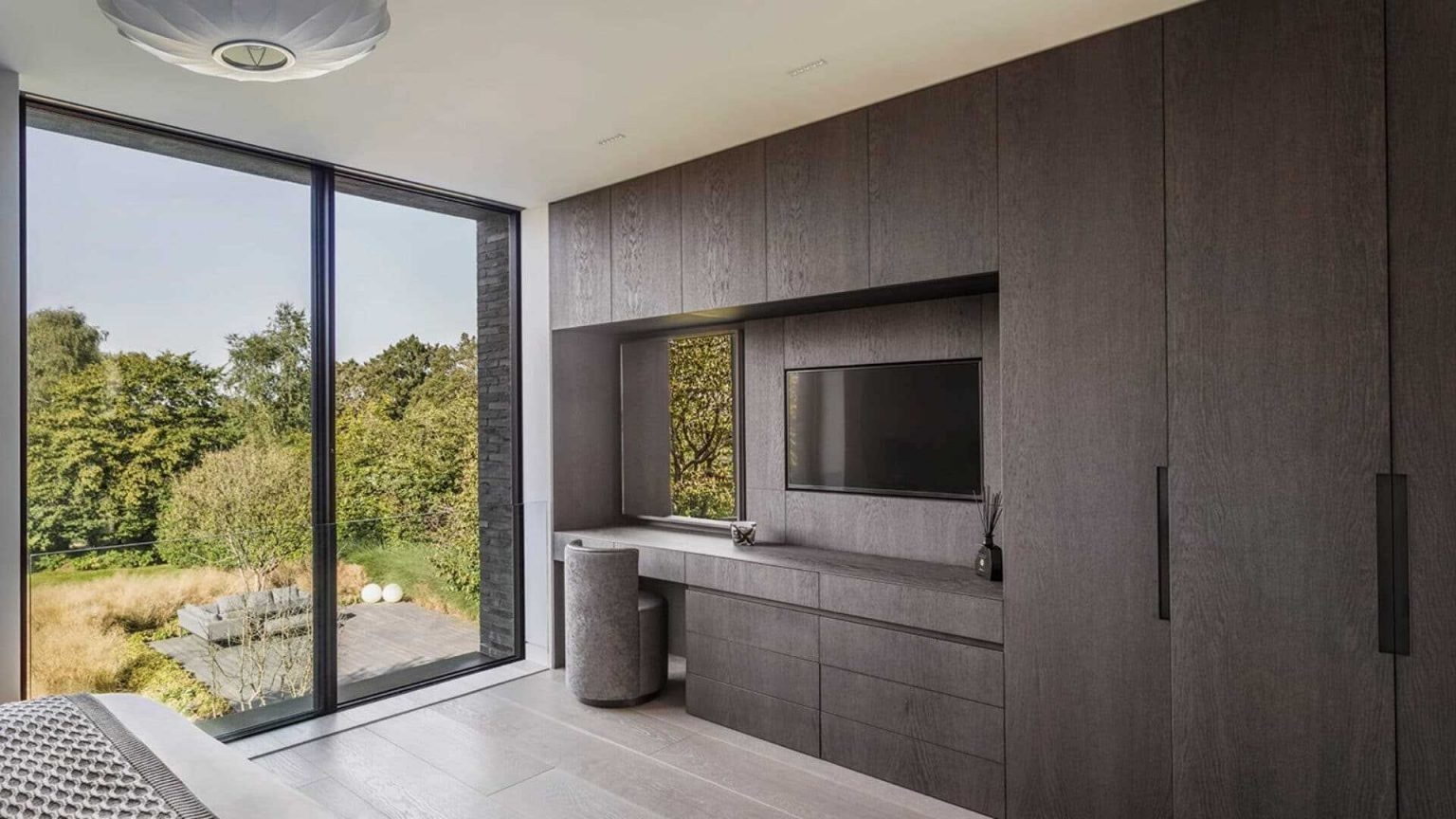
The bedrooms continue the home’s restrained material palette while making the most of the surrounding landscape. In one bedroom, floor-to-ceiling glazing frames views of the garden, bringing greenery into the room and creating a bright, open atmosphere.
Built-in storage helps maintain the uncluttered aesthetic. Integrated closets include a vanity area and a built-in television, allowing the room to remain streamlined while still accommodating everyday needs.
A Bathroom Framed by Brick and Light
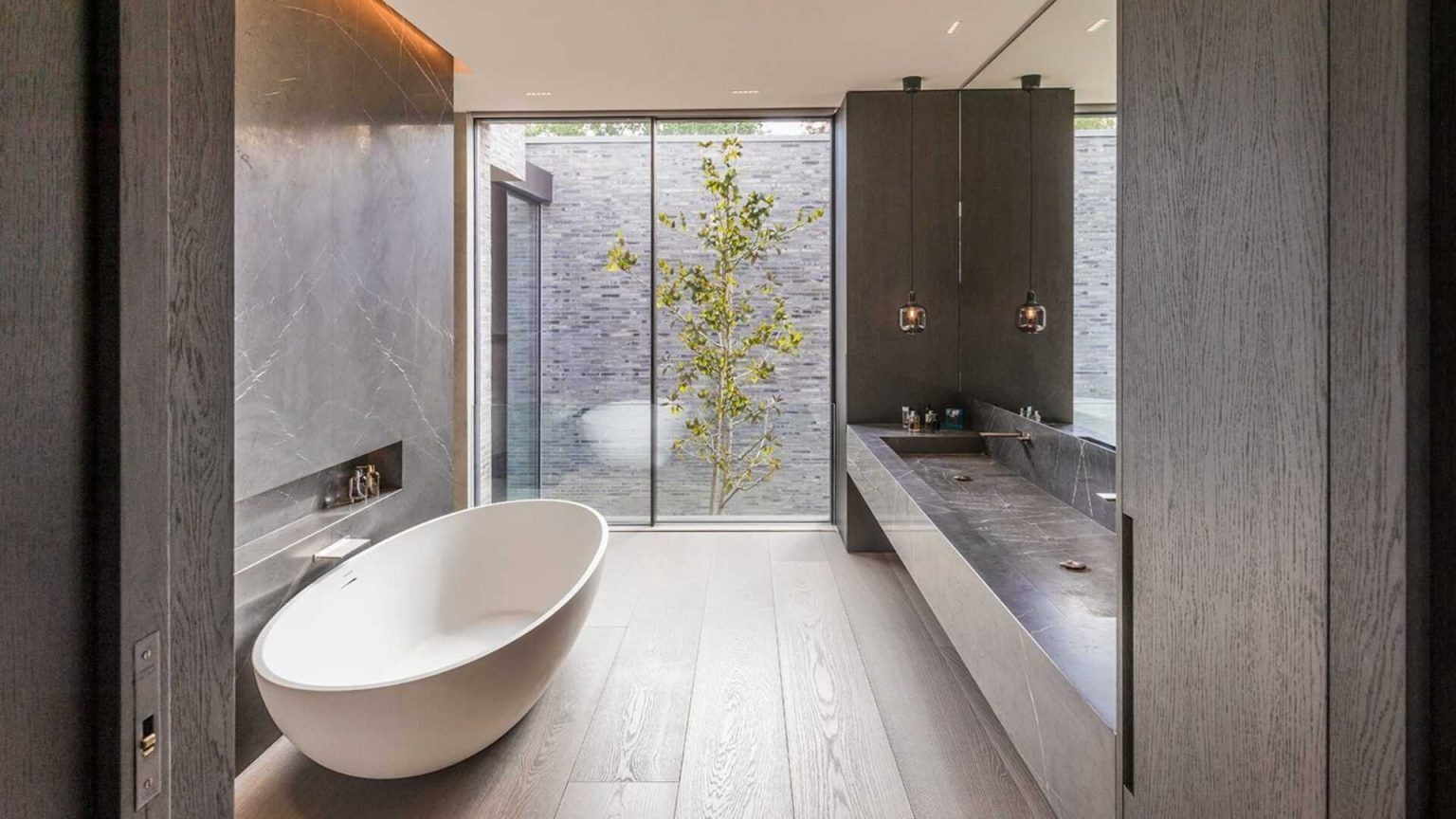
The bathroom offers another example of the home’s simple but effective design approach. A freestanding bathtub sits beside a recessed shelving niche, creating a functional focal point within the space.
Nearby windows provide views toward the textured grey brick exterior, creating a subtle visual link between the interior and the architecture outside.
Understanding the Layout
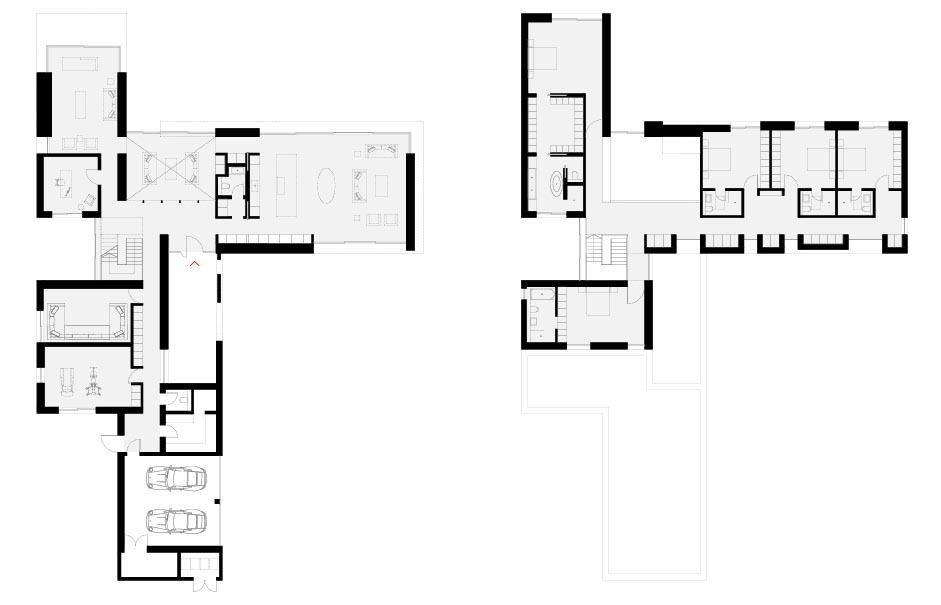
The floor plan reveals how the various living spaces are organized to maximize light, views, and access to the garden. The design was originally conceived as a three-storey house partially embedded into the site’s natural topography, allowing it to appear lower from the street while accommodating generous interior spaces.
The homeowners also wanted the main living areas and garden to sit on the same level, helping create easy movement between inside and outside. That decision plays an important role in how the house functions today, supporting an open and highly usable layout.
From the textured facades and dramatic shadow lines to the bright interiors and garden views, every part of the design contributes to a house that feels both distinctive and enduring.